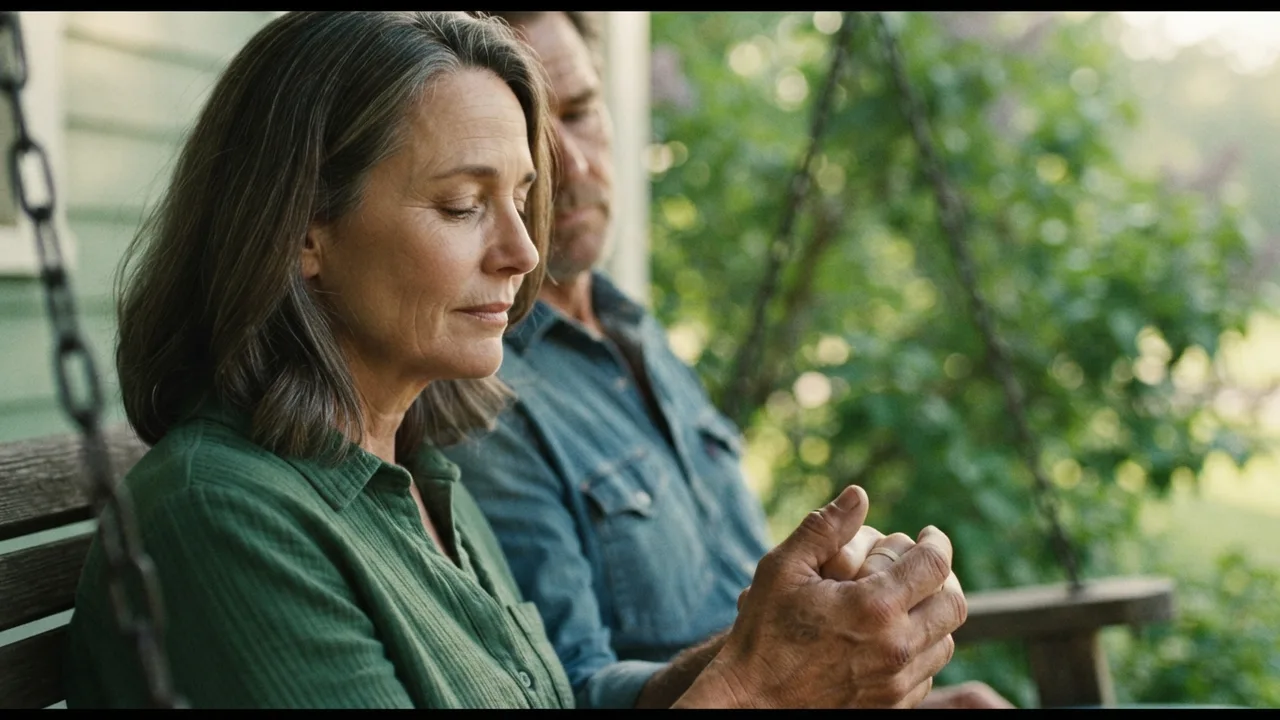
My son told me the man I was seeing had a knack for finding trouble, but after twenty-eight years in the insurance business, I know trouble is rarely found; it's made.
By Monday morning I had Stan Olson's closed bull claim on my desk, the file that left him thousands of dollars short, and one line in it I could not stop reading.
Ryan had set the whole business on my table the night before, somewhere between the pot roast and the peach cobbler.
Advertisements
"I'm only saying what people say, Mom." He pushed a carrot around his plate. "Stan's a good man. Nobody argues that. But you remember the bull."
"I wrote the claim, Ryan. I remember the bull."
"A prize Hereford with a broken leg, because somebody couldn't be bothered to latch a gate."
"Stan Olson has latched gates since before you were born."
"Then why does it keep happening to him? The bull. The hay shed. The wheat in the bin." He ticked them off on his fingers. "He's got a knack for finding trouble, and I don't want you standing next to him when it finds him again."
I put down my fork. In my office, "accident-prone" is what people call a man when they haven't looked at the paperwork, and I had never once heard my son use the phrase before that spring.
"Eat your cobbler," I said.
"Mom."
"Eat."
Advertisements
Stan called at eight, as he did most Sundays. I watched the phone buzz its way across the counter and let it go to voicemail, which I had never done, and afterward I stood there with a dish towel wrung into a rope, feeling like a thief in my own kitchen.
The file was thin. A claim number, photographs of a fence line, the adjuster's tight printing, and a settlement letter that paid what the policy covered and not a dollar of the breeding season Stan had lost along with the animal.
Then the line. *Gate to pasture found unlatched.*
Stan's own signed statement sat right behind it. *Latched at noon. Chain, and a twist of baling wire on top, same as always.* Frank used to say Stan wore a belt and suspenders and checked both twice. I had once watched him walk back across the church parking lot to make sure a truck window was rolled up.
Meticulous men do not leave gates open. I knew that the way I knew my own phone number, and I also knew that a client file is not a place for a woman to go hunting answers to her supper-table doubts. I had written that rule into our office manual.
I read it anyway, at my desk with the blinds half shut, and every page I turned felt like a page out of somebody's diary. Behind the settlement letter sat the usual pile of receipts: a feed-store invoice, a delivery ticket from Mayfield & Son for salt blocks, since half the county buys its fence staples from the store Frank started. I squared the stack and moved on.
I did not sleep that night. I lay there fitting Stan's careful hands to an open gate, and then I thought about how little it takes to doubt a man you have only just begun to trust.
On Wednesday, Marge Pruitt came in to renew her homeowner's policy, as she had since the year the grain elevator changed owners. She signed where I pointed. Then she kept hold of the pen.
"Corinne, honey, I hate to ask this."
"Then I'll make it easy. Ask."
"Are you sure about Stan?"
The printer was still humming out her declarations page. I let it finish before I turned around.
"Sure of what, Marge?"
"Well, Doug Kendall mentioned at Rotary that Ryan's been worried. About you getting hurt. Financially, I mean." She had the grace to look at the pen. "Everybody's just fond of you."
"Douglas said that."
"He said Ryan said it. I don't think he meant any harm."
I walked her to the door and thanked her for her business. Then I stood in my own front office with my face burning. For twenty-eight years I had been the person in Havenridge who knew everybody's trouble and kept it in a drawer, and now mine would be at the Casey's coffee counter by noon, passed around like a casserole at a funeral.
That was when the worry turned into something with an edge on it.
Thursday afternoon I stood at the window at the county annex and filled out a request form for two sheriff's reports. Fifty cents a page. The clerk didn't ask why I wanted them, and I didn't offer.
I spread the copies on my kitchen table that night with a legal pad and a pencil, and I opened the National Weather Service archive on my laptop. When a claim looks wrong, you lay the timeline against the facts on the ground and see which one gives way first.
The hay shed fire came first. The report listed the cause as undetermined, "possible lightning." The archive showed a clear sky over the county from dusk to dawn, with no thunderstorm recorded anywhere near Havenridge. The first call of any kind came from Stan at five minutes to ten that morning, when he drove out to check the place and found it.
I put my pencil down. I knew what I was about to remember.
My phone had rung at twenty to eight that morning while I was making coffee. *Did you hear about Stan's shed?* Ryan had said. I had gone right on pouring. Bad news in Havenridge runs faster than the fire department, and I had never asked how it got to him two hours ahead of the man it belonged to.
The wheat bin was next. A hard rain had come through that night, the report said, and the bin door was found standing open, the padlock "hanging unlocked, no sign of force." Stan's statement said only two keys existed. One hung in his kitchen drawer. The other lived on the ring Frank had carried for years, since the two of them had swapped keys over the seasons like wrenches.
Ryan had taken that ring out of Frank's truck the week of the funeral. He had set it on my table every Easter since, next to the ham, and I could still hear the jingle of it.
I pulled the bull file back out of my tote. I found the delivery ticket I had squared up and moved past. *Salt blocks, north pasture. 4:10 p.m. R. Mayfield.* Stan's statement said he had left for the Saturday sale at one and did not return until after supper.
Nobody else had been through that gate all afternoon. My son had.
I did not cry. I folded the pages into a manila folder, ran water into a coffee cup that was already clean, and stood at the sink thinking about a four-year-old on a milk crate, handing his father a wrench with both fists.
Saturday was the Community Foundation pancake breakfast. By eight the Methodist fellowship hall was full, same as every year: folding tables, squeeze bottles of syrup, paper plates, eight dollars a ticket. Douglas Kendall worked the big griddle in his apron, with a line of kids waiting on him.
Stan had saved me a chair at the end of the third table. He stood when I came in and pulled it out, and I let him, with the folder in my tote bag against my hip.
I had planned to speak to Ryan on Sunday, at my own table, alone. Ryan had other plans.
He crossed the hall in a clean shirt with his jaw set, and he did not lower his voice.
"Mom. I need a word."
"Here is fine."
"Everybody in this room knows about Stan's luck." He said it to me, but his eyes went over my shoulder to the whole hall. "He's taking advantage of you, and I'm not going to stand by and watch."
Forks stopped. Marge Pruitt, at the syrup, found something interesting in her bottle.
I did not raise my voice. I never have.
"Douglas, would you come over here, please? And Stan. You'll both want to hear this."
"Mom, don't."
"You've been telling people what's good for me, Ryan. I'd like them to hear the facts on the ground."
Douglas wiped his hands and came. Stan was already beside me, quiet as a fence post.
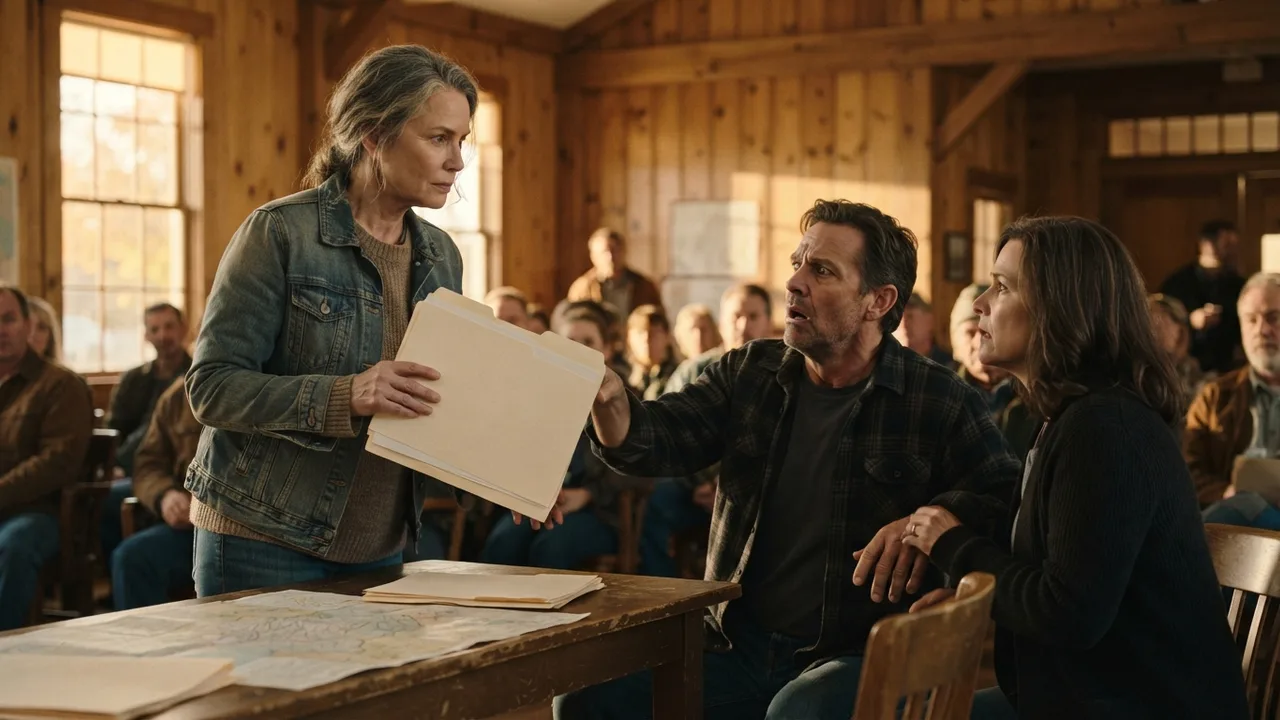
I took out the folder. "Let's look at the timeline. The hay shed burned on a night with no storm anywhere in this county. The first report to the sheriff came from Stan at five minutes to ten. You phoned me at twenty to eight, Ryan, and asked if I'd heard."
"Somebody told me. This is a small town."
"The wheat bin was opened with a key. Stan's key was in his kitchen drawer. The other was on Dad's ring, which you've carried since the funeral."
"Half the county had keys to half the county!"
"And the day the bull got out, the report said the gate was unlatched. You were the last one in that pasture, Ryan. Your own delivery ticket says four-ten."
The hall had gone so still I could hear the griddle hiss. Douglas looked at the dates on my page, then at Ryan, and his mouth went thin.
"Ryan," he said. "Is any of that wrong?"
"Don't you start." Ryan's face had gone red to the collar. "He's got her twisting everything! Look at her, reading police reports like a detective, because some old farmer smiles at her! You're choosing him over your own family, Mom. You're a fool in love, and this whole town can see it."
It was a good try. If I had been another kind of woman, it might even have worked, because I could feel the heat of it climb my neck.
"Maybe I am a fool," I said. "That doesn't change the dates."
"You're not even listening to yourself!"
"I'm listening to you." I held his gaze, and I kept hold of it. "This was never about Stan. This is about you blaming him for Dad's heart attack."
Nobody breathed.
I watched it land. His shoulders came down first, then the hands that had been fists, and then his whole face broke open on something he had kept shut for five years.
"He was standing right there," Ryan said. His voice cracked in the middle. "Right next to Dad, in that field. He was right there, Mom."
"Son." Stan spoke softly. "I have gone over that afternoon every night since. I'd have traded places with him in a heartbeat. I never knew you carried it."
Ryan looked at him as if he had never seen him. Then he looked at the floor, and then at the faces around him, every one of them seeing it plainly: not a foolish widow's romance, but a grieving boy who had gone looking for somewhere to put his anger.
He walked out through the side door. Douglas shut off the burner under the griddle, set down his spatula, and said to no one in particular that he would be wanting to see the store's delivery tickets on Monday.
My tote strap had left a groove in my palm. I had gripped it that hard.
Ryan knocked at my kitchen door that evening, which he had not done once since he was twelve. I let him in. He sat at the table where he had eaten his supper for most of his life and set Frank's key ring in front of him.
"I'm not going to argue it," he said.
"Good."
"I've hated him since the funeral. Every time Stan came by with a casserole, I thought, why him, why is he still standing there." He rubbed his face with both hands. "I told myself I was protecting you."
"You were protecting yourself."
"Yes, ma'am." He almost laughed. "Probably."
I had rehearsed what came next in the shower and again over the dishes, and it came out as plainly as a policy limit.
"Stan lost thousands of dollars, Ryan. You will go to his house, you will apologize to his face, and you will work out a plan to pay him back. You'll take that key to him yourself. After you make it right with him, we can start to figure out us."
"Is there an us?"
"I'm your mother. That doesn't change." I turned my teacup on its saucer. "The rest you earn back."
He nodded, once. He stood and pushed in his chair, and I watched him go down the porch steps to his truck, the same broad back as his father's.
I used to hear that truck in my drive and think, there's my boy. I stood in the doorway and knew I would never again hear it without wondering where it had been, and who had been on the other end of its errands.
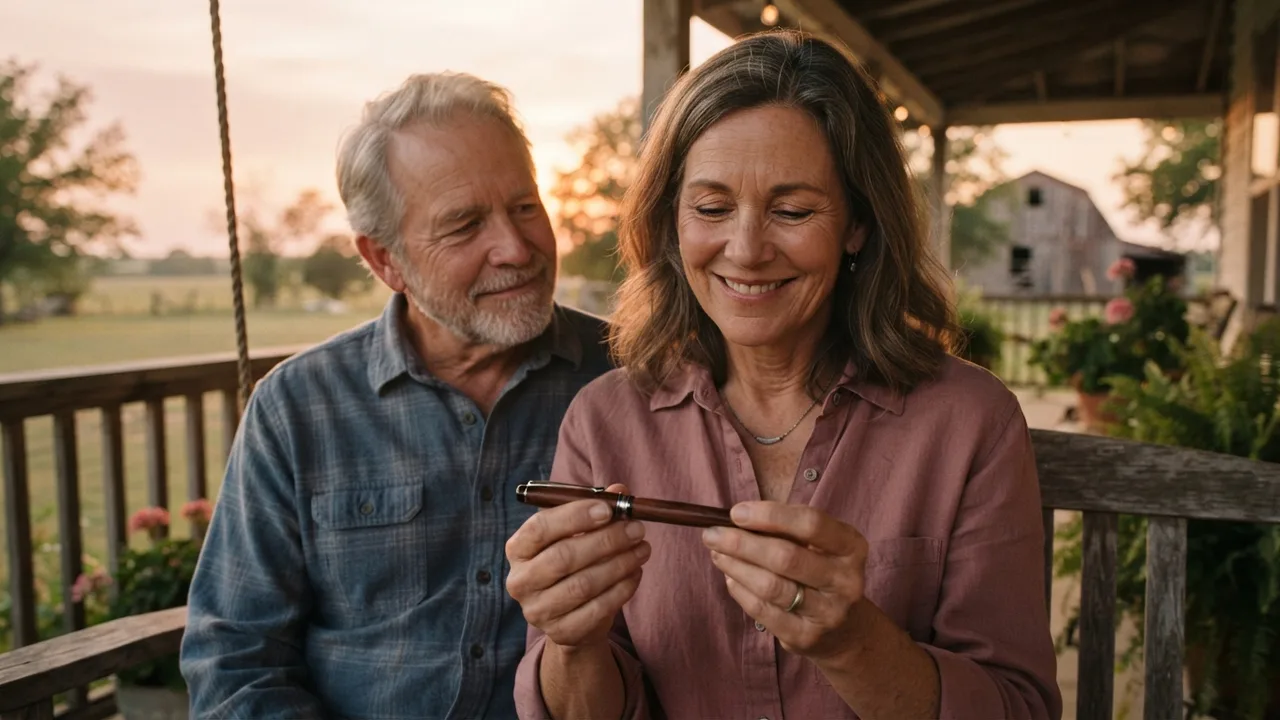
It was a week before I let myself sit still. Stan came by after supper, and we took the porch swing with a pitcher of tea going warm on the rail, the lilac by the steps past its best and the wheat outside town turning the color it turns in June.
He took my hand without making anything of it.
"Ryan came out to the place Tuesday," he said. "Worked on the shed frame till dark. Wouldn't let me help."
"What did you say to him?"
"Not much. I told him I'd rather have a good man than a good shed." He turned my hand over in his. "We have an understanding. He pays when he can, and I let him think I don't need it."
"That's very generous."
"It's not generosity. It's Frank's boy."
We sat. A screen door banged somewhere down the block, and a sprinkler ticked across a lawn. I couldn't tell you the last time a silence had felt that easy.
"For an insurance agent," I said, "I was never very good at assessing my own risks."
Stan smiled, the slow one that reaches his eyes last. "Good thing some risks are worth taking."
I looked down at my hand in his and noticed the faint tan line on my finger where my wedding ring used to be.
Comments