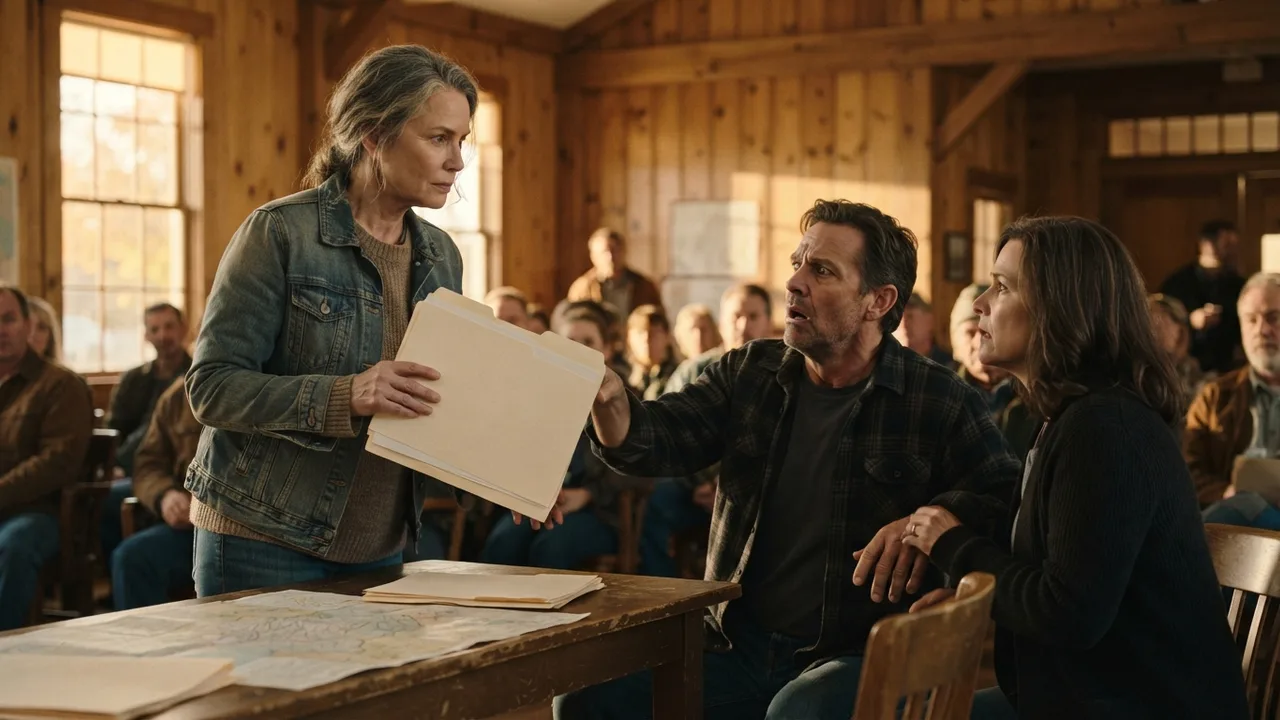
The brass key on my mantel was a gift from my late husband, Robert, long before the expensive vacations, the new cars, or the college fund for our son. That night I took it down with a county records folder under my arm: proof that the man my son was about to honor had ruined Patrick Donovan's father.
But it started on a Sunday walk, with nothing in my hands but a leash I didn't need, because Patrick likes to bring his old beagle, Biscuit, along.
We went down Depot Street, past the Baptist church and the Dollar General, and Patrick slowed at a gravel lot with a chain-link fence and a sign for sale gone pale as a dishrag. Wild onion grew along the fence line.
Advertisements
"That's where Daddy's store stood," he said. "Donovan's Hardware."
"I remember the sign," I said. "Red letters."
"He painted them himself every spring." Patrick pushed a hand through his hair, and a little sawdust came loose from it. "Somebody bought every lot around him, one at a time. The parking, the alley, the building next door. Nobody knew who. Customers couldn't get a truck in, and the lender wouldn't wait."
"Who was it?"
"A company with a post office box. Daddy never found out." He watched Biscuit sniff the fence. "He sold for what they offered, which was next to nothing. He died still wondering who hated him that much."
I said I was sorry. I meant it. But something cold had settled under my ribs, and it stayed there through the rest of the walk and the pimento cheese sandwiches on his porch.
Robert bought land. Robert always bought land. He used to say a man who owned the ground around a thing owned the thing.
Advertisements
I told myself half the county had bought land in those years.
Sleep didn't come easily that night, and Monday morning I stood at the foot of the attic stairs with a cup of coffee going cold in my hand.
Robert kept his files the way I kept my seed packets, by year and by kind, in gray boxes with his square handwriting on the ends. I hadn't opened them since the funeral. I told myself I was looking for the deed to the back garden, which I didn't need.
The box marked 1996 had a folder tabbed BRH.
Inside was a certificate of formation for Blue Ridge Holdings, LLC, and behind it a stack of deeds for five parcels, every one of them touching Depot Street. I knew the street numbers. I'd walked past them the day before.
A yellowed luggage tag was clipped to the top deed. Robert's pen had written on it: *D. Hdwe. front door. Keep.*
I sat down on the attic floor in my gardening slacks and stayed there until my knees ached.
The key on my mantel had two letters stamped on the bow, worn nearly smooth. *DH.* Robert had told me they stood for his grandfather's name, and that the key opened a little shop in Tennessee that burned before I ever met him. I had dusted that key every Saturday for thirty-five years.
The folder went down to the kitchen with me and into the bread drawer, like a woman hiding a letter from a child.
Stephen drove down from Asheville that Saturday to help me with the porch rails, which he did every few weeks in a pressed shirt, watching me more than the rails. I waited until he'd set the drill down.
"Stephen, did you ever hear of Blue Ridge Holdings?"
He didn't look up. "It was Dad's holding company. For taxes."
"Do you know what it owned?"
"Why?" His voice had gone smooth. It's the voice he uses on clients who ask about fees.
"I found deeds in the attic. Five lots on Depot Street, all bought in 1996, all around the old Donovan store."
He set down the screwdriver, one careful click against the rail. "And you found that this week."
"I found it after Patrick told me how the store failed."
"There it is." He laughed, short and without any humor in it. "Mom, I'm going to say this kindly. Dad's been gone two years, and you've taken up with a man whose family has a grudge. Now you're in the attic looking for something to make it all right."
"That isn't what I'm doing."
"It's exactly what you're doing. You want permission, and you're trying to dig it out of Dad's files." He picked up his jacket from the porch swing. "He gave you everything. You're tarnishing him to make yourself comfortable."
"Stephen."
"I'll see you at the dinner. I'd ask you not to bring Patrick, but you will."
"I will," I said.
He drove off with the rails still loose. I tightened them myself with the drill, my hands shaking just enough that I had to stop twice.
On Monday I drove to the Laurel Ridge County Records Office, a low brick building behind the courthouse with a fern in the window that somebody had been overwatering. The clerk was a woman about my age with reading glasses pushed up into gray curls. Her name tag said Deborah.
"I need the plat maps for these parcels," I said, "and the articles for an LLC."
"You a title researcher?"
"No, ma'am. A widow who needs to know something."
She looked at me over the counter a moment longer than she needed to, then went into the back. She came out with a drawer of maps and a thick file, and we stood together while she pulled each page.
The articles of incorporation listed one registered agent: Dale Pruitt, Attorney at Law. Robert's lawyer. The man who had read the eulogy at the funeral and held my elbow on the church steps.
The filing date came a month before the first deed. The last deed was recorded the week the Donovan store closed its doors. A line of ink on a county ledger had done what no one in that town had been able to name for thirty years.
"That'll be forty-five dollars," Deborah said gently. "Copies are fifty cents a page, and the certified ones are extra."
Cash from my purse paid for it, the way you pay for something you wish you hadn't bought. Then I sat in the car in the lot, with the windows down and the laurel blooming white along the fence, and understood that I was holding the last of what I had believed.
It was a good marriage. I had thought so for thirty-five years. I could not make that sentence and the folder fit in the same car.
Stephen had chosen the Saturday after Memorial Day for the dinner. He'd ordered a ham from the Ingles deli counter and a strawberry shortcake from a farm stand in Weaverville, and he'd set my dining table with the good china as though I wouldn't know where it went.
Walt and Marjorie Hensley came first. Walt had been Robert's golfing partner for longer than Stephen had been alive. Marjorie kissed my cheek and told me my azaleas were the envy of the street.
Patrick came last, in a gray jacket I had never seen, with a pie from the Food Lion bakery because he said he didn't trust himself to bake. Stephen shook his hand like he was signing for a package.
"Patrick," he said. "I didn't realize you'd be joining us."
"Your mother was kind enough to ask," Patrick said.
"Of course she was."
Before they sat, I stepped into the front room, lifted the key from the mantel, and closed it in my left hand. It felt warmer than brass should. I slid it into my cardigan pocket, with the folder waiting on the sideboard under a dish towel.
Dinner passed in a murmur of passed bowls and weather. Walt told the story about Robert and the borrowed boat. Marjorie laughed at the right place. Patrick ate ham and said very little, and once he met my eyes across the candles and gave me the smallest nod, as if to say he was fine.
I did not feel fine.
After the shortcake, Stephen tapped his glass with a spoon and stood. He buttoned his jacket first.
"Thank you all for coming. As some of you know, this house was built on my father's principle that a man's word was his bond." He cleared his throat. "Dad believed in this town. He believed in small business. So I'm honored to announce the Robert Wakefield Community Business Grant, ten thousand dollars every year to a Laurel Ridge business that needs a hand up."
Marjorie pressed her fingers to her mouth. Walt said, "Well, I'll be."
"It's a way," Stephen said, and his voice caught, which I hadn't expected, "of making sure Dad's integrity outlives all of us."
I stood.
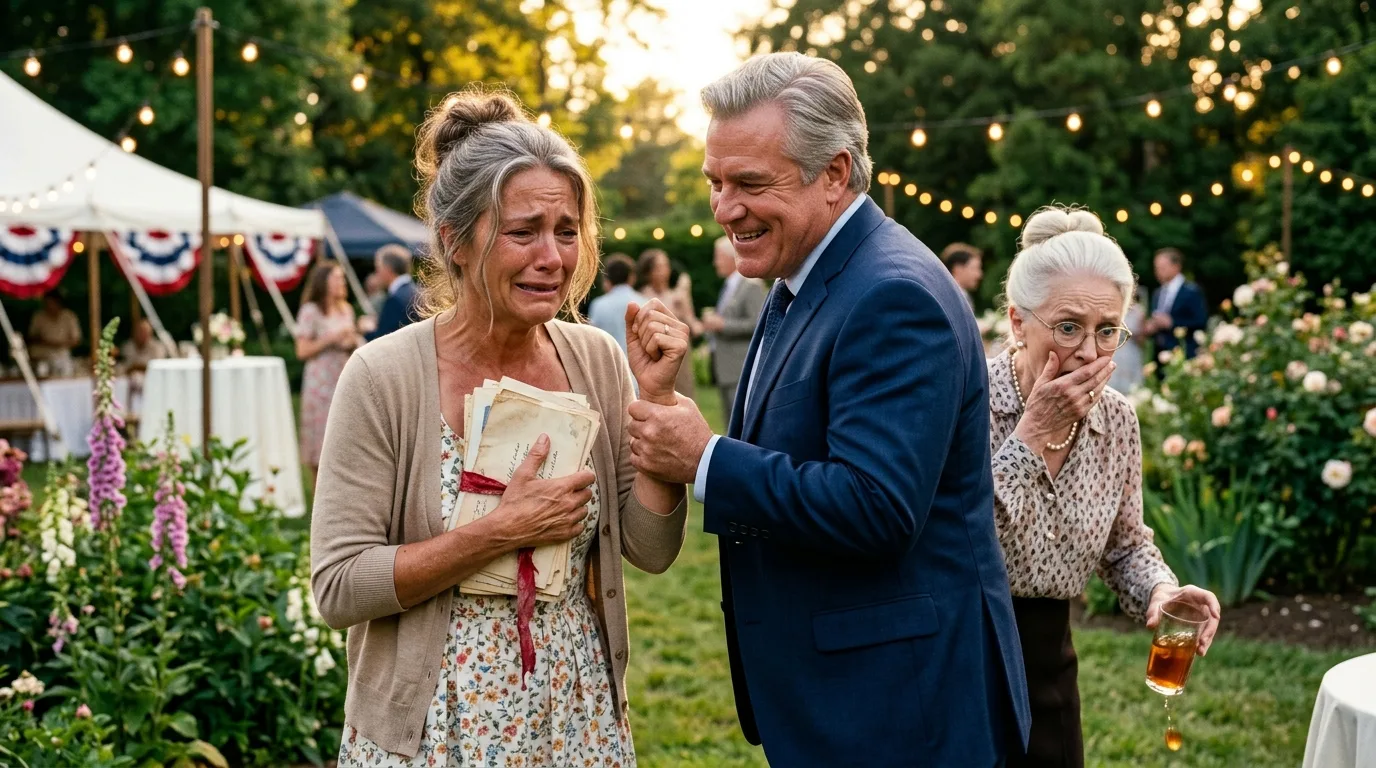
Nothing I said was meant for the table. I walked around the end of it, past Marjorie's chair and past my son, to the place where Patrick sat with his napkin still in his lap, and I opened my hand.
The key lay across my palm with its worn letters up.
"Patrick," I said, and my voice came out clear enough to surprise me. "I believe this belongs to your family."
He looked at it. He didn't touch it for a long moment. Then his hand came up and turned the key over, and I watched him find the notch his father must have filed there, and his face changed in a way I will not forget.
"Mother." Stephen was beside me, his hand on my elbow. "What are you doing?"
I turned to him, and I spoke so that Walt and Marjorie could hear.
"Robert told me this was from his grandfather's shop. It isn't. It's the key to Donovan's Hardware, on Depot Street. He kept it all these years."
"That's absurd."
I took the folder from the sideboard and held it up.
"He was Blue Ridge Holdings, Stephen. Here are the deeds, and here is Dale Pruitt's name on the articles. He bought every lot around that store and he starved it, and then he took the key home and put it on our mantel."
Nobody moved. A candle guttered at the far end of the table. Marjorie's hand had gone to Walt's sleeve, and Walt was looking at his plate as though he'd found something written on it.
"Dad explained the company to me," Stephen said, but he said it to the folder.
"Did he explain this?" I asked. "Because he never explained it to me."
His mouth opened and closed. The grant announcement still lay beside his plate, a single typed page with a gold seal at the corner. I watched him look at it and not know what to do with his hands.
Patrick stood. He was a tall man and he had to push his chair back to do it.
"Audrey," he said quietly. "Thank you."
That was all he said. He folded the napkin and set it by his plate, and the Hensleys left a few minutes afterward without finishing their coffee. Marjorie hugged me at the door and whispered that she was sorry. I never found out what for.
Stephen was the last to go. He stood in the front hall with his keys in his fist.
"You could have told me in private."
"You wouldn't have listened in private."
No answer came. He went out, and I heard his car back down the drive more slowly than it ever had.
Patrick came on Wednesday afternoon, after I had stopped listening for the phone.
Coffee gave my hands something to do. We sat at the kitchen table, where the sun came across the oilcloth and lit the rim of the sugar bowl.
The key came out of his jacket pocket, and he set it down between us.
"Saturday night I took it home," he said. "It sat on my workbench and I looked at it till morning. I couldn't leave it there. It's too much like Daddy standing in the room."
"Anyone would feel that."
"Let me say this right." He turned his cup a little on its saucer. "I'm glad you told the truth. You didn't have to. Most people wouldn't have, with their son sitting there. I won't forget it."
"But."
"But I can't look at you without seeing Robert's face over your shoulder. I've tried. I sat in my truck outside your house yesterday and tried." He glanced at the window, at the garden, at the sunroom Robert had added the summer after Stephen left for college. "And I can't be in this house. It was built on my family's loss. Every board of it."
"Yes," I said. "I know."
"Time, Audrey. That's what I need, and I may not ever find enough of it."
"That I know too."
He nodded slowly. His hand moved on the oilcloth toward mine, and stopped an inch short, and I let it stop.
"You're a good woman," he said. "I want you to know I know that."
At the door he said goodbye to the beagle, who had come in under the table without either of us noticing. Then the screen door clicked shut, and his truck went down the hill with a little sawdust still sifting from the bed.
Stephen hadn't called. I checked the phone twice before supper, and again at nine, and put it face down on the counter.
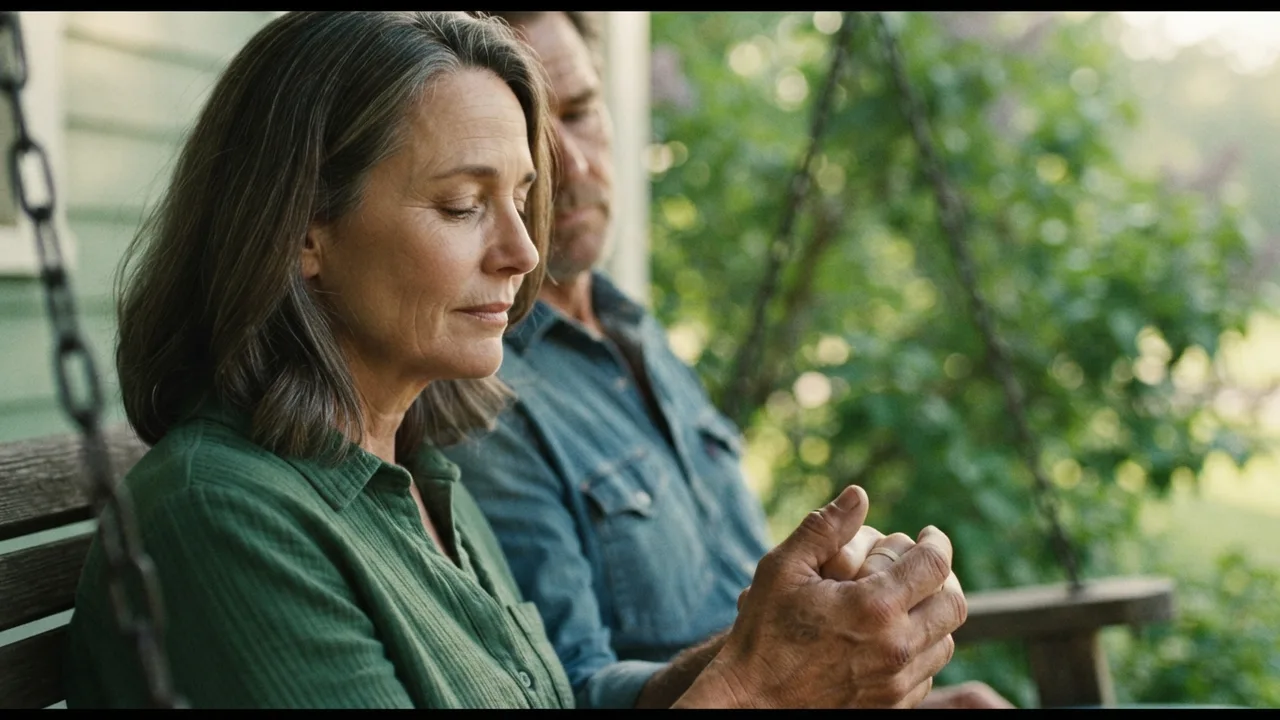
The house was very quiet. The refrigerator hummed. Out in the yard the mountain laurel was blooming against the fence, pink and white, indifferent to all of us.
I washed the two cups and dried them and put them back on their hooks. Then I came to the table and picked up the key.
It was a small thing, lighter than I'd have guessed. I carried it across the kitchen to the drawer by the back door, the one that sticks, where I keep the spare fuses and the dried-up pens, and I dropped it in with them and pushed the drawer shut with my hip.
Comments