"My father doesn't need a grant writer, Ms. Esparza," he said, his voice smooth as poison. "He needs a conservator."
I stood at my kitchen counter with the phone on my shoulder and a half-finished budget narrative glowing on the laptop. Joel Vancek had found a fifteen-thousand-dollar gift on his father's account, and he had decided I was the reason for it.
"I'm not sure I follow, Joel," I said.
Advertisements
"Let me be plain, then. My father is a generous man. At his age, generosity is a vulnerability, and I would hate to see anyone take advantage of it."
"Are you accusing me of something?"
"I'm asking you to be careful. That's all." A small laugh, the kind people use to sand the edge off a knife. "Have a good evening."
He hung up first.
I am Veronica Esparza, fifty-three, a widow. A year after Daniel's funeral I sold the house in Tulsa and rented a limestone cottage in Juniper Creek, Texas, because my younger sister Patti lived there and had told me, more than once, that I could not grieve in a house that still held his coffee mug.
I write grants for a living, from a card table that I call a desk. I did not expect to meet anyone. Then Elias Vancek, a retired civil engineer with kind eyes and a habit of checking the bluebonnets along the fence line, held a door for me at the H-E-B and asked whether I knew how to pick a cantaloupe.
Advertisements
Six months later I was hopeful, and I had not been hopeful in a long while.
That night I did what I always do. I built an argument. Point one: Elias had never asked me for a dollar. Point two: I had never asked him for one. By three in the morning the argument had no third point, and I lay listening to the live oak scrape the roof, wondering whether I had misread a whole season of my own life.
On Sunday Elias grilled brisket in his backyard and talked with his hands, the way engineers do when they describe a bridge.
"The Arts Center board wants to go after a big grant," he said. "A statewide foundation. They need someone who can make the case, and I told Maggie Holloway you were the best I'd ever seen."
"Elias, I haven't met the board."
"You will. They can't pay you much. I was hoping you'd do it for the love of the thing."
I looked at him across the picnic table, the peach cobbler cooling between us, his reading glasses pushed up into gray hair.
"I'd be glad to," I said. "Do you give to them?"
"Here and there." He studied the grill. "Ruth and I always liked the place."
He said it so quietly that I did not ask what here and there amounted to. I should have.
The call came Wednesday evening. Elias had told his son about the project over the phone, and Joel had driven the ninety minutes from Austin to speak to him in person, which I learned only afterward.
"Ms. Esparza." The same smooth voice. "I understand you've been insinuating yourself into my family's finances."
"I've been asked to write a proposal for the Arts Center. For free."
"Free is always the most expensive price. My father is not a man who understands that. You do."
"Joel, I am not—"
"We'll talk again."
I sat with the dead phone for a long time. My face was hot, as if I had been caught reading someone's mail. By morning I had drafted an email to Elias that began, *I think it best that I step back*, and I had written it three times and deleted it twice.
Patti found me at the cottage Thursday with the third draft still open. She arrived in a yellow cardigan, carrying a bag of kolaches from the Daily Grind, and read the screen over my shoulder.
"Absolutely not," she said.
"He has a point. I'm a stranger with a laptop."
"You are my sister with a laptop. Ronnie, look at me. Did you take one penny?"
"No."
"Then you don't quit because a man in a suit is loud." She set a kolache on a napkin and pushed it toward me. "Delete it."
I deleted it. I ate the kolache. I did not feel brave, but I felt less alone.
Joel came to town on Saturday. He found me at the Daily Grind, at the corner table where I proof my drafts, and he sat down without asking. He wore a charcoal suit on a Saturday morning, and he set a four-dollar-and-fifty-cent oat milk cortado on the table like a gavel.
"I'll keep this short." He slid a folder toward me. "I've consulted an attorney about power of attorney for my father. Fifteen thousand dollars to a nonprofit in a single month is erratic. It's illiquid, it's sub-optimal, and it's out of pattern."
"It is a tax-deductible gift to a registered charity."
"It's the kind of decision that gets a man's competency looked at." He leaned back. "If this goes to a hearing, I will name you as the source of undue influence. In your line of work, Ms. Esparza, a name is the only asset you have. I'd hate to see it damaged."
At the next table, two women from the Methodist church had stopped stirring their coffee.
My hands were steady on the cup, which surprised me. The rest of me was not steady. A petition with my name in it would sit in a county file for anyone to find, and no foundation in Texas would hire the woman in that file.
"Thank you for being so clear," I said.
"I like clarity."
"So do I."
He finished his cortado, left the folder behind, and walked out into the morning pollen. I watched him cross the square, and I understood that he meant every word.
The first point to consider was that I had been defending myself with feelings. Joel was using numbers. I needed facts of my own.
Maggie Holloway, who chaired the Arts Center board, was a woman in her seventies with a silver braid and a voice like a dinner bell. When I asked for access to the old minute books and the founding records, she looked at me over her glasses for a long moment.
"For the grant narrative?"
"Foundations want history. I'd like to give them the real one."
"Honey," she said, "take the key."
I spent four afternoons in the back room of the library and the Arts Center basement, with the county's bound council minutes on one side and the center's own ledgers on the other. The story that came out of those pages was not the one Joel had been telling.
I wrote it onto index cards in block capitals, as I do with every proposal. Then I put the cards in my purse and said nothing to anyone, not even Elias.
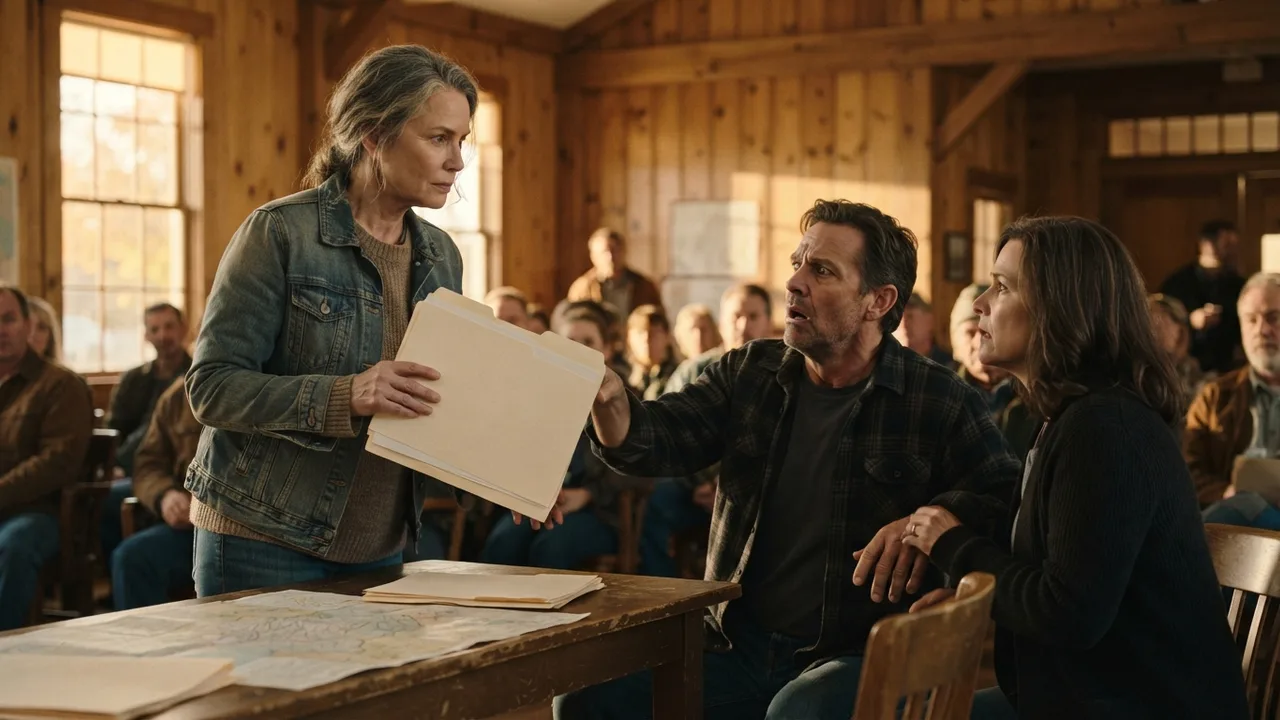
The donor appreciation luncheon was held on a Friday in the main gallery. Limestone walls, track lights, a long row of folding tables dressed in white paper. The caterers had set out pulled pork sliders and sweet tea in plastic pitchers, and about twenty donors had come in their church clothes.
Elias sat beside me in a pressed blue shirt. Patti sat on my other side, with her purse on her lap like a shield. Joel took a seat near the front, where everyone could see him.
Maggie did the thank-yous. She named the board, then the volunteers, then the donors by category. When she finished, Joel stood up before she could sit.
"If I may say a few words."
Maggie hesitated, then nodded.
"My father has been generous his whole life." Joel smiled at the room, a man about to give a toast. "It's a lovely trait. But in a person's later years, generosity benefits from careful stewardship. Family has a duty to make sure good intentions are protected from, well, outside influences."
He did not look at me. He did not need to.
Elias's hand closed around his water glass, and I heard it creak. Across the room one of the church women lowered her eyes, and I understood that Joel had been working this ground for weeks.
I stood up.
"Thank you, Maggie. May I add something?"
"Please," said Maggie.
I took the cards from my purse. My voice came out clear, a little lower than usual.
"I want to thank the board for letting me work on the foundation proposal. The research phase is my favorite part of any grant. You sit in the archives and the minutes, and you find out who a place really is."
I looked at the first card.
"In 2004, the town council recorded a gift of ten thousand dollars, the seed money to turn a empty limestone feed store into this building. In 2011, a second gift paid for the pottery studio, the one downstairs that has a waiting list. And every summer since 2015, the children's program has been sponsored in full, with the same name beside it in the ledger."
The room was very quiet. A chair creaked.
"Those gifts came from Elias and Ruth Vancek. They asked for no plaque and no mention in the annual report. The council minutes record them anyway, because the clerk was an honest woman." I turned to the last card. "This spring's gift of fifteen thousand dollars is not an erratic act. It is the capstone of a twenty-year pattern of quiet, consistent giving, by a man who has never once changed his mind about what matters to him."
I sat down. My knees were not entirely reliable.
Joel was on his feet again, color climbing his neck.
"This is highly inappropriate," he said. "My father's finances are a private family matter."
"They're in the council minutes," I said.
"She's known him for six months." He turned to the room, palms out. "I think it's frankly disturbing that a stranger has been digging through my father's personal history. Ask yourselves why."
"Joel," Elias said softly.
"Dad, stay out of this. She has an agenda."
I opened my mouth to answer, and Maggie Holloway rose from her chair.
She did not raise her voice. She did not have to.
"Joel Vancek, your mother was my dearest friend. She and your father started this center with a check for ten thousand dollars, written at my kitchen table, with a pot of coffee going cold between us." She folded her hands. "What this woman just read isn't an invasion of privacy. It's our town's history. And it is a shame that a stranger had to be the one to remind you of it."
Nobody moved. A man near the back set down his sweet tea with a small click.
Joel looked at the faces around him, at the donors who had known his mother, at Patti with her chin up, and nobody looked away from him.
"Ruth never wanted a thank-you," Elias said into the quiet. "Neither do I, son. I only wanted you to know where the money went."
"Dad—"
"Not here."
Joel picked up his jacket. He walked out across the gallery floor, past the pottery cases and into the bright noon, and I heard the front door close behind him.
Nobody clapped. Maggie sat down, someone refilled a pitcher, and after a minute the sound of forks came back, low and uneasy. Elias took a slider he did not eat. Patti reached under the table and pinched my wrist.
The sun was low when I drove to Elias's house. The stone walls had turned the color of honey, and the porch swing creaked on its chains in the evening wind.
He had two glasses of tea waiting on the rail. I sat beside him and the swing rocked once, then settled.
"He left?" I asked.
"Back to Austin. He called from the road." Elias rubbed his thumb along the glass. "I told him I wouldn't be signing anything over, not now and not later. I told him we had nothing more to discuss until he was ready to apologize, and mean it."
"Do you think he will?"
"Someday." He did not sound sure. "Not soon."
I thought about Thanksgiving tables and hospital waiting rooms and the years of holidays ahead. Joel would be in all of them, polite and watchful, and the beginning of this, the easy first spring of it, was behind us now.
"I'm sorry, Elias."
"Don't be. You did it better than I could have." He took my hand, and his palm was warm and dry from the porch rail. "He was wrong about so much. But he was right about one thing. I do need a partner. Not a conservator. A partner in crime."
I laughed, and it broke in the middle.
"The Arts Center got that grant, you know," he said. "Maggie called this afternoon, while you were still at the cottage. Which means we have more good to do."
"We."
"If you'll have me." He turned on the swing to face me, formal as a man proposing at a council meeting. "Veronica Esparza, will you be my partner?"
"Yes," I said. "I will."
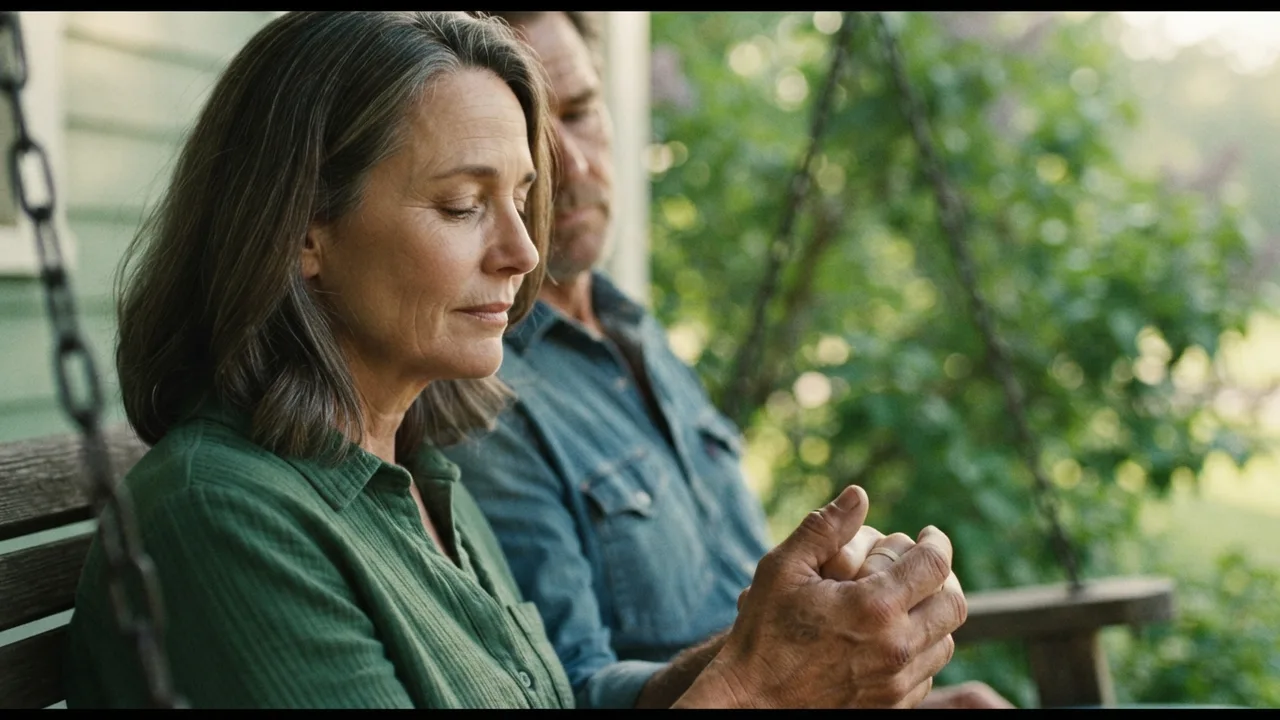
The sun sank behind the cedar line and the whole Hill Country went rose and then gray. We sat with our hands joined and watched it go, the swing ticking softly on its chains.
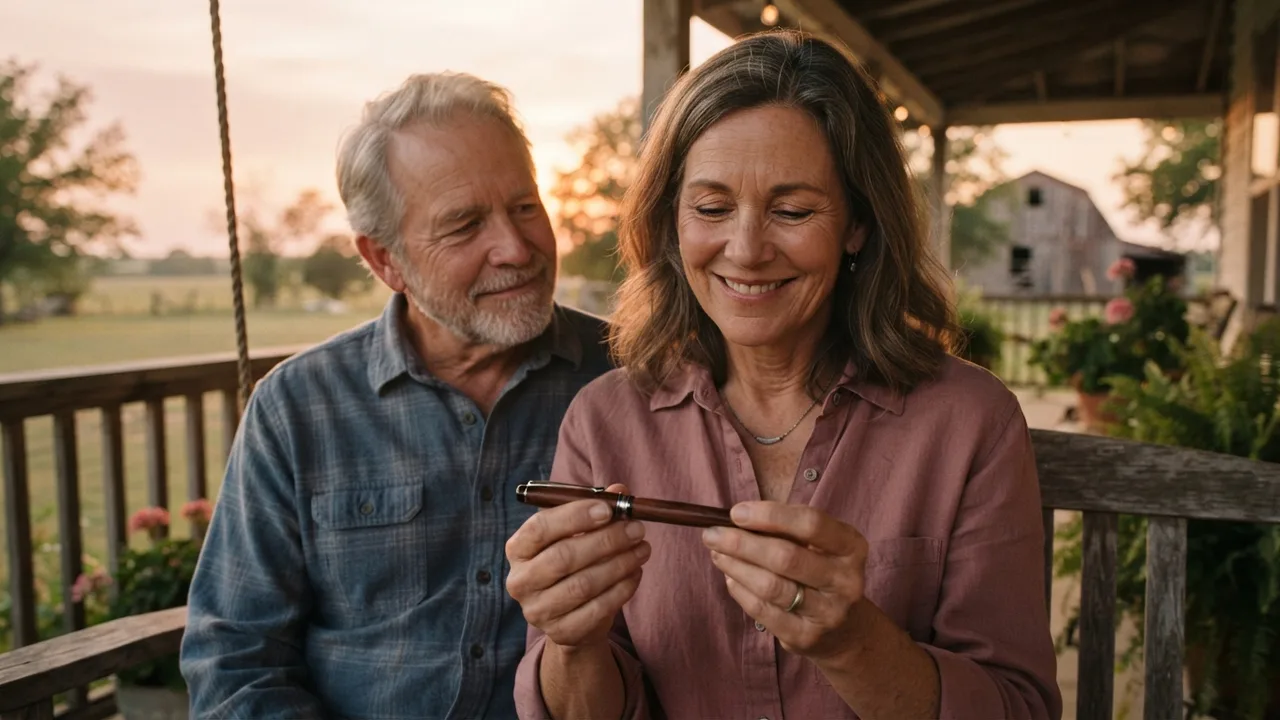
After a while Elias reached into his shirt pocket and drew out a handsome fountain pen, black and heavy, with a gold band at the cap. He pressed it into my palm.
"I think you're going to need this," he said. "We've got work to do."
Comments