
For thirty years, I gave my life to a ghost.
"The soil remembers what people forget, Maeve," my predecessor told me on the day he handed me the brass shears of the Oakhaven Heritage Gardens. "Elspeth Thorne built this sanctuary on purity, sacrifice, and grace. Treat every rose as her living legacy."
I believed every word of it.
Advertisements
The entire historic town of Oakhaven, Virginia—nestled like a porcelain saucer in the green folds of the Shenandoah Valley—existed because of Elspeth Thorne.
According to every school textbook and bronze plaque in the county, she was an heiress who lost her fiancé in the Great War, retreated to these mountains in 1924, and poured her inheritance into fifty acres of pristine botanical terraces, weeping willows, and public conservatories.
At fifty-two, my hands are permanently stained with leaf mulch, my face is lined with valley sunshine, and my knees ache before every rain.
I never married. I lived in the stone cottage by the north gate. The Gardens were my children, my sanctuary, and my church.
Then came the centennial celebration.
***
It was a Tuesday afternoon in early May. In seventy-two hours, four thousand visitors, state senators, and reporters from Washington would arrive for the garden’s 100th anniversary gala.
I was in the archives room beneath the stone pavilion, looking for historical press clippings to display in the visitor center.
Advertisements
On the highest shelf, tucked behind a moldering stack of Victorian landscape prints, sat a leather-bound folio: *Flora of the Blue Ridge, 1922.*
When I pulled it down, the cracked spine split open.
A sealed envelope fell into my lap.
The paper was brittle, yellowed with age, and tied with a faded black velvet ribbon. The wax seal had crumbled to red dust.
Inside were four handwritten letters, dated June 1924, addressed to a probate attorney in Philadelphia.
I began to read.
By the second paragraph, the breath left my lungs.
The letters weren't from a saintly philanthropist in mourning. They were a confession written by a penniless grifter named Sarah Jennings.
In April 1924, the real Elspeth Thorne—a frail, reclusive heiress traveling alone to an Asheville sanatorium—contracted typhoid fever at a rural boarding house near Roanoke.
She died in a back bedroom with no family beside her.
Her paid companion, Sarah Jennings, took her purse, her passport, her diamond engagement band, and her private banker's authorization letters.
She assumed Elspeth’s identity, liquidated $2.8 million in railroad bonds, bought fifty acres of mountain timberland in Virginia, and built the Oakhaven Gardens as the ultimate, unassailable fortress to hide her stolen fortune from federal tax auditors.
The town’s founder was an imposter.
Our sacred sanctuary was money laundering.
***
My hands trembled so violently I nearly dropped the brittle parchment.
For a century, every family in Oakhaven had defined themselves by Elspeth Thorne’s myth. The school was named Thorne Elementary. The town crest featured her mythical rose.
And right now, sitting in a luxury suite at the Valley Inn, was Julian Thorne.
Julian was fifty-five, polished, with immaculate silver hair, tailored bespoke suits, and the cold, appraising eyes of a predator. He was the great-nephew of "Elspeth"—or rather, the grandson of the con artist Sarah Jennings.
For the past six months, Julian had been lobbying the town council to "modernize" the Gardens.
His proposal was an atrocity: carve off twenty-five acres of the historic wetlands and old-growth arboretum to build a private five-star wellness resort, luxury spa chalets, and a helicopter pad.
"We must honor Aunt Elspeth’s commercial vision," Julian had announced at the last council hearing. "The Gardens cannot survive on five-dollar admission tickets. We must invite high-net-worth tourism."
I had fought him at every public meeting.
Julian’s response had been to threaten my job. He had already stacked the board of directors with his golf partners from Richmond.
If I released these letters, the legal foundation of the Thorne Trust would disintegrate.
The land would revert to the state or be tangled in decades of probate claims from the true Thorne heirs in Pennsylvania.
Julian would take the land by court receivership before the ink on the scandal was dry.
***
At 4:00 p.m., I called Clara Bellweather.
Clara was seventy-two, a retired town librarian, and the president of the Oakhaven Historical Society. She was bird-like, energetic, and knew the lineage of every family in the Shenandoah Valley back to the Revolution.
She arrived at the north cottage carrying a tray of chamomile tea in fragile porcelain cups.
"Maeve, dear, what is so urgent? The gala caterers are already setting up the marquee on the lawn."
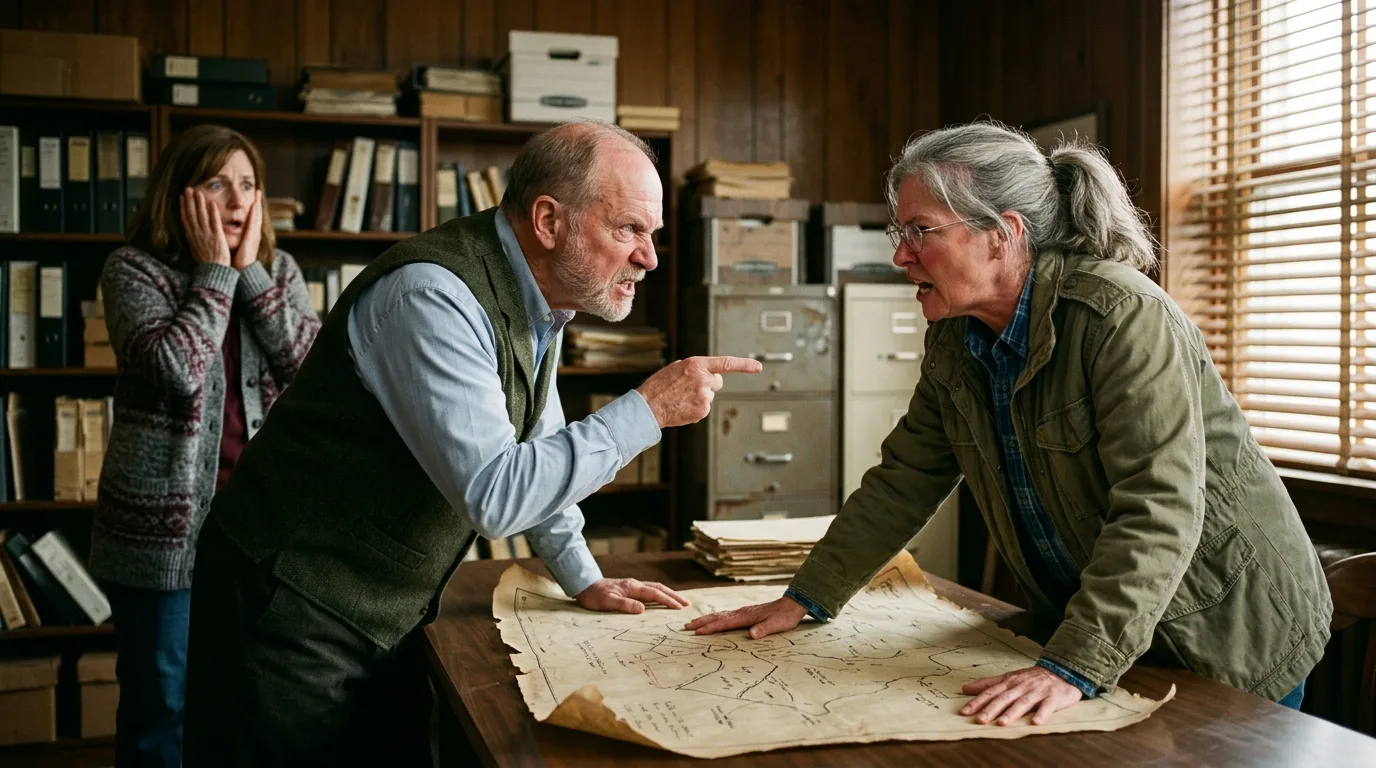
I laid the four letters on the oak table.
"Read these, Clara."
Clara put on her wire-rim reading glasses.
She read the first page in silence. Then the second.
Her face went from cheerful pink to the gray ash of wet limestone. Her frail hands began to shake so hard that her teacup rattled violently against the saucer.
"Sweet Lord in heaven," she gasped, pressing a napkin to her chest. "This isn't possible. My grandfather shook Elspeth Thorne’s hand at the 1928 dedication. He framed the photo in our hallway."
"It’s not just possible, Clara," I said. "It’s documented. And Julian is using her fraudulent bloodline to privatize the property."
Right then, the front door swung open without a knock.
***
Julian Thorne walked in like he owned the room—because he truly believed he did.
He was wearing an expensive Italian cashmere blazer, sunglasses pushed up onto his silver hair, and a smirk of complete, unshakable entitlement.
"Afternoon, ladies," Julian drawled, glancing at the tea tray. "Clara, you really shouldn't waste your energy on historic displays. Nobody looks at old clippings when there’s free champagne."
He turned to me, tossing an official blue-backed legal document onto the kitchen counter.
"Maeve, pack your tools. The board met at the club thirty minutes ago. By a four-to-one vote, we’ve authorized the master lease agreement for the resort. Your position as Director is eliminated effective Monday."
I didn't blink.
I reached out, picked up Sarah Jennings’s confession, and held it up between two fingers.
"Read this first, Julian."
Julian smiled patronizingly. "I don't read romantic poetry, Maeve."
"It’s not poetry. It’s your grandmother’s confession. Her real name was Sarah Jennings. She stole the Thorne fortune from a dying girl in a boarding house."
The smirk on Julian’s face didn't fade—it twisted into something feral and venomous.
He stepped forward, his leather shoes clicking sharply on the slate floor.
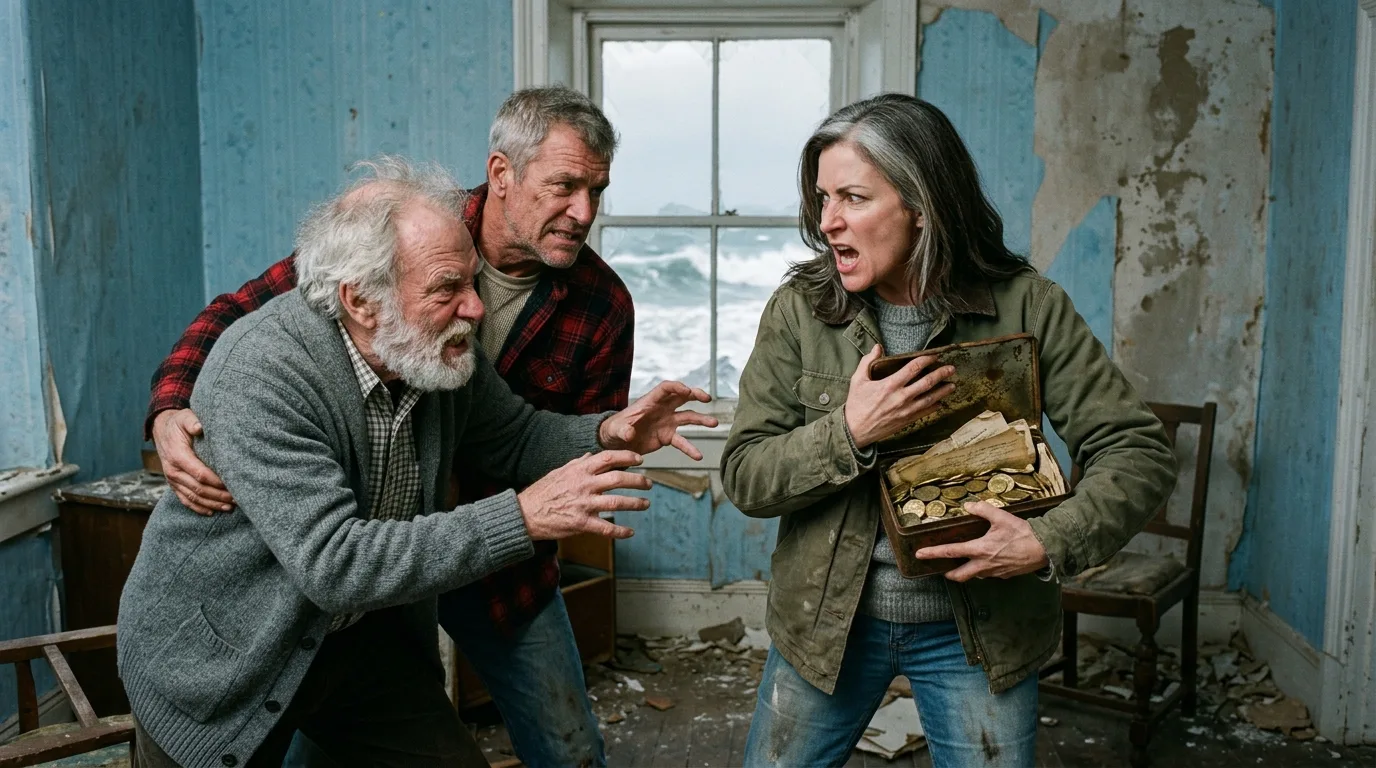
He didn't read the letter. He lunged forward and grabbed my wrist with brutal, bruising force, trying to wrench the brittle paper from my grip.
"Give me that!" he hissed, his face inches from mine, his polished exterior shattering into raw, vicious fury. "Do you have any idea how much money is riding on this development? Sixty million dollars! You think I’m going to let an unpaid dirt-gardener with dirty fingernails destroy my family’s fortune over an eighty-year-old scrap of gossip?"
Clara gasped in absolute horror.
She stood up so abruptly her chair flew backward. Her teacup slipped from her trembling fingers and smashed onto the slate floor, hot chamomile and white porcelain shards splashing across Julian’s polished leather shoes.
"Let go of her, Julian!" Clara screamed, her voice echoing off the stone walls. "Let go of her this instant, you thief!"
Julian froze.
He looked down at the shattered tea on his shoes. He looked at Clara, then looked into my eyes.
I didn't pull away. I stared directly through his hollow, expensive gaze.
"You’re hurting my wrist, Julian," I said, my voice dead calm. "And there are two security cameras in this cottage. Both are recording to the county cloud."
Julian let go of my wrist as if it were burning iron.
He stepped back, smoothing his blazer with shaking hands, his breath coming fast and ragged.
"Nobody will believe you, Maeve," he whispered, his voice trembling with poisonous malice. "You publish this, you kill the town. You kill the festival. You kill every business on Main Street."
"No, Julian," I said, smoothing the old letter flat against the oak table. "I’m not killing Oakhaven. I’m curing it."
***
On Thursday morning, twenty-four hours before the centennial gala, Clara and I walked into the chambers of the Shenandoah County Superior Court.
We didn't go to the press. We went to Judge Robert Vance.
We presented Sarah Jennings’s original handwritten confession, the 1924 probate records from Philadelphia, and a petition signed by two hundred and eighty Oakhaven residents.
Judge Vance was seventy. He had known three generations of Thornes. He reviewed the documents in his private chambers for two hours while Julian’s attorneys waited outside, sweating through their tailored suits.
At 2:00 p.m., the judge issued an emergency injunction.
The court ruled that the Thorne Family Trust was void ab initio due to historical fraud.
Under the doctrine of cy-près, the court decreed that the fifty acres of the Oakhaven Heritage Gardens did not belong to Julian Thorne, his shell corporations, or the private equity buyers in Richmond.
The Gardens were transferred in perpetuity to the Shenandoah Conservation Land Trust—to be preserved as a public, non-commercial nature sanctuary forever.
The resort was dead.
Julian was served with the injunction on the steps of the courthouse. He didn't stay for the gala. He packed his luxury bags and drove out of the valley before sunset, his sixty-million-dollar empire vanished into thin air.
***
On Friday evening, the centennial gala went forward as planned.
Four thousand people stood under the white lanterns on the Great Lawn.
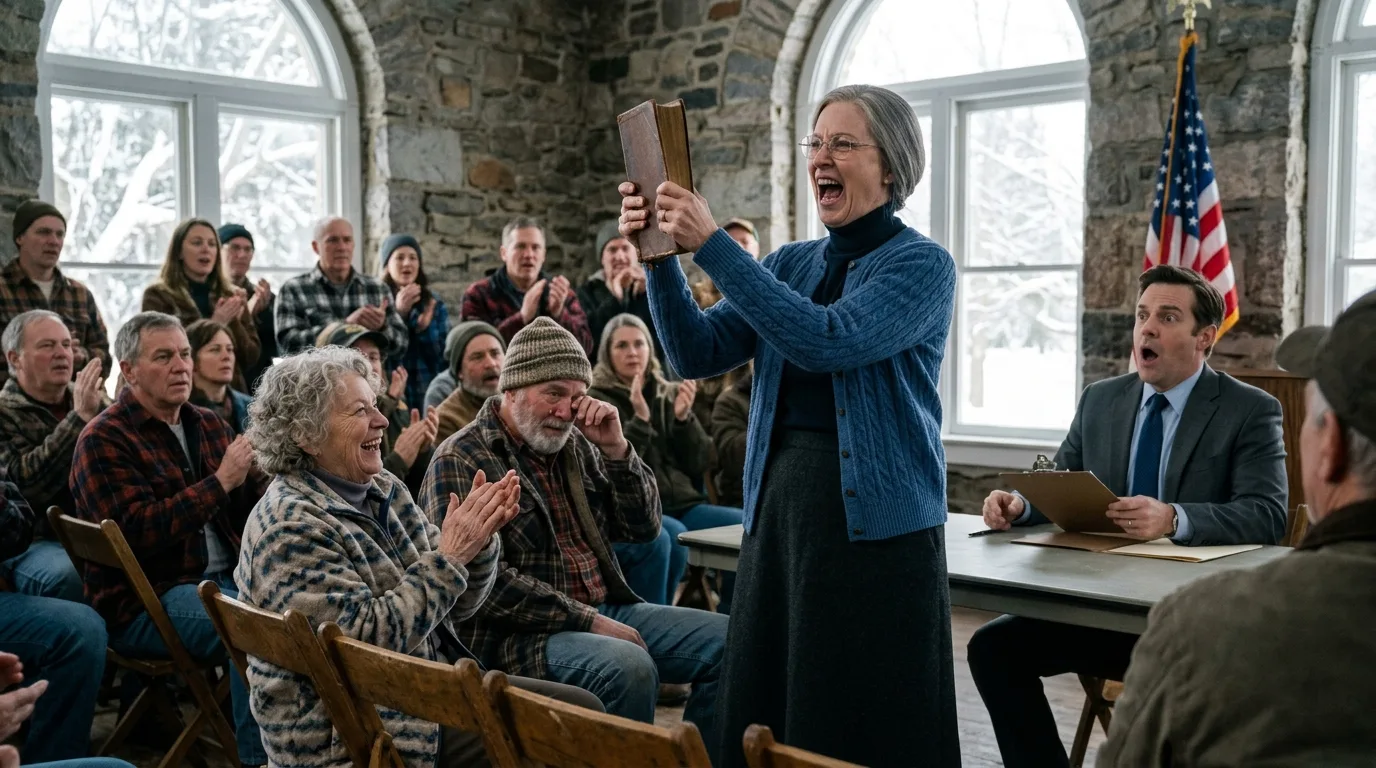
I didn't hide the truth. I stood at the microphone and told the town the story of Sarah Jennings and the girl she robbed.
I told them that the beauty of these fifty acres wasn't built on a family's noble name. It was built by the generations of ordinary valley men and women who planted the seeds, pruned the branches, and weeded the soil for one hundred years.
When I finished, there was a long, breathless silence under the stars.
Then Clara Bellweather began to clap.
And a moment later, four thousand people rose to their feet in a thunderous standing ovation that shook the leaves of the ancient weeping willows.
The bronze statue of Elspeth Thorne on the village green was taken down on Monday morning.
In its place, the town planted an eighty-foot white oak.
Underneath it sits a small, simple slate stone with no family crest and no aristocratic titles.
It bears only four words:
Belongs to the people.

Comments
Loading the conversation…