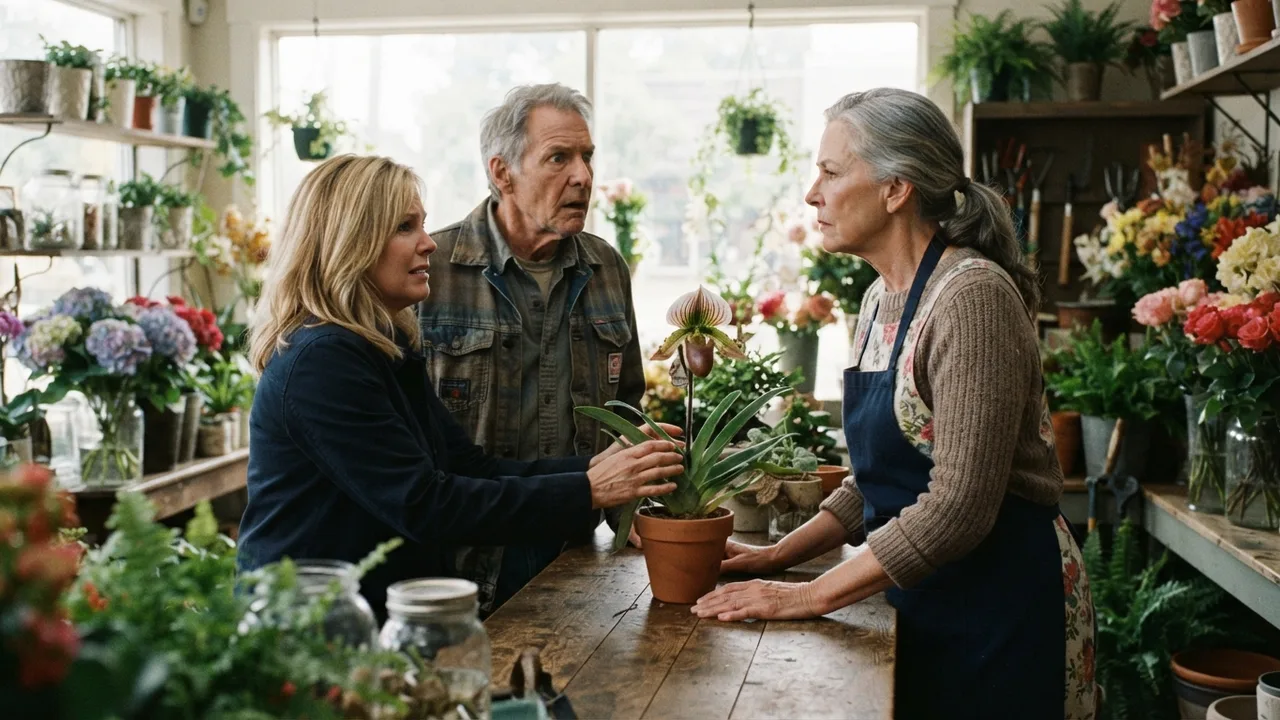
"He's not himself," Charlotte Prescott told me on her father's front porch, her voice slick with false concern, "and I'm having the lawyer draft the papers to protect him from you."
She held out a cream-colored envelope. I took it before I had decided to, the way you catch a vase that is already falling.
The first line of the letter inside said *conservatorship*.
Advertisements
That was a Thursday in June. The trouble had started weeks earlier, in May, with a telephone call to my shop.
"Sea Holly Flowers, this is Penelope."
"Penelope, it's Charlotte. Walter's daughter." She said it as if I might have misplaced her. "I need something sent today. A sympathy arrangement for a Mrs. Aldridge in Barrington, a dear friend of the family. White lilies, delphinium, nothing skimpy."
"I'm sorry for the family's loss. I can do that. What name should I put on the card?"
"The Prescotts. Put it on Dad's card, he asked me to handle it." She read me the number without a stumble. "Whatever it comes to."
It came to $340. I cut the lilies myself, wired the delphinium so it would stand through the drive, and delivered it in the van before noon. Mrs. Aldridge's housekeeper took it at the door and cried a little.
An hour later, the phone rang again.
Advertisements
"Penelope, thank God." Charlotte was out of breath, which struck me as odd for a woman who had sounded so unhurried before. "Dad never authorized that. He doesn't know a Mrs. Aldridge. He's been confused all week and I only just found the charge. I need that refunded right now or I'll have to dispute it with the card company."
"The flowers are already at her door."
"That sounds like your problem. Honestly, a florist who takes an order from anyone with a card number." She let it hang. "I'd hate to put this in writing."
I refunded her. I stood at my own counter with the register drawer open and counted out my own morning, and I wondered whether in all my years of taking orders over the phone I had gone careless. I had never gone careless. Still, the question sat in me like a seed in the wrong pot.
Walter and I had a standing coffee at the bakery on Water Street every Tuesday. He was always there first, at the window table, with my coffee already set across from his and the cream poured in. It was his habit and I had come to lean on it.
The next Tuesday the chair stayed empty. My coffee went cold. I called his house from the sidewalk.
"Penelope." He sounded embarrassed, and Walter Prescott is a man who does not embarrass. "I'm sorry. I can't get down there. Charlotte has my keys."
"Your keys?"
"Just for a day or two. I got turned around driving home from the Stop & Shop. Took Bay Street instead of Ferry Lane. It was nothing, but she was worried."
"Walter, you have driven those roads since before the stoplight went in."
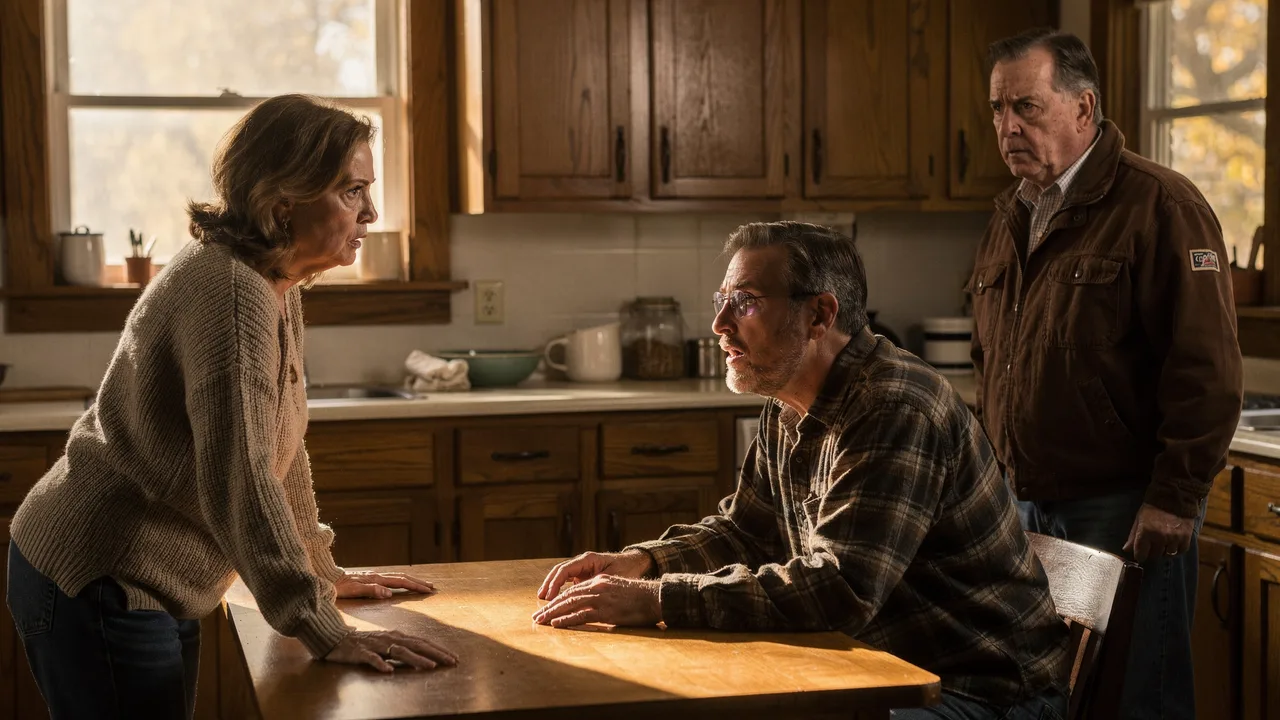
"I know it." A long breath. "She's staying with me a while. She says it's easier if I don't argue."
I didn't sleep that night. Around four I gave up and went out to the garden in my bathrobe and pulled bindweed by the light of the porch lamp. Bindweed doesn't fight you. It winds up from underneath, politely, around every stem, until the plant can't tell it's being held.
I called Walter's house twice more that week. Charlotte answered both times and said her father was resting.
So on Thursday I drove out to the water and parked behind her silver Audi. She came onto the porch before I reached the steps and stood in front of the door with her phone in one hand.
"Penelope, this isn't a good time."
"I'd like to see Walter, Charlotte. Five minutes."
"He's overstimulated. The doctor says he needs quiet." Her smile did not move her eyes. "I'm trying to hold space for him right now, and frankly your presence is a stressor."
"Which doctor?"
That was when she said it, the line about papers, and gave me the envelope. Through the screen door behind her I saw a shape move in the hall, tall and stooped, and then it went away.
"Please don't make this harder," she said. "Walter is vulnerable. People take advantage."
"Charlotte," I said, "I sell hydrangeas."
"And you're very good at it." She went in and shut the door. I heard the deadbolt.
I read the letter at my kitchen table. It came from an attorney in Providence named Pruitt and warned against *undue influence on a vulnerable elder*. It said his daughter intended to petition for conservatorship. My hands were steady enough to hold it, though the page rattled a little anyway.
I had never meddled in anyone's family. My whole life I'd believed you should let a plant show you what it wants before you move it. But a plant in the wrong place will starve while you wait, and Walter was being starved of his own name.
What I needed was not my opinion of him. I needed something on paper that a person could put a finger on.
I looked at the orchid shelf above my sink. Every month since January a box had come to my shop with a rare lady's-slipper inside and a card in Walter's square, careful hand. A year of orchids was his idea, a surprise he had planned and then told me about over chowder at the yacht club. The June box had not come.
I had assumed a shipping delay. I picked up the phone.
"Marchetti Orchids."
"Gil, it's Penelope Albright. I'm looking for my June Paphiopedilum."
"Penelope." Gil Marchetti grows his plants in a greenhouse in Wakefield and talks like a man with soil under his tongue. "I held it back. I'm sorry, I meant to call. The payment got reversed. Somebody who said she was the trustee on Mr. Prescott's account told the bank it was fraudulent. Walter's check cleared fine the other eleven times, so I figured it was a mistake. Is he all right?"
"Who called the bank, Gil?"
"The daughter. Charlotte. She phoned me too. Said her father wasn't in a state to be buying orchids."
I looked at the lilies in a bucket by the sink, and held the receiver tighter.
"Can you send me the invoice? Every transfer from January on, with the dates."
"Sure thing. Want me to ship the orchid?"
"Ship it," I said. "I'll pay for it myself."
The Summer Solstice fundraiser for the Port Anne Public Library is the biggest night of the early summer. The yacht club puts up a white tent on the lawn, the librarian dresses in linen, and everyone who matters in town eats stuffed quahogs and pretends not to watch everyone else.
I had donated the centerpieces, blue hydrangea in galvanized pails. I wore my good green dress and put the printed invoice in my purse folded once.
Charlotte had the round table nearest the water. Dennis Hallworth, who ran Port Anne Savings, sat across from her with his wife Marjorie. The Reverend Collins and his wife were there too, and the school board chairwoman. Walter sat at Charlotte's elbow in a navy blazer that hung looser than it used to. He was turning his water glass, a little at a time, and not drinking from it.
"It's been such a hard season," Charlotte was saying, her hand on her father's sleeve. "My father is forgetting things. Names, appointments. We're taking it day by day, we're being so proactive about it."
"Oh, honey," Marjorie Hallworth said to Walter, and he flinched at the pity.
I crossed the lawn. My knees were not fully steady, but I kept the sheet of paper in front of me where I could see it, and I waited at the edge of the table until Charlotte drew breath.
"Charlotte, I'm so glad I found you. I think there's been a mix-up with one of your father's accounts."
Her smile held, though her eyes went to the paper. "Penelope. This isn't really the place."
"It's a library fundraiser, Charlotte. I think it's exactly the place." I turned to the table. "Walter is the most forward-thinking man I know. Last January he arranged a surprise for me. A rare orchid delivered every month for a year."
Walter lifted his head.
"He had you help him set up the payment," I said, looking at her now. "He authorized twelve monthly transfers of $200 from his investment account to the grower."
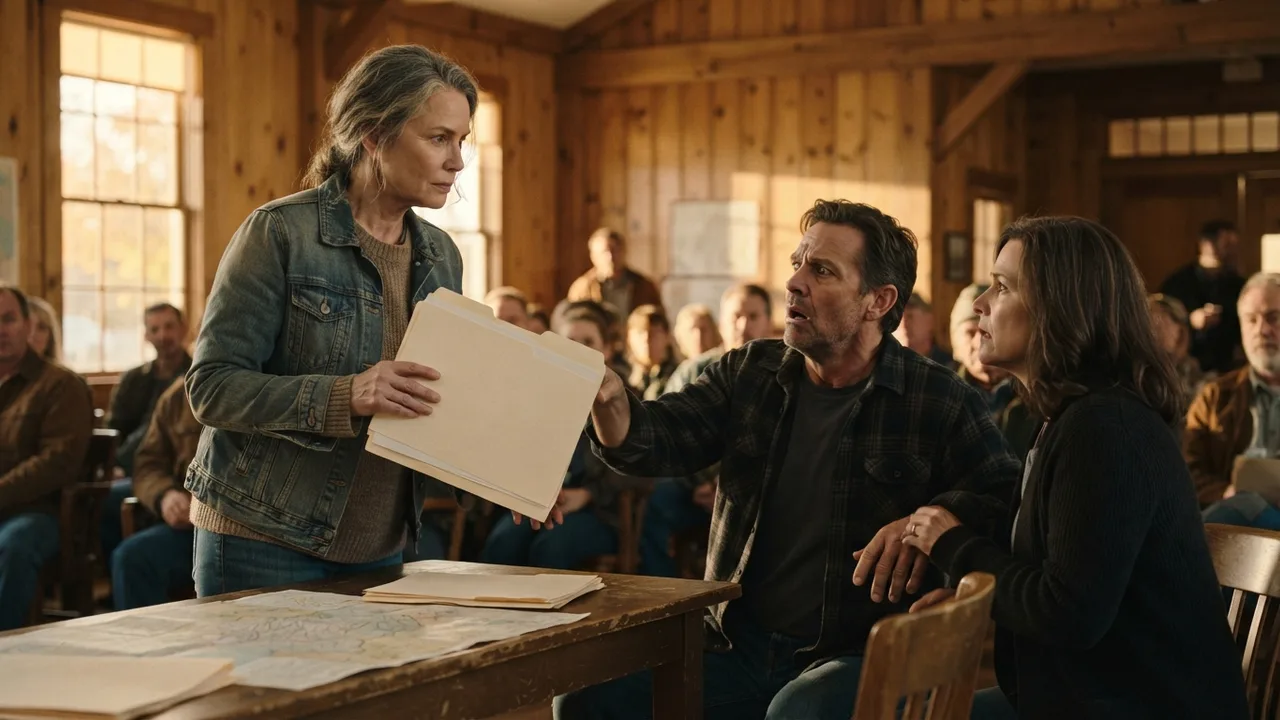
I laid the invoice on the white tablecloth beside the bread basket.
"The grower called me yesterday. He said this month's payment was reversed. He said the account trustee, you, told the bank it was fraudulent. I was so confused. A man who plans a romantic gift a year in advance doesn't seem forgetful to me. But a person who claws back a $200 payment might be having money trouble."
Nobody spoke. At the next table a spoon clinked against a bowl and stopped.
Dennis Hallworth reached out and drew the sheet toward him. He read it with his glasses pushed up on his forehead, and his mouth moved a little at the bottom line.
"Fraudulent?" Walter said.
His voice was not the voice he had used on the phone. It was the one he'd used on the dock for his whole working life, the one that carried across water. He pushed back his chair and turned to his daughter.
"I authorized that myself. Every one of them. Charlotte, what have you been doing with my money?"
Charlotte's mouth opened. Her phone, which was never out of her hand, slid onto the tablecloth.
"Dad, you're upset, we talked about this—"
"Answer him," said Dennis Hallworth quietly.
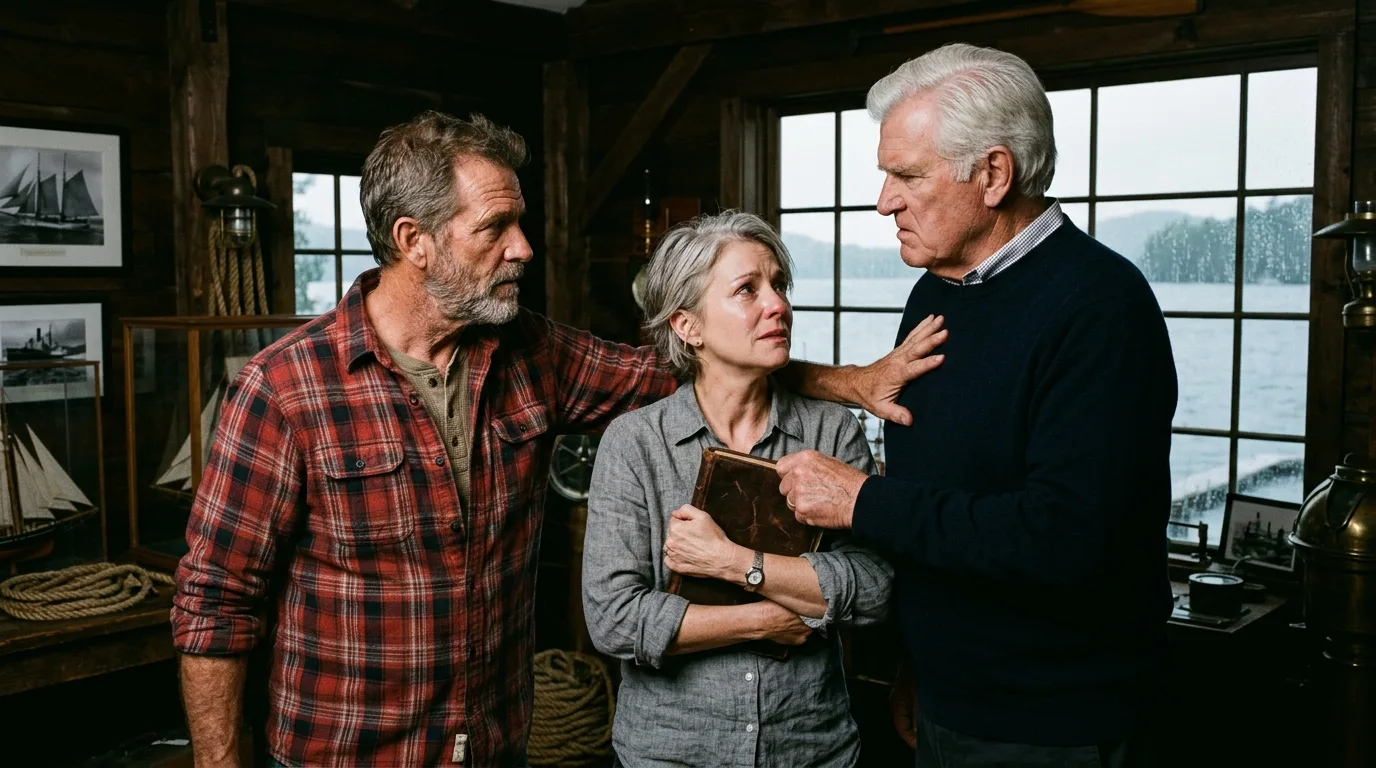
The terrace behind the club faces the harbor, and at that hour the light is amber and the rigging on the moored boats ticks in the wind. Dennis steered Walter there with one hand under his elbow. Charlotte walked behind them with her handbag clutched against her ribs, already crying. Walter looked back at me once, and I followed.
"Walter, I should have come to you months ago," Dennis said. "There's been a pattern. Large withdrawals, one after another, out of your investment accounts. Charlotte told me each time it was a portfolio adjustment, and she held the power of attorney. I took her at her word. I was wrong to."
"How much?" Walter asked.
Nobody answered. The wind lifted a napkin off a nearby table and carried it over the rail.
"Charlotte," Walter said. "How much?"
"Tens of thousands." She said it into her hands. "The business is failing, Dad. I've been behind since last spring. I was going to put it back, I swear it, the market was just supposed to turn."
"You told me it was down."
"It was down for me."
I stood at the rail with my back to them as long as I could stand it, looking at the water, because a person ought to be allowed some privacy for a thing like this. Then I turned around. Walter's face had gone gray under the tan. His jaw worked.
"I won't take this past this terrace," he said, and his voice shook now. "Not if you sign a repayment agreement. In writing, with a lawyer, every dollar. Dennis will see to it."
"Dad, thank you, I—"
"Don't thank me. I'm not being kind." He swallowed. "Your mother would be ashamed of how you went about this. Of how you spoke about me, to these people, tonight."
She wept harder. He didn't reach for her.
"As of this minute you don't speak for me," he said. "Not at the bank, not to a lawyer, not to anyone. Dennis, I want that power of attorney revoked first thing Monday, and I'll sign whatever you put in front of me."
"I'll have it ready," Dennis said.
Charlotte picked up her bag. She looked at me once, and I saw that she had expected me to say something. I had nothing to say that would help either of us. She walked back through the tent alone, and nobody turned to watch her go.
Walter sat down on the iron bench and put his elbows on his knees. I sat beside him and took his hand. It was cold and the knuckles were swollen. We stayed like that until the light went from amber to pewter.
"I'm sorry you had to see it," he said at last.
"I'm not." I squeezed his fingers. "I'd rather have seen it than gone on guessing."
On Wednesday he came to my cottage in his own car. He had driven there himself, and I watched him through the kitchen window pull in beside my hydrangeas and set the parking brake with great deliberation, like a man making a point to himself.
The repayment agreement had been drawn up at Dennis's office on Monday, over coffee and a plate of shortbread nobody touched. Charlotte had not come. She had signed it in Providence and sent it by courier, and it had arrived with no note.
I had put the kettle on. He laid a stack of seed catalogues on my kitchen table, glossy ones, the corners softened from being carried.
"I've been marking the pages," he said. "I don't want to presume."
"Presume."
He had circled dahlias along the whole south wall of his house and a row of lavender down the seaward side, where the wind off the bay would carry it. He wanted a bench near the dock. He had drawn a rough plan on the back of a marine chart, with arrows and measurements in his square hand.
"You'll want your roses somewhere that gets the morning sun," he said. "They'd do well on the east side."
"We'll see what the east side says."
"Penelope." He turned a page without looking at it. "I'd like it to be our garden. When the time comes."
"It will be."
We went through the catalogues until the tea went cold. He decided on the lavender, argued himself out of the zinnias, and talked himself back into them. Every choice was his own, and I did not once steer him. Twice his phone buzzed on the table with a name on the screen, and twice he looked at it for a while and turned it face down.
"She'll call again," he said.
"She will."
"I don't know what I'll say."
"You don't have to know yet," I said. "Nothing has to be pulled up this week."
He nodded and slid the dahlia catalogue toward me. His thumb rested on the circled page a moment, as if it were a letter he could not quite send.
The orchid came from Gil's greenhouse in a padded box, the same week. I opened it at the shop with the good scissors and set the plant down on my counter, where I do my wrapping, in the spot where the register used to sit before I moved it for the light.
It is a Paphiopedilum, a lady's-slipper, with a pouch the color of old honey and a pair of dark, twisting petals like streamers. It is the finest bloom I have ever had in the shop. I paid Gil for it myself, the full $200, and I would pay it twice.
It sits on the counter now, where everyone who comes in can see it.
Comments