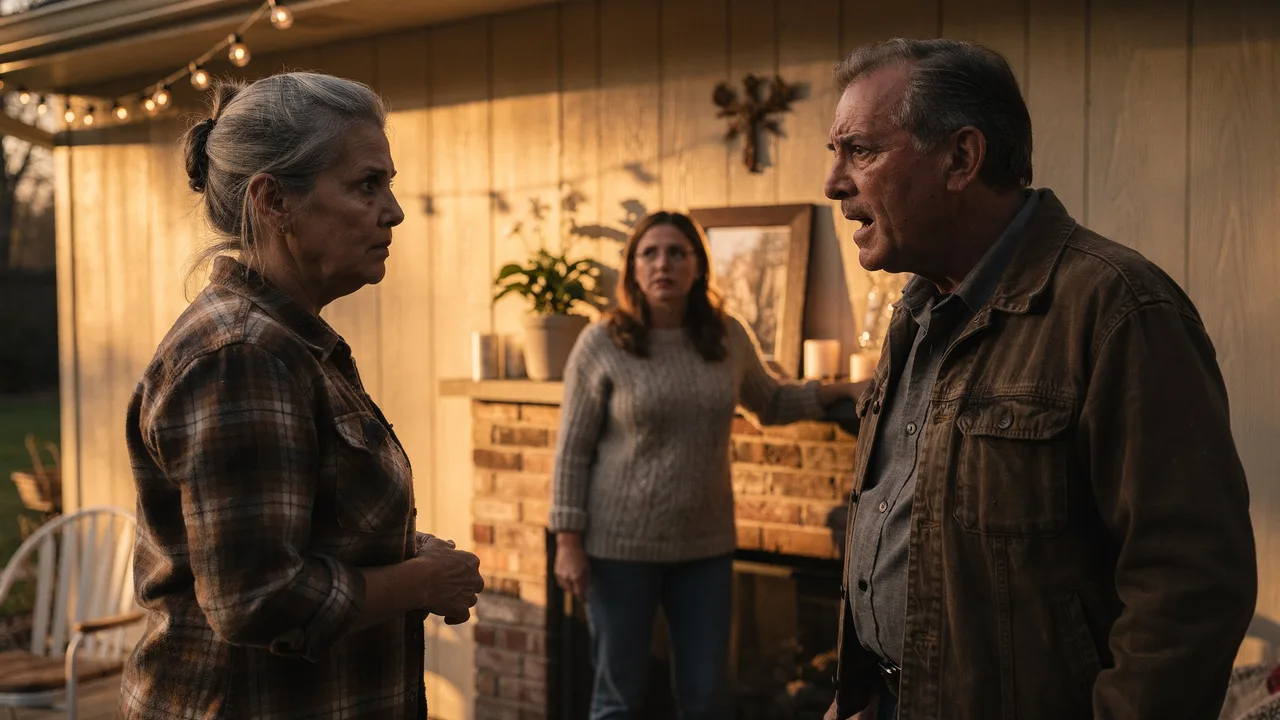
"It's a hobby, Cori, not a business," my husband said, waving a hand at the hives that had paid our mortgage for the last seven years.
The man beside him wrote on a clipboard. He had introduced himself as Dale Pruitt from a realty office in Rutland, and Mattias had told me over breakfast that Dale was only here to put a number on the place for the insurance. The number Dale kept saying under his breath was two hundred fifty thousand.
"Insurance doesn't care about the lower pasture," I said.
Advertisements
"Dale's thorough," Mattias said. "Aren't you, Dale?"
Dale smiled like a man who gets paid when a sign goes up. He walked the stone wall with his boots in the clover and pointed with his pen. "Road frontage is what folks want out here. You could cut house lots along the town road and leave the back for a pond. These boxes would be easy to move."
"Those boxes are sixty hives," I said.
"Sure. Easy to move, though."
Bees were working the dandelions along the wall and the apple blossom by the drive, and not one of them cared who owned the ground. I had come out that morning to open the hives and check the brood. I lit my smoker, let it burn down to gray, and never lifted a lid.
I stood at the fence while a stranger priced the field my bees had worked since the spring I set the first box. The whole day went into that standing.
Advertisements
When Dale's truck had gone down the drive, I turned on my husband.
"You said insurance."
"I said appraisal. Same thing."
"It is not the same thing, Mattias."
"Cori, don't make a scene out of an afternoon." He gave me the smile that had talked me into a wedding. "I'm only trying to be practical for once."
That was the first time in twelve years I wanted to check whether the man I was married to was telling me the truth.
The second time came at supper two nights later. He did not eat. He set his laptop beside my plate, turned it toward me, and showed me our joint savings.
Eight thousand dollars had been in that account the last time I looked. The screen said under five hundred.
"The Pelletier commission fell through," he said. "The dining table for the lodge. They went with some outfit in New Hampshire."
"That was a deposit and a final payment. Where did the deposit go?"
"Materials. Cori, listen to me." He took my hand across the table, and his was warm and dry. "The bank is going to start calling. If we sell the hobby farm, we clear everything and rent something in town. I can find work. You can keep a few hives at a friend's place."
"A few hives."
"It's a way out. That's all I'm saying."
I got up and did the dishes so he would not see my face. Then I took the ledgers down from the shelf over the feed bin and sat at the kitchen table until the window went gray.
I keep my books by hand and again on the computer, every jar and every case, every check from the co-op and the Hannaford in Rutland and the farmers' market. The honey made money. It made money every month, and it had made the mortgage payment on time for seven years running. Nothing in those columns could explain a man who needed to sell.
Around four in the morning a single hive started up outside, a low steady note carrying across the yard. Bees do not announce a problem. They fan, they cluster, they work, and if something is wrong in the box you find it by what changed in the sound.
Something had changed in my house.
I am the account holder on our phone plan, so I logged in that night while he slept and pulled the call records. One number came up again and again. It was a Boston number, and the calls ran into the dozens, some of them long.
A search bar gave me a name: Winslow Hart Wealth Management, with an address on Beacon Hill.
I read the page slowly. A man who owes the bank does not spend his afternoons on the phone with people who manage other people's fortunes. My husband had told me on our third date that his parents were gone, that he had no family worth the name, and that his only brother, Alistair, had fallen off a ledge in the White Mountains before I ever met him. I had cried for a man I never met.
The laptop clicked shut and I sat with my hands in my lap. The refrigerator hummed. Mattias turned over upstairs, and the floor creaked under him.
I drove to Boston on a Friday while he was at his workshop. I told him I had a supplier in Brattleboro, and he did not look up from the lathe.
The drive took three hours. I put fifty-some dollars of gas in the truck and bought a coffee I did not drink. On Beacon Hill I found a place on a side street off Charles, and from there I could see the door of a narrow brick building with a polished knocker and a boxwood in a pot.
I waited most of the morning. A little before noon a dark sedan stopped at the curb and a man got out of the back.
He was my husband. He had Mattias's shoulders and his jaw and the cowlick over the left ear, as if someone had taken the man I married and pressed all the give out of him. The suit fit him like paint. A gray-haired man with a leather folio met him at the steps, and the two of them went inside without shaking hands.
I took a picture of the plate as the sedan pulled away. Later, sitting in my truck with the doors locked, I paid fourteen dollars to a records site on my phone, and it told me the car belonged to Alistair Rowan of Pinckney Street.
The brother who died climbing had a parking space.
I called the number from the truck. A young woman answered, polished as a table. I told her I was Mattias Rowan's wife and that I would wait.
Minutes went by. Then a voice said, "This is Alistair Rowan."
"I'm told you fell off a mountain," I said.
Nothing for a breath. "I assume my brother's the author of that." His voice was dry and exact. "Mrs. Rowan. Where are you?"
"Parked outside your window, I expect."
"I see." Paper moved on his end. "Then you should know he telephoned me on Tuesday. He wanted money against the Weyland Family Trust, which is our mother's family's. I told him the trust was closed. Entirely and for good."
"Why?"
"Because he has spent two decades of it, and the cupboard is bare. He asked me then whether a man could sell his wife's land without her signature. I told him to find a lawyer."
I put my forehead against the steering wheel. The metal was cool. "Would you come to my kitchen, Mr. Rowan, if I called you?"
"If you call," Alistair said, "I will come."
The drive home was the loneliest of my life. Somewhere past the New Hampshire line the sun dropped behind the hills and I turned on the headlights, and I had nobody to tell.
The annual meeting of the Green Mountain Growers Co-op was held the following Thursday in the West Haven Grange Hall. The room smelled of coffee from the big urn and floor wax from the Saturday dance.
About fifteen of us sat in folding chairs: dairy people, a man who raised garlic, two sisters with a maple operation. Beverly Caswell stood at the side with her clipboard and her tidy gray bob, in her sensible shoes, running the clock the way she ran the town clerk's office for thirty years.
I had my poster boards on an easel. I was on the third page, explaining why a line of infused honey, lavender and a hot chili blend, could sell at fourteen dollars a jar and use the co-op's kitchen on slow days.
The door at the back banged.
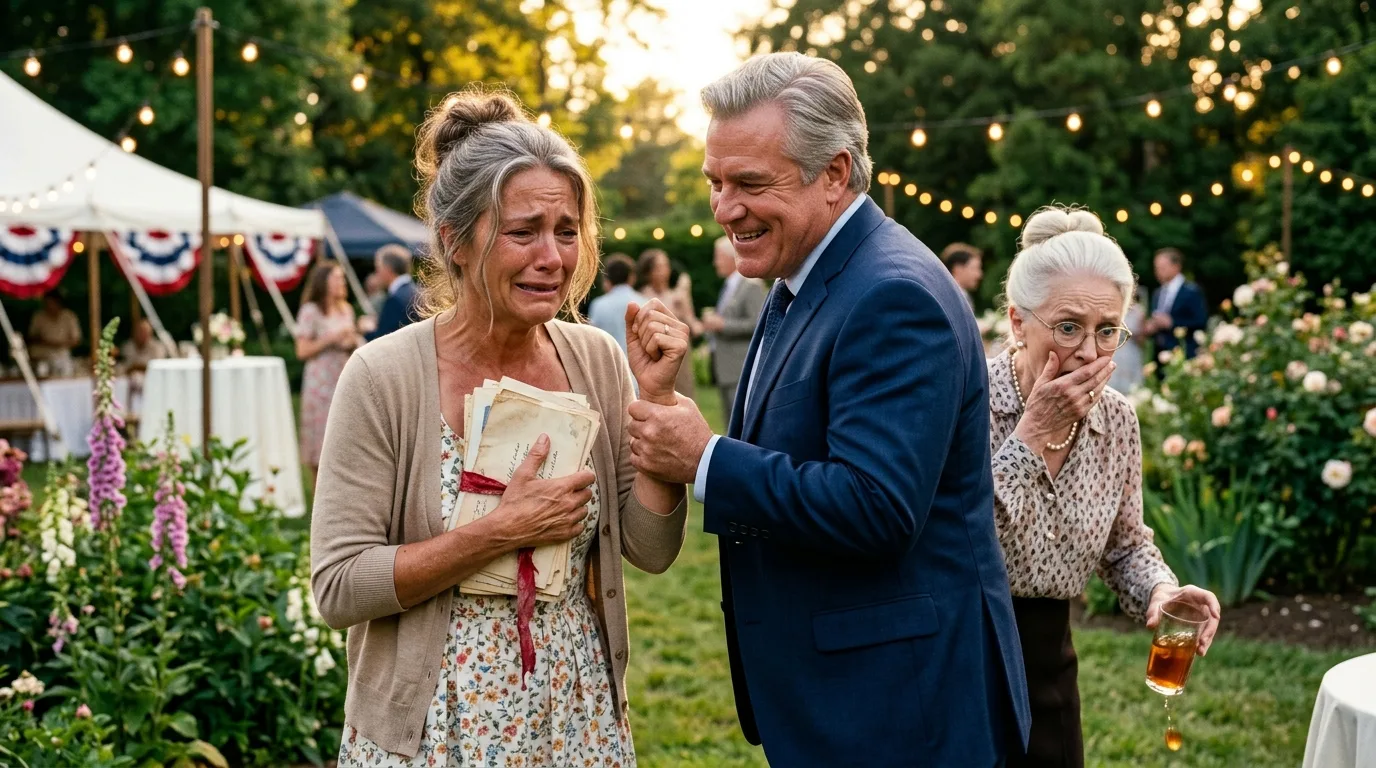
Mattias came down the aisle in his good flannel and his clean boots, smiling and holding up one hand like a man arriving late to church. "Sorry, sorry. Don't stop for me. Bev, may I? Just a quick word. Cori's too modest to say it herself."
Beverly looked at me. I said nothing.
"We've had a change of plans," Mattias said, and the room leaned toward him, as rooms always did. "Cori and I have made a joint decision, after a lot of prayer and a lot of numbers. We're going to sell the farm and start something new, something more profitable. I'm so sorry to spring it on you."
A chair creaked. Somebody coughed into a sleeve.
"Her plan is wonderful," he went on, gently, nodding at my poster boards. "It's aspirational. Cori's a dreamer, God love her, and that's why I married her. But somebody has to look at the books, and I'm afraid the honey was never going to carry us."
My face went hot from the collar up. I could feel fifteen people not looking at me. The garlic man studied his shoes.
I laid my pointer on the easel's tray. I looked at my husband for what felt like a long time.
"That's a surprise," I said. "You didn't mention it when you talked to Alistair on Tuesday."
Mattias's smile stayed where it was, but the color left under it.
"Is this his idea?" I said. "Or did it come up when he told you the Weyland Family Trust was closed?"
He laughed, one short note. "What are you talking about? Cori, you're not making any sense."
He turned to her with his palms out. "She's been under a terrible strain. The farm, the money worries. I think she's confused."
He came toward me with his arm already rising for my shoulders, the arm that had comforted me at my mother's funeral. I stepped sideways, and it closed on air.
"I'm not confused, Mattias." I did not raise my voice. The hall was so quiet I could hear the urn tick. "I drove to Boston on Friday. I stood across the street from a building on Beacon Hill and watched your brother get out of a car. The one you told me died in a climbing accident. The one who manages the money from the family you told me you never had."
Nobody moved. The sisters with the maple operation looked at each other.
"Cori," Mattias said, low, "we can talk about this at home."
"We will. Saturday week, at the kitchen table. Alistair's coming."
Beverly Caswell had liked my husband. She had always asked after his tables and his health. Her face now was as smooth and still as the stone step outside.
"Mattias," she said, "I believe you'd better go."
He went. The door banged again behind him, and we all listened to his boots on the gravel and the truck starting up.
She turned back to me. "You were on page three, Corinne."
I finished the presentation. My hands shook on the pointer the whole way through, and nobody said a word about it, which was a kindness.
Alistair came on the Saturday, driving himself in the same dark sedan, which looked like a funeral parked in my yard among the lilacs. He wore a gray suit and carried a slim leather case. When I opened the door he looked at me, then past me at the kitchen, and I saw him take in the worn table and the jars on the sill.
"Mrs. Rowan."
"Corinne. Coffee?"
"No, thank you."
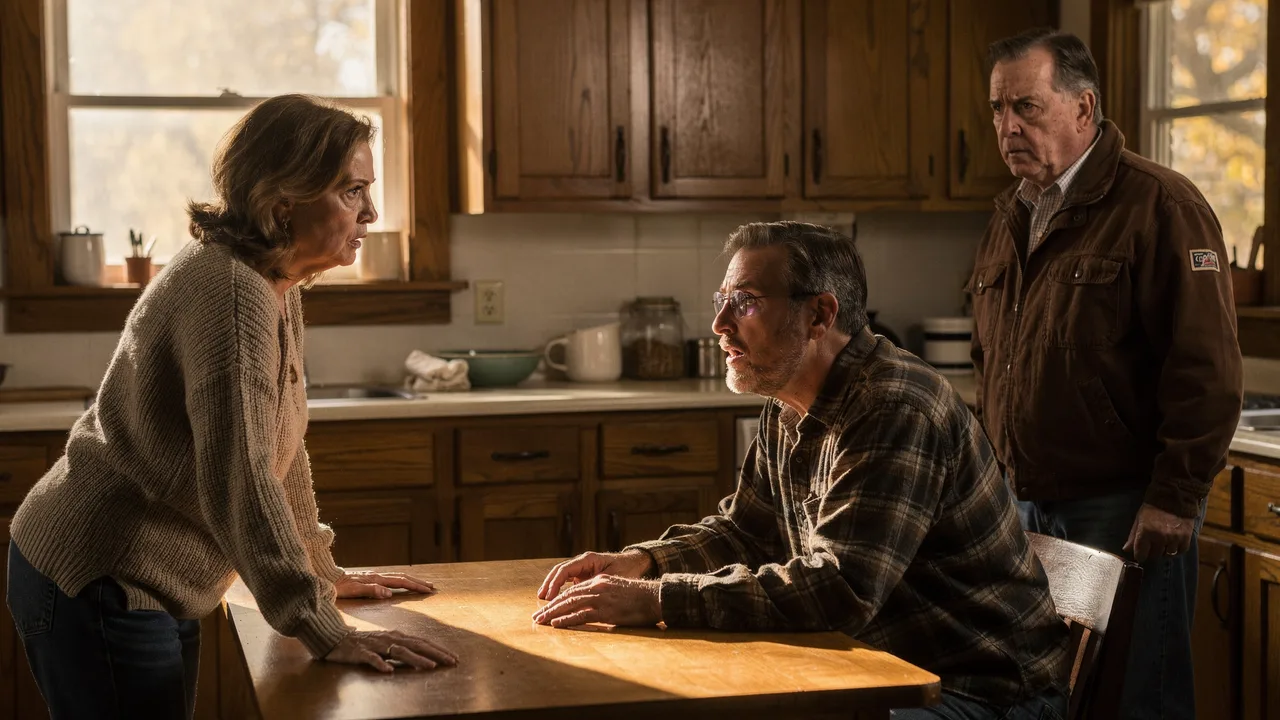
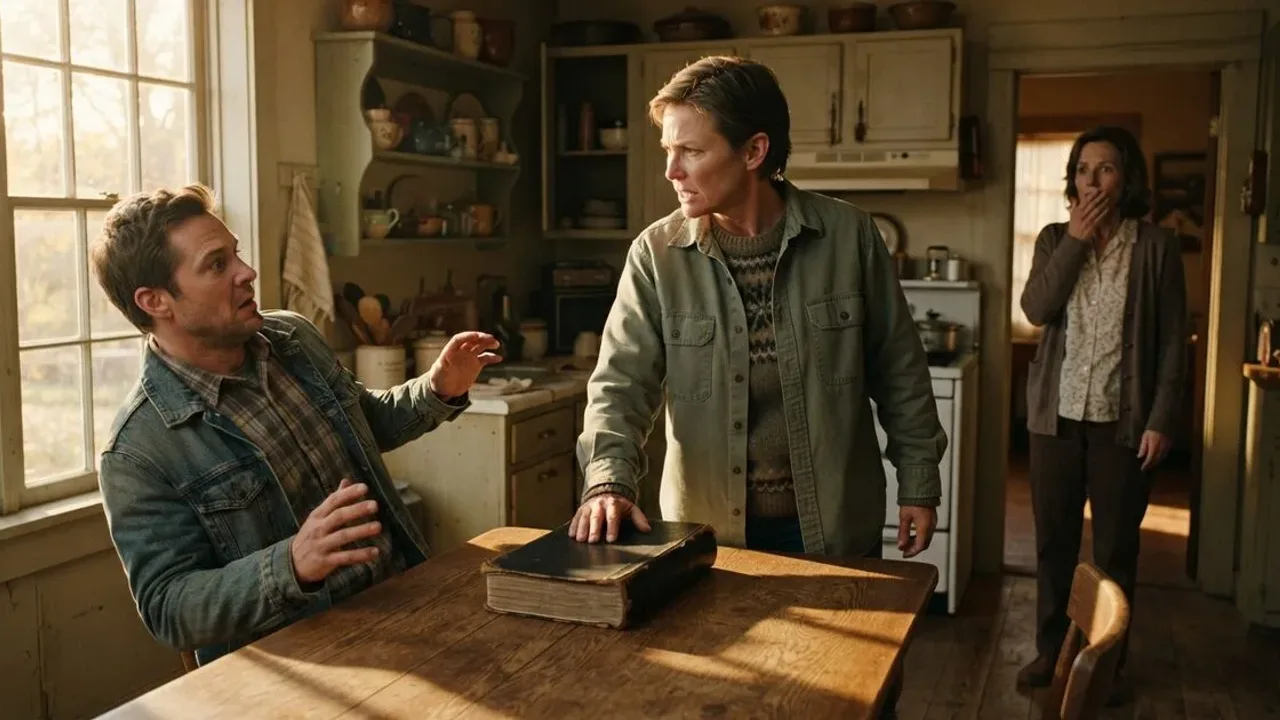
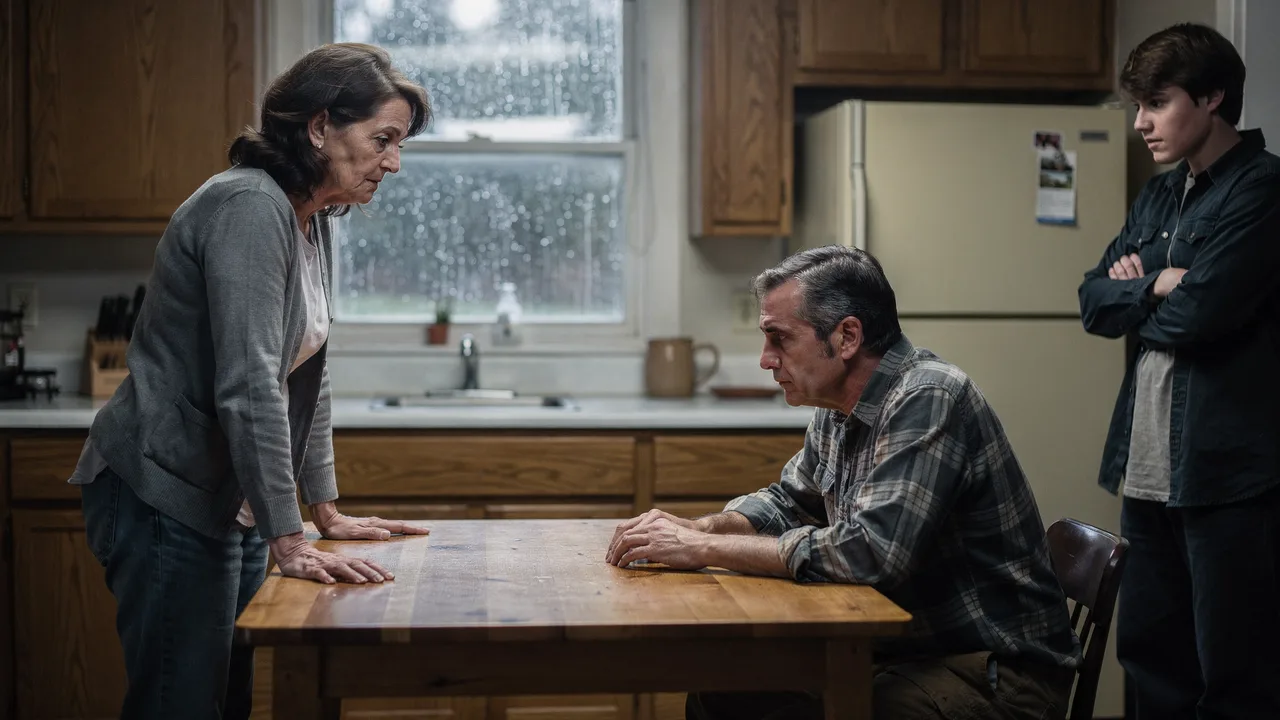
Mattias was already seated on his side of the table, with his coffee mug in front of him, the brown one he had thrown himself. He did not stand. He looked ten years older than he had a week before.
Alistair did not sit until I did. He opened the case and laid two documents on the table, squared to the edge.
"Mattias," he said, "this is a quitclaim deed. It gives Corinne this house and all of this land, free and clear. You will sign it now."
"Al, come on." Mattias spread his hands. "Half, at least. I put twelve years into this place."
"You put your name on it. She put in everything else." Alistair's voice never rose. "You have two choices. You sign, and the family absorbs what you owe. Or you refuse, and the family lets you file for bankruptcy by yourself. Your name, your creditors, your picture in the Globe. We will not lift a finger."
"You wouldn't."
"Our mother's name is on that trust. I will do a great deal to keep it out of the newspapers, and I will do nothing at all for you." He took a pen from his breast pocket and set it on the deed. "I hold a notary's commission. It will be done in this room."
Mattias looked at me. I held his eyes, and I had nothing to say to him.
"Cori," he said. "I was going to tell you."
"When?" I asked.
He had no answer. He took the pen, and it scratched across the paper twice. Alistair stamped it, signed it, blew on it once, and slid it into the case.
Then he took a cashier's check from an inner pocket and pushed it across the table to me. The amount was seventy-five hundred dollars.
"What he took from your savings," Alistair said. "He moved it the week the trust stopped paying."
"Thank you."
"It isn't a kindness. It's an account settled." He stood and buttoned his jacket. "He will not bother you again."
He did not apologize, and I did not expect it. Mattias rose slowly, like a man getting up from a hospital chair. At the door he turned as if to say one more thing, and I looked at the window until I heard the sedan's engine and the sound of gravel under two sets of tires.
Then the kitchen was quiet.
The house held the quiet the way a hive holds a winter. I stood in the middle of the floor with the check in my hand. I had the farm, the land, and the sixty hives. I had lost the man I'd cooked for and slept beside, and found out he had never existed, so there was nobody to be angry at and nothing to bury.
His brown mug sat on the counter where he had left it that morning.
I picked it up. My hand knew the weight of it, the thick handle with the chip near the base, and I carried it to the sink and turned on the tap.
I could not wash it.
The tap went off and I carried the mug back to the table and set it down on his side, where the sun came through the window and made a ring on the wood. Then I took my veil from the hook by the back door and walked out into the yard.
The clover had come in white along the wall. At the first hive the foragers were landing heavy and slow, and the low steady hum of sixty boxes came up through the grass and into my boots, the realest sound I had ever known, from the thing my husband had called a hobby.
Comments