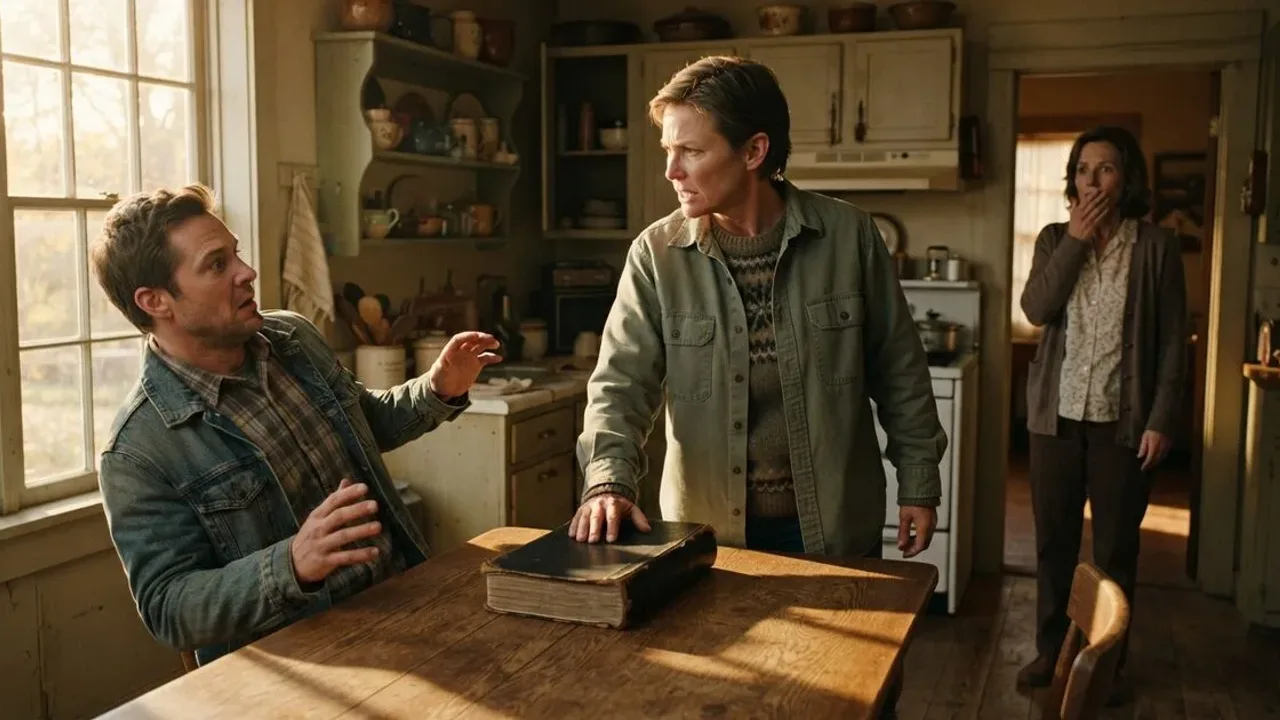
The For Sale sign on our front forty wasn't from me; it was from my brother, hammered in the dark like a thief.
I found it at first light with a mug of coffee going cold in my hand, the ground around the post still soft and turned, and the offer printed on the board — four hundred thousand dollars, cash, to a developer from downstate. Forty acres of tart cherries and apples my grandfather planted, ground my father worked until his hands quit on him, and my brother Robert had decided to sell it while I slept.
My name is Marian Kessel. I'm fifty-four years old, widowed, and I manage the orchard I was raised on, up on the Leelanau Peninsula, where the lake makes its own weather. I walked that fence line twice a week. Now there was a hole in it.
Advertisements
I called him from the packing shed, where the reception is best.
"You put a sign on the front forty."
"Marian." Rob's voice came through warm as a showroom. "I was going to call you today."
"You were going to call me after the sign went up."
"Look, it's a good offer. It's a very good offer. The front forty is the piece with road frontage. That's the piece that sells."
"That's the piece with the oldest trees on it. That's the piece Mom walked every morning before she got sick."
He let out a breath, long and patient, the kind saved for somebody slow. "Mom signed a quitclaim deed. Before she died. It's legal, it's filed, and the sale closes the last day of the month."
The coffee had gone cold. I set it on the sorting table. "She signed a quitclaim deed."
"She did."
"On what date?"
"Marian, don't do this."
Advertisements
"On what date, Rob."
"June twelfth. Twenty twenty-four." He said it fast, the date already worn smooth from having been said before. "And listen. I know you're upset and I'm sorry about that. But if you make this difficult, I'll have to open the estate. Everything freezes — the operating account, the equipment loan, all of it. You've got pickers coming, fuel to buy, a crew to pay. You cannot run this place on a frozen account. Think about it."
There it was. The offer and the threat in the same breath.
I stood in that shed a while after he hung up. The wind had a sharp edge on it that morning, coming off the water the way it does in October, and the cherry leaves had gone the dull copper color that means the season is nearly done. Then I went into the house and spread the farm's books across the kitchen table and sat with them until the light went gray, and then I sat with them some more.
Eighteen months since Mom died. Eighteen months since I planted the last of her roses at the corner of the house because she'd asked me to. And here was her son, selling the ground out from under me.
The next morning I drove to Leland.
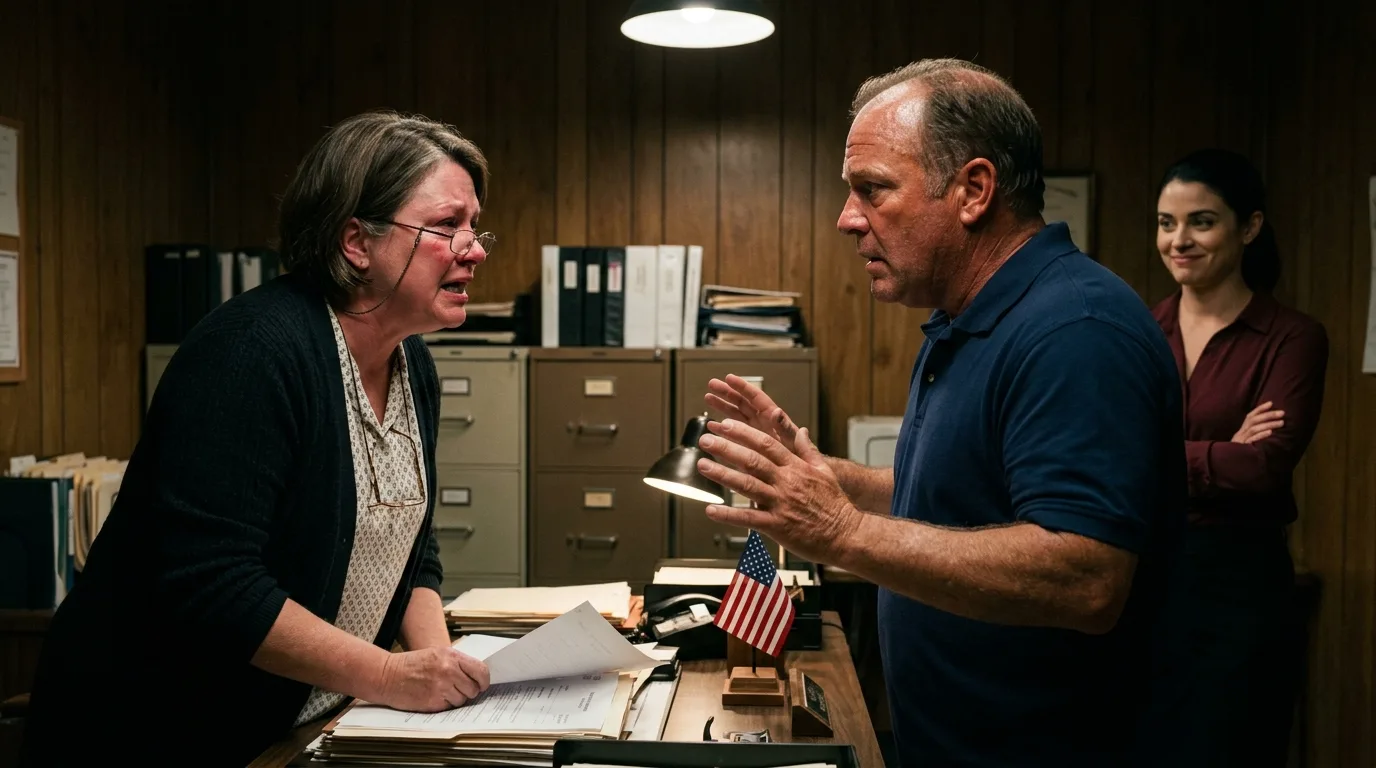
The Register of Deeds office sits in a small building with good light coming through the front windows, and Doris has been behind that counter since before I could drive. It's twenty minutes from my door, and I've known every turn of it since I was a girl riding in the truck bed with the empty apple crates rattling behind me. I paid eleven dollars out of the grocery money for a copy of the deed and stood right there at the counter and read it.
Quitclaim. Eleanor Kessel to Robert Kessel. June 12th, 2024. At the bottom, the notary block, with a stamp and a signature: Wendy Fletcher, commissioned in Traverse City.
Above it was my mother's name.
I know my mother's hand. She wrote her grocery lists with a slight lean to the right and crossed her sevens the old way, and when she signed Eleanor, the first E always came out with a small break in it where the pen lifted mid-letter. This signature had the lean and the crossed seven. It did not have the break. It was my mother's handwriting as copied by somebody who had studied a photograph of it.
I was sitting beside her bed on June 12th, 2024. There was a nurse named Angela and a television playing a cooking show with the sound off, and Mom never came out of that room.
I asked Doris whether the county kept the notary's log. She said the log belongs to the notary. So I filled the truck at the Meijer out on the highway and drove the forty minutes down to Traverse City, to a credit union on Front Street, and asked for Wendy Fletcher.
Her office had a brass nameplate and a bowl of peppermints on the corner of the desk.
"Ms. Fletcher. I wonder if I could take a minute of your time."
"I have a few." She looked up over her glasses. Neat cardigan, reading glasses on a chain, the tired face of a woman who reads loan paperwork all day. "What can I do for you?"
I put the deed copy on her desk and turned it so the notary block faced her. "Did you stamp this?"
She looked at it a long time. Her hand went up toward her glasses and then came back down. "Where did you get this?"
"Leelanau County. It's filed."
"I have never seen this document in my life."
"Look at the stamp."
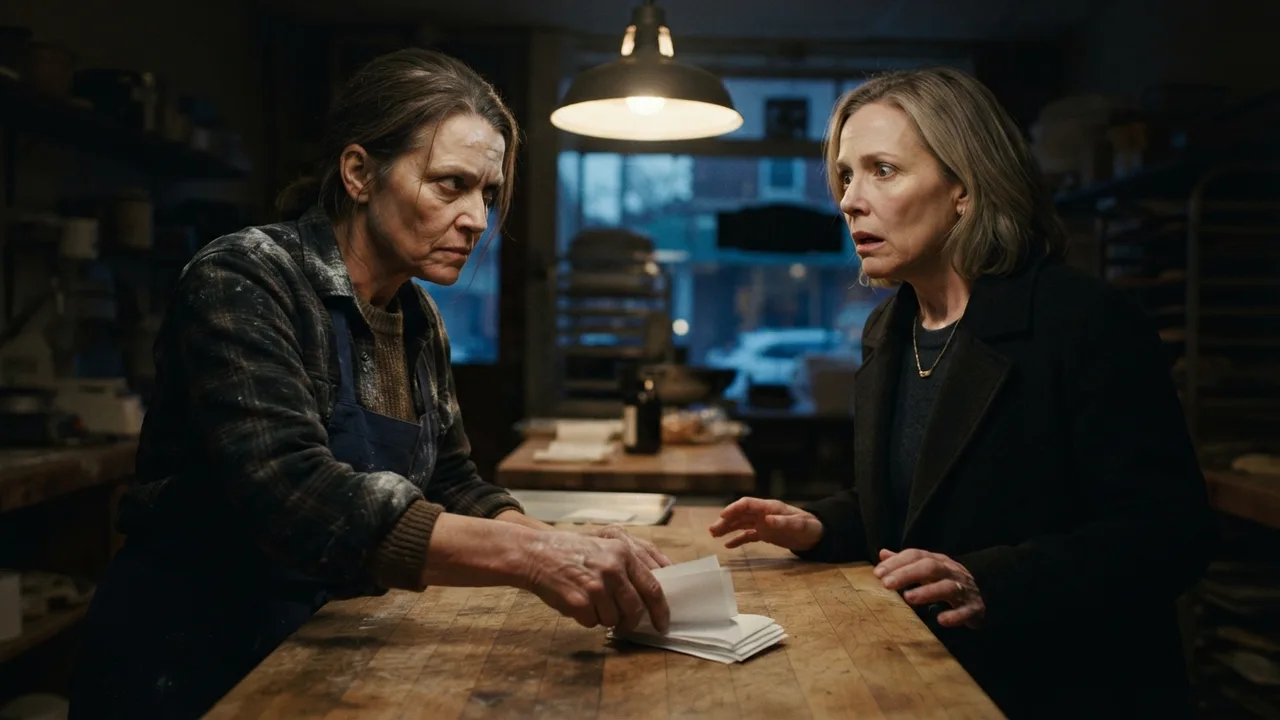
She looked. She picked up a pen, set the pen down, and opened the bottom drawer of the desk. What she brought out was a bound register, the official logbook a notary is required by law to keep, and she went through it with her thumb until she stopped.
"There's one entry for June twelfth," she said, and her voice had gone thin. "A tractor title. For a Mr. Van Dyke." She looked up. "That's all I notarized that afternoon. There is no deed here. There is no Mrs. Kessel."
"Would you sign an affidavit saying that?"
And that is when the whole thing changed in her face. She closed the register and pressed both palms down on the cover. "I can't do that."
"Ms. Fletcher—"
"I hold a commission and I hold a job. If I sign something and this turns into a fight, I get named, I get called, I get pulled into it — I watched a woman in Cadillac lose her position over a car loan she barely touched, and I am not going to be her. You need to talk to a lawyer."
"I have no proof without you."
"You have your mother's signature," she said. Her eyes were wet and she shook her head anyway. "I'm sorry."
I drove home the long way, around the bay. I won't pretend I didn't pull off at the wayside and sit there a while. That day cost me work in the middle of the busiest week of the year, and gas money I had counted, and something harder to name — standing in a stranger's office asking for help and being told no in a polite voice.
Rob came up that Saturday.
He pulled in around noon in a sedan with the dealer plates still on it, wearing a coat that cost more than my truck, and he walked the front forty with me as though it were already his. His shoes were scuffed along the toes. That's what I noticed first. A man who sells cars for a living, with a showroom smile, walking my rows in shoes he'd worn hard.
"You've got good fruit this year," he said.
"We do."
"It'd be a shame to see the whole place tied up for years. That's all I'm saying."
"Rob. Whose idea was the quitclaim?"
He stopped at the head of a row and looked out at the water. "Does it matter?"
"It matters to me."
He laughed, and then he stopped laughing. "You want to know my problem? I'm fifty-one years old and I've got nothing to show for it. The restaurant deal went south. I put everything into it. Everything." He said it lightly, as if the restaurant deal had cost him a parking ticket. "This one last deal gets me back on my feet. That's what this is."
There it was, plain as fence wire. He had forged our mother's name while she was dying because he had nowhere left to go, and he had driven up here to tell me it was nearly over.
"You should go home," I said.
He went.
The co-op ballot came in the mail the following week. Northern Michigan Fruit Growers, annual election, one board seat open. Robert Kessel's name printed on it, under our father's name and our grandfather's, because in this county a name still buys a man something. He won. Of course he won. Every grower at that dinner would remember Frank Kessel, and they would vote for Frank's boy.
The dinner was the following Saturday at the banquet hall in Suttons Bay. Paul Van Dyke, who farms cherries south of town and has run the co-op as long as anyone can recall, would be standing up to welcome the new board members. Fifty growers and their spouses. White cloths on the tables. The good smoked whitefish, and cherry pie from the bakery out on M-22.
I had a deed copy and a notary's log I had seen with my own eyes, no affidavit, and no lawyer yet. What I had was one public hour to use them in.
I didn't sleep much that week.
Saturday I put on the one good blouse I own and drove to Suttons Bay, and took a seat near the back with the apple growers. The room was loud and warm and full of people I have known my whole life, and Rob worked the tables, shaking hands, laughing, resting a hand on a shoulder here and there. When Paul Van Dyke stepped up to the microphone to welcome the new members, the room went quiet and polite.
"Robert Kessel, everybody," Paul said. "Frank and Eleanor's boy. Good to have the name back on the board."
People clapped. A room full of neighbors being decent, nothing more. Rob stood and raised a hand.
I stood up.
I walked to the microphone, past the pie table, past the Suttons Bay crowd, and Paul, who has known me since I was a girl in the passenger seat of my father's truck, blinked and stepped back half a step, because I had not told him I was coming and I looked like a woman with something to say.
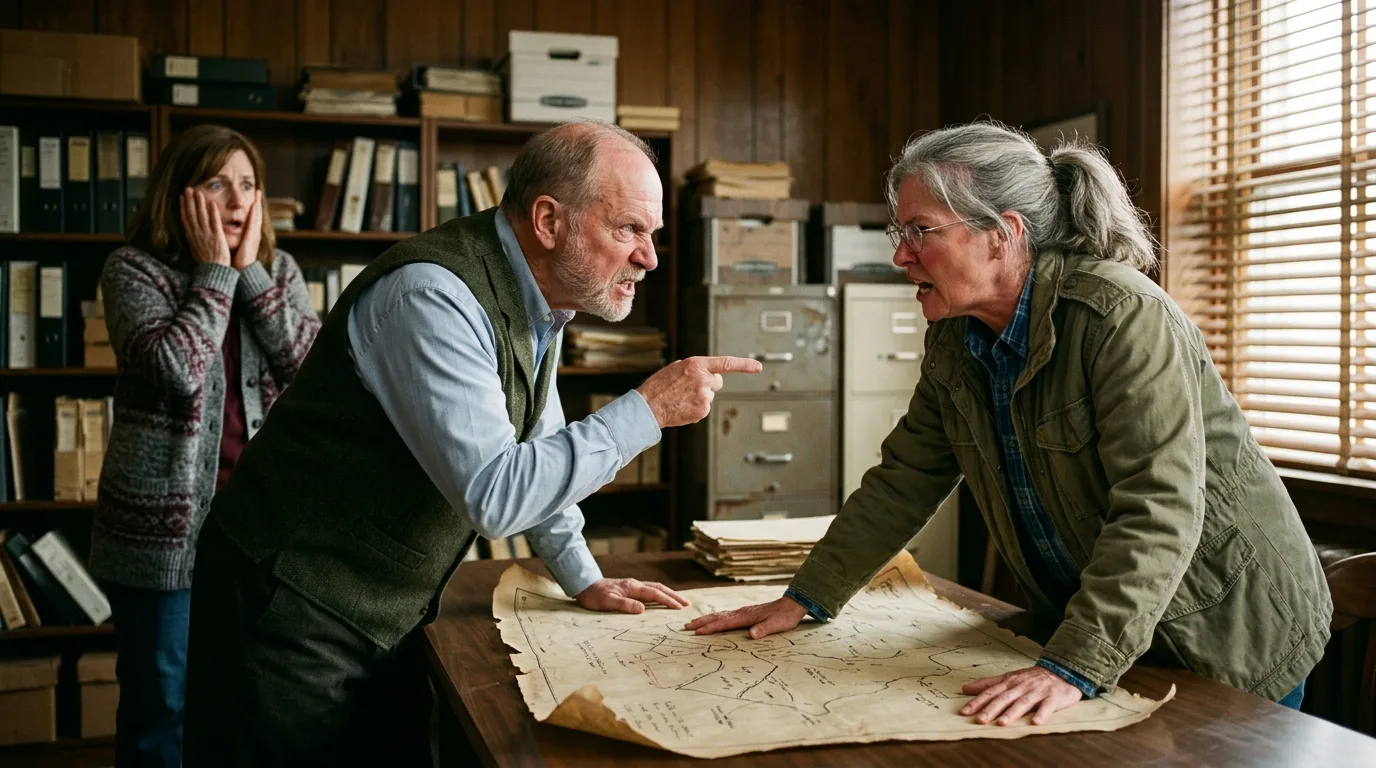
"Marian." Rob's voice came across the room, pitched to carry, easy as ever. "Marian, this isn't the place."
"It's the only place," I said. "I'm sorry to interrupt the dinner."
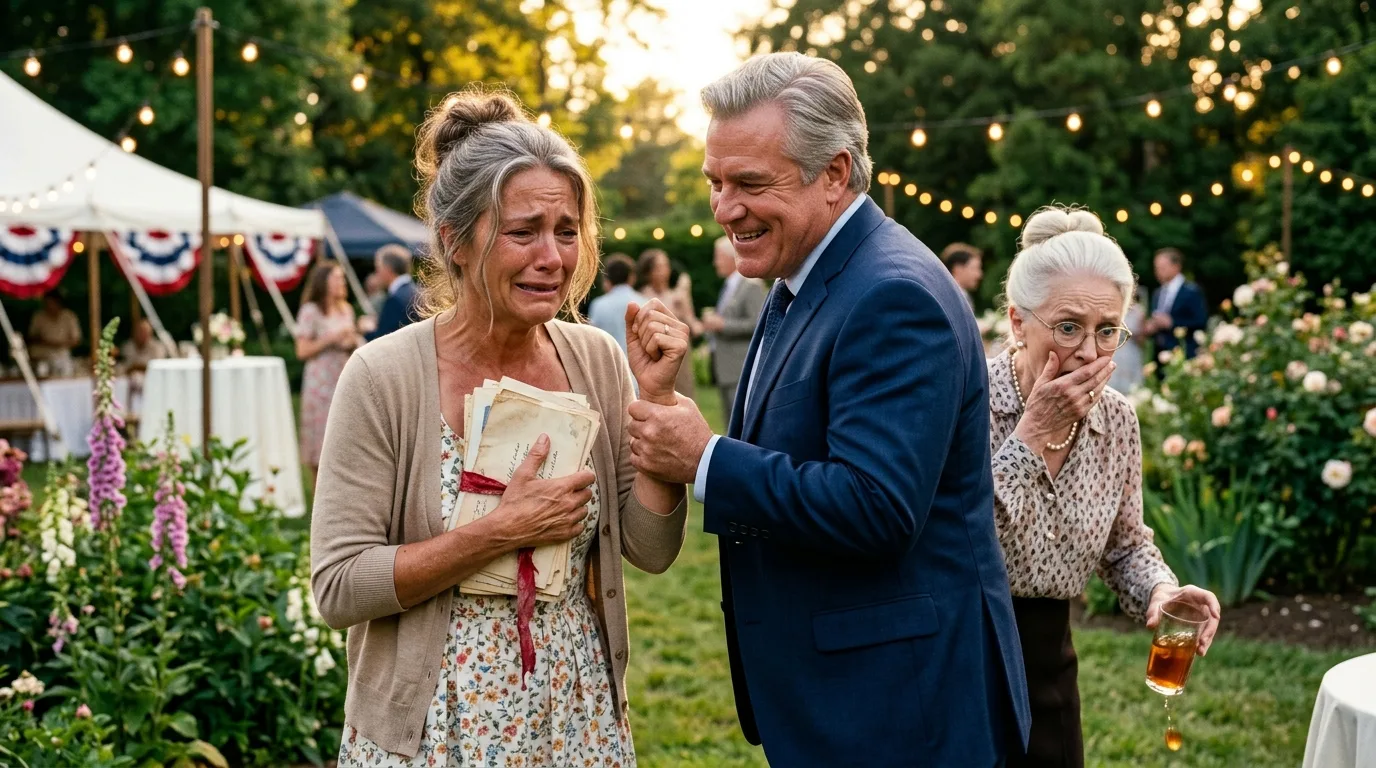
I held up the copy. "This is a quitclaim deed filed in Leelanau County. It says our mother signed her land away on the twelfth of June, 2024."
I let it sit in the room.
"She was in intensive care that day. I was in the chair beside her bed. She died in that room, and she did not sign anything in it."
Rob laughed. He truly laughed, one short bark, and turned to the room with his hands out, salesman to the house. "Folks, my sister has had a hard year. She's confused. She's emotional, and I understand that, but this is a family matter and we'll settle it at home."
"Who notarized it, Rob?"
"Marian—"
"The notary block says Wendy Fletcher. She's a loan officer in Traverse City. I sat in her office and she opened her register in front of me, and the only thing she notarized that afternoon was a tractor title." I looked up at Paul. "For you, Paul. Do you remember that?"
The whole hall went quiet. Paul Van Dyke looked at the paper in my hand, then at Rob, and then he stood up straight and squared his shoulders.
"I do," he said. "I bought a used tractor off a man over in Empire that spring, and she did the title for me at the credit union." He paused, and his jaw worked. "Same afternoon."
Somebody at the back set a fork down, and it sounded like a dropped plate.
Rob's face went white and then red to the collar. "You have no right," he said. "This is a private family matter and you're standing up there ruining — you don't get to do this, do you hear me, after everything I've —" He was on his feet now, and his voice was climbing, and he was saying something about the developer and the lawyers and ingratitude and the years he had put in, and the room was watching the charming man come apart at the seams, and every word out of him proved my case better than the paper in my hand ever could.
Paul walked over and took the deed copy and read the notary block.
"Robert," he said, quiet, into the microphone. "Sit down."
Rob sat down. Nobody laid into him. Nobody said much of anything to me either, except Alice Bergman from the cherry co-op, who caught my arm as I came back down the aisle and held it a moment.
The room ate pie. People stopped by my table and said small things. It was enough.
The developer's lawyer called my lawyer the next morning and withdrew the offer. Then my lawyer called Wendy Fletcher and put it to her in plain terms: the fraud was public now, and an inquiry would follow, and she could be a witness or she could be a person of interest, and her logbook would protect her only if she stood behind it. She signed her affidavit the same afternoon.
A week later, Rob drove up from Grand Rapids for the last time. He sat at the kitchen table where we had eaten our mother's chicken and dumplings every Sunday of our childhood, with my lawyer on one side and his on the other, and signed a consent judgment voiding the fraudulent deed.
He didn't look at me until the pen was down.
"You could have called me first," he said.
"I did call you first. You told me the sale closed before the month turned."
He put his coat on. It still didn't fit that room. At the door he stopped, and for a moment I thought he might say something he could take back, and then he didn't, and the door closed.
The legal fees came to four thousand dollars, which I will be paying off all winter.
The next afternoon I walked out to the front forty and stood at the fence line where the sign had been. Two deep holes in the ground, still soft, still holding the shape of the post.
Paul Van Dyke's truck came up the drive about then, and it wasn't Paul alone. Two of his farmhands got out of the cab with their gloves already on.
"Figured you could use some help getting the harvest bins ready," he said.
"That's a lot of help."
"That's what it is." He looked at the holes in the ground, then at me. "Bins don't stack themselves, Marian."
We got the bins ready. It took the afternoon, and nobody said a word about Rob, and nobody said a word about that dinner, and when they left Paul shook my hand at the truck and told me he'd see me at the next co-op meeting.
Then I walked the fence line on my own, all the way down to where the post had gone in. I nudged the loose soil back into both holes with the toe of my boot, working it in until the ground was level and whole again, and the old trees stood on it as they had before.
Comments