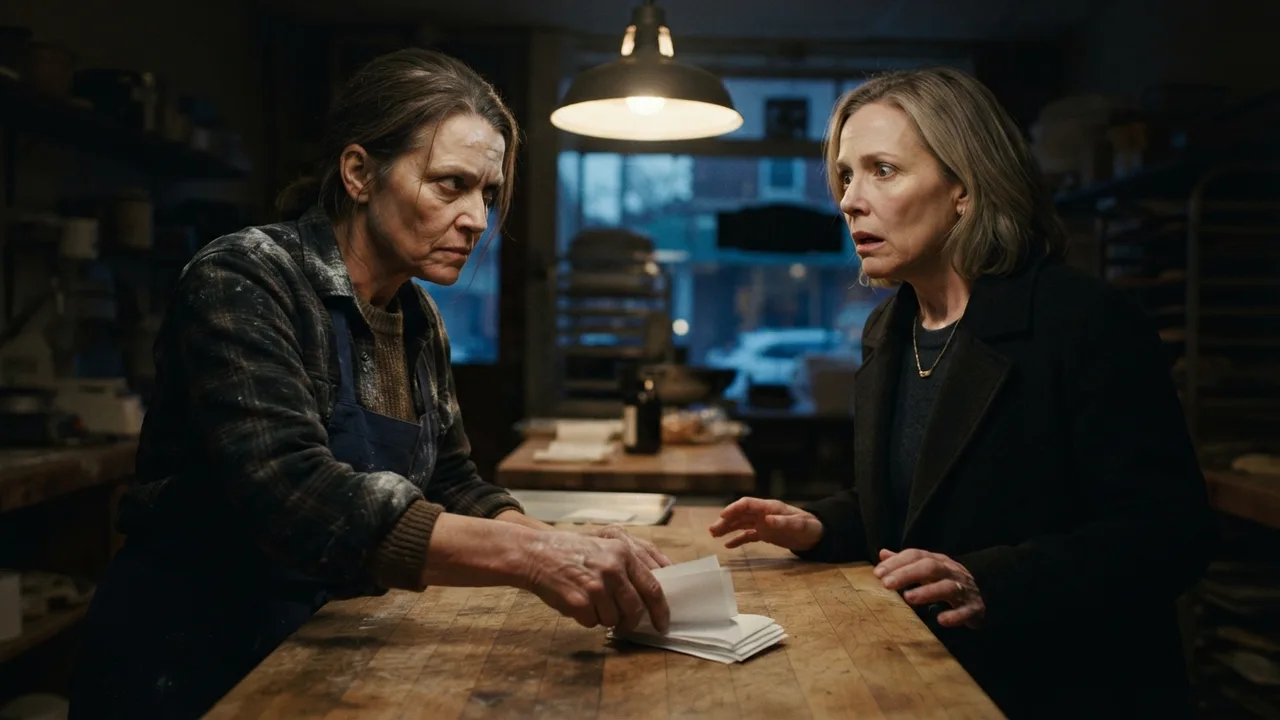
My sister-in-law offered me ten thousand dollars for the bakery my husband and I built from nothing. She slid the check across the counter, next to a tray of cinnamon rolls, and told me I had ninety days to be out of the building.
"It's a shame, Irene, but we have to be realistic," Susan said.
I am Irene Novak, I am 52, and I have run The Rolling Pin alone since Mark died a year ago. The shop takes up the ground floor of a brick building on Main Street in Linden Creek, Pennsylvania. I live in the apartment above it. Every dollar I earn comes through that front door.
Advertisements
The building belongs to the Novak Family Trust. Since Mark's heart gave out, Susan has managed the trust.
"Realistic how?" I asked.
"Mother's care at Birchwood Commons keeps going up. The trust can't carry a building that's underperforming." She glanced at my display case. "No offense. You work so hard."
"The rent has come in on time every month."
"Below market, Irene. Far below."
Mark had set that rent with his mother's blessing, years before Susan ever touched a ledger. I wiped my hands on my apron and left the check where it sat.
"I won't sign anything for ten thousand dollars," I said. "That wouldn't cover the ovens."
"Take the weekend." Susan picked up her handbag, which cost more than my delivery van's last repair. "I'm giving you time to make good decisions."
She left the check behind. I put it in the drawer with the rubber bands and the twine.
Advertisements
---
The realtor came Thursday, in the thick of the morning rush.
I had a line to the door. Harold, the retired mail carrier, was waiting on his usual half dozen rolls, and Dottie from the dentist's office was counting out exact change for coffee. The cinnamon was still rising off the sticky buns, three seventy-five each, and the front windows had fogged.
Susan walked in behind a man in loafers carrying a tablet.
"This is Brent," she said. "He does commercial listings. Pretend we're not here."
Brent measured my front wall with a laser. He knocked on the oven door. He asked the girl at the register whether the floor drains were original, and she looked at me like I might answer for her.
"Susan, I have customers."
"And we'll be out of your way." She smiled at the line. "Just working through the list."
Dottie put her coffee down. "Is that really necessary, Susan?"
"It's business, Dottie. Irene's being difficult about a perfectly fair offer. I'm sure you understand."
Nobody said anything. Harold looked at his shoes and left without his rolls. By the time Brent finished measuring, half the line had gone, and I stood behind the counter holding a tray of buns nobody was going to buy.
I gave them away that afternoon to the church food pantry. My hands shook the whole time I boxed them up, and I had to count the buns twice because I kept losing my place.
---
On Sunday I drove to Birchwood Commons.
Joyce sat in the sunroom in a pressed blue blouse, folding and refolding a paper napkin. Her eyes were still sharp, but they landed on things a beat late. I kissed her cheek and sat down beside her.
"Joyce, did Susan talk to you about the building?"
"Rising costs," she said. "Everything has rising costs, Irene."
"I know it does."
"We have to make hard choices. Susan says that's what a family does. It makes hard choices."
I took the napkin out of her fingers and held her hand instead. "Did she say what choices?"
"She said it's all for me." Joyce looked past my shoulder at the door. "Is Mark coming today?"
I couldn't tell her. I'd told her once before, and she had grieved it fresh, and I'd carried that home with me for a week.
"Not today," I said.
She patted my hand and started in again about hard choices. In the parking lot I sat behind the wheel with the key in my lap. I had come hoping for an ally. What I'd found was a woman who had been handed her lines, and a daughter who'd taught them to her.
---
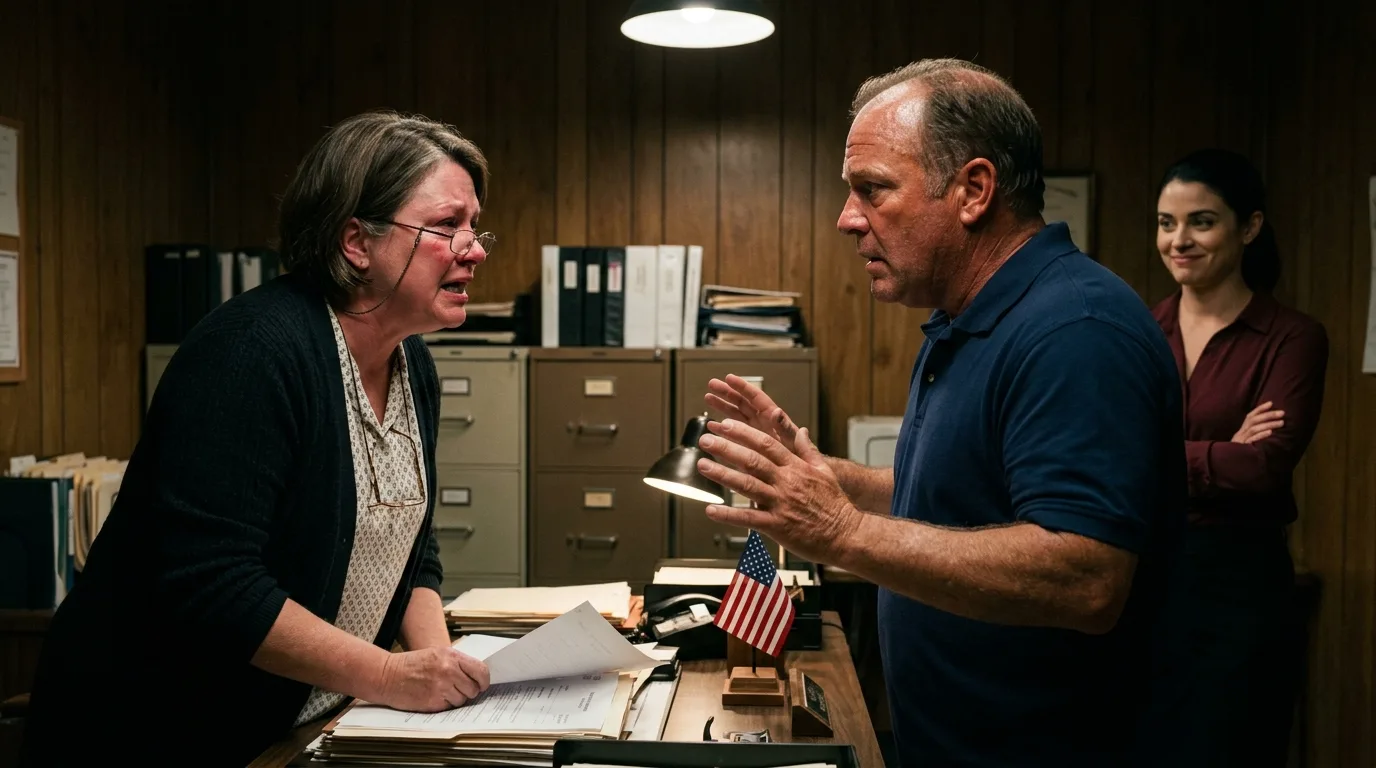
The notice came by certified mail the following Tuesday. I signed for it at the counter with flour on my thumb. It gave me sixty days, and it was signed by a lawyer whose name I didn't know.
Stapled to the back was a single page headed *Statement of Trust Hardship*. Susan had included it to show how badly the trust needed cash. It was a list of expenses in neat columns.
One line stopped me. *Custom millwork, Gatherings retail fit-out, $45,000. Paid to Ridgeline Millwork LLC.*
I read the line again. Then I put the page down on the butcher block and stood looking at it.
Gatherings was Susan's boutique. Mark had built every shelf in that shop. He'd done it over three weekends, with David hauling lumber and holding the level, and he'd come home sunburned from the loading dock and grinning like a boy. He never charged her a dime. It was a gift.
I didn't know Ridgeline Millwork from a hole in the ground.
That weekend I closed the shop early on Saturday and went down to the basement. Mark had kept every scrap of paper for twenty years. It was all in banker's boxes stacked against the cinder block, soft with damp, and the single bulb on its pull chain swung when I touched it.
I sorted by year. I found tax returns and flour invoices, a warranty for the mixer, and the card Mark's mother sent when we opened. I found his handwriting everywhere, the blocky capitals he used on everything, and I had to stop twice and sit on an overturned bucket until I could see the page again.
Late Sunday morning, near the bottom of the last box, I found a brown envelope. It said *GATHERINGS – SHELVES* in his block letters.
Inside were receipts from Hartman's Lumber & Hardware, stapled in order. Maple boards, brackets, finishing oil, hinges, screws. At the bottom, in Mark's pencil, he had added it up. *$1,847.52.*
On the back he'd written one more line. *Gift. Don't let me brag about it.*
I held that envelope against my chest for a good while.
---
Then I drove to Susan's shop, which sat in a larger town 45 minutes away, between a day spa and a place that sold candles.
Gatherings had a glass door and a hand-lettered sign about "consolidating inventory." A young clerk looked up from her phone.
"Can I help you?"
"I'd like to look at your shelves."
She laughed, then saw my face and stopped. "Sure. They're pretty. Everybody says so."
They were. Wide maple planks, joined so cleanly I couldn't find the seams, and half of them stood bare. I crouched and reached under the lowest one. My fingers found the small stamped *M.N.* he put on everything he made.
"Do you know who built these?" I asked.
"The owner said a contractor. Some company. It cost her a fortune." The clerk shrugged. "She doesn't come in much anymore."
I thanked her and bought a lavender candle I didn't want, because it seemed rude not to. Then I drove home with the receipts in my purse.
---
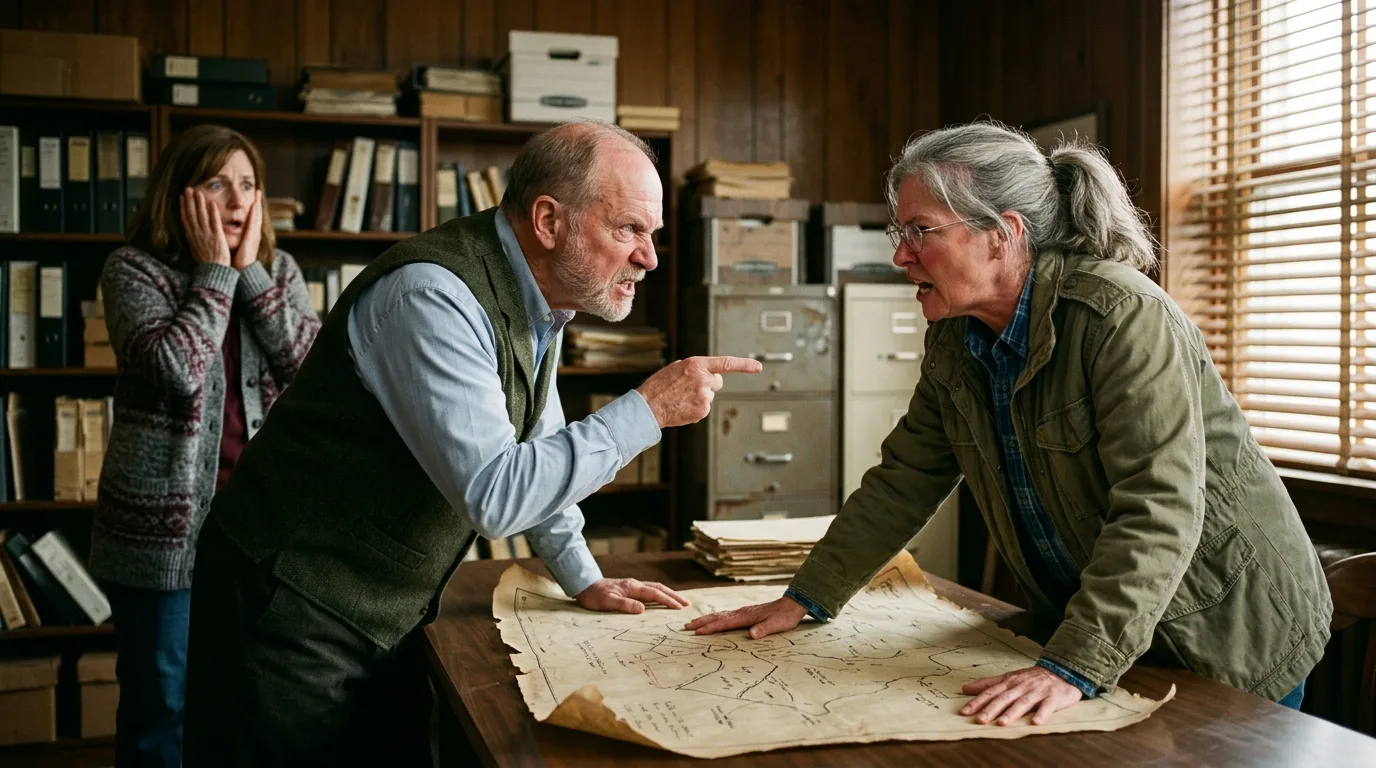
The annual trust review was held the next Thursday in the private back room of the Alder Inn, where the Novaks had held every important dinner since I married in. The room had a fireplace nobody lit and a long table with a white cloth. Susan had ordered the chicken pot pie for everyone, because Joyce liked it.
David brought his mother in on his arm. He wore his good fleece and looked like a man bracing for a pop quiz. Joyce took her seat with her hands in her lap.
Susan arrived last, with a leather folder.
"Thank you all for coming," she said. "I'll keep this brief. The trust has to sell the Main Street building. It's a sad necessity, but Mother's care comes first."
"Susan, are we sure?" David said. "I'm sure we can work this out."
"We've been through it, David. Irene has had every opportunity." She opened the folder and set a document in front of him. "This just needs your signature as co-beneficiary. A formality."
I watched her uncap a pen and hold it out. David took it. He looked at the page the way he looked at a student's late homework, apologetic and resigned.
The pen touched the line.
"Susan," I said, "I was thinking about those beautiful maple shelves Mark built for your shop."
Everyone looked at me. Susan gave a brittle little laugh.
"That's hardly relevant, Irene."
"I think it is." I opened my purse and took out the brown envelope. I laid the receipts on the white cloth, squared them with my fingertips, and slid them toward the middle of the table. "The materials cost eighteen hundred and forty-seven dollars. I have every receipt right here."
"Mark was generous," Susan said. "Everyone knows that."
"He was. That's why I'm wondering what you invoiced the trust for the contractor."
She didn't move. Her hand stayed on the folder, and a muscle in her jaw jumped once.
"What does she mean?" David asked.
"It's a private business matter," Susan said. "It has nothing to do with the sale."
"Who was the contractor, Susan?" I kept my eyes on her. "What was the name on the invoice you submitted to the trust for forty-five thousand dollars?"
The number sat in the middle of the table with the salt shaker and the bread basket.
David's pen rolled out of his fingers and clicked against a water glass. He looked at the receipts and then at the folder under his sister's hand. I watched his face come apart and then clear, the way a window clears when somebody wipes it.
"I held the level," he said slowly. "I carried the boards. Mark built those shelves in her garage. There wasn't any contractor."
"David, you don't understand how these things are structured."
"Ridgeline Millwork." He said it like he was tasting it. "Who is that, Susan?"
She said nothing at all.
Joyce looked from one of us to the next. "Mark made such nice shelves," she said, in a small bright voice. "Is it time for pie?"
Nobody answered her. Susan stood up so fast her chair scraped the floor. She took the folder, picked up her handbag, and walked out of the back room without her coat. We heard the front door of the restaurant, and then we heard nothing.
The waitress came in with a tray of pot pies and stopped in the doorway. David got up and thanked her and asked her, as gently as he asked anything, to give us a few minutes.
---
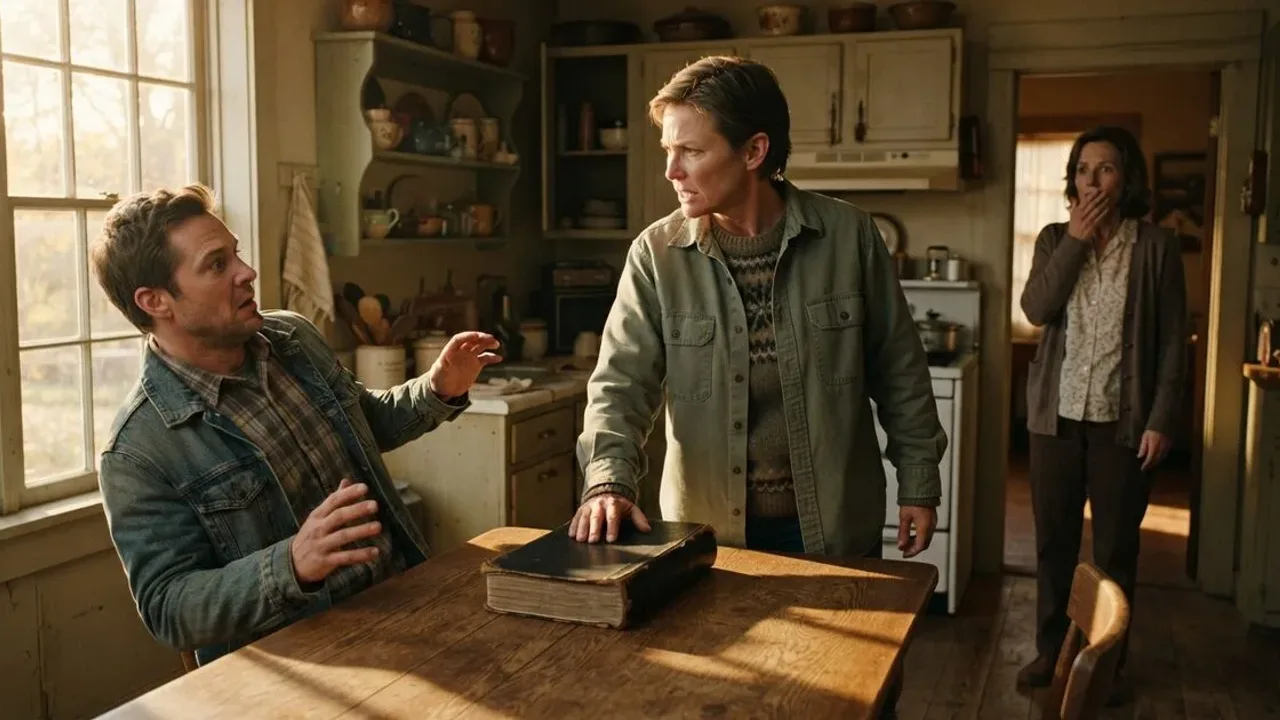
Two weeks later, a lawyer sat at my kitchen table.
His name was Walter Haines. He wore a gray cardigan, and he'd set a folder on the oilcloth next to my sugar bowl. David sat beside him, in the same fleece as the dinner, with his hands folded like he was waiting to be called on.
"Irene, I'll be plain," Mr. Haines said. "The trust's accounts have been reviewed. Susan has been removed as trustee. David is serving in her place."
"I didn't want it," David said. "Somebody had to."
"Susan has agreed in writing to have her future inheritance garnished until the trust is made whole," Mr. Haines said. "In exchange, the family has agreed not to take this further. That means no public filing and no charges."
I poured coffee into three mugs and set one in front of each of them. My hand stayed steady, which surprised me.
"And the bakery?"
Mr. Haines slid a document across to me. "A new lease. Ten years, rent fixed at one dollar a year."
I read it all the way down. I read the line about the dollar twice, as if it might change when I looked away. Then I took the pen David had brought and signed at the bottom, in the plain script I use on the flour orders.
"I wanted to say it myself," David said. His voice cracked. "I'm sorry. I should have asked questions years ago. I let her handle everything because it was easier."
"You didn't know."
"I didn't want to know. That's different."
I couldn't tell him it wasn't. I put my hand over his on the oilcloth and we sat that way for a moment.
"How is your mother?" I asked.
"She asks where Susan is." He looked into his coffee. "I tell her Susan is busy."
Mr. Haines gathered his papers and let himself out. David stood in the doorway a long minute with his keys in his hand, like he meant to say something about Thanksgiving. He didn't. We both knew there wouldn't be a table big enough anymore.
I locked the door behind him and listened to his car start in the alley.
---
The next morning I went down before dawn.
The street was dark and the radiators in the old building ticked as they warmed. I didn't turn on the front lights. I only lit the work lamp over the butcher block, and in its circle I set out a sack of flour, a bowl of water, and the crock of starter.
Mark made that block for me when we first signed on to the building, twenty years ago. He glued the maple in long strips and planed it for a month of evenings. It is scarred now, with knife nicks and a pale ring where a hot pan once sat, and every mark on it is mine or his.
I tipped the flour out and made a well in it. The water went in, then the starter, and I worked it with my knuckles until it came together under my hands, cool and tacky.
Susan's chair at Christmas would stay empty. So would the one beside it. I had the bakery, the stairs up to my own bed, and a paper with a dollar on it. I had won all of it, and the quiet where the family had been was so large I could hear the oven pilot hissing across the room.
I pushed the dough with the heel of my hand, folded it back, and pushed again. Then I stopped and laid my palm on the block. The wood was cold at the edges and warm in the middle where I always worked, and I felt the grain run under my hand, long and even, the way he'd left it.

Comments