"Ninety-five thousand dollars," my brother Wesley said, tapping the appraiser's report against his palm. "I told you Mom was a genius."
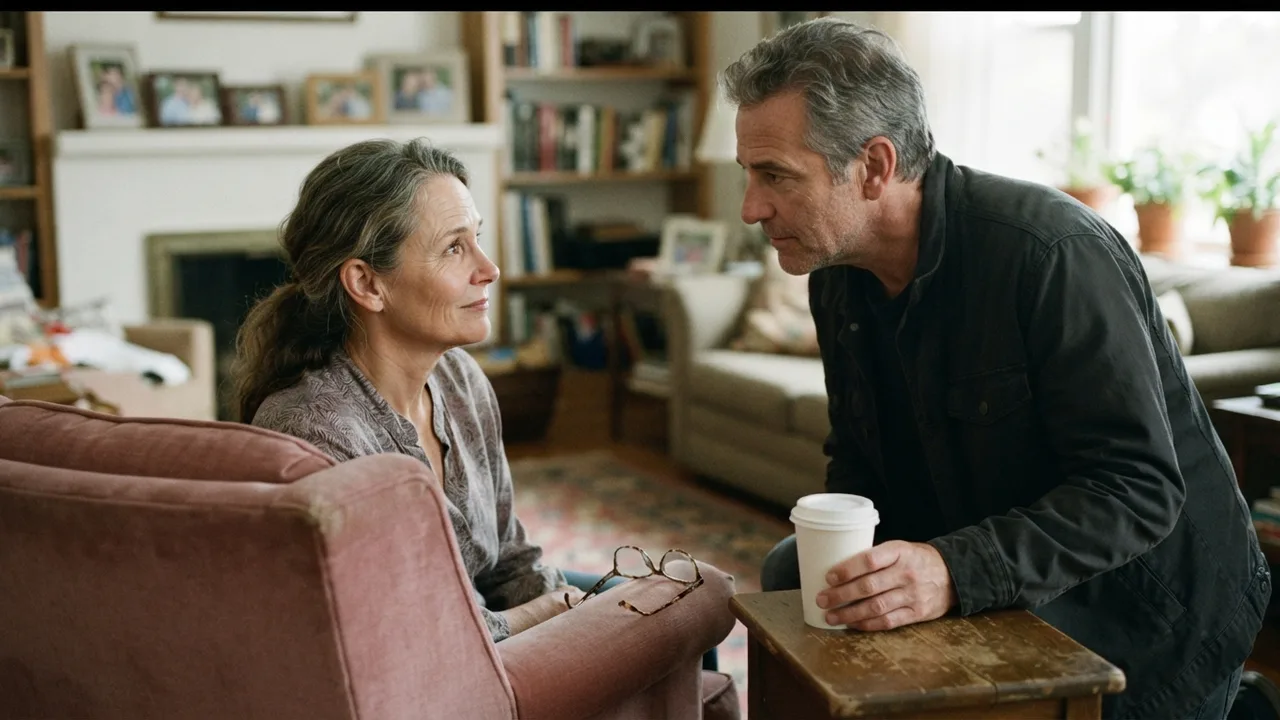
He stood in her front room in a gray suit, and her reading glasses still sat on the arm of the chair. The painting rested on the easel between us, a gorge gone white with snow, and every other canvas she ever finished leaned along the walls. I had promised her in the hospital that all of them would stay in Bryson City.
"It's a beautiful painting," I said. "It isn't a bank account."
"Everything's a bank account, Retta. That's the secret nobody in this town wants to hear."
I have run The Gilded Finch for thirty years, and I know how to look at a thing without touching it. I looked at Wesley's thumb, which kept rubbing the corner of the report until the paper furled. His phone buzzed in his pocket and he let it buzz.
Advertisements
Three months had passed since we buried Mom, and he had driven up from Charlotte every other weekend with a clipboard. He called it handling the estate. I called it measuring the walls.
"I've signed with a gallery," he said. "Piedmont Fine Art. They take the whole collection, 'Cullasaja Gorge in Winter' first. Their man says it could hang in Atlanta by fall."
"You signed."
"As executor. I'm sending you the consignment agreement tonight. You're co-executor, so you'll need to add your name."
"Mom wanted her work here."
"Mom wanted a lot of things." He picked up his keys. "She also wanted a new roof on this house and never once asked what it cost."
He left a smear of cologne in the hallway. I stayed until the light moved off the canvas and across the floorboards, then locked the door behind me and drove home with the wipers going, because a May rain had come down the mountain.
The email arrived at nine-forty, forty-one pages as a PDF. I read every clause at my kitchen table with a cup of decaf going cold, and the word *irrevocable* appeared more often than my own name.
I did not sign. I did not sleep either. Around midnight I stood in the dark kitchen and held the edge of the counter, and I understood that my brother had turned my mother into a line item and put it in my inbox where I could not stop looking at it.
Advertisements
---
Evelyn Monroe met me the next morning in her office at the Blue Ridge Heritage Center, where the radiator ticked and a quilt hung behind her desk like a flag. She had known Mom for decades and she hugged me hard enough to knock my glasses crooked.
"Tell me," she said.
I told her about Piedmont and the contract and Atlanta by fall.
"Oh, Loretta." She sat down slowly. "We want the collection. Clara talked to me about it more than once, right in that chair. We could run a campaign, a bake sale if we had to, and every church in the county would put something in the plate."
"But."
"But ninety-five thousand dollars is more than our whole acquisitions budget would see in several years." She turned a pencil over on the blotter. "I can promise you a fair price and a good wall. I can't promise you anything that sounds like Charlotte."
"A fair price is all I'm asking."
"Then you'll have to make your brother ask for the same thing."
I called him from the Ingles parking lot, between a minivan and a cart someone had left rolling. Wesley listened with a small breath at the other end, the kind he makes when he is about to enjoy himself.
"A bake sale," he said, and he laughed. "Retta, that's the sweetest thing I've heard all year."
"It's what she wanted."
"It's what she said she wanted, when nobody had offered her anything." The laugh was gone. "Sign the agreement."
"No."
"Then I'll let Doug Pruitt explain it to you."
Doug Pruitt's letter reached The Gilded Finch on Thursday, on thick cream stock with a Charlotte return address. It said that my refusal to cooperate as co-executor was a breach of fiduciary duty and that remedies would be pursued.
I read it standing behind my own counter, between a rack of walnut corner samples and a half-built shadow box for the Presbyterian church. My hands were steady enough to square the letter against the edge of the mat cutter, which is the only thing I could think to do with it.
Wesley and I had shared a bunk bed once. We had split a bag of buckeyes on this very street. Now his lawyer used my full legal name twice in one paragraph.
---
I had not let myself remember it in years, but that night it came back whole.
I was in my thirties, and Mom and I were sitting on her porch shelling beans when she said, "I need to tell you something, and you can't ever tell your brother." She kept her eyes on the colander. "I didn't paint the gorge. Your father did. He painted exactly one picture in his life, and he was so shy about it he would have burned it in the yard. So I said it was mine."
"Why?"
"Because it was good, Loretta. Because it ought to be seen." She smiled at the beans. "And because he gave me a look when I said it, a look I'd have lied for every day of my life."
Dad built every frame in that house, and he was not a man who could leave a piece of wood unsigned. If the painting was his, then the stretcher bars behind the canvas were his too, and he would have marked them.
I drove to Mom's house on Saturday with my tool roll on the passenger seat. Wesley's Audi was already in the driveway.
He met me at the door with one arm across the frame.
"What are you carrying?" he said.
"My tools. I want to look behind the gorge."
"Why?"
"Because I think the attribution is wrong, Wesley. I think Dad painted it."
He stared at me. Then he laughed, short and unpleasant, and his arm did not move.
"Dad hung drywall and made cradles," he said. "You want to stall the sale, so you're inventing a dead man's hobby. You came to take it off the wall, didn't you? Before Piedmont's courier gets here Monday."
"I came to look."
"You came to steal it." His voice went up and cracked on the last word. "I have a lawyer, Loretta. Leave."
"Let me in my mother's house."
"Our mother's house, and I am the executor of record." He stepped forward until I could see the sweat at his hairline. "Go home."
I stood on the porch where I had once shelled beans and understood that he meant it. My own brother thought I was a thief, and every word I had left was the kind that would get me called a liar next.
I took my tools back to the car. The pines along the drive were dripping from the morning rain, and I sat with both hands on the wheel until the shaking stopped.
---
Evelyn held the memorial for Mom on the last Sunday of May, in the big room at the Heritage Center where the folding chairs are always a few short. People stood along the back wall in their church clothes. Someone had brought a pound cake, and the coffee urn gurgled by the door.
The painting waited on an easel at the front, because Wesley had lent it for the day and because Evelyn would not hold the service without it. I had not seen it since the porch. My tool roll sat in my lap, and I had told no one why.
Mr. Alder from the hardware store spoke first, about how Mom paid him for a box of brushes in quarters. Annette Cole, who taught third grade, said Mom once painted a whole mural of the Little Tennessee on a classroom wall in a single weekend. People laughed, and somebody dabbed at her eyes with a church bulletin.
Then Wesley stood. He had a fresh haircut and a navy suit, and he gave the room the smile he uses on clients.
"Thank you all," he said. "Mom would have been embarrassed by this much fuss, but I think she'd have eaten the cake." More laughter. "I want you to know her gift is going to be recognized far beyond these mountains. A Charlotte gallery has agreed to represent her, beginning with this painting, and her genius will finally be seen the way it deserves."
A few people started to clap. The sound spread along the back row, uncertain, building.
I stood up before it could fill the room.
My knees had gone loose, but I walked the length of the aisle with the tool roll under one arm and a dish towel bundle in the other hand. Evelyn watched me come and did not stop me.
"Wesley," I said at the easel, "there's something everyone needs to know."
He had stopped smiling. The clapping thinned and died, and a chair creaked somewhere behind me.
I had not slept Saturday night. After the porch I had knelt in my shop at the oak tool chest Dad built the year I opened the doors, and I had pulled the bottom drawer and turned it over, because every drawer he made was marked underneath.
There it was, *J.B.* cut with a pocketknife, and below it in pencil capitals, *FOR LORETTA'S SHOP.* I had pried the bottom panel out of its grooves, and that chest would never close right again.
I laid the painting face-down on the cloth-covered table Evelyn had set for the guest book and put the drawer panel beside it, pencil side up. The gummed tape sealing the paper backing had gone brown and brittle, and it was whole along every edge.
"Nobody has been behind this paper," I said, "since the man who sealed it."
I slit it with the utility knife and folded it back, and the room was so quiet I heard the paper curl. I ran my fingers down the inside of the left bar, over the grain, over a slight burr in the pine.
A *J* and a *B*, no bigger than a thumbnail. Under them, in pencil, a line of capitals.
"'For Clara. You gave me the courage. J.B.'" My voice came out smaller than I wanted. "That's my father's mark, and that's his hand."
I held the drawer panel beside the bar. The *J* in each had the same hooked tail, and the crossbar on every *A* ran past its own legs.
Wesley's face emptied first. Then the color came up his neck.
"You wrote that," he said, loud enough for the back row. "You carved it last night in your shop. You've had a knife and a pencil your whole life."
"The tape was whole, Wesley. Saturday you stood in Mom's doorway with your arm across it so I couldn't get inside. When was I supposed to have gotten behind that paper?"
"Then Mom put it there." He turned to the chairs. "Dad marked every frame he built. He scribbled a sweet note on the back of her painting, and that doesn't make it his."
Evelyn had come up beside me, and she was not looking at the back. She was looking at the front of the canvas.
"Clara signed everything she finished," she said. "Lower right corner, in red."
"Every time," Annette Cole said from the second row. "The river mural has it big as a playing card."
"There's nothing in that corner, Wesley."
"She forgot once."
"Honey," Evelyn said, "she never forgot a thing in her life."
He came close then and dropped his voice, the way he must have done across a hundred desks.
"Retta, fine, say it's Dad's, because Piedmont would eat that up, a hidden masterpiece. Don't do this in front of everyone. We sell it together and split it."
"Under whose name?" I said. "You've known since Saturday what I thought, and you'd have sent that courier Monday anyway."
"And what have you got? A pencil line and a dead woman's friends." His eyes went over the room. "You carried a knife into her memorial. That's what they'll remember."
"They'll remember I laid every bit of it on a table where they could see it," I said. "I won't sign Piedmont's paper, and I won't put her name on his painting."
Nobody spoke. Near the door a woman said "Oh" very quietly. Mr. Alder turned his hat around in both hands, and Annette looked at the easel and then at the floor, like a guest who has walked in on something private.
I had kept Mom's secret for years, and I had just opened it at her own memorial. Wesley sat down hard in the nearest folding chair and did not look at the drawer panel again.
---
Piedmont's man came to Mom's house Monday at ten, in loafers that had never met a gravel drive. Wesley had called me Sunday night. "He wants to hear it from the co-executor," he'd said, and nothing more.
The gorge sat on its easel again, backing open, the pencil line showing. Mr. Tolliver set down a flat leather case, bent to the left bar, and stayed bent a long time.
"Mr. Byrd gave me the outline on the phone," he said at last. "I wanted to see it for myself." He straightened. "It's a lovely picture. It isn't the picture in our agreement."
"It's the same canvas," Wesley said.
"The agreement says Clara Byrd, a regional painter with work behind her. That's what our clients buy, a name and a shelf of other canvases. One painting by a husband who never made another is a nice Sunday afternoon."
"The rest of her work." Wesley waved at the canvases leaning along the walls.
"Is pleasant. Church-fair pleasant. We took it for the gorge's sake." He snapped the case shut. "Piedmont withdraws. I'll send a release for both signatures."
"You told me it could hang in Atlanta."
"With her name under it, I did." Mr. Tolliver looked at me. "I'm sorry for your loss, Ms. Byrd. I'd keep that bar out of the damp."
The screen door clapped behind him. Wesley took the appraiser's report out of his jacket, looked at the figure, and folded it in half, and in half again, until it would not fold.
"I owe a man in Charlotte over $80,000," he said. "A deal went under last winter, and I borrowed against what I thought Mom's paintings would bring. I wasn't going to tell you."
"I figured it was something like that."
"How?"
"You looked at your phone like it was a snake."
He laughed, a real one, and it cost him. "I called you a thief in front of the whole town."
"You did."
"I'm not going to call it a misunderstanding."
"Good," I said. "It wasn't."
I told him Evelyn could raise a fair price for the whole collection, the gorge hung in the middle, credited to Jonathan and Clara Byrd with the frame beside it so people could read how it happened.
"Dad would have hated that."
"Mom wouldn't."
"No." He almost smiled. "She wouldn't."
"My half goes toward what you owe," I said. "You sign beside me, and you spend your Saturdays at the Center sorting and labeling every canvas."
"Retta, that's the roof."
"The roof has held this long. A pan in the hall can hold a while yet."
He stood looking at me with the folded report in his fist. "I don't know how to be your brother right now."
"You come by on Sundays. You bring your own coffee. We'll see."
I will not pretend it cost me nothing. Dad's chest had a drawer that would not shut, the town knew what had belonged to my parents alone, and the roof stayed a worry. The Mom I carried in my head, the woman with paint on her wrist, had a husband's name standing next to hers now, and I loved her more for it and missed the simpler one anyway.
---
The next Sunday he came up the porch steps at nine with two paper cups from Hardee's, and he did not check his phone.
The gorge had gone to the Heritage Center on Friday in the back of my truck, wrapped in a quilt. The easel stood empty in the front room, and Mom's reading glasses still sat on the arm of the chair.
Wesley set one cup down beside them and left the glasses where they were.
Rain started on the tin of the back porch. In the hall, the first drip of the afternoon found the pan, and neither of us got up.

Comments