My nephew Trevor wanted me to co-sign a one-hundred-and-fifty-thousand-dollar loan to bring his father's dead dream back to life. If the payments stopped, the bank would come for the only thing I owned that mattered, my paid-off house on Alder Street.
He set the prospectus on my desk on a gray Tuesday in November. It was a thick packet in a clear plastic cover, with a glossy photograph of Ballard Mountain Lodge on the front. The photograph was twenty years old. Snow on the roof, smoke from the chimney, every window lit.
I turned the pages slowly. Selling houses in Bridger's Pass has taught me that a person's confidence is usually printed in the largest font.
Advertisements
"Phase one is the roof and the lift house," Trevor said. He wore a quilted jacket that cost more than my winter boots, and he kept turning his phone face down on his knee, then face up. "We're booking holiday weekends by Christmas."
"You have the roof at forty thousand dollars."
"That's what the contractors gave me."
"Which contractors?"
"I manage construction projects for a living, Aunt Mer. I know what things cost."
"You know what they cost in Burlington. With the rot that's in that building, I'd say twice your figure and hope. And you have the lodge full every weekend from Thanksgiving to April. Nobody's lodge is full every weekend, Trevor, not even in the good years."
He went still. The smile stayed on his face but moved off his eyes.
"Wow," he said. "Okay."
"That's the math. These numbers don't pencil out."
"It's not math. It's that you have no faith in our own family. Dad has carried this for twenty years and you're sitting there with a pencil."
Advertisements
"I haven't said no. I've said show me better numbers."
He stood and left the packet where it lay. "Grandma's going to be so disappointed," he said, and the front door shut hard enough to rattle my framed broker's license.
I sat with my coffee going cold. I had been the aunt who got him his first summer job at a title office, and in one conversation I had turned into the villain of a story I hadn't known I was in.
On Thursday a text came from him. *Brunch Sunday at Pike's. Grandma's coming. Please.*
I went, because Lydia is eighty and I am a dutiful daughter, whatever else I am.
Trevor had picked the big booth by the window, where everyone in Pike's Diner could see us. He'd collected my mother from Maplewood Assisted Living that morning, and the aides had dressed her in her good lavender cardigan with her white hair set. Stephen sat beside her in a flannel shirt, both hands around a mug, studying the coffee.
"Picture it, Grandma," Trevor said, before I'd got my coat off. "The lift turning. The lot full. BALLARD on the sign again, lit up, and everybody in town driving past it."
"Oh, Trevor," Lydia said. Her voice shook, but every word came out clear. "Your grandfather used to stand right at the bottom of that hill and say it was the only honest thing he ever built."
At the next booth Gail Dufresne from the library stopped chewing. Hank Pelletier, who plows my driveway, tilted his head our way over his plate of pancakes.
"Meredith hasn't decided yet," Trevor said, loud enough to carry. "She's looking at the numbers."
"Numbers," my mother said. She set her fork down. "Meredith, don't stand in the way of your family's one chance to fix things."
The whole diner heard it. Gail looked down at her eggs. Hank found something interesting in the syrup.
"Mother, I'm not standing in anyone's way."
"Then sign the paper."
I looked across the table at my brother. Stephen hadn't lifted his eyes since I sat down. He turned his mug a little on the Formica, and then he turned it back.
When the check came, Trevor had somehow left it on my side of the table.
Monday afternoon I drove up Notch Road to see the thing I was being asked to bet my house on. It is a fifteen-minute drive when the road is dry, and that week it was frost heaves and mud, with bare maples standing gray on both sides. Stick season. The mountain looked like a rug somebody had scraped down to the backing.
The gate chain hung loose. The sign still stood, but BALLARD MOUNTAIN had lost enough letters to read as BAL ARD MOU TAIN. The roof of the main lodge sagged in the middle like a swaybacked horse, and plywood covered the windows I remembered lit.
Behind the lodge, past the lift house with its door hanging off one hinge, I found a rusted pickup I knew. Stephen's.
He was kneeling in front of the main chairlift motor, a block of orange-brown rust the size of a chest freezer. He had a rag in one hand and a tin of brass polish at his knee. On the housing was a small manufacturer's plate, no bigger than a playing card, and it was the only bright thing on the mountain.
He rubbed one corner of it in small circles. He rubbed the same corner for so long that I coughed to let him know I was there.
"Stephen."
He didn't turn. "Mer."
"What are you doing?"
"It was dirty."
"Is somebody coming up to look at this? A contractor, an engineer, anybody?"
"Trevor's got it handled." He moved the rag to the next corner. "Go home. It's going to snow."
I stood there longer than I meant to. Nobody polishes a plate on a motor he plans to haul to the scrapyard, and nobody polishes it like that unless he's saying something to it. He wasn't getting ready for anything. He was tending the thing, the way you'd tend a plot at the cemetery.
I drove down the mountain with my headlights on at three in the afternoon. That night I lay awake counting ceiling cracks I knew by heart, and I saw that brass plate every time I closed my eyes.
Tuesday morning I made coffee, sat down at my desk, and opened the logins that come with my license. I had the county parcel database, the state land-use portal, and the town clerk's permit index, all in a row on my screen. I typed in the lodge's parcel number from memory.
A building permit would have been needed for a new roof. A demolition permit would have been needed for the rotted annex. Anything touching the septic or the stream would have needed a wastewater filing, and anything on that scale of reopening would have needed state land-use review. I searched all of it.
Nothing. The last entry on the parcel was a property tax bill.
I called the town clerk anyway.
"Pam, it's Meredith Ballard. Has anybody filed anything on the old lodge parcel?"
"Not so much as a driveway cut, hon. Why, you got a buyer?"
"No. I'm checking something for family."
"Well, tell them to come see me when they're ready. It's all just the way it was."
I hung up and looked at the prospectus where it had sat on my desk since his visit. All that glossy paper, the projections, the pro forma, a rendering of a deck with people laughing on it. Not one page had a permit number. I had been so busy checking his arithmetic that I hadn't checked whether he'd done anything at all.
He wasn't wrong about the numbers. He was lying about the whole thing, and I couldn't think why.
On Friday another text arrived. *Sunday dinner at your place? Celebration of our new partnership. Dad and Grandma will come. I'll bring dessert.* He hadn't asked what I'd decided. I wrote back: *I'll cook.*
I made a pot roast with carrots and potatoes from the farm stand on Route 7. By five on Sunday the kitchen windows were fogged and the dining room table was set with my mother's good china, the pattern she'd given me when I married. Stephen came in holding his cap in front of him. Lydia took the chair with arms. Trevor arrived last with a white bakery box from Hannaford and a leather folder under his other arm.
The pot roast went around. Lydia told the story about the winter the lodge sold out for Presidents' Day and the kitchen ran out of cider donuts by noon. Trevor laughed in the right places. Stephen ate three bites and moved the rest around.
After the apple pie, Trevor wiped his mouth and opened the folder.
"Just the signature pages, Aunt Mer," he said. "I've put yellow flags where you sign."
He slid the forms across the tablecloth and laid a pen on top. It was a good pen, heavy, the kind you buy for closings. I'd bought a dozen like it myself.
I folded my hands in my lap and left the pen where it was.
"Trevor, there's a problem," I said. "I spoke with the county records office last week. There are no permits filed for the lodge. Not for the roof, not for demolition, not for anything. There is no renovation planned, is there?"
The kitchen clock ticked. My mother's fork clinked against her plate.
"What are you talking about?" Trevor said. "We're in the pre-filing phase. That's how it works."
"That isn't how it works, and you manage construction projects."
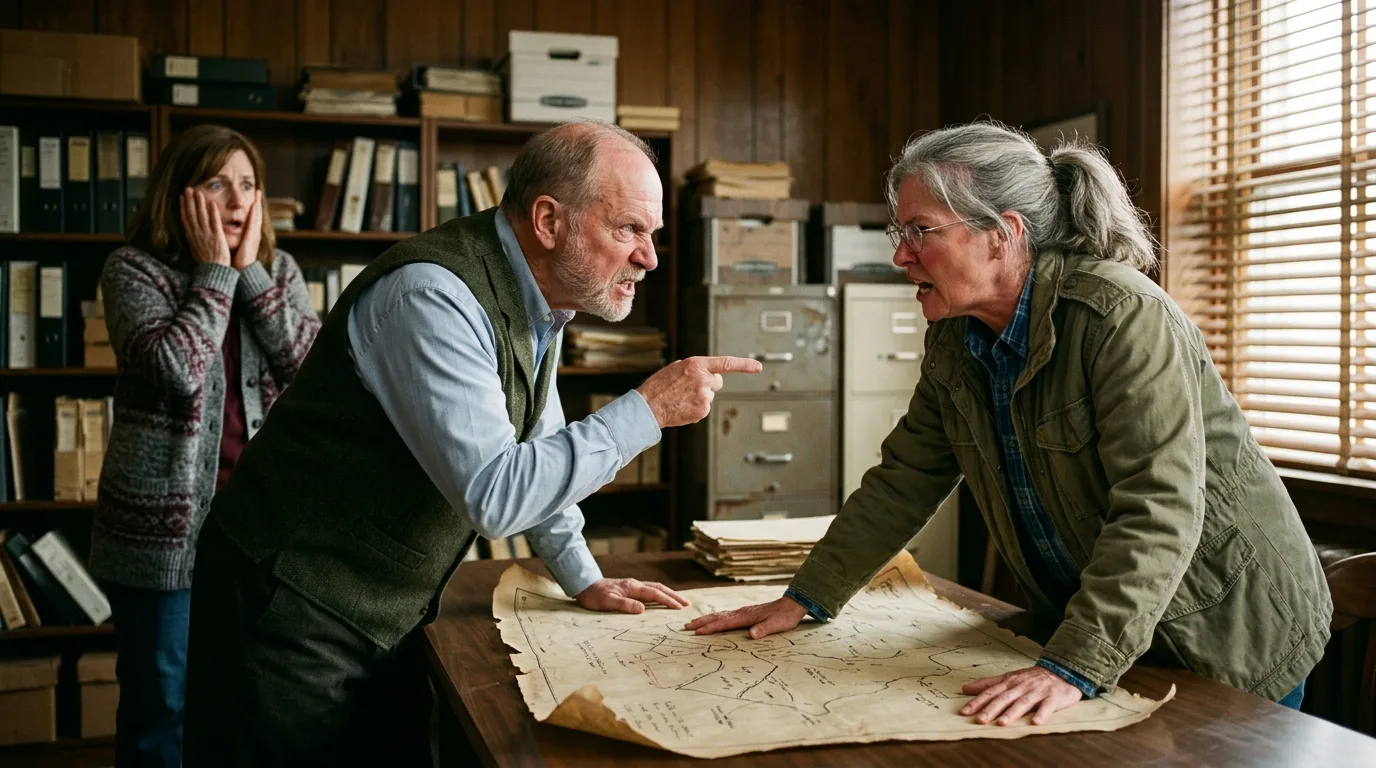
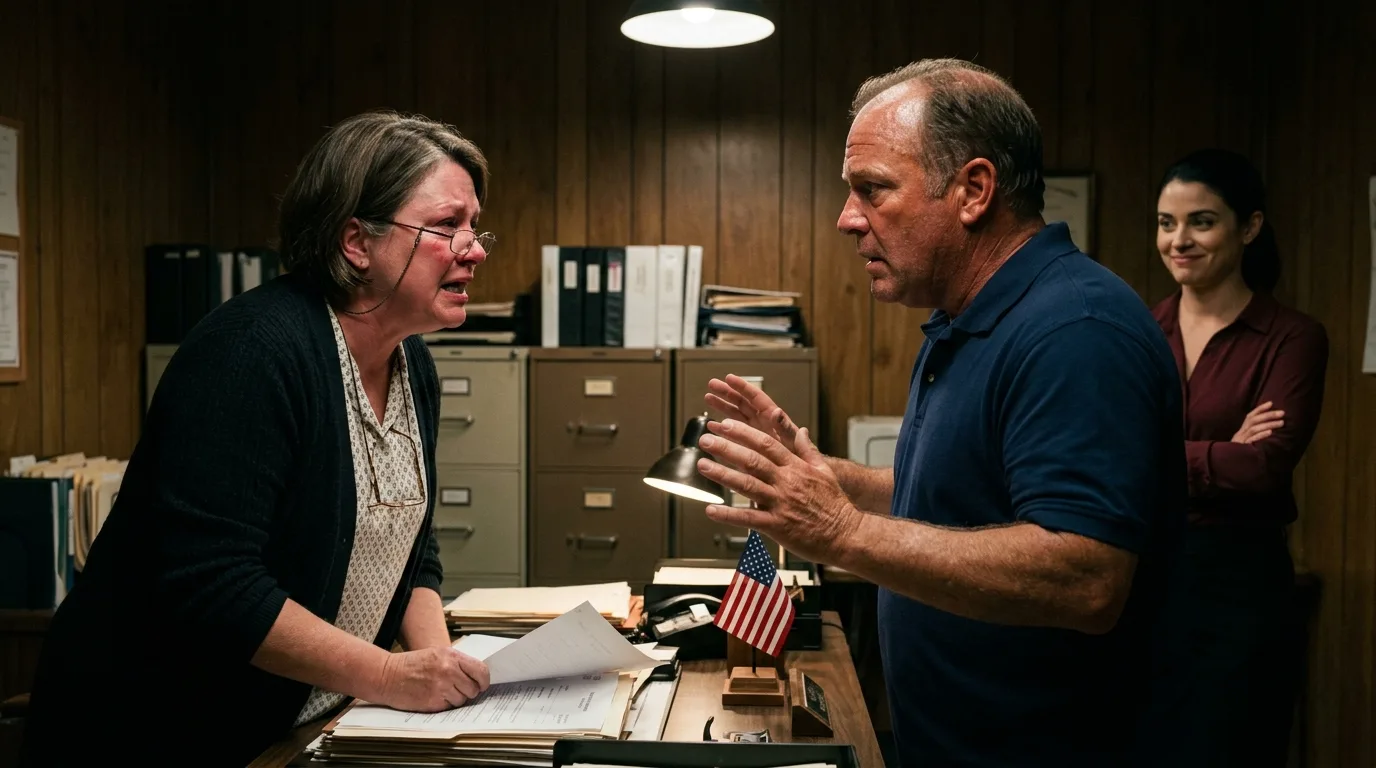
"Oh, here we go." He pushed back from the table. His chair scraped the hardwood I'd refinished myself. "You're doing this on purpose. You've always been jealous of that lodge, Aunt Mer. Dad got it and you got a real estate license and a savings account, and you've never forgiven us."
"Trevor," Lydia said.
"No, Grandma, she's sabotaging this. She goes sniffing around the county like we're criminals." He swung toward his father, and his voice cracked in the middle. "Dad, tell her. Tell her what this means to us."
Stephen didn't answer.
"Dad."
"She's cold," Trevor said, turning back to me. "That's what you are. You'd rather watch your own family drown than risk one dime of your precious house. You're doing it out of spite."
I didn't raise my voice. I have never raised it in public, and I wasn't going to start in my own dining room. I kept my hands folded and watched my brother.
Stephen looked at me. Then he looked at his son, who stood red-faced with his hand still pointing at me, and something in my brother's shoulders let go. It was the look of a man setting down a bag he'd been told to carry until he died.
I thought of him on his knees in the lift house, rubbing one brass corner raw.
"It wasn't a business failure, was it, Stephen?" I asked. "You didn't lose the lodge. You gave it up."
He put both palms on the table. His hands were shaking.
"Steve," Trevor said. "Dad. Don't."
"There was a night," Stephen said. He said it to the tablecloth, in the short sentences he always used. "Late in the fall. Trevor was eighteen. He took the maintenance truck up to the lift house with Wade Pruitt, to show off, I guess. Boys do."
"Stephen," my mother whispered.
"He lost control of it. It went into the lift motor." He stopped and swallowed. "Wade was hurt. Bad. He never walked right again. And the lift was gone, Mer. The whole drive mechanism. I'd let the insurance lapse that fall. That part was mine."
Nobody moved. Trevor had gone the color of the china.
"There'd have been charges," Stephen said. "He'd have been finished before he started. So I told everyone the lodge failed because of me, and I let it. I sold what I could, I paid Wade's family what I had, and I let this town think I was a fool." He looked up at me for the first time. "Better a fool father than a ruined son."
"And now?" I said gently.
"Wade came back this summer. He wants a hundred and fifty thousand, or he goes to the papers and the state's attorney." Stephen's voice thinned out. "Trevor couldn't ask a bank for blackmail money."
"So he asked me for a revival."
"I'm sorry, Mer."
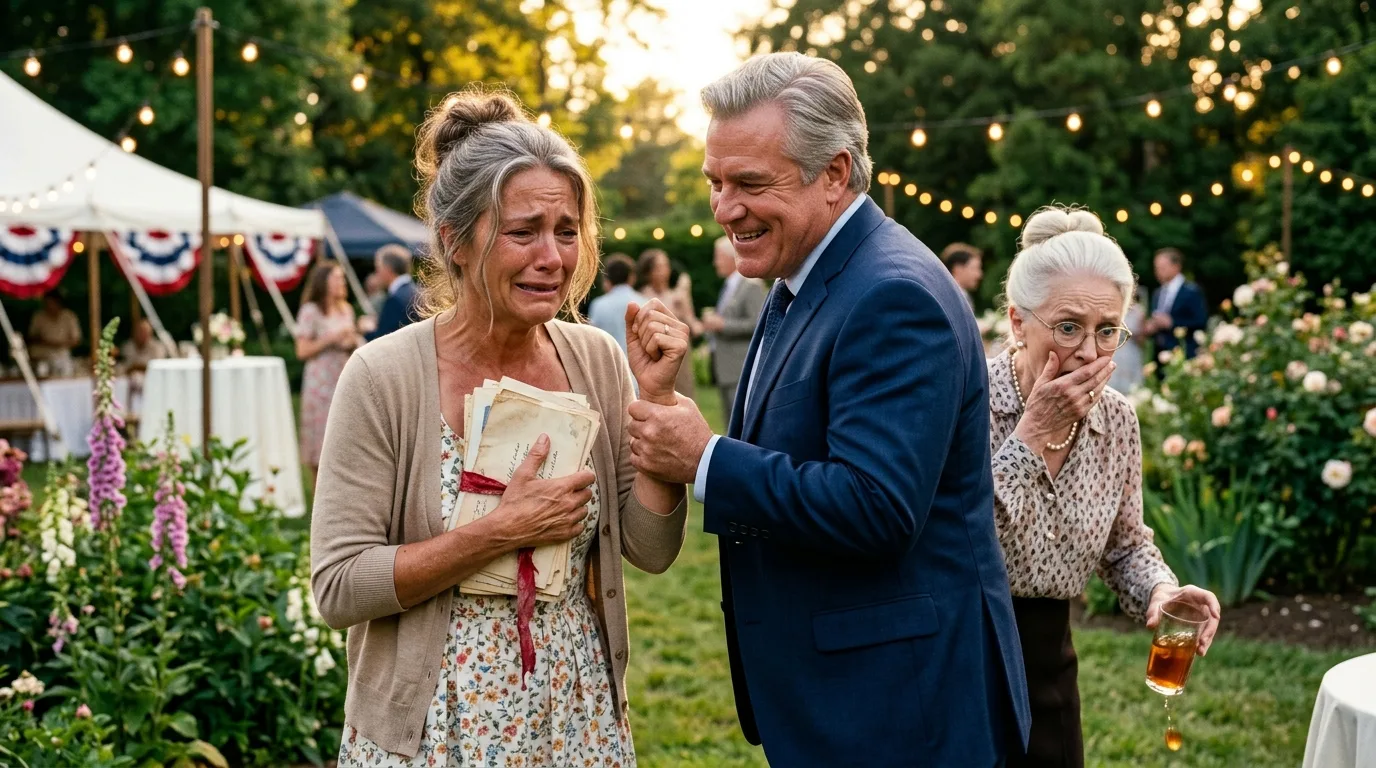
My mother was crying without any sound, tears running straight down into the collar of her lavender cardigan. Trevor sat down hard. He put his elbows on my tablecloth and his face in his hands, and the confident man in the expensive jacket was gone. What sat in his chair was an eighteen-year-old.
"I didn't know what else to do," he said into his palms. "Every time I thought about telling someone, I saw Wade's face."
I stood up and came around the table. I didn't touch him. I picked up the forms with their yellow flags and the heavy pen, and I held them where he could see them.
"You don't need my signature, Trevor. You need a lawyer."
He lifted his head.
"A real one, who does this kind of thing. Wade has a claim, and he also has a crime of his own, because blackmail is one. A lawyer can put both on the table. You settle it properly, once, with paper that has his name on it too."
"With what money?" Trevor said.
"The lodge land," Stephen said quietly. He was looking at his son the way I hadn't seen him look at anybody since I was thirty-two, straight on, with nothing held back. "It's worth something. Not much. We sell it, and we pay what's fair, and we stop paying what isn't."
"Dad, the Ballard name—"
"The name's already gone, son. I spent it. Let's use what's left."
Trevor nodded slowly. He didn't say anything else.
"I'll drive you both to the first appointment," I said. "I'll sit in the room. I won't sign anything."
My mother spoke at last, her voice small and sharp. "Twenty years I've looked at you, Stephen, and thought you couldn't hold on to a thing." She pressed a napkin to her mouth. "Take me home, Meredith. Please."
I drove her back to Maplewood in the dark. She didn't speak for the whole length of Main Street, and at her door she took my arm instead of the aide's. Up the walk I could feel how light she was.
Stephen and Trevor left together in Stephen's truck, one headlight dimmer than the other.
Four days later it snowed for the first time that year, an inch of wet white that was gone off the road by noon. I sat in my home office with the blinds half open. The house had been quiet since Sunday, and I'd noticed how quiet I'd let it get over the years.
I had my house. I had everything on the balance sheet that I'd had the week before. But I'd lost a brother I'd been quietly sorry for, a fool I'd felt kind toward, and I'd gotten in his place a man who had given up twenty years for his boy. I'd lost a nephew too, and got a frightened one back, which wasn't a swap I would have chosen. When the phone rang now, I would not know which version of my family was calling.
The loan packet still sat on my desk where I'd carried it from the dining room table. A yellow sticky note was stuck to the cover in Trevor's loopy engineer's handwriting. *Thanks for believing in us. —T.* He had written it before dinner, when he still thought I would.
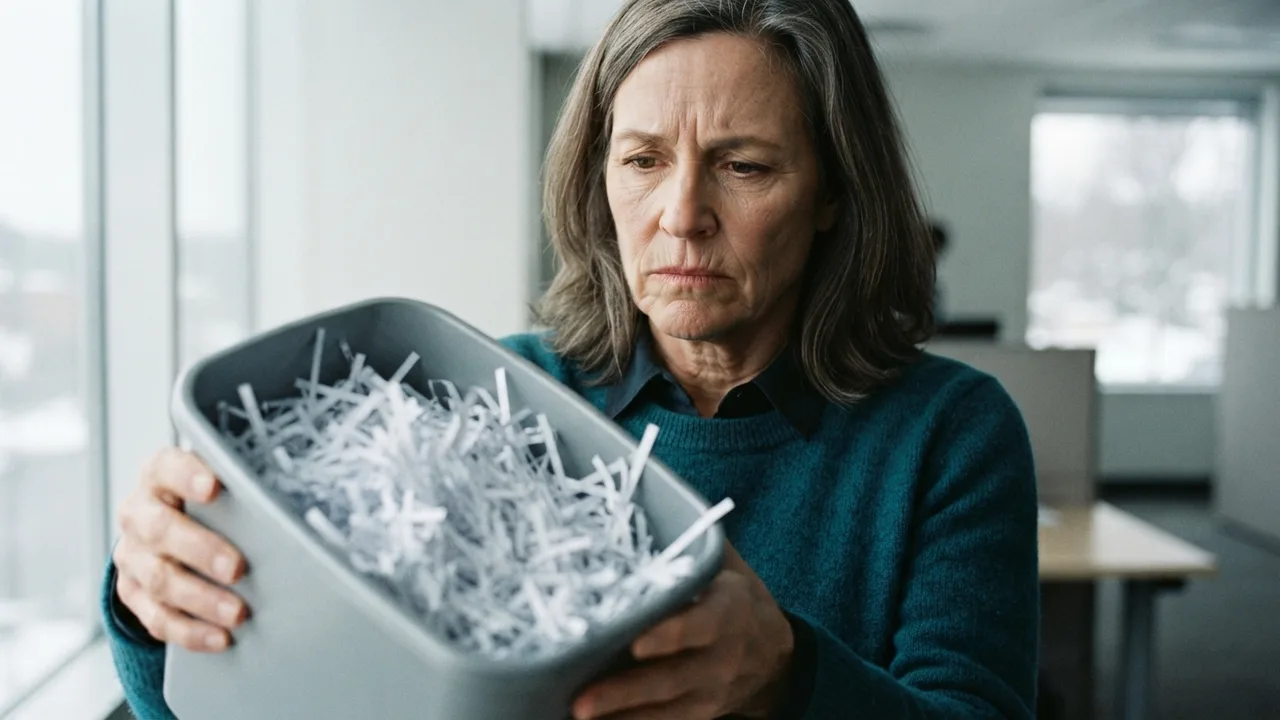
I looked at it for a long time. Then I peeled the note off, set it face up beside the keyboard, and lifted the first page to the shredder.
It took the paper with a low, even whir. I fed it the second page, then the third, the projections and the pro forma and the rendering of the deck with all those laughing people. The only sound in the room was the motor, and the only thing I had to do was keep my hand moving.
When I finished, I pulled the bin out and set it on my blotter. Inside lay a neat drift of pale strips, soft as snow, where the thick, hopeful packet had been.
Comments