The lock on the cash office door, the one I'd had a key to for thirty-eight years, had been changed without a word to me. I was standing there with the old brass key in my hand when Preston came up behind me, scrolling his phone.
"We need to run leaner, Josephine," he said. "Payroll is the biggest line I've got, and yours is the biggest line in it."
I put the key in my apron pocket. It was the only thing I could think to do with it.
"You changed the lock," I said.
"Insurance requirement. Fewer keys, fewer liabilities." He still hadn't looked up. "I'll have a key cut for you if the carrier signs off."
"Celia never had an insurance man who cared who held the key."
Advertisements
"My mother ran this place like a church supper." He smiled at his screen. "We're optimizing now."
I went back to the floor and stocked canning lids until my hands stopped shaking. Oakhaven Supply & Sundry had been in Celia Hawkins's family since the year it opened, and she had handed it to her son on a Friday in September with a hug and a casserole dish.
By the end of October he had put in a digital-only inventory system. He called it a platform. My administrative access was gone by Monday, and the screen in the back office told me so in polite gray letters.
He found me Tuesday week, writing in the green ledger I'd kept every day since before he could drive.
"What is that?"
"The daily log. Deliveries, counts, who came in asking for what."
"It's all in the system now." He tapped the ledger with a pen, not his finger. "Duplicate records are a liability. I need you to stop."
"Celia read these every Friday."
"Celia isn't the owner."
I closed the ledger and said, "All right, Preston." He nodded and went off to take a call.
That night I sat at my kitchen table with a cup of decaf and wrote the day out from memory, every count and every delivery. Then I wrote down what he'd said about the ledger. My bungalow is a ten-minute walk from the store, and I had never carried one piece of store business home in thirty-eight years.
Advertisements
I felt like a woman sneaking a bottle into a church. I wrote anyway, until my pen ran dry.
The jam went next.
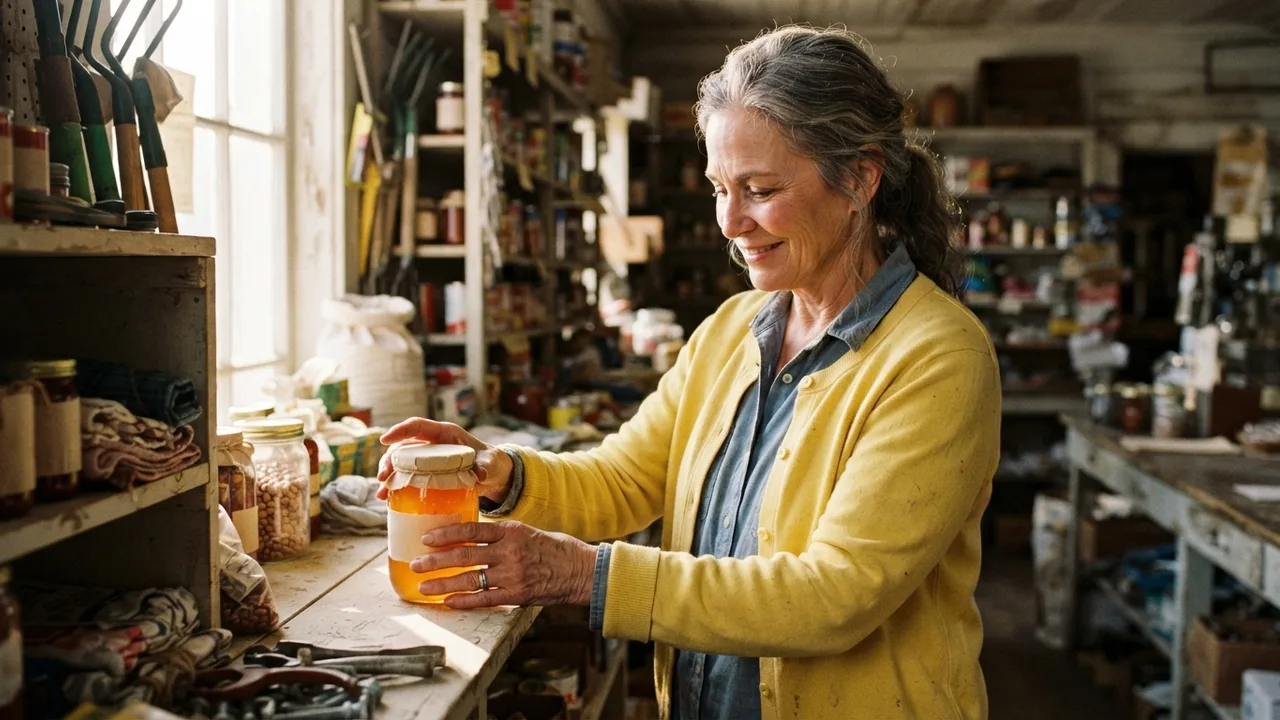
Marguerite Tilley had brought her jars in every second Thursday since before the highway was widened: muscadine, blackberry, pepper jelly with the labels written in her slanted blue hand. She came in that Thursday with her crate and found Preston at the counter.
"I'm sorry, Mrs. Tilley," he said. "Low margin, poor brand alignment. We've moved to a national supplier."
"Brand alignment," Marguerite said.
"It's a consistency issue."
She looked at me. I was holding a box cutter and a stack of flattened cardboard, and I did not say anything, because I didn't know what to say that wouldn't cost me my job on the spot.
"Josephine?" she said.
"I'm sorry, Marguerite."
"Well." She hitched the crate onto her hip. "You'd have said something once."
She went out into the cold, and I watched her cross the lot in her good wool coat. The new jam arrived Monday in plastic tubs with a cartoon peach on the lid.
That evening I took what was left of Marguerite's shelf stock to the register myself. Dolores Quintana, who had worked the front for twenty years, rang me up with her eyes on the screen.
"Josephine, that's all of it?"
"All of it."
"It comes to a lot."
"Most of my grocery money for the week. I know what it comes to."
She bagged the jars in two paper sacks, slowly, as if the jam might break. "He asks me for my password on Tuesdays," she said, so low I almost missed it. "When the lights flicker. I didn't think anything of it."
"Did you give it to him?"
"No. He always says never mind, he'll use his own." She wouldn't meet my eye. "I don't want trouble."
"Nobody's asking you for trouble," I said. "Just remember it."
I carried the sacks home and lived on Ingles rotisserie chicken and saltines for the rest of the week. The jars sat in a basket on my counter, thirty-odd of them with Marguerite's handwriting facing out, and I couldn't look at them without feeling I'd done a poor job of apologizing.
The weekly report came to my desk every Friday, because Preston had forgotten to cut me off that list. In the third week of November I started reading it the way I used to read a stranger's check.
The write-offs were all shipping damage: a table saw and a cordless drill set, then a premium cooler, the kind that keeps ice for days, which sells for a good bit more than I'd pay for a used truck tire. Each of them was entered on a Tuesday.
Tuesday is my day off. It has been since the year I turned fifty.
I tried to open the original transaction details. The system gave me a gray box that said *Insufficient permissions.* I tried again, as if the box might change its mind.
What the system didn't know was that the old dot-matrix printer in the stockroom, the one I'd wired to the back office years before, still printed a nightly summary at close. Preston had never found it. It sat behind a pallet of birdseed, and every morning I tore off the paper and folded it into my apron.
By Saturday I had a stack of those summaries at home, and I laid them out on my table. The saw showed up on a Tuesday as a return, then as damaged. The refund went to a store gift card. Ninety seconds later, that same card number paid for a stack of Visa gift cards.
Every one of them carried a manager's code. It was Preston's.
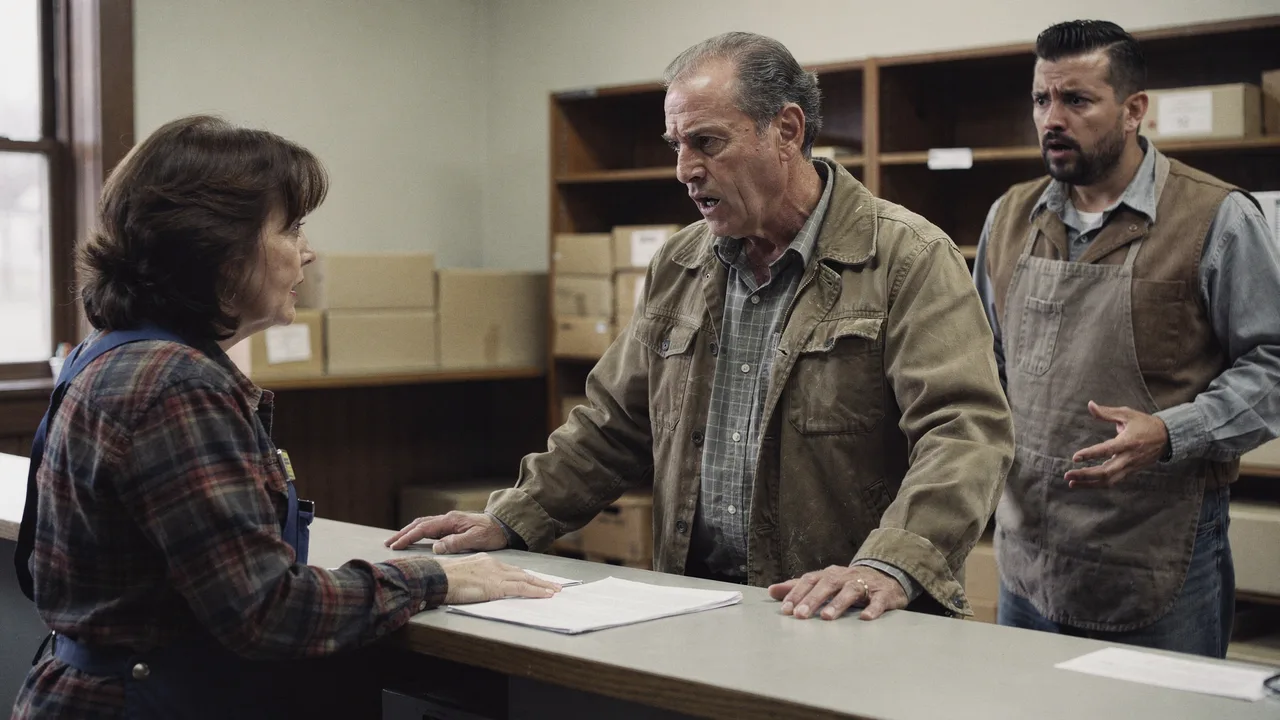
On Monday I took my lunch break in the parking lot, in my car, and dialed Carolina Tool Wholesale from the number printed on an old invoice.
"Accounts, this is Ruth."
"Ruth, this is Josephine Barlow at Oakhaven Supply in Oakhaven. I'm trying to reconcile an old invoice and my records are a mess. Can you look at a table saw, the one on our September order?"
Keys clicked. "That model's on backorder across the board. We didn't ship you one in September."
"Not one?"
"Not one, honey. It shows as canceled on your end, Preston Hawkins's signature. You want me to send you a copy?"
"No," I said. "Thank you. I'll find it."
I sat in the car with the heater ticking and my glasses fogging on their chain. He had written off a saw that had never come through our door.
I didn't sleep right for several nights after that. I got up around two each morning, made another cup of decaf, and looked at the folded summaries again. By Wednesday I walked the floor before opening and found the premium cooler sitting on its shelf, where it had been all week, with the price tag still hanging off the handle.
Preston had marked it as returned and damaged last Tuesday.
I copied the stock number off the tag, the one printed small in the corner, and left the cooler exactly where it sat.
I wrote the date down and took a plain pen to the one printed page I needed. Then I knelt on the cold concrete behind the old front register, which Dolores had called "the dinosaur" for twenty years, and I did what I'd had it set up to do. I pulled its reboot diagnostic.
That register had flickered with the lights, as it always did. It didn't know it was supposed to keep quiet.
The store's seventy-fifth anniversary fell on a Saturday afternoon in the last week of November, and Celia would not hear of putting it off.
The floor was cleared for folding chairs. Dolores had hung a paper banner over the hardware aisle. Thirty townspeople came in their church coats, with Food Lion cookie trays and a coffee urn from the Methodist ladies. Marguerite Tilley stood by the door in her good wool coat, and she did not come over to me.
Celia stood at the front in a navy dress with a pearl pin, holding the counter for balance. She spoke about her husband's father building the first shelves himself, about paying a man in tomatoes during the lean year, about knowing every customer's name. She spoke for six minutes with one hand trembling on her cane and every word reaching the back row, and she thanked me by name.
"Josephine Barlow kept this store alive when I would have let it slide," she said. "I wouldn't be standing here without her."
The room clapped for that. I looked at the floor.
Then Preston took her place, in a tailored charcoal jacket that looked wrong against the pegboard. He tapped the little microphone twice.
"Thank you, Mother. What a legacy." He smiled out at the folding chairs. "Today we're also looking ahead. Oakhaven Supply is entering a new era of profitability, leveraging our assets and rightsizing for the future."
He turned toward me. I felt the whole room turn with him.
"And I'd like to thank Josephine for her many years of traditional service. Those years have been valuable. We honor them as we make room for what comes next."
Make room. Somebody in the back row drew a breath. The applause came, polite and thin, the kind you give at a funeral for a man you didn't know well.
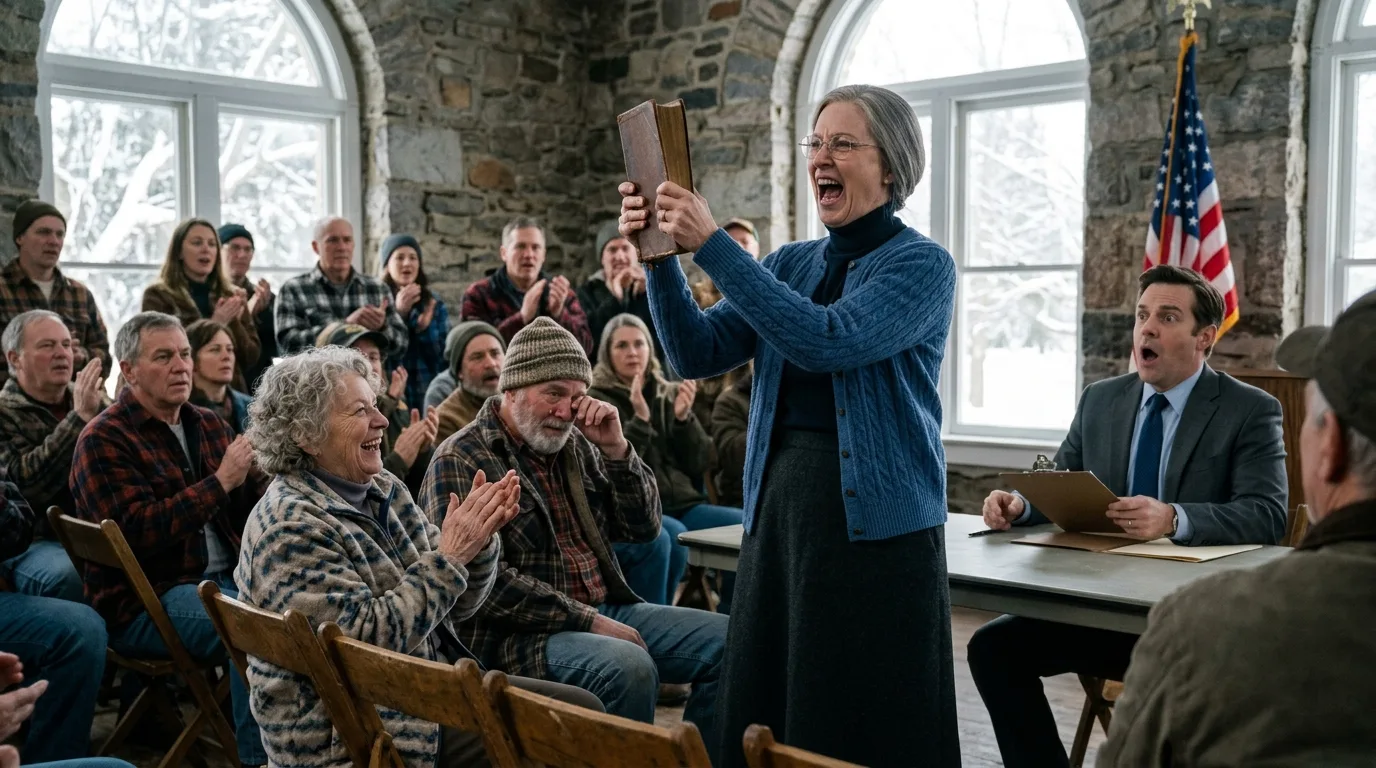
I had two sheets of paper folded small in the bib of my apron. I walked up the center aisle with them before that applause finished dying.
"Josephine," Preston said. "We can talk later."
"We can talk now."
I held up the first sheet, so the people in the folding chairs could see the columns. "Last Tuesday, my day off, a premium cooler was marked returned and written off as damaged. That cooler is on aisle four. It has been on aisle four since the week before."
A murmur moved through the chairs.
"The refund went onto a store gift card. Ninety seconds after that, the same card paid for four hundred and fifty dollars in Visa gift cards, the kind that can't be traced. Your manager's code is on both transactions, Preston."
He laughed. It was short and well practiced.
"It's an inventory glitch," he said to the room. "My mother warned me the systems here were ancient. This is a desperate accusation from someone who can't adapt to change." He turned to Celia, his hand open, his voice softer. "Mother, she's clearly upset about the new direction. This is slander."
Celia said nothing. She was gripping the counter.
I took a breath through my nose. I'd practiced this part at my kitchen table, alone, with the jam jars watching.
"You're right," I said. "The system shows your code from the back office. What you don't know, because you never asked, is that when our old registers reboot, they log a separate diagnostic file. It's a fail-safe I had the repairman put in twenty years ago, after a thunderstorm cost us a whole day's receipts."
I held up the second sheet.
"This is the diagnostic log from Dolores's front register, from last Tuesday. It shows a manual override at 2:14 PM, using your password, to process that exact refund. You were at two terminals at once. You were covering your tracks, and you didn't know how deep the tracks go."
Nobody coughed. I could hear the coffee urn ticking as it cooled.
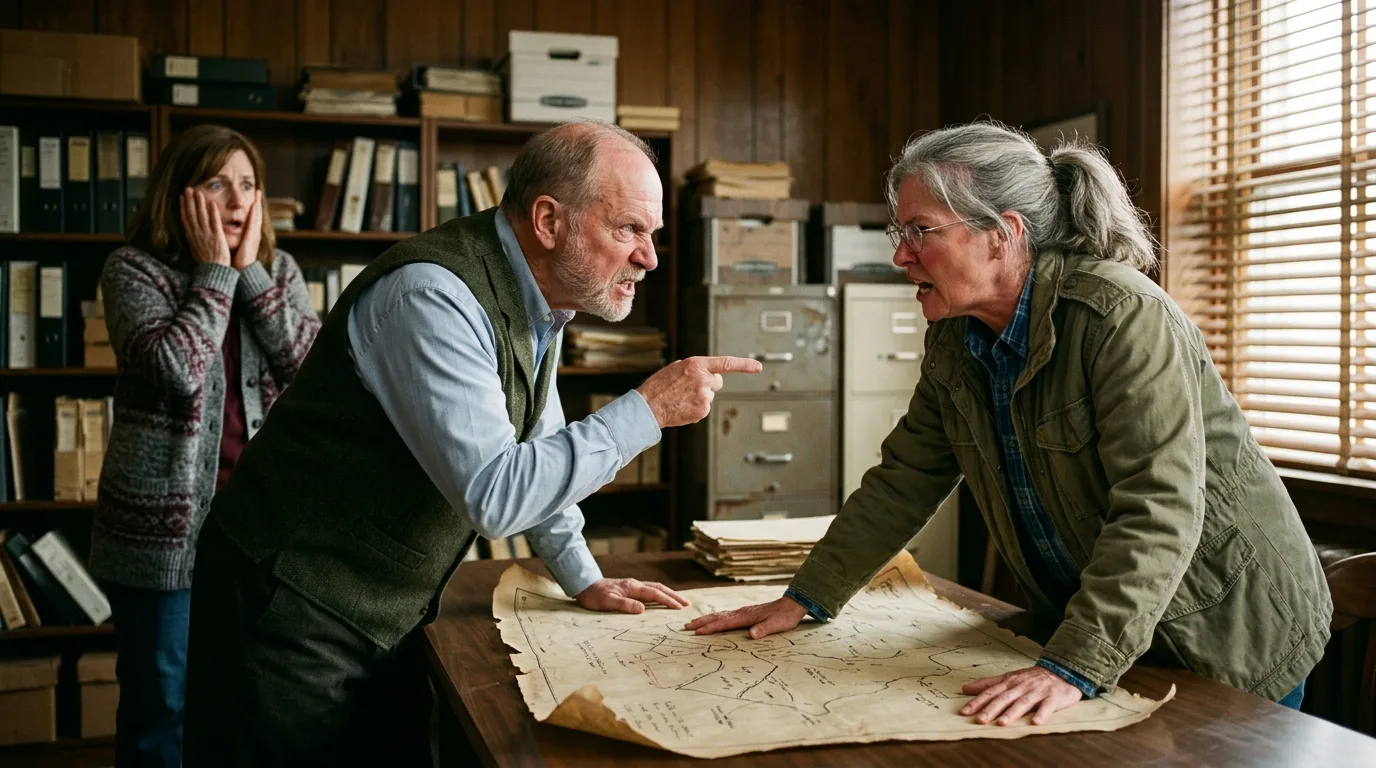
"A diagnostic file," Preston said. "Printed by a woman who got locked out of her own system. Anyone can type those."
"I didn't type it. The register did."
"Dolores," he said, turning, his voice gone soft and bright. "Tell them. You were at the register. You'd remember if I'd been there."
Dolores stood beside the cookie tray in her faded apron. Her hands were wrapped around each other, and her eyes went to the floor, then to me, then to Celia.
"There was a flicker that Tuesday," she said. "You asked for my password. I said I didn't give it out. You told me to go check the stockroom, that you'd handle the till." She swallowed. "I was in the back a good while. When I came out, you'd already left."
"That's one cashier's confusion," Preston said, and I heard the crack in it. "That's a lot of speculation over a cooler."
"Then walk to aisle four with me," I said. "The stock number on that tag is the one on this page. I copied it Wednesday. Thirty people can read it off the handle."
Nobody moved. Preston's eyes went to the door, then to the chairs.
He came a step closer and dropped his voice to something meant for me alone. "Josephine. Come into the cash office. Whatever number you're after, we can square it quietly."
"You changed that lock so I couldn't go in there. And there's nothing quiet about it. Marguerite Tilley is in the second row."
"You'll cost my mother this store over a few gift cards."
"A saw that never came, a drill set, a cooler, and every Tuesday I wasn't here to see it. You're the one costing her. I'm only reading it out."
Celia hadn't let go of the counter. She was looking at her son, and I knew that look. I'd seen it the day she signed the store over, when she wanted so badly to be right about him. She couldn't be the one to say it, and I didn't blame her.
So I said it.
I reached into my apron pocket, took out the old brass key to the cash office, and set it on the counter beside the register. It made a small click against the wood.
"Here's how it goes, Preston. Your keys go on this counter, today. What those cards and that saw cost this store gets paid back on paper tonight, in the cash office, with your mother and me sitting there. And you don't run Oakhaven Supply another day."
"You don't get to say that. You work here."
"I do. If your keys stay in your pocket, mine stays on that counter, and I walk out the front door past all these people."
"You'd walk? After thirty-eight years? Over a cooler?"
"Over you."
He looked at his mother. "Mother. Tell her she's out of line."
Celia took her time. Her voice, when it came, was thin and steady. "Josephine asked you a plain thing, Preston."
He stood there with his jaw working and his phone dark in his hand. Then he reached into his jacket, drew out a ring of keys, and set it on the counter next to mine. Nobody in the room breathed.
"Cash office," I said. "Now."
The three of us went into the back, and I unlocked the door with his new key, the one that had cost me my own. I sat down in my old chair. Celia took the stool by the filing cabinet with her cane across her knees. Preston wrote a check for the four hundred and fifty on the corner of the desk, and I wrote out the rest in my plain hand on a sheet of the store's ledger paper: the saw, the drill set, the cooler's refund, and the Tuesdays. He signed it with a pen that skipped. Celia signed under him, and I put the page in the green ledger.
"I'll move my things out tonight," he said, to nobody.
"Leave the phone number where you'll be," Celia said. "You'll want to hear from me, someday. Not soon."
He went out through the store and the front door without once looking at his phone.
Celia sat with her hands folded on the cane. "The store needs you, Josephine. I'll have papers drawn to make you a partner, with the controlling share. Will you stay?"
"On terms," I said. "The ledger comes back to my desk. You read it Fridays, the way you did. And Marguerite Tilley's jam goes back on that shelf Thursday, every one of her jars, at the price she asks."
"Done."
She reached over and took my hand in her thin, cold one. I held on, and I knew we would not be sitting in her kitchen on Sunday afternoons talking about nothing. I had shown her what her boy was, and she would see my face in that every time she looked at me.
She stood on her own, with the cane, and went out to her car without turning around. Through the front glass I watched her brake lights go on, and stay on a long while before she pulled out.
The room had emptied. The Methodist ladies had taken the coffee urn, and Dolores had folded the last chair. Marguerite had stopped at the door on her way out and given me one nod, short and plain.
Preston's keys lay on the counter beside the brass one. I slid the new cash office key onto my own ring and left the old brass one where it was.
The basket I'd carried from my kitchen that morning sat behind the register, packed with every jar of Marguerite's I'd bought. I lifted it onto the counter and set the first jar on the shelf, muscadine, with the label turned toward the door. Then I set out the next.

Comments