I noticed the charge three months before our thirtieth anniversary: four hundred dollars, every month, to a company called "Evergreen Wellness Solutions." Edward and I shared one checking account and one retirement fund, and in all that time neither of us had hidden a nickel from the other. If he was paying someone in secret, then thirty years of my life stood on a floor I had never tested.
I'm Constance Guthrie. I'm fifty-eight, and I own The Petal Patch on Alameda Street in Las Flores. For thirty years my life had been that shop and my husband.
Our routines were my bedrock. I left for the wholesale market before sunrise, and Edward had the coffee going when I got back. Saturdays we walked the farmers market, and Sunday nights he cooked tri-tip on the grill whatever the fog was doing.
Advertisements
The charge was not vitamins and it was not a gym. I knew that the way I know a lily has gone off before I can see the brown. In a marriage a secret is a debt, and it always comes due.
I waited until Edward finished his orange that night. He peeled it in one long spiral, the way he always had, and set the curl on a napkin.
"Who is Evergreen Wellness Solutions?" I asked.
He didn't look up. "Where did you see that?"
"On the statement. Four hundred dollars a month, Edward."
"Oh. That." He pulled the napkin toward him and folded it. "It's a health tech thing. An investment. A fellow from my old firm talked me into it, and it went nowhere."
"Nowhere, but it bills you monthly."
"I was embarrassed, Connie. I didn't want you to know I'd been taken." He gave a small laugh that sounded borrowed. "I'll cancel it tomorrow. I promise."
"All right," I said.
It was not all right. Edward Guthrie had spent forty years as a civil engineer and had never once been embarrassed into silence about a number. He checked every bridge twice.
I lay awake and replayed it in the dark, and each time the lie came out clumsier. He had said "fellow" like a man reading a card. He had folded the napkin into a square so small it would not open again.
Advertisements
The next month the charge came through again, same amount, same day.
I stood in the back of the shop with my gloves still on and thorns from the roses in my apron pocket. I did not call Edward. I called Dennis Pettibone.
Dennis ran Pettibone Florals across town, and for years he had been my rival. His shop had taken the hotel contracts and mine had taken the weddings, and we nodded at each other at trade shows like two cats on one fence. He also supplied arrangements to care homes from here to Ventura.
"Dennis, it's Constance Guthrie. I need a favor, and I'd rather you didn't ask why."
"You want a favor from me." He sounded delighted. "Go on."
"A company called Evergreen Wellness Solutions. Do you know the name? It bills monthly."
Paper rustled on his end. "Hang on. I've got a drawer." Then, more slowly: "Connie, that's not a company. That's a billing service. Half the private care facilities on the coast run their accounts through it. Long-term residents. Families get the statement with a pretty leaf on the letterhead so nobody has to see the word nursing."
I held the phone against my shoulder so he wouldn't hear my breathing.
"A recurring bill," I said. "For a person."
"For a person," Dennis said gently. "I'm sorry. I really am."
He was kind, and that was the part I could not forgive him. I thanked him, and it cost me something to do it. I hung up and snipped the stems off a bucket of ranunculus so short that I had to throw the whole batch away.
So there was a person. Someone with a room and a bed and a bill that came on schedule, and my husband had put her in our checking account and then looked me in the face over an orange.
That Saturday Edward went hiking, as he did most Saturdays. I stayed home and opened the garage.
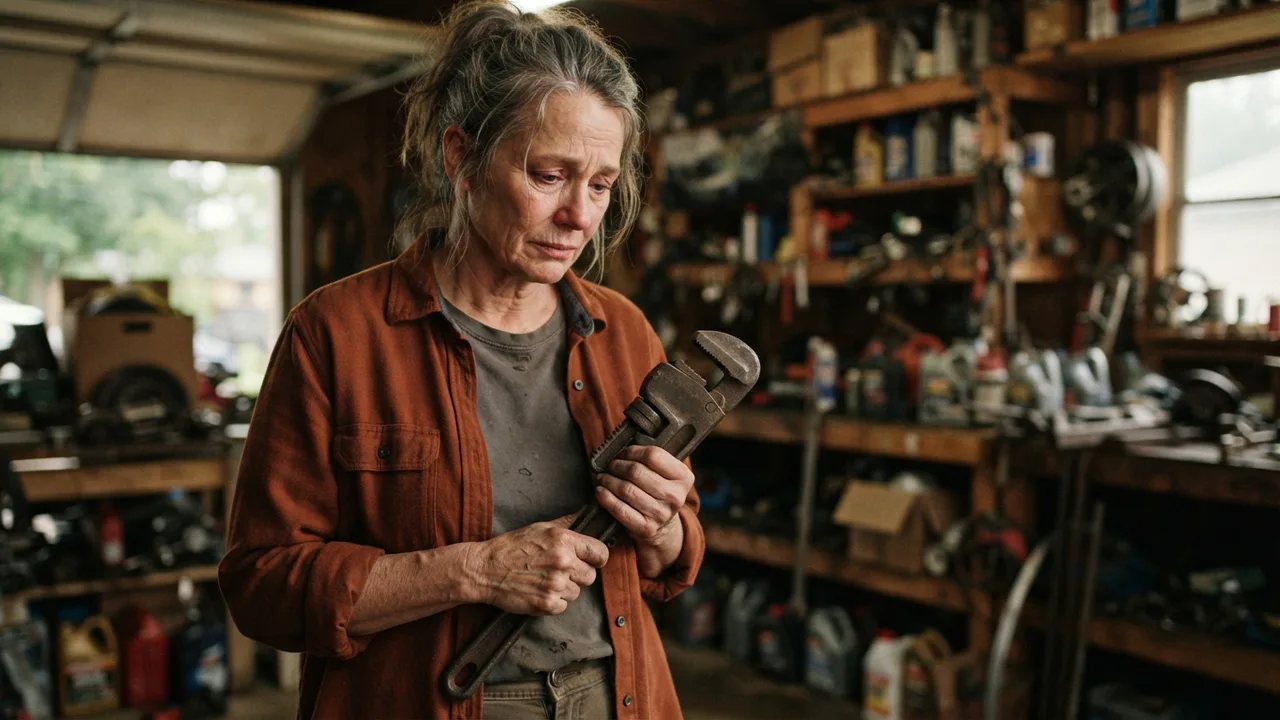
I told myself I was looking for old financial records, the first tax returns and the account from the year we married. The boxes were stacked behind the Christmas bins, soft with dust, and I went through them with the thoroughness I use on a delivery of cut stems, checking each one.
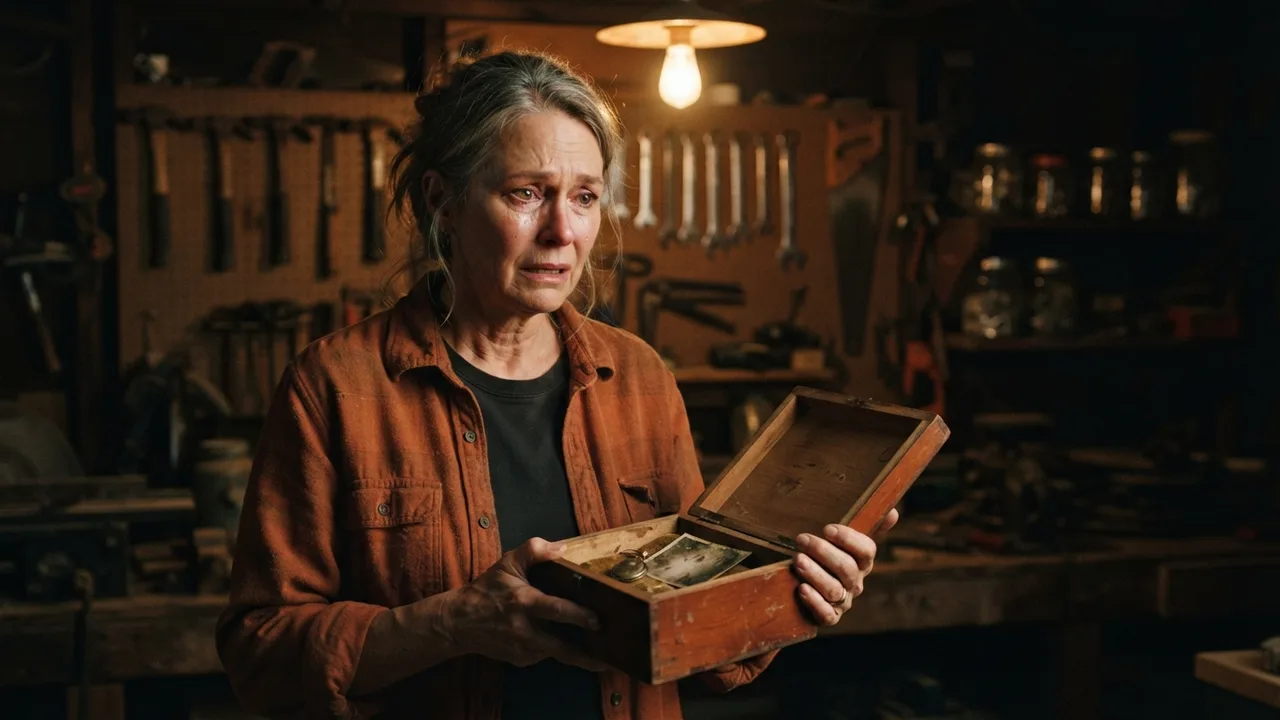
Near the bottom was a gray cardboard carton marked E.G. – MISC. Under a drafting set and a dead watch I found a small address book with a cracked leather cover. It was from before we met.
The pages were full of his young, slanted handwriting. Names of draftsmen and a landlord, and a dentist in Fresno. I turned to the back, and tucked behind the last page was a card with one name on it.
*Eleanor Tremblay.*
Beneath it, in the same ink, were two words: *White Gardenias.*
I sat down on the concrete floor.
Eleanor was the wife who had died. Edward had told me about her once, early, in a parked car outside a movie theater, and never again. A car accident in 1995. He had not wanted to say more, and I had loved him for the restraint.
Gardenias.
I thought of every year he had asked me not to bring them home from the shop. *They give me a headache, Connie. Roses, please.* I had thought it a sweet quirk. Now I understood it was a man keeping a flower out of his own house.
Dead women do not send bills. Eleanor Tremblay was not dead. She was a woman in a room, with a name and a flower, and he had paid for her all through our marriage.
My memories of him turned over in my hands like petals gone translucent at the edges. The proposal and the honeymoon in Carmel, and the night Olivia was born, when he cried in the hallway of the hospital. I could not tell anymore which of them had been real.
I did not confront him. I printed the statements instead. I made a timeline of every payment, set it in a folder, and told no one.
Our anniversary was a Friday in spring. Olivia drove up from Los Angeles that afternoon with a bottle of sparkling cider and a card she'd drawn herself. She hugged me in the kitchen and held on until I patted her back.
"Mom, you look tired," she said.
"It's the season," I said. "Everybody wants peonies."
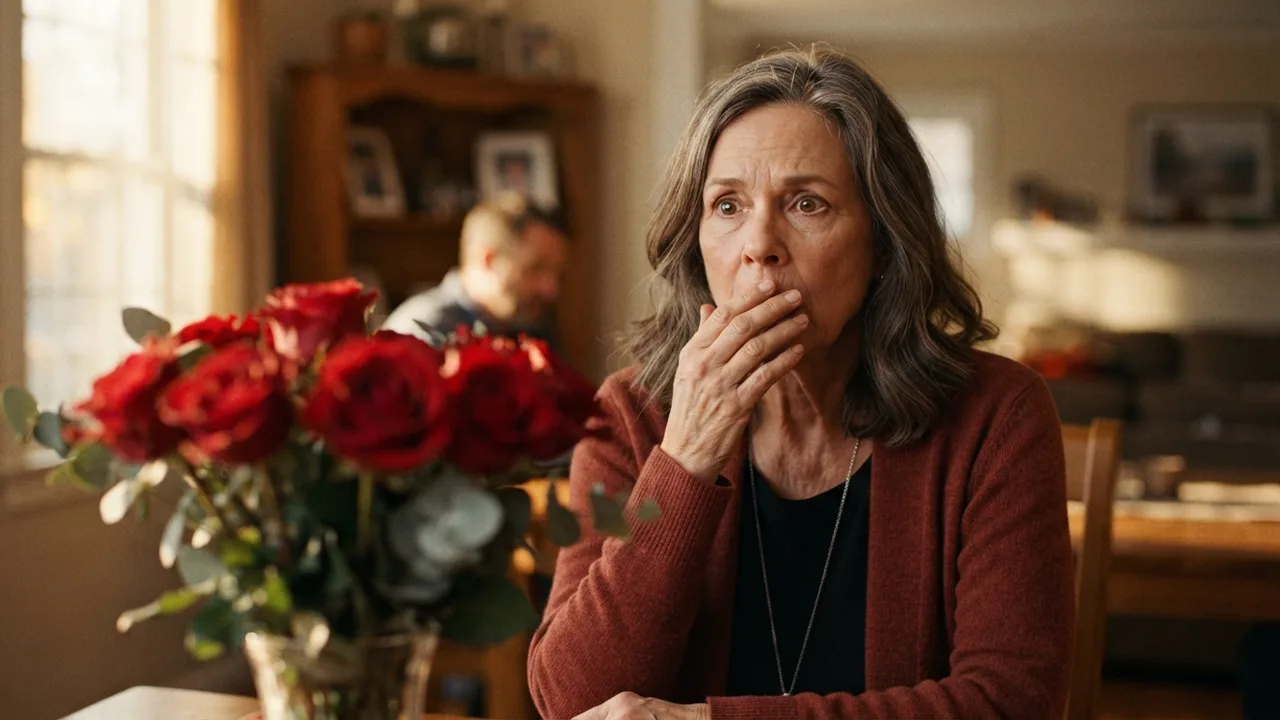
Edward gave me roses that morning, two dozen of them, deep red, wrapped in brown paper. They were perfect. I put them in the cut-glass vase on the dining table and did not touch them again.
The Cypress Table sat ten minutes from our house, up a drive lined with the trees it was named for. Every table had white linen and a candle in a low glass. Our waiter, a young man with a careful haircut, brought us bread and a bottle of Pinot Noir.
I had carried a single gardenia in my purse, wrapped in damp tissue. I had cut it at the shop that afternoon, the best bloom in the cooler, ivory and waxy, with a scent so full it seemed to lean on the room.
Olivia lifted her glass. "To Mom and Dad. Thirty years, and I'm still trying to figure out how you two do it."
"Olivia, wait," I said.
I set the gardenia on the white tablecloth between Edward and me. It looked like something laid on an altar.
"Who is she, Edward?"
Olivia lowered her glass. "Mom?"
Edward looked at the flower. The color left his face by degrees, as it leaves a cut stem. He said nothing.
I took the folder from my bag and opened it. My hands had started to shake, so I pressed them against the linen to hold them.
"Four hundred dollars a month," I said. "To Evergreen Wellness Solutions. It's a billing company for long-term care facilities. You told me it was a failed investment, and you looked at me when you said it."
"Constance," he said. "Please."
"Here is every payment. I printed them." I slid the pages across. "And this was in your old address book, in the garage."
I laid the card beside the gardenia. *Eleanor Tremblay. White Gardenias.*
"Mom, stop," Olivia said. "Please, stop. People can hear."
They could. At the next table a woman had put her fork down, and the couple past her had stopped talking.
"I'm not going to stop," I said, and my voice shook and kept going. "He has been supporting another woman for our whole marriage. She has the same name as the wife he told me died."
"Constance, please. Not here." Edward's voice was thin. "It's not what you think."
"Then tell me what it is."
"Not here."
"Dad," Olivia said. She was staring at him, and I watched the girl who had adored him do the arithmetic that I'd done on the garage floor. "Dad, say something. Say it isn't true."
He pressed his fingers against his eyes. He did not look angry or caught. He looked like a bridge with the bolts gone out of it.
"Thirty years of lies, Edward," I said, and some cold part of me was glad to be right. "Who is Eleanor?"
He looked at Olivia, then at me. When he spoke, I had to lean in to hear him.
"Eleanor Tremblay. She's my wife."
I laughed, one hard breath. "Your wife died in a car accident in 1995."
He shook his head slowly.
"No, Constance. She didn't die. She never woke up."
The candle between us leaned and righted itself. Somewhere behind me a glass touched a plate.
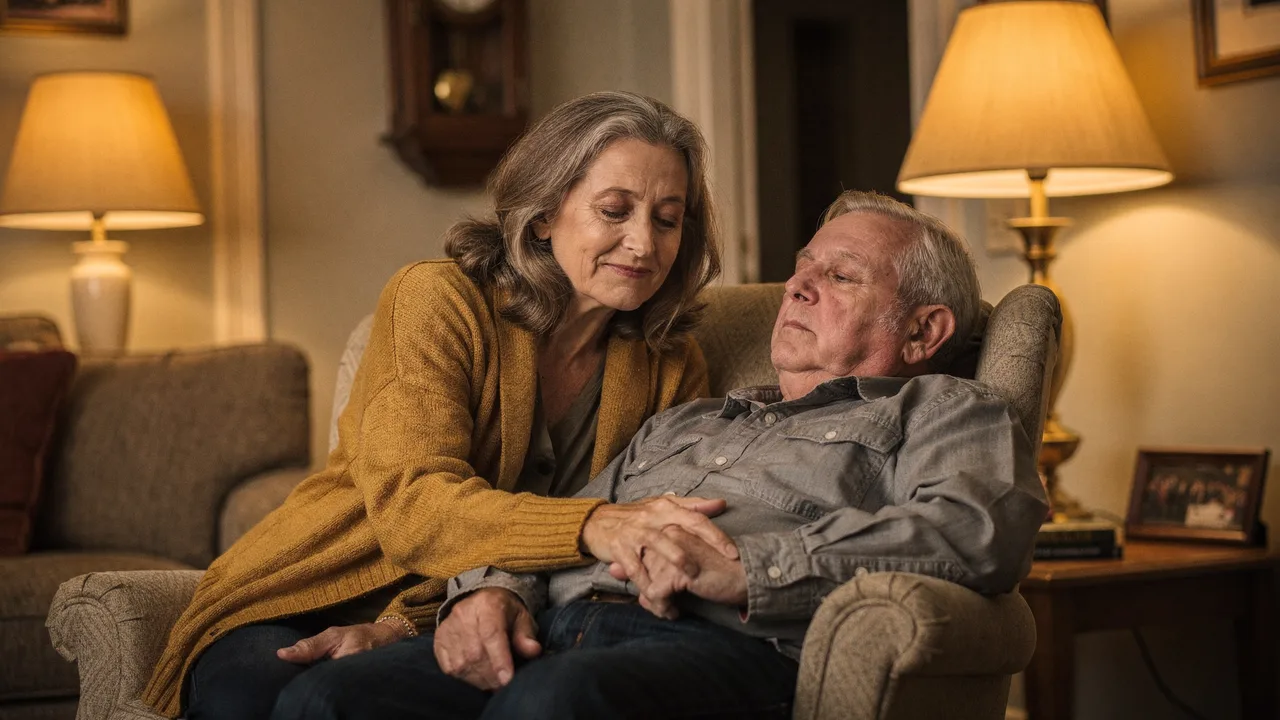
"She was driving home from her sister's," Edward said. "A truck crossed the median. They kept her alive, and month after month they kept telling me to wait. Then they stopped telling me anything. She breathes and her eyes open sometimes, but nobody is there."
I could not speak.
"She's in a private home about an hour from here," he said. "Her insurance covers the bed and the nurses. It doesn't cover the extras. A better mattress, a physical therapist who comes in twice a week, the little things. That's the four hundred."
"The little things," Olivia said, and began to cry without a sound.
"I lived in that hospital for a year," Edward said. "Then one day I was a widower in every way but the paperwork. When I met you, Connie, I was thirty-one and I'd been a ghost for so long. You laughed at a parking meter. I thought, if I tell her, I'll drag her into that room with me and she'll never get out."
"So you buried her," I said.
"I said she'd died. The first time it was easier than the truth. After that every year made it heavier, and I didn't know how to lift it."
"Every Saturday."
"Not hiking," he said. "Not most of them."
I thought of the gardenias, then. The headaches, the roses.
He took out his phone with a hand that wouldn't hold still and turned the screen toward me. A nurse named Marisol sent him a picture every week, he said, so that he would know.
The room was small and clean. A woman lay on a white bed with her face turned to the window, her hair brushed back and her hands folded on the blanket. Her skin was the color of paper that has stayed too long in a drawer.
On the nightstand was a glass vase of white gardenias, fresh and full.
"Every Thursday since the first year," Edward said. "She loved them. They were in her wedding bouquet. I've never known if she can smell them, but I couldn't stop."
I looked at the flowers until the screen dimmed in his hand. I knew exactly what I was looking at. Someone had picked those blooms that week and watched them open. I thought of the one on our tablecloth, already going gold at the edge.
Olivia had her napkin pressed to her mouth. Edward waited, and I understood he would wait however long it took, because he had been waiting for years.
I had come to that table prepared for another woman. I had practiced what I'd say to her and what I'd keep of the house. I had no speech for a woman who couldn't wake.
"Constance," he said. "Say something. Please."
I picked up my purse and set the folder inside it. I left the gardenia where it was.
"Take me home," I said.
He drove, and nobody spoke. Olivia sat in the back with her hands in her lap. At the house she hugged me hard at the door and then went to the guest room without a word, and I heard the bed creak under her.
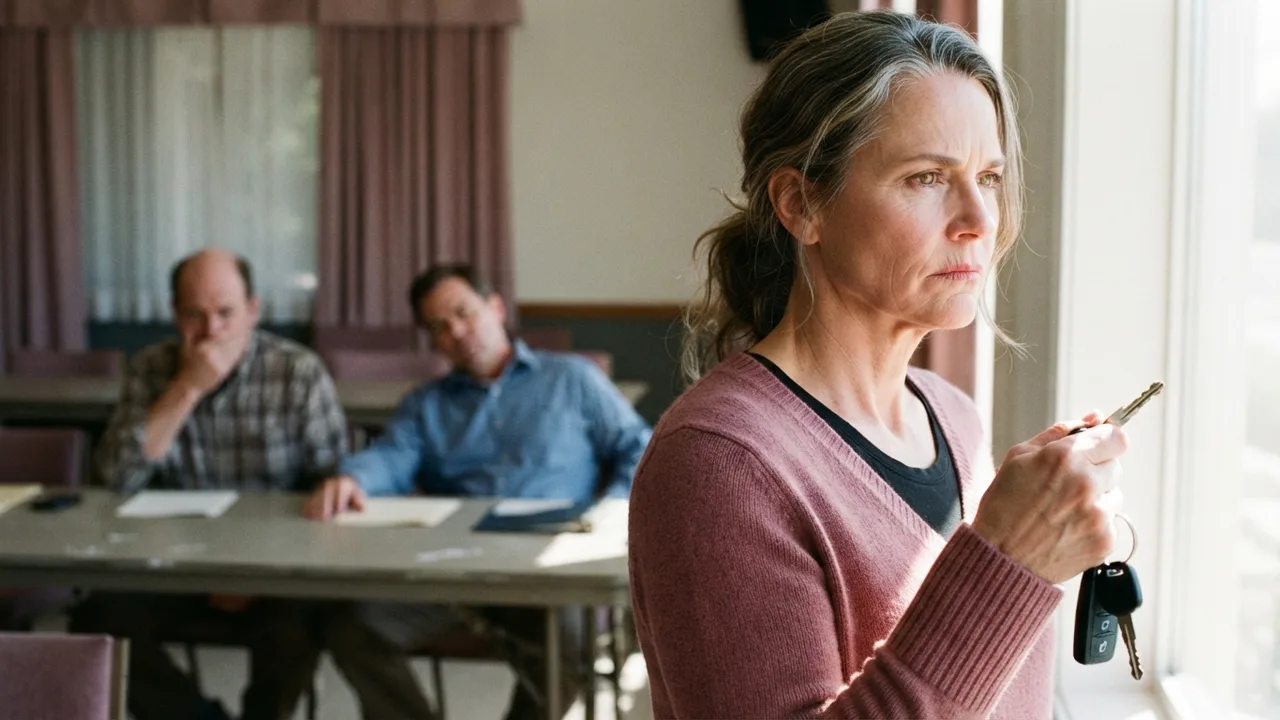
Edward stood in the hall with his keys. I did not tell him to stay or to go.
The house was quiet in the way a shop is quiet after the last customer. I walked to the dining table and stood before the roses he had given me that morning.
They were beautiful. Deep red, the velvet of the outer petals just beginning to loosen. I reached out to touch one, the way I have touched ten thousand, to feel whether it was thirsty.
My hand stopped in the air.
All I could see were white gardenias on a nightstand, bright against a plain wall.
Comments