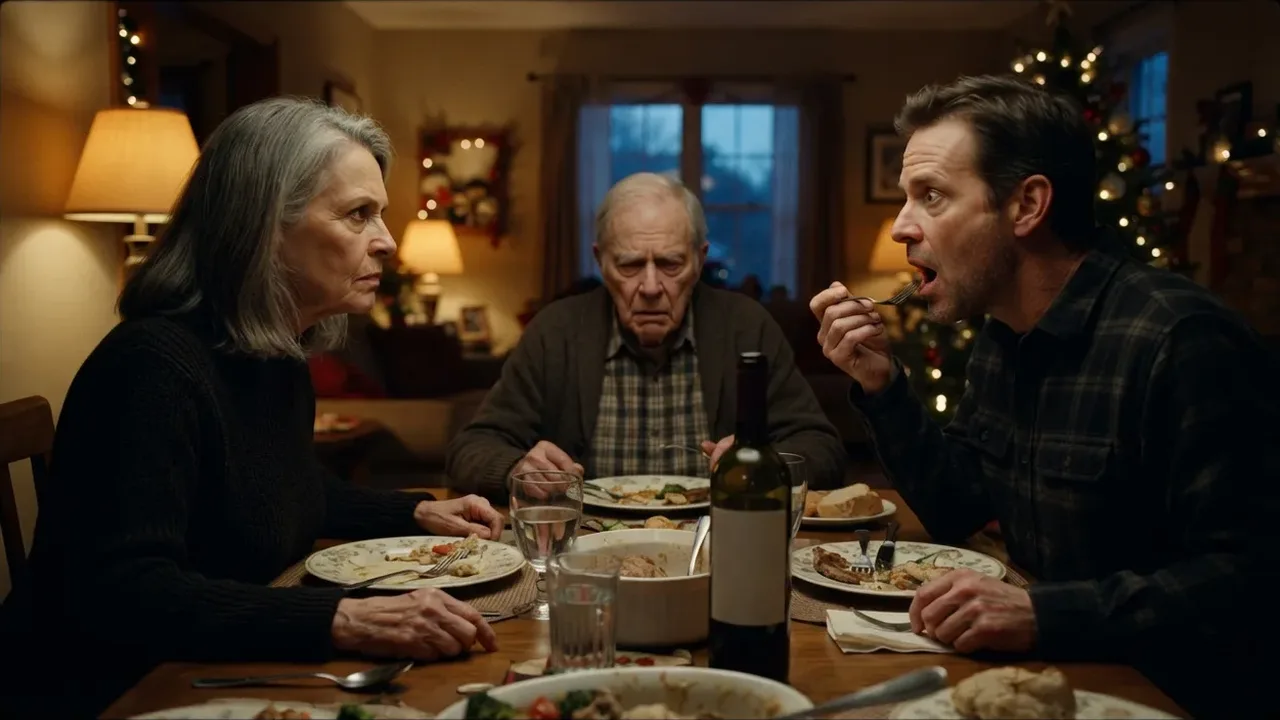
“It’s just the market, Fi, you know how it is,” my husband said, his hand resting on my shoulder, but his eyes were on the football game over my head.
Eighty-five thousand dollars of our retirement was gone, and Neil was watching a replay of last season’s Texans game he had saved on the DVR.
I sat at the kitchen table with the laptop open and the folder of statements fanned out beside my coffee. I do the books the first Sunday of every month. Twenty years of keeping attendance sheets and lunch-money envelopes straight at Cypress Ridge Elementary will do that to a person.
“The market doesn’t take a clean eighty-five thousand,” I said. “It takes a little here and a little there.”
“Well, it took a lot.” He squeezed my shoulder and let go. “Don’t you worry. It’s all in hand. It’ll come back by the time we’re sixty-five.”
Advertisements
“I’m forty-eight, Neil. I’d like to know it will.”
“Then I’ll show you the pretty charts at the review.” He grinned at the television. “Come watch the third quarter with me.”
I didn’t go. I sat with the number until the game ended and he went up to shower.
After midnight, with the house ticking in the heat and Neil asleep on his side of the bed, I carried the laptop to the dining room and logged into the investment account. Neil had saved the password on the family computer years ago. I had never once used it.
There was no cliff. A cliff is what a market drop looks like. What I found was a staircase.
Outgoing wires, one after another, running back over the past eighteen months. Most were the same modest amount. Two were much larger. Every one went to the same routing number, and when I typed those nine digits into a search box, the answer came back in plain black letters: a bank in Galveston.
I wrote the number on the back of an electric bill and sat looking at it. The ceiling fan turned over my head. At some point the window over the sink went from black to gray, and I was still in my robe with my feet cold on the tile.
I knew one person who lived in Galveston.
Advertisements
On Monday I ate a turkey sandwich at my desk in the front office, between a boy with a stomachache and a mother who wanted to change her carpool note for the third time. When the hall went quiet, I pulled up Facebook.
Jared’s page was new. *Galveston Bay Adventures: Dolphin Tours, Sunset Cruises, Fishing Charters.* The profile picture showed my brother-in-law squinting into the sun, hat pushed back, one arm around the wheel of a boat with fresh white paint.
I scrolled down. *Got the new engine in, ladies and gentlemen!* There was a photo of him in the engine well, grinning, grease to the elbow. Three posts later: *Sonar upgrade done. No more guessing where the fish are.*
I took a yellow sticky note from the dispenser and wrote the post dates down the left side. Then I wrote the dates of the two big wires beside them.
They matched to the day.
I thought of Jared at our table last Thanksgiving, scraping the pecan pie plate and telling the kids a story about a pelican that stole his sandwich. I thought of him fixing the porch swing in his cargo shorts and refusing to take twenty dollars for it. I had always called him flighty, and I had always said it fondly.
I folded the sticky note in half and tucked it inside my wallet, behind my school ID.
That Saturday I told Neil I was driving to meet Dena Okafor for lunch, a friend from the district office I hadn’t seen since spring.
“Good,” he said, pouring his coffee. “You never take time for yourself.” He kissed the top of my head.
It was seventy miles to Galveston, ninety minutes on I-45 with the sun climbing and the heat already shimmering off the road. I filled the tank at a Shell in Texas City. It cost me more than I liked, because I had started counting everything.
I found the slip behind a row of seafood shacks, past a stack of crab traps and a man hosing down a deck. The boat was called *Second Wind*. Jared was on the stern with a bucket and a sponge.
“Fi?” He dropped the sponge. “Well, I’ll be. Fi Buckley, on my dock!”
“Neil’s so proud of this boat,” I said. I smiled so hard my cheeks hurt. “I wanted to see what all the fuss was about.”
“You do? Oh, come aboard, come aboard. Watch the step, it’s slick.”
He gave me the whole tour. The new engine, which he patted like a horse. The sonar screen, which he switched on so I could watch it draw a blue line across nothing. The cooler of bottled water for tour guests, and a laminated sign that read *Dolphins Guaranteed or Your Second Ride Is Free.*
“I’m telling you,” he said, “I was a week from the bank taking the old boat. Then Neil calls and says you two talked it over.” He pressed a hand to his chest. “Fi, I don’t know how to say it. Thank you for talking him into it. The whole eighty-five grand. That was a lifesaver.”
The deck moved under my feet. I put a hand on the rail.
“I’m glad it helped,” I said.
“Neil said you were the one who thought it was smarter than leaving it in stocks. You always did have a head for money.” He laughed. “Can I get you a lemonade? There’s a stand at the end of the pier.”
“I should get going,” I said. “Dena’s waiting.”
I bought the lemonade anyway, because I didn’t want him to see my hands. I drank it in the car with the air conditioner roaring and the windows up. I stayed in that parking space a long time.
Neil asked how lunch went. I told him Dena sent her love.
“Good,” he said, not looking up from his phone. “That’s good, Fi.”
I have kept track of things all my life. I knew what to keep track of now.
That night, after Neil went up, I printed the wire history at the dining room table, three pages, and typed a one-page agreement of repayment. I also downloaded the form for removing a signer from a joint account and filled in my half in blue ink, and I put all of it in my purse under the sticky note.
I texted Jared the morning of our quarterly review, from the car, while Neil was inside the house hunting for his good cufflinks.
*Neil wants to surprise Leila Haddad with the family investment at our meeting today. Come to her office in the lobby and wait for my text. Don’t tell him I told you!*
He answered in under a minute. *Ha! On my way. Boat emoji, thumbs up.*
Leila’s office sat in a glass building off the Katy Freeway. The conference room was so cold I wished I had brought a cardigan. A pitcher of ice water sweated on the table. Leila Haddad, crisp in a gray suit, had a monitor angled at her elbow and a stack of printed charts squared at the corner.
“Neil, Fiona,” she said. “Shall we begin?”
Neil began. He had a salesman’s way of leaning back as though the chair belonged to him. He talked about volatility and a correction and the importance of holding steady. He said “long horizon” four times. He tapped Leila’s charts and said, “You see? This is what I’ve been telling Fi. You don’t panic. You ride it out.”
Leila nodded at her charts.
“It’s unfortunate timing, of course, with the downturn,” he finished. “But the fundamentals are sound.”
“That isn’t where the money went,” I said.
Neil’s smile stayed where it was for a second, like a picture slipping on a wall. “Fi, honey.”
“I asked Jared to join us.” I stood up and went to the door. “He’s been waiting outside.”
I opened it. Jared stood in the corridor holding a Buc-ee’s bag, his hair still damp from the humidity, looking from me to the room with the cheerful confusion of a man arriving at a party.
“Surprise?” he said.
Neil half rose out of his chair. His face had gone strange, the color draining toward his collar. Leila lifted her eyes from the charts and, for the first time that morning, looked at me and not at the numbers.
“Come in, Jared,” I said. “Sit by me.”
He sat. I stayed standing, my fingertips on the back of his chair.
“Jared,” I said, “why don’t you tell Ms. Haddad how excited you were when Neil and I agreed to invest the eighty-five thousand from our retirement account into your business?”
“Oh, gosh.” He brightened. “Ms. Haddad, I was over the moon. I was about to lose the whole operation.”
“Fiona.” Neil’s voice came out sharp. “This is inappropriate. This is a private family discussion.”
He turned on his brother. “What have you been telling her?”
“Nothing! I told her the same thing I told you.” Jared looked at me, baffled. “Did I say something wrong?”
“My wife has been under a great deal of stress lately,” Neil said to Leila, quickly, warmly, the voice he used on customers who were about to leave. “She’s been sleeping badly, and she’s getting things mixed up. I’m sorry you’re seeing this, Leila.”
“I’m not mixed up,” I said. “Ms. Haddad, I’d like to show you something, and then I’d like to ask you for something.”
“Go ahead,” Leila said.
I took the three printed pages and the sticky note out of my purse and set them in front of her, side by side. Neil’s chair creaked behind me.
“Those are the outgoing wires from our joint account, going back eighteen months. Every line goes to the same routing number. It belongs to a bank in Galveston, and the only person we know in Galveston is sitting next to me.”
Jared looked at the pages and then at his hands.
“The two big ones are circled. The yellow note has the dates Jared posted that he’d put in a new engine and a sonar. Put your finger on the first wire and look at the first date.”
Leila did. She moved her finger down to the second. She did not say anything, but she did not take her finger away.
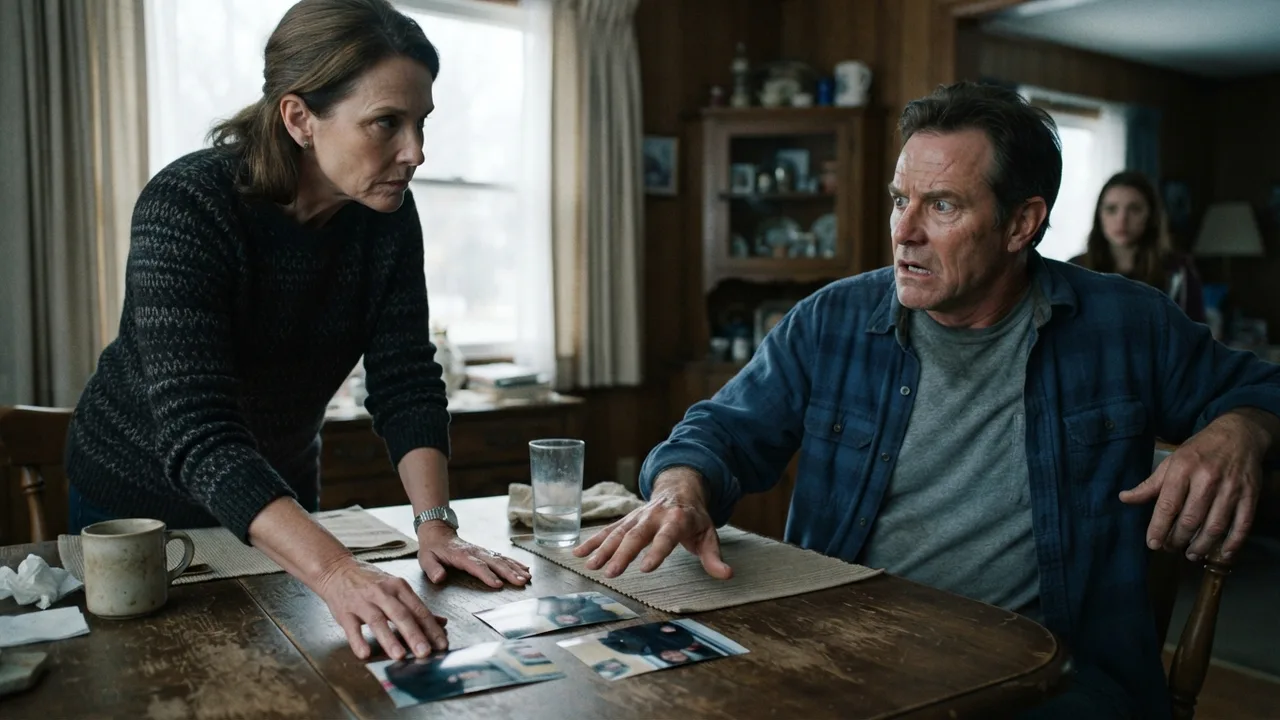
“Fiona, this is absurd,” Neil said. “That was a loan to my brother. Family helps family. And you went through my account behind my back. You lied to me about lunch with Dena. Don’t you stand there and talk to me about honesty.”
“I did lie about Dena,” I said. “I’m not proud of it. I learned how from you.”
He opened his mouth, shut it, and found another door.
“I was going to put it back, Fi. The tours are going to take off. It would all have been back by Christmas, with something extra, and you’d never have known there was a gap.”
“And in the meantime you told your brother I’d approved it.” I turned the sticky note over so the dates faced Jared. “On his dock, he thanked me for talking you into it. Thanked me, Neil, for a decision I never made and never heard about. You told him I thought it was smarter than the market. You told him I wanted it kept quiet so he wouldn’t feel like charity.”
“Neil?” Jared said. It came out small.
“You used my name where you needed a yes,” I said. “I was never asked. That’s what I’m here to put in front of you.”
Nobody spoke. The air conditioner clicked and hummed. A drop of water slid down the side of the pitcher and pooled on the table.
“Leila, you see what this is,” Neil said. “She’s building a case against me.”
“I see eighteen months of wires, Neil,” Leila said, and she took her finger off the page.
I put the blue-ink form on top of the pages. “I’m a joint owner on this account. This takes Neil off it as a signer. I’ve filled in my part. Will you accept it today?”
“Yes,” Leila said. “Mrs. Buckley’s signature is enough to stop outgoing wires.”
“You can’t do that,” Neil said.
“She can,” Leila said.
I slid the typed agreement out of my purse and laid it in front of him, with Leila’s pen on top of it because I would not lend him mine.
“It’s one page. Read it.”
He read it. I watched his lips move, the way they do over a menu.
“Eighty-five thousand dollars goes back into the account, out of your paycheck, on the first of every month, until the number on the statement is the number it was. Jared lists the boat, and whatever it brings goes in first. Both of you sign. Ms. Haddad witnesses.”
“Fi, be reasonable. That boat is Jared’s livelihood.”
“Then he’s the one who knows what it’s worth,” I said. “Jared?”
He took a long time. I thought of the laminated sign, *Dolphins Guaranteed*, and I made myself keep looking at him.
“Yes, ma’am,” he said. “I’ll call a broker Monday. I should have asked where that money came from.”
“I’m not blaming you for taking it,” I told him. “You thanked me for something I never did. That’s on your brother.”
Neil pushed the page an inch away. “I’m not signing this. My own wife, in front of a stranger.”
“Then I go home and pack a bag,” I said. “And what’s left of the eighty-five thousand gets divided by people who bill by the hour. You know what that leaves each of us. I’ve done the arithmetic on a school secretary’s salary, and I’d be fine. Would you?”
He looked at Leila, who looked back at him and did not blink. He looked at his brother, who was studying the carpet. He looked at the wire dates marching down the monitor.
He picked up the pen.
His signature was smaller than usual, the tail of the N barely a scratch. Jared signed under it with his tongue between his teeth, like a child at a school desk. Leila signed as witness and slid the page to me. I signed at the bottom in my own blue ink, and then I signed the removal form, and my hand shook on the last letter of Buckley.
Neil saw it. For a moment he looked almost sorry.
“Good,” I said. “Thank you.”
Leila took both papers to the copier in the hall. When she came back she handed me the originals and put the copies in a folder with the firm’s name on the tab.
Jared stood. His hands hung at his sides, and he was not the hopeful man from the dock anymore. “Fi,” he said, “I swear I didn’t know.”
“I know you didn’t.” I picked up the Buc-ee’s bag he had left on the chair and handed it to him. “Go home and call that broker.”
He nodded and left. His flip-flops squeaked down the corridor.
Leila capped her pen. “I’m sorry, Fiona,” she said quietly. “I should have asked who the money was going to.”
“You asked what he told you to ask,” I said. “So did I, for a long time.”
Neil waited by the door with his jacket over his arm. He said my name once. When I didn’t answer, he went out first, and I heard his good shoes on the tile and then the elevator chime.
I put the originals in the folder and the folder in my purse. The money would come back one paycheck at a time. The years it should have been sitting and growing were gone, and no signature was going to give me those.
In the lobby he was waiting by the glass doors. He lifted his hand toward my shoulder, the way he had at the kitchen table, and I stepped around it and took hold of my purse strap instead.
The doors slid open and the heat came at me like a hand. The parking lot shimmered. My Corolla sat three rows back, silver and dusty, the only thing I owned outright that nobody had touched.
“I’ll ride home with you,” Neil said.
“You’ll take your own car,” I said. “I’m going to the kitchen table. The books are due.”
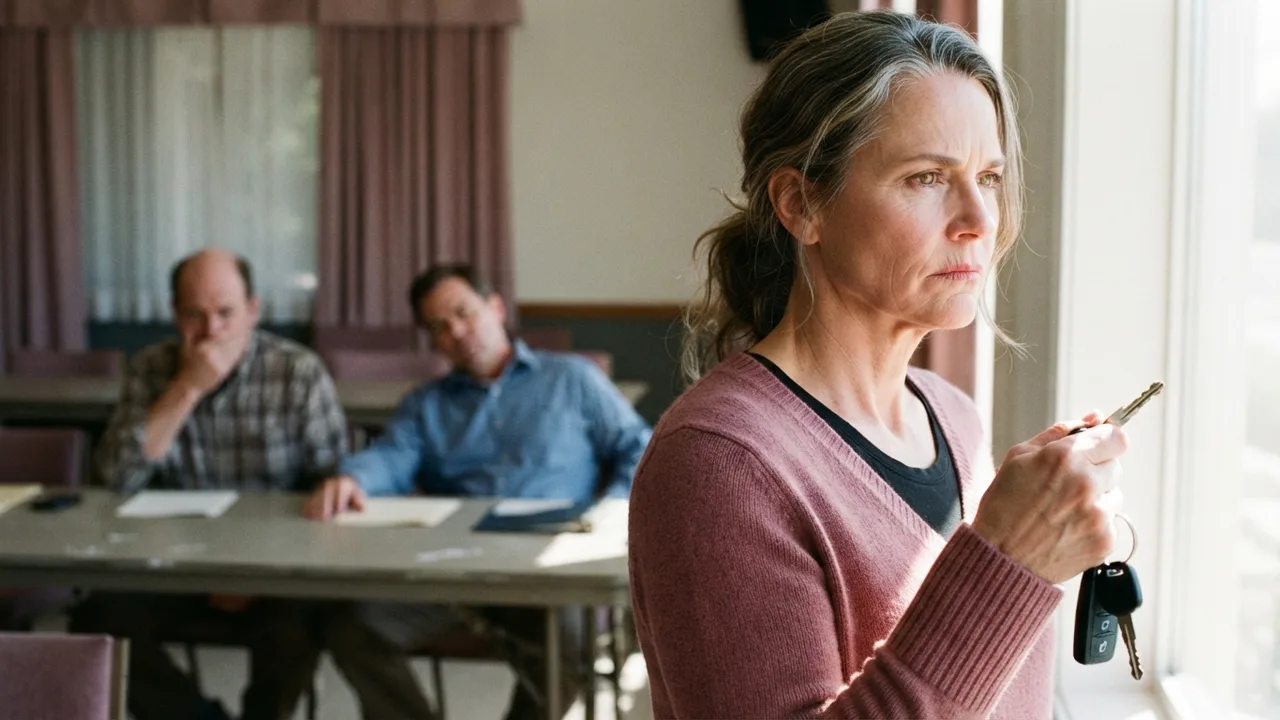
I took the keys in my hand. The sun struck the teeth of my car key and sent a bright, hard line of light across my palm.
Comments