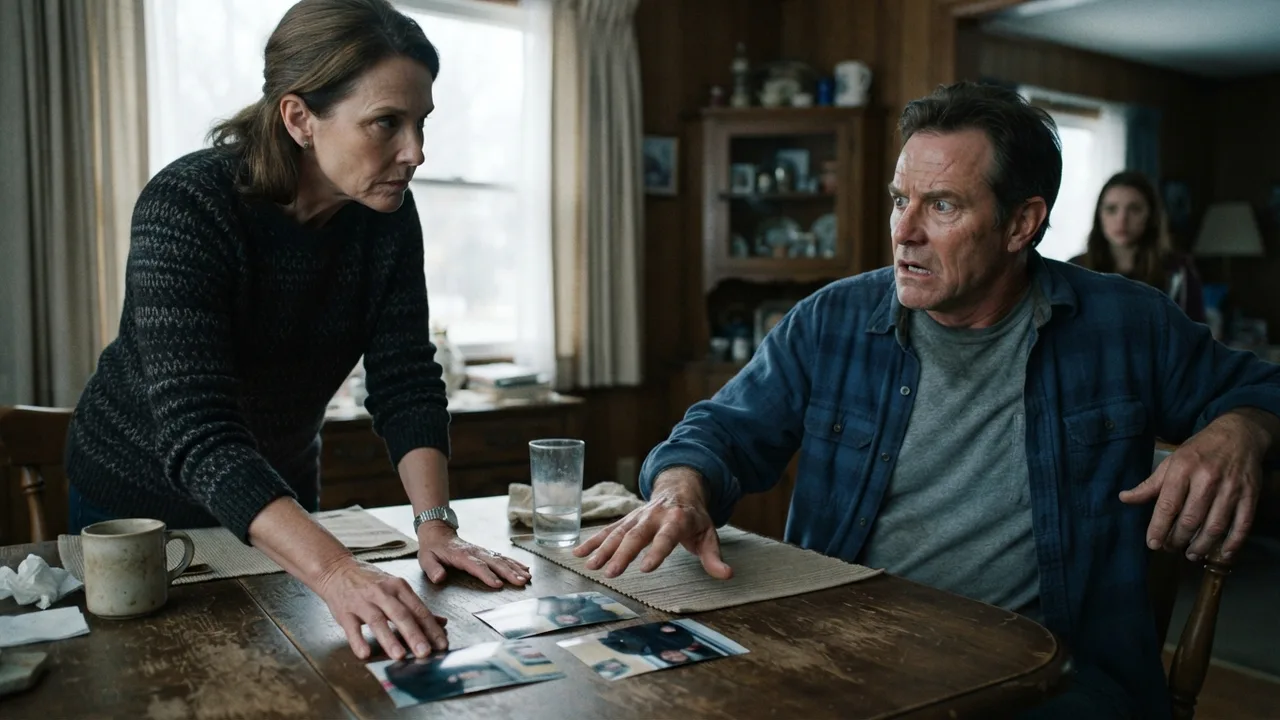
My brother said our mother gave him the last eighty thousand dollars of her life savings, but I'm the one who cashed her fifty-dollar check every Friday for thirty years, and I knew this wasn't her story.
Forty thousand of that money was mine under the will. The rest of what I wanted was harder to put a number on.
Vinny made the announcement two weeks after the funeral luncheon, on the phone, while I stood in the produce aisle at Weis holding a bag of lemons. "Mom gave me cash before she passed," he said. "Eighty grand. She wanted me to have it for the business. Mr. DeLuca should know, since it changes the numbers."
I put the lemons back. I did not buy anything that day.
Advertisements
Our mother, Maria Giordano, clipped coupons from the Weis circular until the week she stopped knowing what a coupon was. She washed and reused foil. Every Friday she wrote a check to cash for fifty dollars in a hand like a schoolteacher's, and every Friday I counted it out at my window at Chesapeake Federal and slid it into her purse myself.
A woman like that did not hand over eighty thousand dollars in an envelope. And in her last year she could not have told you what day of the week it was.
I called a family meeting for the following Sunday, at her kitchen table.
Angela drove up from Bel Air with a tote bag of ungraded essays. Vinny arrived late, in a camel sport coat that cost more than my winter boots, and kissed Angela on the cheek before he sat down. He did not kiss mine.
"I want to understand it," I said. "When did she give you the money?"
"Over the last few months. Little at a time." He spread his hands. "What do you want, a receipt?"
He laughed once and loosened his cuff, as if the question were a small joke at my expense.
"A receipt would be nice, yes."
"Frankie." Angela put her pen down. "Can't we just talk like a family?"
"We are talking. Vinny, Mom couldn't remember my name some Thursdays. She asked me twice if Daddy was working late. Why would anyone hand you eighty thousand dollars and trust you to take it?"
Advertisements
His smile stayed where it was, but his eyes went flat. "Because she trusted me, Frankie. That's what you can't stand. She told me things she never told you."
"I'm asking about the money."
"You're always asking about the money. You count everything. You counted Mom's pills, you counted her visitors, you probably counted the flowers at the funeral." He turned to Angela. "She's cold, Ange. She's been cold since Dad died. And she's jealous."
I waited for Angela to say that wasn't fair.
"Frankie, you know how he is," Angela said. "Maybe Mom wanted him to have something. He's been struggling. Does it have to be a fight?"
Vinny reached over and squeezed her hand. Neither of them looked at me. The refrigerator hummed, and the coffee can where Mom kept rubber bands sat on the counter where it had always sat.
I drove home understanding that I was now the one making trouble. That was the first thing it cost me.
The second thing took three weeks and a form.
An executor can request a decedent's account records, and the rule is that you request them through the bank's own channels, with your Letters and a death certificate, like anyone else. Mom's account was at Chesapeake Federal. My bank.
So I stood at the operations desk on a Tuesday morning with a clipboard, and Denise, who had shared a break room with me for eleven years, looked at the name on the form and then at me.
"Frankie. Your mother's? Is everything all right?"
"It's estate business."
"Of course. I'll route it today."
She meant it kindly. By noon, every teller in the building knew I had filed paperwork on my own mother's account, and I felt it in how they stopped talking when I walked past the vault. For thirty years I had been the one who didn't need to be watched.
Vinny found out within the week. I never learned who told him.
The voicemail came at nine at night, and I played it standing at my kitchen counter in Havre de Grace with my coat still on.
"Pull one more statement and I swear I'll tie that house up for years. Lawyers, appraisers, the whole circus. You think I won't? You'll be sixty before you see a dime. Drop it, Frankie."
I did not call him back. I sat at my table until the streetlight outside went off at dawn, and I did not sleep.
The statements came ten days later in a thick manila envelope. I spread them across the table that evening with graph paper, a ruler, and a yellow highlighter, because the rule is that a pattern does not exist until you can draw it.
For most of the year, the account looked like Mom. The Friday check for fifty dollars. The electric bill. Her Medicare supplement. Then, in her final three months, the account did something it had never done in all my years behind the glass: eight large cash withdrawals, spread across those weeks.
Every one was coded to the drive-thru lane at the Route 40 branch.
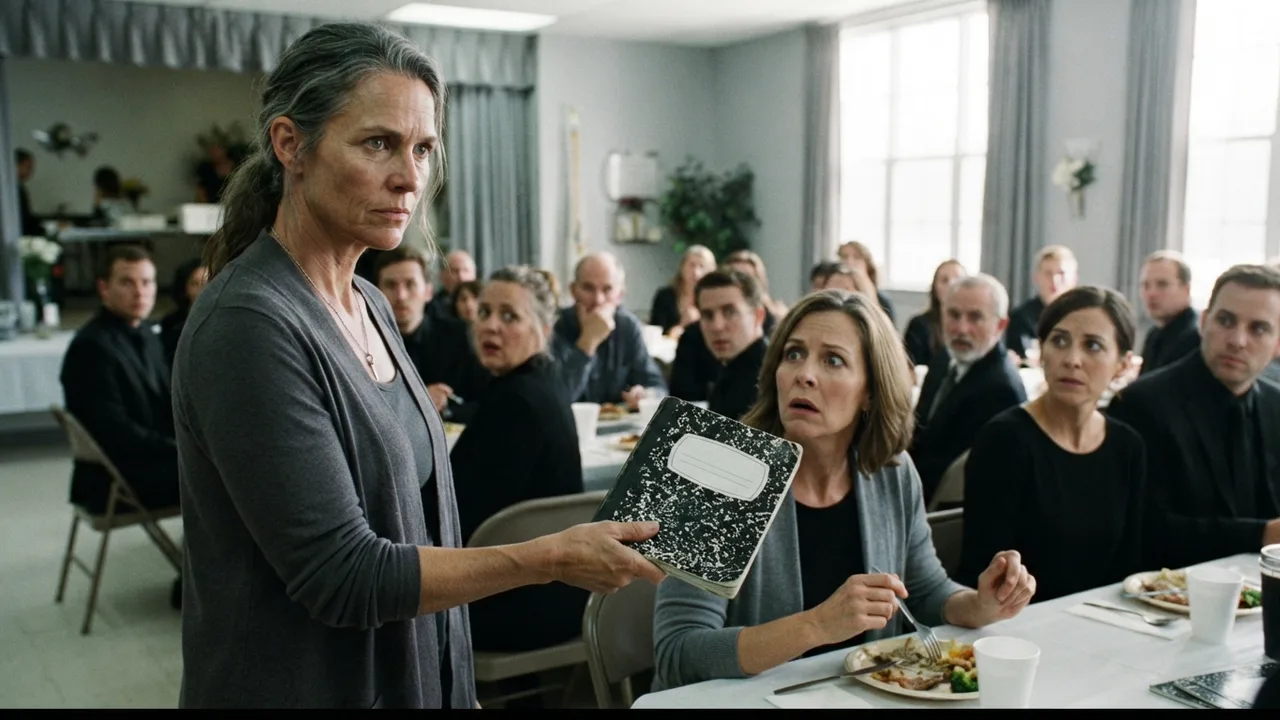
I took down the spiral notebook I'd kept by Mom's phone, where I logged every visitor to her house, and laid it beside the statements. Vinny's name sat in the notebook on the date of each withdrawal. Beside several of them I had written, in my own small print, *V. took the Buick to charge the battery.*
I had not driven that car in a year, and neither had she. After the second fender incident, I took away her keys, and she never once asked for them back.
I sat looking at the pattern for a long time.
It was a good pattern, and it was also only a pattern. A lawyer would call it circumstantial. A drive-thru withdrawal leaves a slip with a signature and a photo of the lane, and the slips and the photos lived in the bank's security department, which does not release anything to a teller, even a head teller, even for her own mother. They release it on a request with legal standing behind it.
So I called Mr. DeLuca, and I wrote him a check.
"Five hundred for the consultation and the letter," he said, folding it into his blotter. He was a gray, careful man who had written my parents' wills at this same desk. "I'll put it on the firm's letterhead. Security departments pay attention to letterhead."
Five hundred dollars was most of what I had set aside for the dentist. I wrote the check anyway, and my hand did not shake.
Eight days later, a packet arrived. I did not open it. I carried it to my table, washed my hands, and then I opened it.
The slips were on top.
Seven of them carried my mother's signature, shakier each time, the *Maria Giordano* sliding downhill across the line. Those I could have explained away if I'd wanted to. A daughter can believe a lot about a signature she wants to believe.
The last two, each for fifteen thousand dollars, I knew in the first second.
Beneath them were the camera stills, printed in grainy gray with a date and a time in the corner of each frame. I counted nothing. I studied the stills for the last two slips and checked the date stamps against each other, and I went to my filing folder for the neurology office's summary from Mom's last two appointments.
I had requested it as co-executor the same week I wrote the check. I knew where I had been on those mornings. I had taken a half day each time and driven her myself.
I did not sleep that night either. But it was a different kind of awake.
The meeting to finalize the distribution was set for a Thursday in late May, in the conference room at Mr. DeLuca's office, on the second floor above an insurance agency. The room had a long walnut table, a pitcher of ice water, and a window that looked out on the Susquehanna, wide and brown under a low sky.
Angela came in first and sat nearest the door. Vinny arrived in a navy blazer with a pocket square, shook Mr. DeLuca's hand with both of his, and took the chair at the head of the table as if somebody had assigned it.
I sat across from Angela, with a folder in front of me and a second one under my chair.
"Before we begin," Vinny said, "I want to say something. I loved my mother. I was there for her, I drove her to her appointments, I sat with her. When she wanted to give me a gift at the end, I accepted it with love. If my sister wants to make that ugly, that's her choice."
Angela's eyes were wet. Mr. DeLuca wrote something down.
"Vinny, may I?" I said.
"Go ahead, Frankie. Count away."
I slid the first folder to the center of the table. "Mom's statements for her last year. A fifty-dollar check every Friday, steady as a clock. Then, in her last three months, eight cash withdrawals of a size she never made in her life, all at the drive-thru lane on Route 40."
"Of course I drove her." He leaned back. "She was too frail to go inside. She sat in the passenger seat and told the teller what she wanted."
"Mom hadn't held keys in over a year. I took them myself."
"This is pathetic. You're standing there counting her money instead of grieving her."
Angela's hand went to her mouth. "Frankie. Please. Stop."
"I can't, Ange."
I reached under my chair, set the second folder on the table, and opened it where everyone could see.
"The withdrawal slips and the drive-thru stills, released to Mr. DeLuca's letterhead." I laid the slips in a row. "The first seven are Mom's. Weak, but hers."
I put my finger beside the last two.
"Fifteen thousand each. Look at the G in Giordano. Our mother made a little loop on her G. On every check she wrote me, every birthday card, every Christmas envelope. It's not there."
Angela leaned over the slips. I watched her find it. She had signed a hundred birthday cards from Mom herself.
"She had bad days," Vinny said, too quickly.
"She was at the neurologist on both of these mornings. The front desk signed her in at these exact minutes." I turned over the stills. "I know because I was sitting next to her. And look at the passenger seat in this picture, Vinny. It's empty. You weren't driving her to the bank. You were driving her car."
The ice shifted in the pitcher. Out on the river, a barge horn sounded and faded. Mr. DeLuca laid his pen down and said nothing, as he had agreed to on the phone.
Vinny's jaw worked. "Fine. Say I took some. Who sat in that house every Christmas Eve? Who cleaned the gutters? Nobody paid me a nickel. She owed me."
"Then you should have asked her while she could still answer. You wrote her name for her instead."
"You can't prove I wrote anything."
"I don't need to. The State of Maryland has a name for a forged withdrawal from a woman with a diagnosis in her chart. Financial exploitation of a vulnerable adult." I kept my eyes on him. "I looked it up the night the packet came."
He turned to his sister. "Ange. Tell her."
"Don't ask me," Angela said, barely audible.
He pressed his thumb against the table's edge until the nail went white.
"I don't have it," he said. His voice had no polish left. "Not all of it. Some went to the lease on the shop. Some went to people I owed."
"Then here is what happens." My mouth was dry, and I reached for the water and did not drink it. "What you can't pay from your own pocket comes out of your half of the house. Mr. DeLuca writes it up today, and you sign it today. A cashier's check goes to the estate before closing. If it's there, these slips stay in this folder and I never say that phrase out loud again. If it isn't, I file the challenge and I hand him everything."
"You'd do that to me."
"You did it to her."
Mr. DeLuca slid a legal pad across and said he would have the acknowledgment typed in ten minutes. Vinny signed it standing up. His G had no loop, and I think we all saw that.
He buttoned his blazer. "Hope it was worth it, Frankie."
"I'll find out."
He left without closing the door. Angela waited until his footsteps faded down the stairs.
"I just wanted one thing left that wasn't broken," she said, and carried her tote bag out against her chest. From the window I watched her sit in her Camry a long while before she drove back to Bel Air.
She has not called since.
Vinny came to Mom's kitchen on the Monday before closing. He would not sit. He set a bank envelope on the table next to the coffee can of rubber bands, and I took out the cashier's check and read it aloud.
"Payable to the Estate of Maria Giordano. It covers what the lease on your shop hadn't already eaten."
"It's what I had."
"And this." I put the typed acknowledgment beside it. "The rest comes off your half. You initialed every page."
"You've got it all lined up." He looked at the stove, at the dish towel still hanging off the oven handle where she had left it. "You could have let it go, you know. Ange won't pick up when I call."
"She won't pick up when I call, either."
He nodded slowly, as if I had finally said something he could use. Then he dug into his pocket and put Mom's house key down on the table, the one with the red rubber cap.
"Sell it," he said. "I don't want to walk in here again."
The door shut behind him. I stood there until the refrigerator kicked on, and I did not touch the key until I heard his car back out of the drive.
The next morning I walked the check into Chesapeake Federal and deposited it at the estate account, at the window of a teller who was twenty-four and did not know me. She stamped it and slid back the receipt. Behind me I could feel the others at their stations, watching the head teller bank her own mother's money.
The house on the corner sold in September to a young couple from Aberdeen who liked the front porch and the tomato bed along the fence. They closed on a Tuesday, at the title company's office on Washington Street, in a room with a bowl of peppermints and a framed print of the Concord Point lighthouse.
Angela's pages had come by courier the week before, signed and flagged with small yellow tabs, her handwriting cramped and quick. Vinny's came through his attorney, in a separate envelope I did not open.
"Everything's in order, Ms. Giordano," said Pam, the agent. "Sign where you see the tabs. Take your time."
I turned to the chair beside me. For a moment I could see all of them in it. My mother with her coupon scissors, and Angela, and a boy in an Orioles cap who once split a Royal Farms chicken box with me on the back steps.
Then I picked up the pen and signed my name across the line.
It was clear, and it was steady, with a small, perfect loop on the G.
Comments