The woman from the mortgage servicer called in November and asked me to sign an occupancy certificate for the reverse mortgage on my house, and I had to tell a stranger I did not know what she was talking about.
"I have you listed as the non-borrowing spouse," she said. "At 1420 Old Mill Road."
"There's no loan on this house," I said.
Advertisements
She read me the amount anyway. Eighty-five thousand dollars, taken out in March, with six thousand one hundred in fees on top of it.
I set the receiver on the counter and looked out at the pond, skimmed over that week, and I counted to four. That was a habit from the work. You count so the family in the next room gets a minute before you say the thing they already know.
Then I picked it back up and asked who signed.
"Mr. Vernon Ray Sizemore," she said. "March twelfth."
I thanked her. I thanked a woman in another state for telling me my husband had put a mortgage on the house over my head, and then I made coffee I never drank.
My name is Charlene Mae Sizemore. I'm sixty-seven.
I've lived on Old Mill Road since I married Vernon in 1985, which is forty-one years. Eleven acres, a farmhouse, six miles east of Sycamore Gap, Missouri, population 1,860. I retired off Piney County Hospice after twenty-eight years and I still work three mornings a week with two old clients in town, because I like having somewhere to be.
Advertisements
Vernon is seventy-one. He put in thirty-four years at the co-op, feed and fence first, then the fuel truck, and he still drives for them two days a week in the fall. Our daughter Kendra is thirty-eight and teaches choir at the high school. She lives in Fairweather, thirty-four miles west.
Dewayne is Vernon's boy from his first marriage, forty-six, runs a digging business out of a double-wide off County Road 214. He has never asked us for a dollar in his life.
I've run the funeral dinners at Sycamore Gap Methodist for twenty years. I was planning Christmas Eve for the five of us, and I had the ham ordered and the good tablecloth down out of the cedar chest.
I did not tell Vernon about the phone call. I want to say why, and the only honest answer is that I already knew what he would do with his face.
So I called the title company and had copies mailed to Kendra's address, and on a Wednesday I told Vernon I was going to Walmart and drove past it.
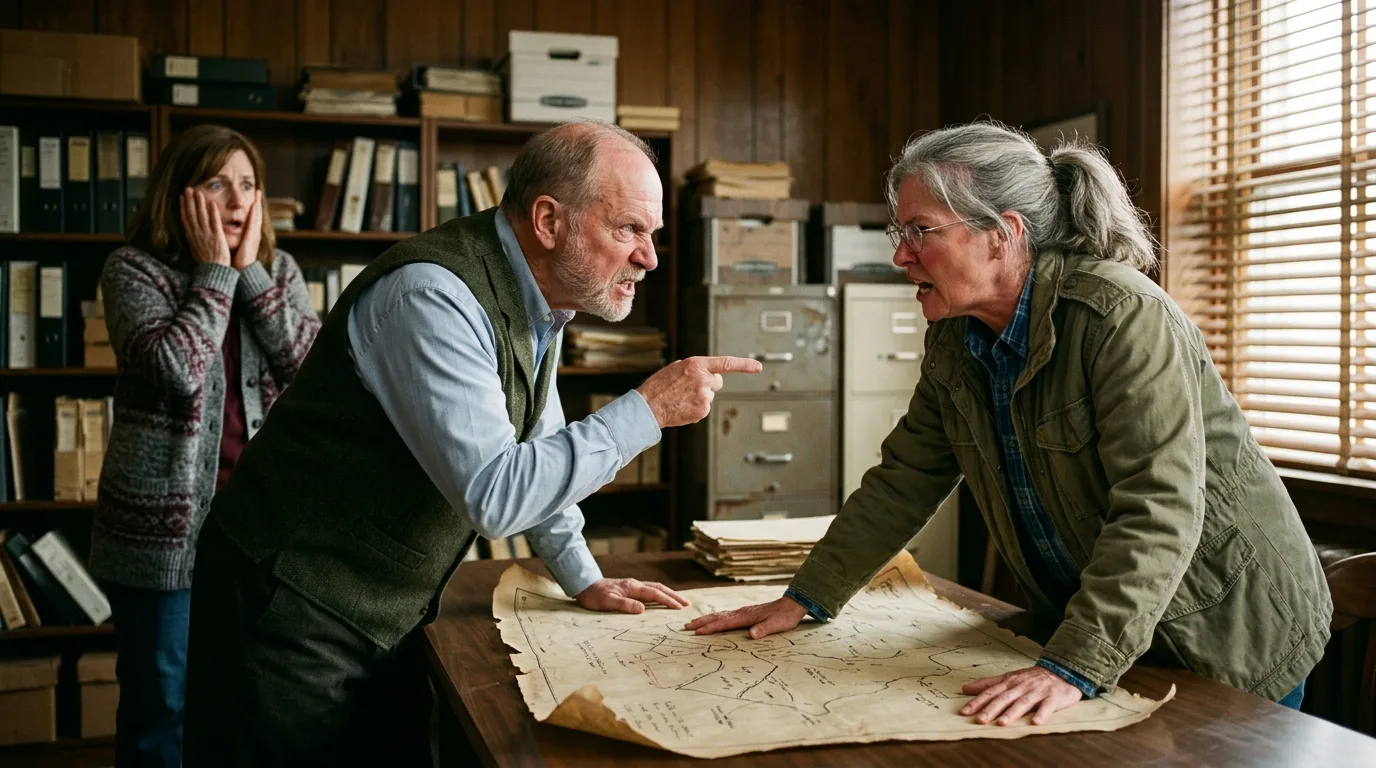
The recorder's office in Fairweather is a small room that smells like a copier and a radiator, and the girl at the counter pulled the deed from 1988 and the mortgage from this March, and I sat at the table by the window and read both of them through with my glasses on.
Two sleepless nights, and that was before I got to the second page.
The house came to Vernon off his mother's estate in 1988. One name on the deed, and it was his. My name had never been on it, not in forty-one years, not on any line, at any time.
I went back to the first page and worked through it line by line, because I thought I had made a mistake in the reading.
I hadn't. I paid the copy fee and put both sets of papers in the truck and drove home with the heater going, and I understood all at once that I had spent forty-one years holding up a house I had no claim to. Not a half of it. None of it.
The money was gone. That was in the papers too.
That night I set the copies on the kitchen table with his supper and asked him one question. "Vernon, where did seventy-eight thousand nine hundred dollars go?"
He did not look up from his plate.
"I handled it," he said.
"Handled it how?"
"It's handled, Charlene."
He ate a bite of pork chop. He chewed it and swallowed it and then he talked about the man coming to look at the well pump, and I stood at the stove with my hands in the dish towel.
That was the first time in forty-one years I could not find him in the room we were both standing in.
I didn't push. I want to be honest about that too. I have washed a lot of hands at the end of a lot of lives, and I know what a person looks like when they're braced, and he was braced.
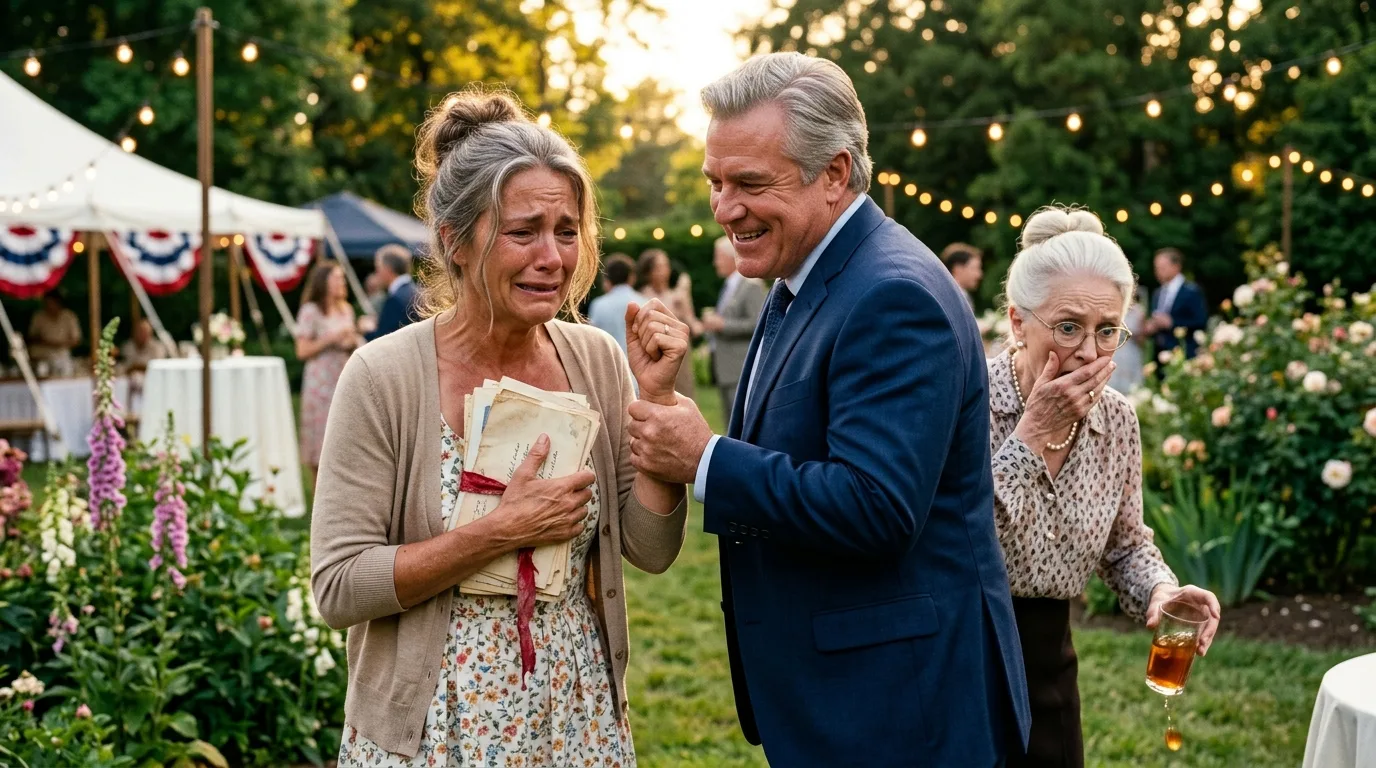
The church bazaar at the fellowship hall is the second Saturday in December. I do the deviled eggs and the children's table, and this year Joslyn ran it with me. She's Dewayne's wife, forty-four, tall, works at the dental office in Fairweather, and she has a voice that carries because she has never had reason to think anybody minds.
I was behind the folding table with a tray when I heard her, four feet away, talking to Marlene Puckett.
"Forty-six thousand two hundred," Joslyn said. "Right off the land contract. We are not paying interest to anybody ever again, I don't care."
Marlene said something low. I did not hear it and I did not need to.
"Vernon took care of it," Joslyn said. "Dewayne's dad just took care of it. It was their money, and Charlene knew all about it."
She turned and saw me and smiled the biggest smile of the morning and said, "Charlene, honey, I don't think I ever properly thanked you."
"You're welcome," I said.
Then I passed the deviled eggs down the line, one hand over the other, and held my face still for eleven minutes by the clock on the fellowship hall wall. I know it was eleven because I looked at it twice.
I told Kendra four days later, at her kitchen table in Fairweather, with the papers spread out and the water running in her sink for no reason.
"Mom." She had her hand over her mouth, same as Joslyn would later. "This is not legal. That's — Mo, that's a mortgage on your home and you never signed anything."
"I know what it is," I said.
"You need an attorney. There has to be — you need somebody who does this."
"I reckon."
"You can't just sit in that house and let him—"
"I'm not sitting," I said. "I just don't know yet what I'm doing."
She said she'd take the day off work and go with me. She said it twice. She put the papers back in the envelope for me and set them by my purse so I wouldn't forget them.
Then Vernon called her that Sunday night, on his way to church.
I don't know what he said. I know what she sounded like when she called me back, which was tired in a way that had nothing to do with school.
"Mom, he says you're worked up over nothing. He says it's all his own business, that it's already worked out, and that you're scaring everybody at Christmas."
"Kendra."
"Just let it go until after the holidays. Please. I'll come down on the twenty-fourth and we'll all talk about it in January, when it's not — when everything isn't like this."
"All right," I said.
That was the third thing I said that week and could not get behind. I hung up the phone and stood in my kitchen and counted the doors on the first floor, front and back and pantry, three, and I knew then that a private conversation was finished in this family.
Some things have to be said once, out loud, in front of everybody, or they get smoothed over by Tuesday.
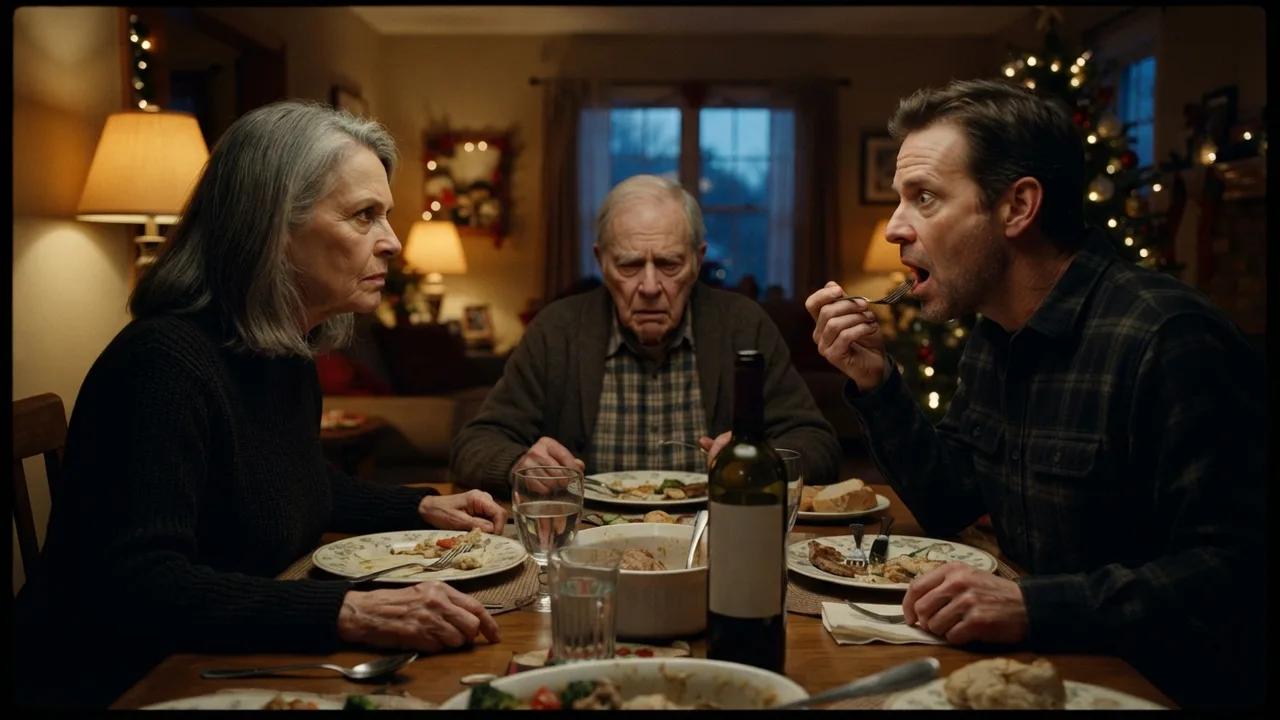
Christmas Eve we had ham, and Vernon's mother's sweet potato casserole with the pecans on top, and scalloped corn, and rolls. Kendra wore her grandmother's Christmas pin. Joslyn had a sweater with little bells on it and every time she laughed the whole table heard it.
Dewayne said the blessing, which he does every year, and he said it short.
We ate. I watched hands instead of faces, out of habit. Vernon's hands were steady. Dewayne's were not, and Joslyn ate like nothing had ever happened to anybody.
Kendra cleared the plates with me, and when she set the last stack by the sink she squeezed my elbow and said, "January, okay?" and I said, "Okay."
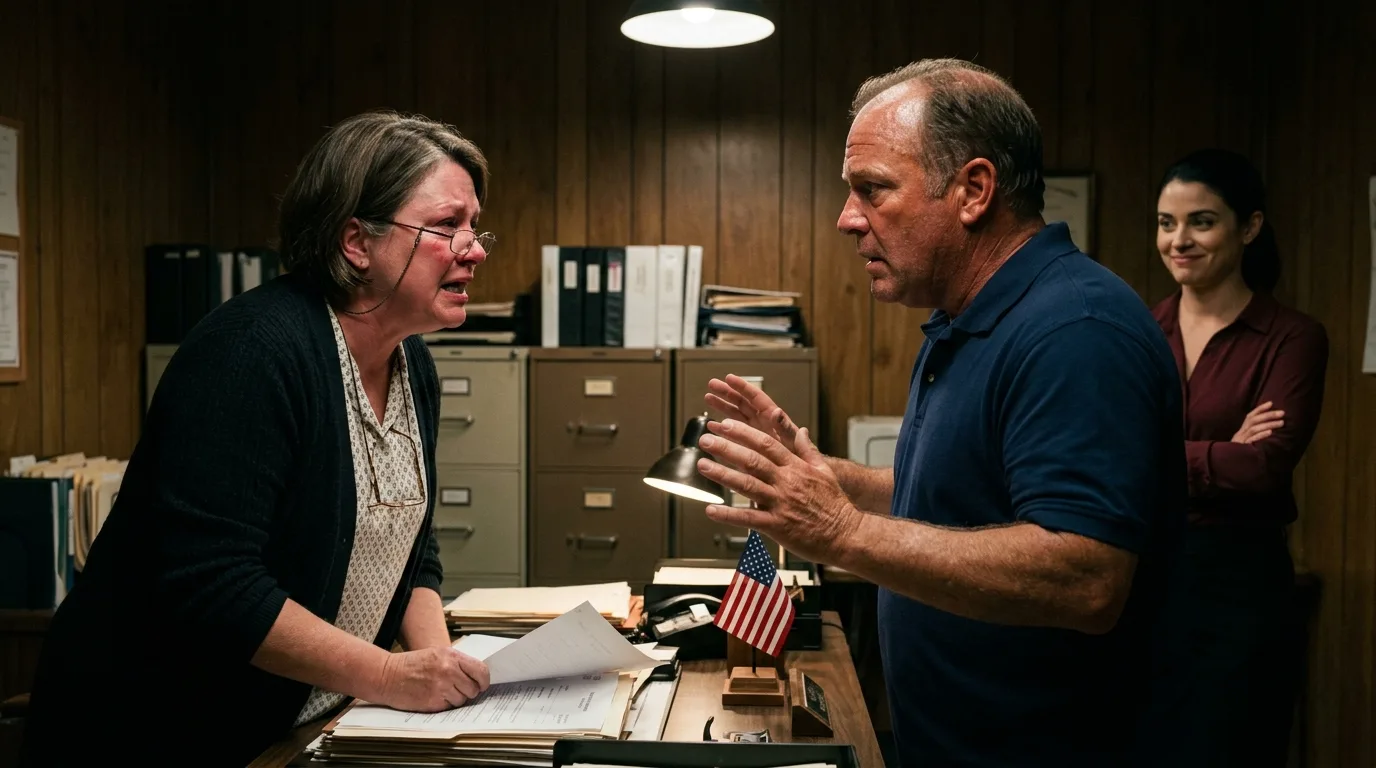
Then I went to the buffet, and I reached into the drawer under the extra napkins, and I took out the recorder's copies.
I laid the 1988 deed and the March mortgage flat on the table between the ham platter and the salt, side by side, squared up at the corners the way I do anything that matters.
Nobody said anything. Joslyn stopped with her coffee cup in the air.
"Vernon," I said. "Whose name is on this house?"
He looked at the papers. He looked at his son. He did not answer.
"Whose name is on this house?"
"Mine," he said.
"All right," I said. "Now I'll ask somebody else. Dewayne, how much did your daddy hand you this spring?"
Dewayne went white from his collar up. He put his fork down very slowly, like it was heavy.
"Forty-six thousand two hundred went on the land contract," he said. "The rest went on the taxes and the excavator note."
Joslyn put her hand over her mouth.
"That's the number," she said, to nobody, quiet, as if saying it smaller would make it smaller.
"Dewayne," I said. "Where did you think it came from?"
He looked at his father for a long moment and then he looked at me, and I have seen that look on a lot of faces at a lot of bedsides. It's the look of a person who has just been told the news.
"He told me it was your savings," he said. "Dad told me you knew. He said you both wanted to do it. He said it was the two of you."
I sat down in my chair.
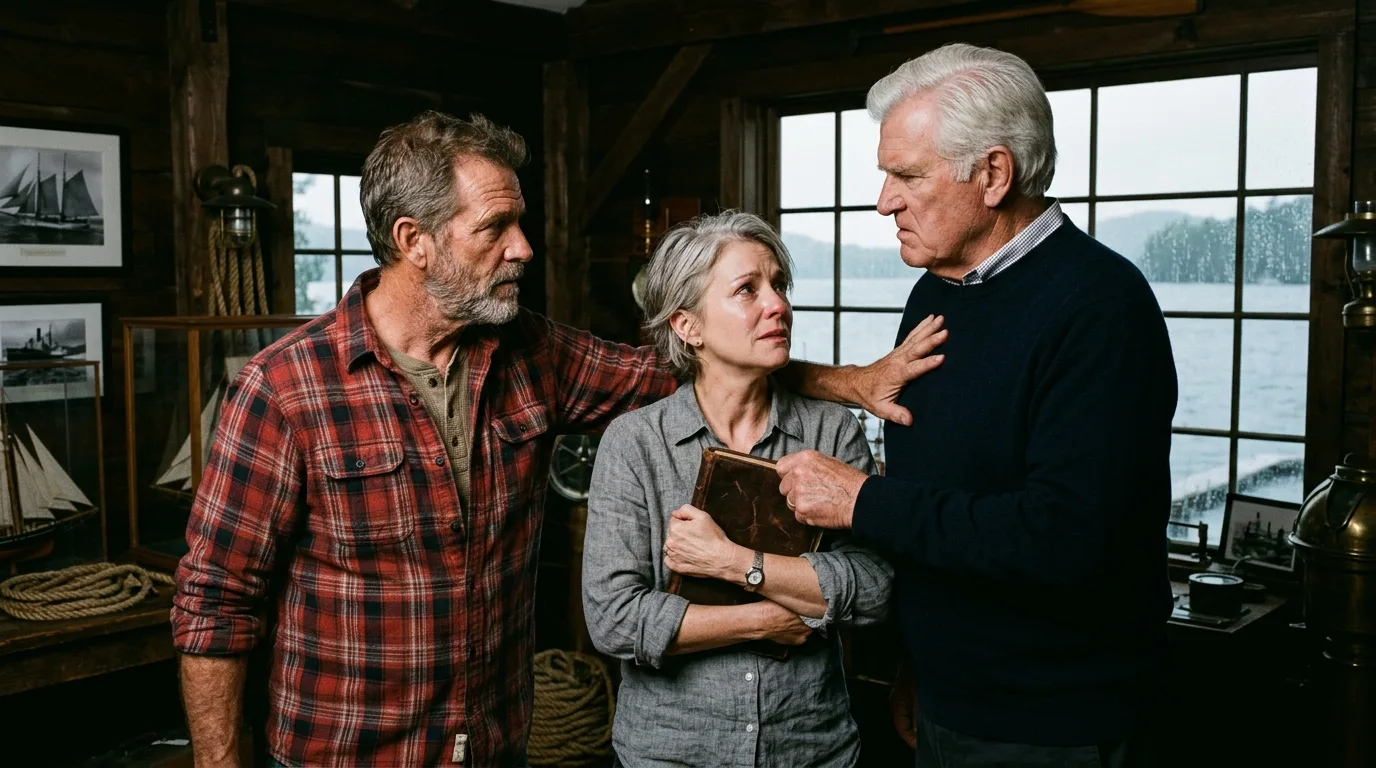
Kendra got up and came around and stood behind me and put her hand on my shoulder, and she didn't say a word, and I did not need her to.
Vernon had not moved.
"I told him that, Charlene," he said.
"You told him that."
"I did."
"Look at me and say it again."
He looked at me. He has a scar on his right ear from the fuel business, and I have looked at that ear across a pillow for forty-one years, and I looked at it now.
"I told him you knew," he said. "I told him it was both of us. I didn't want him thinking he was taking from you."
The stove fan was still running. Joslyn reached over and turned it off.
"I had a stent put in me in September of last year," Vernon said. "You drove me home from Fairweather and I sat in that recliner and I did the math on what I'd leave behind. It came out to nothing. Forty-one years and it came out to nothing."
He rubbed his hands on his knees.
"I left Dewayne's mother in 1985 when he was five years old and every bit of what he's got he got without me. Then Kendra and Terry bought that house in 2019 and we handed them twenty thousand dollars for the down payment, and Dewayne never got a nickel of anything from me. Not one nickel."
"So you took it off my house," I said.
"I took it off my house," he said. "That's what was in my name. I wanted to be good for something before I quit."
Dewayne pushed back from the table and stood up and walked into the front room, and Joslyn went after him. We heard the front door, then the porch boards, then the truck door.
Kendra stayed behind my chair with her hand on my shoulder.
I want to be plain about what I felt, because it surprised me and I have thought about it since. I sat there and found I was not angry at Dewayne. Not even a little.
The anger had one place left to live and it was sitting at the head of the table.
Dewayne came back in with the cold on him and his hood pulled up and his keys in his hand.
"I need to write something down," he said.
We went in the kitchen. He took an envelope off the counter, one of the Christmas cards, and turned it over, and he wrote on the back of it with my pen in his big handwriting.
Six hundred fifty dollars a month beginning February 1, 2027, until it's paid.
He signed it. He handed the pen to Joslyn and she signed under him, and she was crying the whole time and did not try to hide it.
"It'll take years," he said. "I know that."
"It'll take what it takes," I said.
The first week of January, Vernon went to the abstract company in Fairweather and quitclaimed the farmhouse to himself and me, joint tenants with right of survivorship. I paid a hundred and fifty dollars to have it prepared and the recorder's fee besides, and I signed the occupancy certificate as the non-borrowing spouse, which is a phrase I've come to have opinions about.
The debt did not go anywhere. The equity I had counted on all those years was mostly spent on a lot and a truck and a note, and it is not coming back.
On January 3 I was standing at the sink with the water running when Vernon brought his plate over. I told him I was not leaving, and I was not promising to stay. I said I'd tell him in the spring, after the ground thawed and I'd had a winter to think in.
"That's all right," he said.
He picked up the towel and dried while I washed, standing right beside me for the first time in three months, and neither of us said anything else about it.
On January 12 the recorded deed came back from the Piney County recorder in a window envelope, folded in three.
I stood at the counter and steadied my reading glasses on the cord and put my thumb under his name, and there under it was mine, Charlene Mae Sizemore, printed in the same size type.
Comments