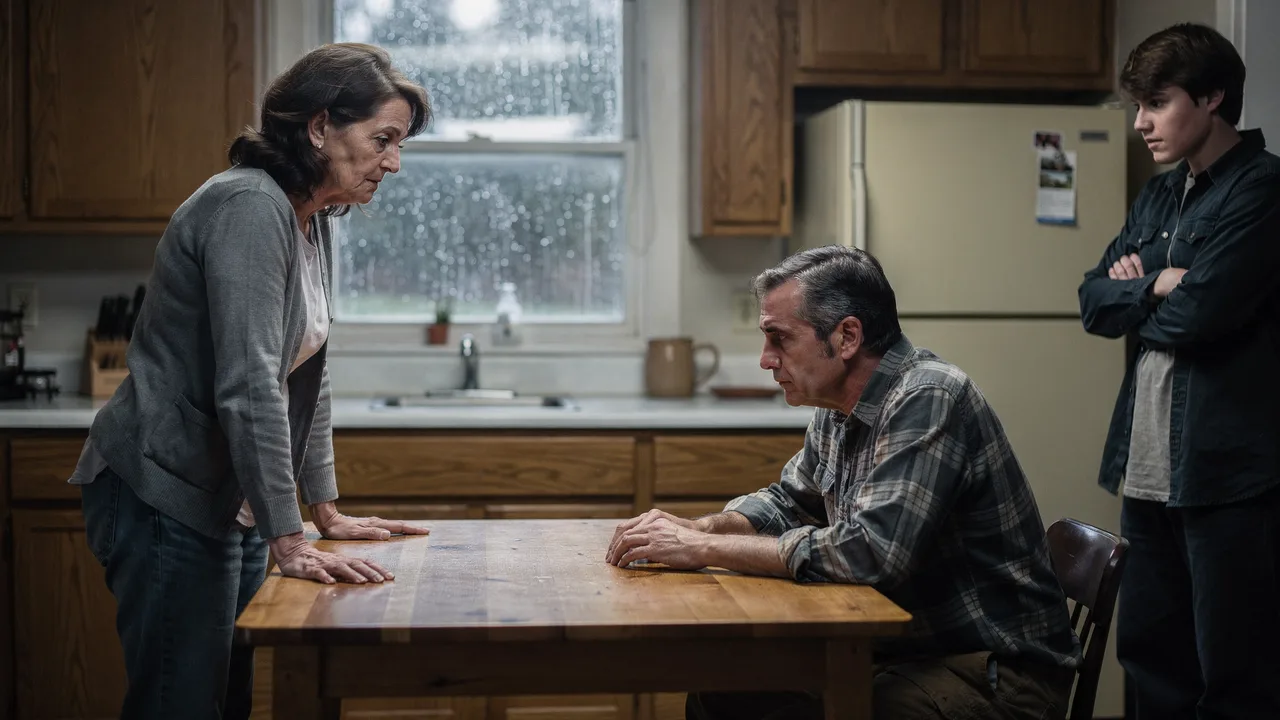
The first lie my nephew told was that our grandfather's Mustang needed $40,000 worth of work. He told it at Mama's kitchen table six months after we buried her, with the bank letter about her certificate of deposit lying between the salt shaker and the napkin holder.
Forty thousand dollars. Sharon's half and mine, the last thing Mama had put by.
"It's a frame-off restoration, Aunt Reggie," Dustin said. He had a way of leaning in with both elbows on the table, as if we were about to share a secret. "Every panel, every bolt. It's a legacy investment. Grandpa's car goes back to showroom."
"Showroom," I said. "That car hasn't seen a showroom since before I could drive."
"Exactly. Time to give it its due."
Advertisements
I had driven that Mustang around the Baptist church lot at fifteen, with Grandpa in the passenger seat telling me to listen to the engine and stop looking at my feet. I knew what sound it made. I did not know where it was now.
"Where's it sitting?"
"My workshop, out past the feed store. I rented the space. It's in pieces right now."
"Then let me come look. Ten minutes and I can tell you what it needs. I'd do it for free."
Dustin smiled the smile that sells home security systems to nervous widows. "I appreciate that, I do. But I've got a professional timeline, and the contractor's schedule is tight. I can't have people picking through the parts."
"People."
"You know what I mean."
I did. Sharon reached across the table and put her fingers on my sleeve. She wore her yellow cardigan, the one with the pearl buttons, and her eyes were already wet.
"Reggie, please. Don't interfere. It's such a wonderful tribute to Daddy, and Dustin's worked so hard on the plan. Don't spoil it."
Something in my chest went the way a gear goes when the teeth shear off. It doesn't make much noise. You just feel the drive stop connecting to anything.
"I'm not spoiling anything," I said. "I'm asking to look at a car."
"You're asking him to prove himself," Sharon said. "To his own mother."
Dustin patted her hand. He didn't look at me, which told me more than if he had.
Advertisements
---
That evening I closed the shop, wiped my hands on the red rag that hangs from the compressor, and sat down at my kitchen table with the laptop I mostly use for parts catalogs. The window unit rattled. Outside, the Ozark humidity had settled over Cedar Hollow like a wet blanket over a dog.
I typed in 1967, Mustang, original paint, auction results.
I read until the coffee went cold. What I found should have been in my head already. Restored cars with fresh paint and new interiors sold for a decent price. Unrestored survivors, the ones with the factory finish still on them, the dings and the worn seat edges and the original radio, sold for far more. Collectors paid for the untouched part. You couldn't buy it back once it was gone.
A car like Grandpa's, with the right paperwork and the right shape of wear, would bring around $90,000 as it sat. Restored, it would bring about $35,000.
Forty thousand dollars spent to turn ninety into thirty-five. A mechanic would call that a head gasket on a car that wasn't overheating.
I called Sharon. She picked up late, after I'd nearly given up, and I could hear her television.
"I need you to listen for five minutes," I said. "Just the numbers."
I gave her the numbers. I gave her the auction names and the sale prices and what the word survivor meant to a man with a checkbook.
"So you want to sell Daddy's car," Sharon said.
"I want it left alone."
"Dustin says it's falling apart."
I rubbed a bit of grit off my thumb against the table edge. "Dustin says a lot of things. Sharon, if he restores it, he destroys what it's worth. And he knows that, or he's a fool, and he's not a fool."
"Oh, here it comes." Her voice climbed. "You've always been this way. Everything is a dollar sign with you."
"That's not fair."
"You're obsessed with money. You can't stand that he's got ambition, that he wants to make something of Daddy's car, and you're stuck under a Buick in that garage and you're jealous."
I looked at my hands on the table. Black in the creases, the way they always are.
"I'm not jealous of anybody," I said.
"Then stop calling." She hung up.
The phone sat in my palm. For a while the only sound was the window unit and the tick of the shop sign cooling outside.
---
Dustin called four days later. I knew from his first word that the charm had been turned off.
"Aunt Reggie. I'm going to say this once. You are harassing my mother."
"I made one phone call."
"She cried for an hour. She's sixty-one years old and she just lost her mother."
"So did I."
"Then act like it." He let that sit. "Here's what's happening. I'm hosting a Project Kick-Off at the workshop in two weeks. Family only. Walt and Delores are coming. I'll walk everybody through the vision and we'll celebrate Grandpa the right way. I'd like you there."
"You'd like me there."
"I'd like you to see it with your own eyes, so we can put this nonsense behind us. Mom's got the bank paperwork ready. It just needs your signature." He paused. "Bring your appetite. And a better attitude."
He hung up before I could answer. I stood in the bay with a half-torqued wheel on the lift and realized I'd been handled. A room full of kin, a table of food, a speech. He'd set it up so that whatever I said would sound like the sour aunt spoiling a party.
I didn't sleep. Around three in the morning I gave up and went back to the laptop, but this time I didn't search auctions. I searched for the car's pieces.
If Dustin said it was in parts, parts had to be somewhere. I typed 1967 Mustang original radio into the sold listings and scrolled.
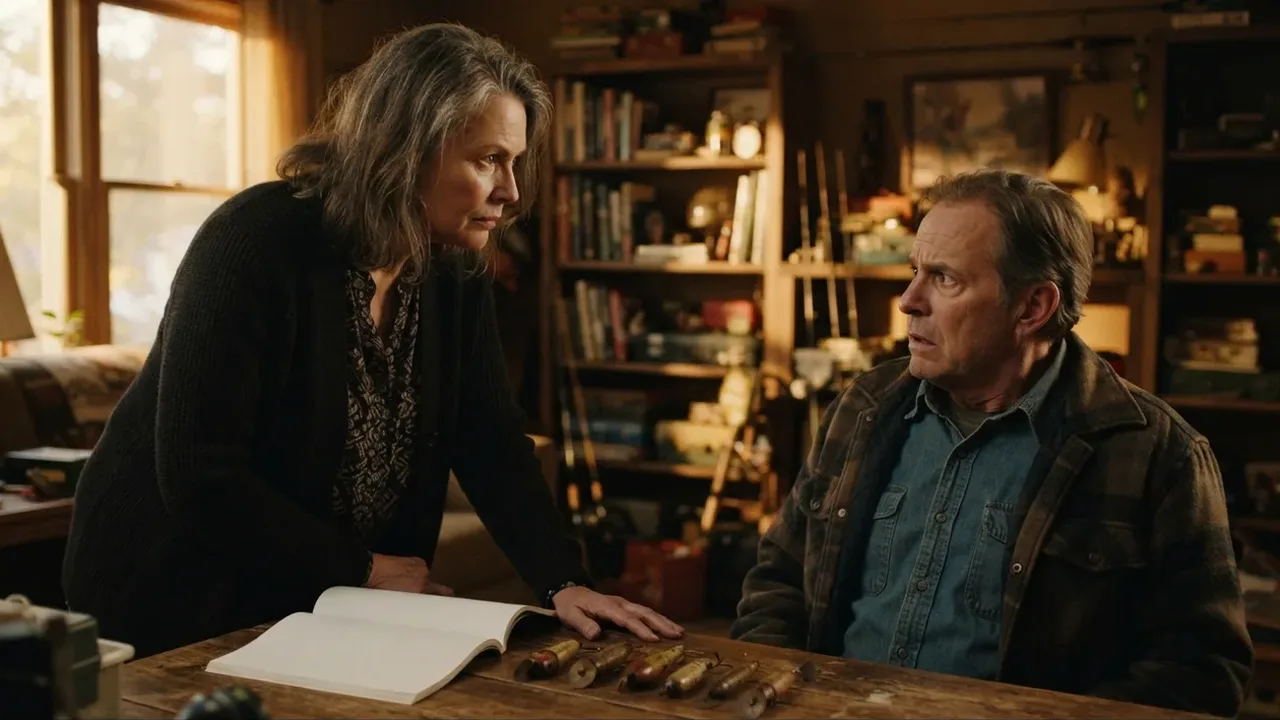
It was the fourth page. A pushbutton AM radio, sold last month, with a photo against a white sheet. The left tuning knob was cracked and mended with a fat bead of epoxy that had yellowed.
I knew that mend. I'd made it myself the summer I turned fifteen, with Grandpa's cousin Walt holding the flashlight and Grandpa saying a woman who fixes things right the first time never has to fix them twice.
A few listings down, a set of hubcaps. The front left had a dent at the edge from the day Grandpa backed into the mailbox post.
The seller's name was BransonClassics94.
I took screenshots until my thumbs ached. Then I sat there while the sky went gray over the feed store, and I did not call my sister. She wouldn't have heard me yet. She'd have to see it with a room watching.
---
Dustin's workshop was a metal building on the edge of town with a fresh coat of white paint inside and a floor swept clean enough to eat from. He had strung lights from the rafters. A folding table held a veggie tray, a platter of cookies from the Walmart bakery, and a pitcher of sweet tea sweating onto a paper tablecloth.
In the middle of it sat the Mustang, polished, hood up, parked under a work light like a bride.
It was not in pieces.
Walt and Delores had already claimed folding chairs. Walt was eighty if he was a day, with a John Deere cap he wouldn't take off for anyone. Delores held her purse in her lap with both hands. Sharon stood by the snacks in her good blouse, and she gave me a nod so small it hurt.
"Welcome, everybody," Dustin said. He wore a vest over a pressed shirt and held a clicker for no reason I could see. "Today's about legacy. Grandpa built a life on honest work, and this car was his pride. My plan is a full frame-off restoration. We strip it to the bare shell, and every system gets a value-add. It's a significant investment, and that's why I'm asking the family to put in the forty thousand."
He went on for a while. Synergy came up once. Delores dabbed her eye. When he finished, he swept his arm toward the car, and there was a smattering of clapping, mostly from Sharon.
I set down my paper plate and walked to the Mustang.
I didn't hurry. A fast walk in a room like that tells everybody you're angry, and I wasn't. I was running a diagnosis.
"Grandpa swore by Motorcraft," I said, at the pitch I use with customers who've been told they need a new transmission. "These spark plug wires are imports. Cheap boots, with a mold seam down the side. Somebody swapped them in, and it wasn't Grandpa."
I bent and ran my fingertips under the front fender, around the rubber grommet where the harness passes through. The paint there caught my skin like fine sand. "Overspray. Somebody patched this panel and did it badly. Delores, come feel."
She did. She nodded slowly.
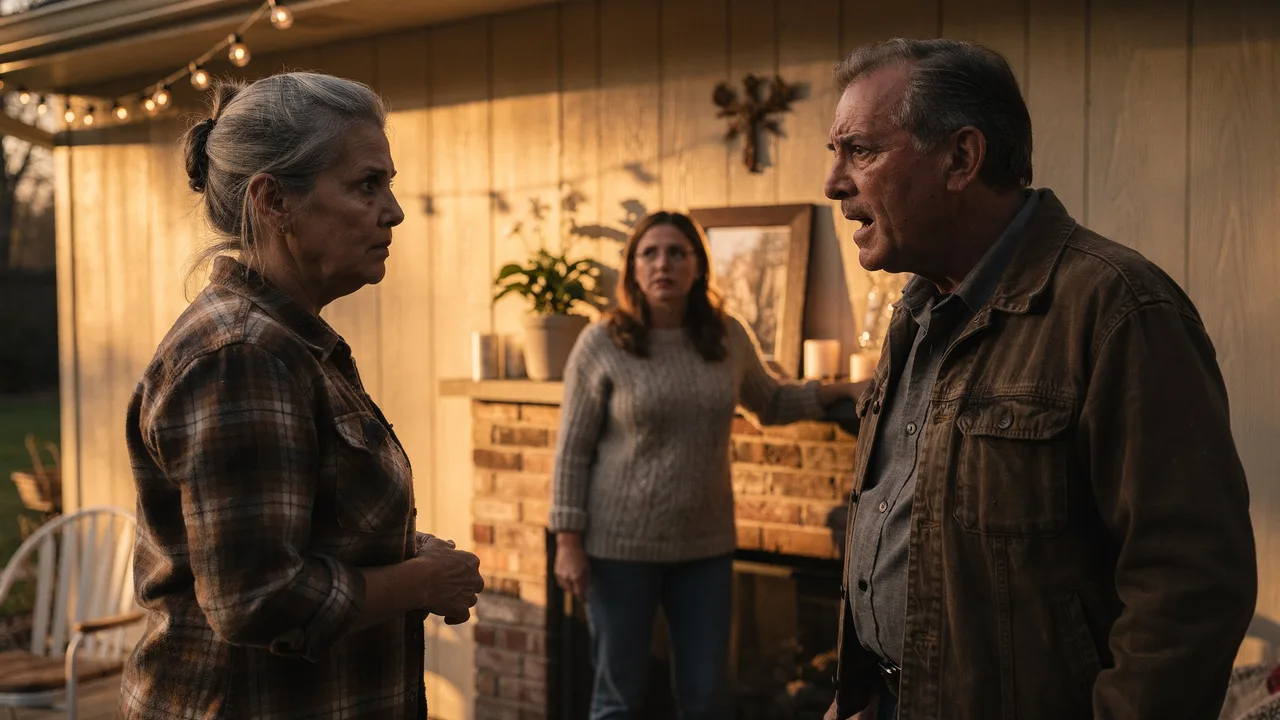
Dustin laughed, the big easy laugh he uses on doorsteps. "Aunt Reggie, with all due respect, you fix minivans. This is a collector's world." He turned to his mother, spreading his hands. "Mom, see? She just wants the cash."
Sharon looked from him to me and back, like a woman standing between two trains.
"You're right, Dustin. I don't understand your market." I turned to my sister. "But I do understand eBay. Ask him why he sold Grandpa's original radio and hubcaps last month. The seller was BransonClassics94." I let it land. "That's his birth year, Sharon."
The string lights hummed.
I held out the phone. Sharon took it with fingers that shook, and I watched her find the radio, and the knob with the yellow epoxy.
"Walt," I said. "You remember who held the flashlight."
"I do." Walt got slowly to his feet. "That's the knob your aunt glued when she was a girl. I was standing right there."
"It was a loan," Dustin said fast. "Against the project. I was going to buy it all back, Mom, it was just a cash flow thing—"
"Nobody lends against a hubcap," Walt said. "They buy it."
Dustin's chin came up. I watched him find his footing the way a car on ice finds the shoulder. "Fine. I sold some loose parts off a car that was getting stripped anyway. That's overhead. I've carried this whole plan on my back, and the first person with a question is the one who couldn't be bothered to show up at Sunday dinner."
That one landed, because some of it was true. I'd missed more Sundays than I'd like to count, with a lift full of other people's cars and nobody to cover.
"I missed Sundays," I said. "I'll own that. I never missed a bill, and I never sold a thing that wasn't mine."
"Dustin," Sharon said. "Look at me."
He looked at the floor.
Sharon's face came apart in the slow way a face does when it's been holding something up for a long time. She opened her purse and took out a manila folder with the bank's name on the tab, and she stood there holding it against her blouse. The pen was still clipped to the top.
"What do I do, Reggie?" she said. "Tell me what to do."
Everybody turned. Walt, Delores, my nephew with his clicker. I could have said something large. I wanted to say something large. I held out my hand instead.
"Give me the folder."
She did. The withdrawal form named Dustin's company as payee for the whole amount, with her signature already inked at the bottom in her round, careful hand. I held it up where Delores could see it, and then I tore it down the middle, and tore the halves again.
"That doesn't get signed. Not today, not ever." I dropped the pieces on the paper tablecloth beside the cookies. "Here's how this goes. Monday morning, Sharon and I walk into the bank on Main Street and split Mama's CD down the middle, like her letter says. Each of us in our own name."
"Mom, you can't let her—" Dustin said.
"Let her finish," Sharon said, very quietly.
"Second. Walt brings his flatbed tonight and the Mustang goes to my garage. Nobody polishes it, paints it, or unbolts so much as a lug nut. Give me the keys."
"They're mine. Mom gave them to me."
"Mom's giving them back," Sharon said, and held out her palm.
He stood there long enough for the lights to hum twice. Then he dug in his vest pocket and dropped the keys into his mother's hand, and she turned and put them in mine.
"Third. The radio and the hubcaps." I took a breath and kept my feet planted. "I'll call whoever bought them and I'll pay whatever he asks to bring Grandpa's parts home. He'll ask too much, because he'll know somebody wants them. I'll pay it anyway."
"Aunt Reggie, that's—" Delores started.
"And you'll work it off, Dustin. Saturdays at my shop, seven sharp, sweeping and hauling tires, until I've got every dollar back. I'm not carrying that. You are."
"I've got appointments on Saturdays."
"Then you'll move them."
"And if I don't?" he said.
"Then Walt tells this story at church," I said. "And he tells it slow."
"I'm eighty years old," Walt said, easing back into his chair. "I've got nothing but time."
Dustin's thumb worked at a hangnail. The polish had gone out of him. He looked like what he was, a grown man who'd bet a car that wasn't his and lost.
"Dustin," Sharon said.
"I'm sorry, Aunt Reggie."
It wasn't an apology you could build anything on, and I didn't pretend it was. "Saturday," I said. "Seven. Bring your own coffee."
He walked out without the vest buttoned. We all heard his truck door shut, and then the engine, and then the long wait before it pulled away.
Sharon stayed by the folding table, smoothing her yellow cardigan, though she wasn't wearing it. She had on the good blouse and her hands didn't know where to go.
"You were right about all of it," she said. "I wish you hadn't been."
I didn't say anything. I put my arms around her, and she let me. It was a careful hug, the way you handle a part you both dropped and aren't sure still fits.
---
Walt's flatbed brought the Mustang to my garage that night, under the work light and then under a tarp. Sharon followed in her car and stood with me a minute in the doorway. She didn't touch the car. I didn't ask her to.
Dustin's chair at Sunday dinner would be empty for a while, and I'd done that. The man in Joplin who'd bought the radio wanted more than it was worth, as I'd said he would, and I wrote his number on a sticky note and pressed it to the edge of the workbench.
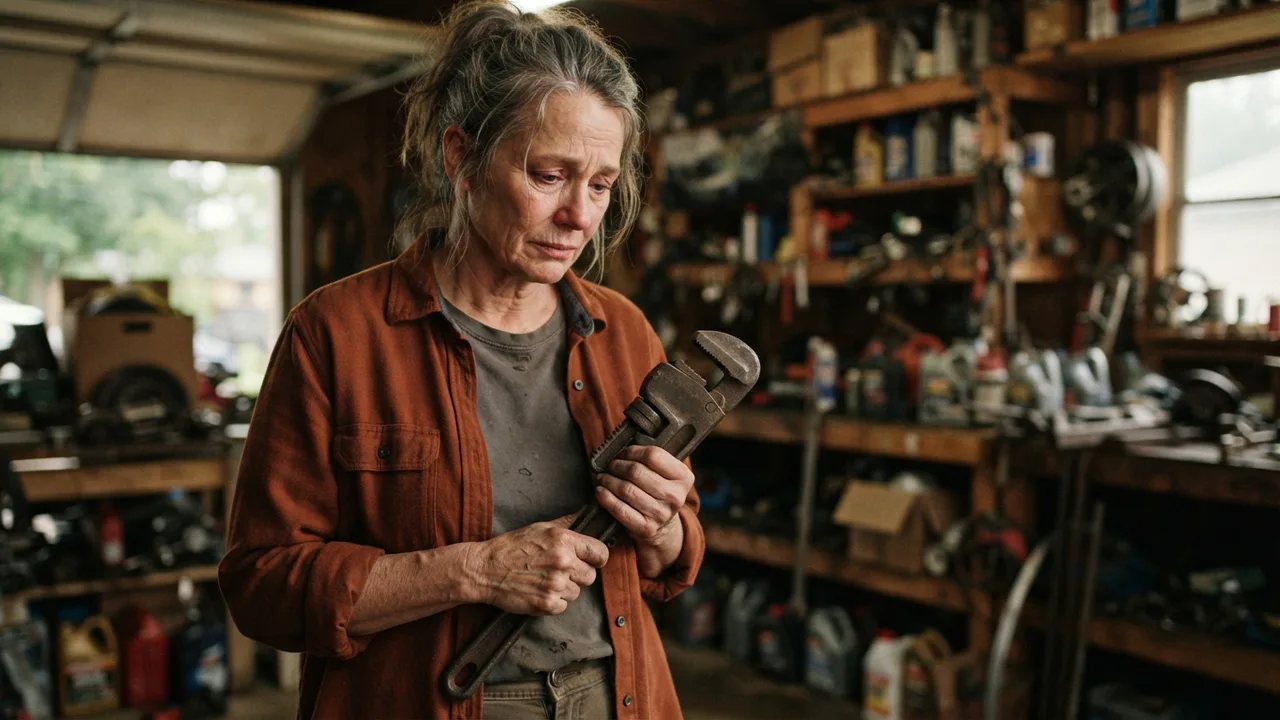
After Sharon's taillights were gone, I found the wrench at the bottom of my toolbox, wrapped in a shop rag. Grandpa gave it to me when I was fifteen. The jaw had gone smooth from his hands before mine, and mine had worn the handle to the shape of my palm.
It was heavy and cool. It didn't ask me for a single thing.
Comments