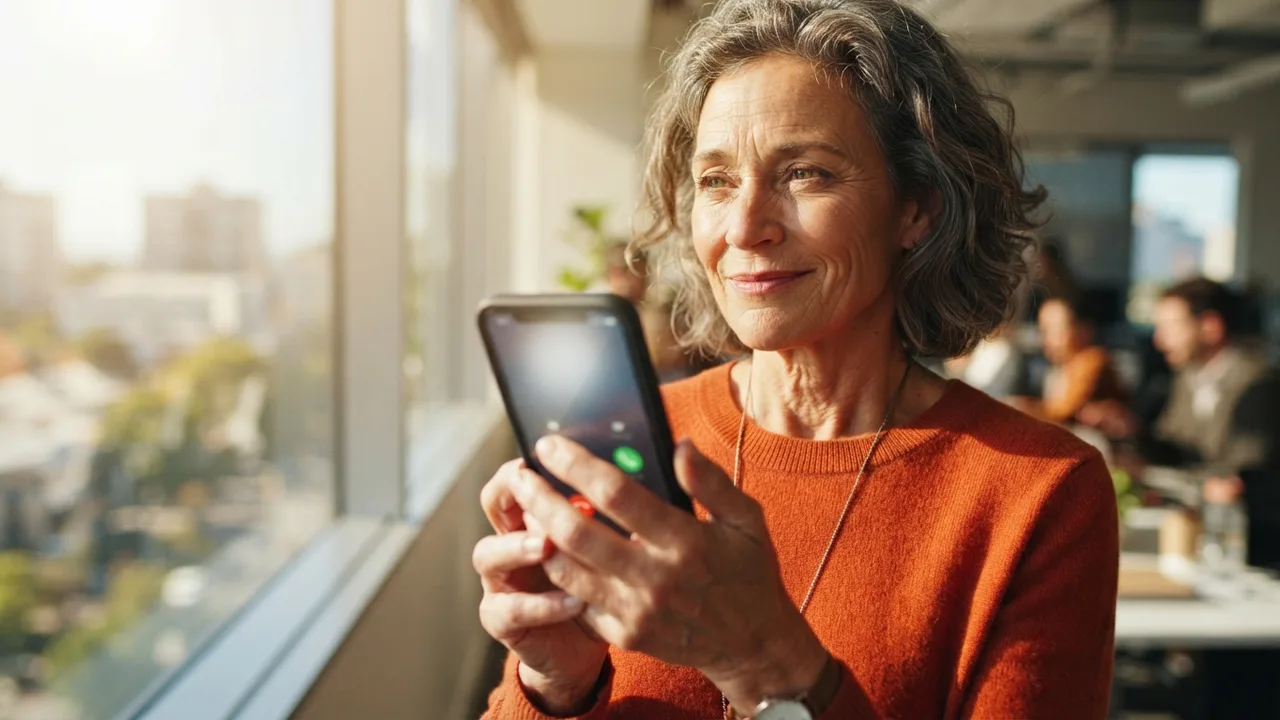
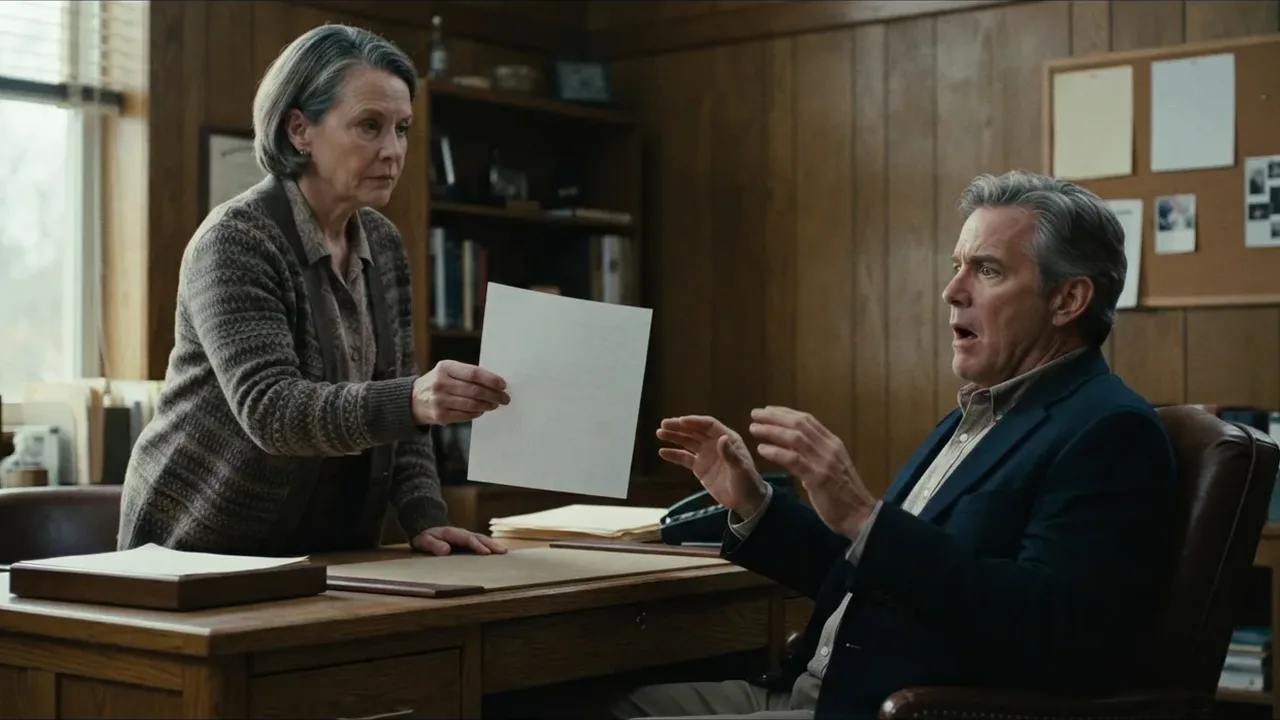
The first time my new boss, Troy, called me a "data security risk" to my face, it was in front of the entire management team. Then he slid a Performance Improvement Plan across the conference table, the kind of paper that ends careers and takes pensions with them.
"This isn't punitive, Barbara," he said. "It's about streamlining. Legacy habits create legacy vulnerabilities."
I looked at the folder. My name was typed on the tab, spelled right, which was more than I could say for his understanding of my work.
"A leak is a serious thing," I said. "May I ask what you believe I did?"
"The accommodation list went out through the HR server. Your server. Your methods."
The list had gone out the Friday before. Names, conditions, the quiet arrangements the company had made for people over the years: a stool for a packer with a bad back, a shifted schedule for a man in treatment. By Monday morning, eleven of those people had received text messages from a "workplace wellness" app that knew exactly who they were.
Advertisements
Ruben, who runs the cold-storage dock, had shown me his phone in the hallway. His hands were not steady.
"How do they know?" he asked me. "I only ever told you."
I had no answer for him. I had one for Troy, and I gave it across the table.
"In twenty years, there hasn't been a single misfiled record in my department. Not one. I can show you the audit history."
"I'm sure you can." He tapped the edge of the folder with his pen and gave me a smile that stopped at his teeth. "But we're not auditing the past. We're securing the future."
Nobody at the table said a word. Gordon Halvorsen, our Chief Operating Officer, wrote something on his legal pad and did not look up. I had known most of those people for years. I had brought a casserole to the house when one of their fathers died.
I signed for the folder because the form said signing only acknowledged receipt. I read that sentence three times first.
The next morning, my login failed.
I typed it again, slowly, the way you do when you assume the mistake is yours. The screen gave me the same gray box. A sticky note appeared on my monitor an hour later, in Troy's handwriting, which slanted like a man leaning toward a door.
Advertisements
*Admin privileges suspended pending security review. Please route all requests through me. – T.*
I carried the note to his office. The door was open, and he was on the phone, pacing in front of a window that looked out on the loading yard where the peach trucks were lining up for the season.
He held up one finger. I waited. When he finished, he did not offer me a chair.
"I need that access to do my job," I said.
"And you'll have it again once we've completed the review."
"Who's conducting the review?"
"I am."
"The person who placed me on the plan is reviewing whether I should be on the plan."
"It's called ownership, Barbara." He picked up his phone and started thumbing it. "I have an eleven o'clock."
I stood there another moment. Through the wall I could hear the copier in the hall, running a job I could no longer approve.
That afternoon I ate lunch at my desk, a turkey sandwich from the Raley's deli that cost nine dollars and tasted like paper. I could not log into anything, so I sat with a legal pad and wrote down what I knew, in order, the way Frank used to tell me to when something went wrong at the house.
I had no access, no ally in the building who held any authority, and no proof. What I had was a memory.
Eight days before the leak, I had received an email from "IT Security Desk." Subject line: *Mandatory Credential Verification – Action Required.* It had the company colors. It linked to a page that asked me to confirm my username and password "to complete the quarterly update."
I had done it. I want that on the record. I had entered my password into that page at my desk, between a benefits inquiry and a coffee refill, because the email had said *mandatory* and I am a person who does what mandatory emails say.
Then something small had bothered me, and I had done what I always do with anything that bothers me. I forwarded it to my personal account, to look at at home. Then I forgot it, because the week got busy.
I found it again on Saturday night at my kitchen table, under Frank's old reading lamp.
I spent that whole weekend learning what I should have known already. I printed a guide on how to read the hidden header of an email. I read about "Received" lines and "Return-Path" and what the words *originating server* meant. I made a pot of coffee at ten o'clock Saturday and another at six Sunday morning. At some point I caught myself whispering the terms to the empty chair across from me, and I wondered if this was how people started sounding paranoid.
By Sunday afternoon I had found the part that mattered. The message had not come from our company's mail system at all. It had come through a personal webmail service, and the account that sent it carried a name I recognized.
I wrote it on the legal pad. Then I wrote under it: *This is not proof of anything until someone who knows can say so.*
On Monday I went to find Omar Diaz.
He was in the server closet that IT uses for an office, a laptop open on a rolling cart, a half-eaten bag of Takis beside the keyboard. He looked up with the face of a man whose queue is already full.
"Hi, Barbara. If this is about the access thing, I can't touch that. Troy put the hold on it himself."
"It isn't about that," I said. "I'd like to report a suspected phishing email received on my workstation. Your policy says to file a ticket with IT. I'm told that's you."
He blinked. "That's me."
"I'm not asking you to override anything. I'm asking for the standard check. Authentication activity on my machine for the days around the date I received it."
"On your credentials."
"On my credentials. Which I'm still permitted to ask about, I believe, as the account holder."
He rubbed the back of his neck. He was twenty-eight, and he wanted his job, and I had no right to put it at risk. I told him so.
"If this makes things difficult for you, tell me and I'll go find another way," I said. "I mean that. I'll write the ticket in my own words so it's clear you only acted on a request."
"You'd put it in writing?"
"I'd put the date and time on it myself."
He looked at the screen. He looked at the Takis. Then he opened the ticket form and turned the laptop toward me.
"Type it exactly how you said it," he said. "Every word. And Barbara, I can pull the log. I can't tell you what it means."
"I can read it."
He printed it Wednesday afternoon and folded it in thirds, and he handed it to me in the parking lot by my Honda, not in the building, which told me all I needed to know about how much he understood. I opened it on the hood. The paper was already warm from the sun.
Two logins, both under my name, both on the day of the leak. The first was at 8:02 AM, from the address of my own desktop. The second was at 2:17 PM.
At 2:17 that afternoon I had been in Diana Pescador's office, going over the payroll reconciliation, with her knitting bag on the chair between us and her reading glasses on her head. I had not touched my computer for an hour.
The address on the second line did not belong to my desk. It belonged to a hard-wired port in a room with a window on the loading yard.
I stood there in the heat, with a freight truck idling across the lot, and I understood that I now had a piece of paper that could save me and could also, if I handled it badly, get Omar fired.
I called Diana that night. I told her what I had, and she listened without interrupting, which is rare for her.
"I'll stand next to you," she said.
"I don't want a scene."
"Honey, I've known you eighteen years. You've never made a scene in your life. That's why they'll listen."
The all-staff meeting was set for Friday in the cafeteria, mandatory, with an agenda that said *HR Transformation Initiative*. Folding chairs had been set up between the long tables where we eat our tri-tip sandwiches on Thursdays. There were about fifty of us, and the room smelled like floor cleaner and the coffee urn. Gordon Halvorsen sat in the front row with his arms crossed. Omar stood by the back wall with his lanyard in both hands. Diana took a chair near the aisle and put her knitting on her lap, though she did not pick it up.
Troy presented for twenty minutes. He had a slide deck with a rocket on it. He said "synergy" twice and "frictionless onboarding" once and promised a new platform that would bring us, in his words, "out of the paper age." He did not look at me until the last slide.
"And finally," he said, "a word on culture. Careless data handling puts every one of you at risk. We've seen what it costs. We won't see it again."
He looked at me when he said it. So did a few others.
I stood up. My knees had gone to water, but my feet knew the way, and I walked down the aisle between the chairs and stopped at the front, beside the projector cart. Troy kept his smile on.
"Barbara. We're mid-presentation."
"I'll be brief," I said. "Everyone in this room deserves to know the facts of the leak. Some of you were affected by it. I think you'd like to know who did it."
Ruben, in the third row, sat up straight.
I held up the folded printout. "This is the authentication log for my workstation on the day the list went out. It was provided through an IT ticket I filed myself. It shows two logins under my credentials. The first, at 8:02 in the morning, came from my own desktop, where I was working. The second, at 2:17 that afternoon, did not."
"Where did it come from?" Gordon asked.
"From the hard-wired connection in Mr. Compton's office." I turned the page so the front rows could see the line. "At 2:17 I was in Diana Pescador's office. She's here. She can say so."
"I can," Diana said, loudly enough for the back.
Troy laughed. It was a good laugh, warm and tired, the laugh of a man being patient with a child.
"This is a fabrication," he said. "Folks, I'm sorry you're seeing this. Barbara's been under pressure, and I think she's reaching. She left her machine unlocked, like she's done for years, and someone used it. That's what the review would have shown, if she hadn't gone around it."
"Who would have used it from your office?" someone said, not loud.
"Anyone. The door's open all day. That log proves nothing about who was sitting at the desk."
"You're right," I said.
It was quiet enough that I heard the urn tick.
"The log doesn't show who sat at your desk," I said. "It shows whose desk it was. For the rest, I'd like to show something else."
I took my phone from my cardigan pocket and held it up, screen out.
"Eight days before the leak, I received an email from 'IT Security Desk' asking me to verify my password. I entered it. That was my mistake, and I'm telling you so in front of everyone. But I also forward anything odd to my home account before I close it. This is that message, with its original header intact."
"Barbara," Troy said.
"The header shows the email did not come from our IT department. It was sent from a personal webmail account, and that account is registered in your name, Mr. Compton."
He had stopped smiling. He still had his phone in his hand.
"Headers can be spoofed," he said. "Anyone can make a header say anything. She's guessing, she's reading strings she doesn't understand—"
"Omar," I said.
Every head turned to the back wall. Omar looked as if I had hit him with a bucket of ice water. His lanyard was twisted around his fingers so tight they had gone pale.
"I'm asking you as the IT expert, not as anything else," I said. "Does an email header carry the originating account and the path the message took?"
He took a long moment. Fifty people waited. Then he unwound the lanyard from his hand and nodded, once, slowly and deliberately, so no one in the room could mistake it.
"Yes," he said. "It does. And you can't change that part after it's sent. I'll confirm what's in hers."
"That's convenient," Troy said. "That's very convenient, you two—"
"Troy." Gordon Halvorsen was standing. He did not raise his voice. "My office. Now."
"Gordon, this is a coordinated—"
"I said now."
Troy looked around the room for a face that would take his side. I watched him look, and I watched him find none. He pocketed his phone and walked out between the chairs with his jaw working, and the cafeteria door swung shut behind him on its slow hinge.
Gordon turned to me. He was a heavy man, sixty-something, with a bad hip that made him stand like he was braced for wind.
"Barbara. I owe you an apology, and so does this company. Thank you for bringing this forward the way you did." He faced the back wall. "Omar, her administrative access goes back on, today, before she leaves the building."
"Yes, sir. I can do it from here."
He already had the laptop open on a cafeteria table. I could hear him typing.
"And I want the two of you on this," Gordon said. "Find out what else was touched. I want a full written report on how this happened and what it takes to make sure it can't again."
"You'll have it with a timeline," I said. "And one more thing. The plan Mr. Compton placed on me. I'd like it out of my file."
"It's out. Diana, would you fetch it, please? I'll tear it up myself."
Diana went. She came back from HR with the folder, and Gordon tore the Performance Improvement Plan in half, and in half again, and handed me the pieces because I held out my hand for them.
Afterward, nobody clapped. A few people touched my arm on the way out. Ruben stood in front of me with his cap in his hands and could not seem to say anything, so I said, "We're going to find out who bought that list, Ruben," and he nodded and put his cap back on.
In the ladies' room I held the edge of the sink until my hands quit shaking. Diana came in behind me.
"You were wonderful," she said.
"I was thorough."
"That's the same thing, with you." She tried to smooth my collar and gave up. "How are you?"
"I'm fine. I'd just like to not have to be brave again for a while."
I did not say the rest. For twenty years I had walked into that building trusting it the way you trust a porch step. Now I knew where the loose boards were. I had learned to read a header and stand in front of fifty people and say a man's name. I had not wanted to learn any of it.
Three days later I was at my desk with the new two-factor protocol up on one monitor and Omar's draft report on the other. He had asked if we could use my office door as the sign-in point for his testing, and I said that was fine. We had spent the week finding what Troy had touched. It was more than the list.
My phone buzzed on the desk. The screen said *Valley Fresh Growers – Recruiting*. I let it ring until it stopped.
A moment later the transcription came up under the missed call, a little gray box of words: *Hi Barbara, this is Priya Whitlock. Your name came up in connection with a data matter, and everyone we spoke to said the same thing about your integrity and experience. We have an HR Manager position open and I'd love to talk this week—*
I read it to the end. I did not call back.
I looked around the office. Diana's knitting sat on her desk in the next room, a half-finished scarf in a green I would never have chosen for her. Through the window, the peach trucks were backing up to the dock one by one. Frank's picture sat on my shelf where it had always been, a little crooked, and I straightened it.
On my screen, the new company login portal was waiting, and under my username a box had appeared asking for the six-digit code from my phone. I had designed that prompt myself.
Comments