The email from the Atherton Foundation promised our school a hundred thousand dollars, but the logo was fuzzy and there was no tax ID number in the footer. Dr. Benton had forwarded it on a Monday with a note on top: "Add to the fundraiser file, Mildred! Our whole town's money gets matched."
A real foundation prints its number at the bottom of the page. I have opened enough of them to know.
I made a new folder in my inbox, named it Evidence, and dragged the message into it. It was an unkind name for a folder. I left it.
Advertisements
I have been the secretary at Blackwater Ridge Elementary for 35 years. I know which bus runs late in the rain, which grandmother may collect which child, and where the spare key to the gym hangs. When the superintendent's office needs a number, they call me before they call the principal.
Dr. Niles Benton came last August, tall and handsome, with a smile made for a campaign poster and suits that belonged in Nashville. He wanted a STEM lab with robotics kits, 3-D printers, and a room rewired to hold them. The email said the Atherton Foundation would match whatever our families raised, dollar for dollar, up to the top of the thermometer.
Mrs. Tilley's art classes painted a thermometer six feet tall on butcher paper and taped it to the cafeteria wall. Every Friday the red crept higher.
The money came through my office in envelopes. A Folgers can of quarters from a grandmother. A check from a man who drives a feed truck. I wrote each one in the ledger in blue ink.
Advertisements
On Wednesday I carried the district's grant intake form down the hall to his office, because it had a blank line only one person could fill.
"Dr. Benton, I need the Atherton Foundation's EIN for the district file." I set the form on his blotter. "The Employer Identification Number. It isn't in the footer of their email."
He did not look at the form. He looked at me and smiled. "Mildred, may I share something with you?"
"Of course."
"Atherton is a new kind of philanthropy. Agile. They don't do the old paperwork shuffle." He turned his pen end over end. "I'd ask you to focus on the big picture. Process the local donations. Let me worry about the foundation."
"The auditor will ask for it."
"The auditor will ask for a lot of things." He stood, which put the window behind him and his face in shade. "You've done fine work here for a long time. Let's let the younger legs carry this one."
His hand hovered near my shoulder as he walked me to the door and never touched it.
I took the form back with me. It had lain on his blotter without being touched, and when I lifted it, a coffee ring had dried on one corner. At my desk I found a loose thread on my cardigan cuff and pulled it free, because that was something I could fix.
That night I was at the kitchen table, two blocks from the school, with the laptop and a cup of decaf going cold. I searched the IRS list of tax-exempt organizations for Atherton Foundation. Then Atherton Family Foundation, then Atherton Education Fund. I searched the Tennessee Secretary of State's business filings. Every page came back with the same polite sentence saying no records matched.
I knew the name from somewhere besides the email. It took me until the dishes were put away to place it.
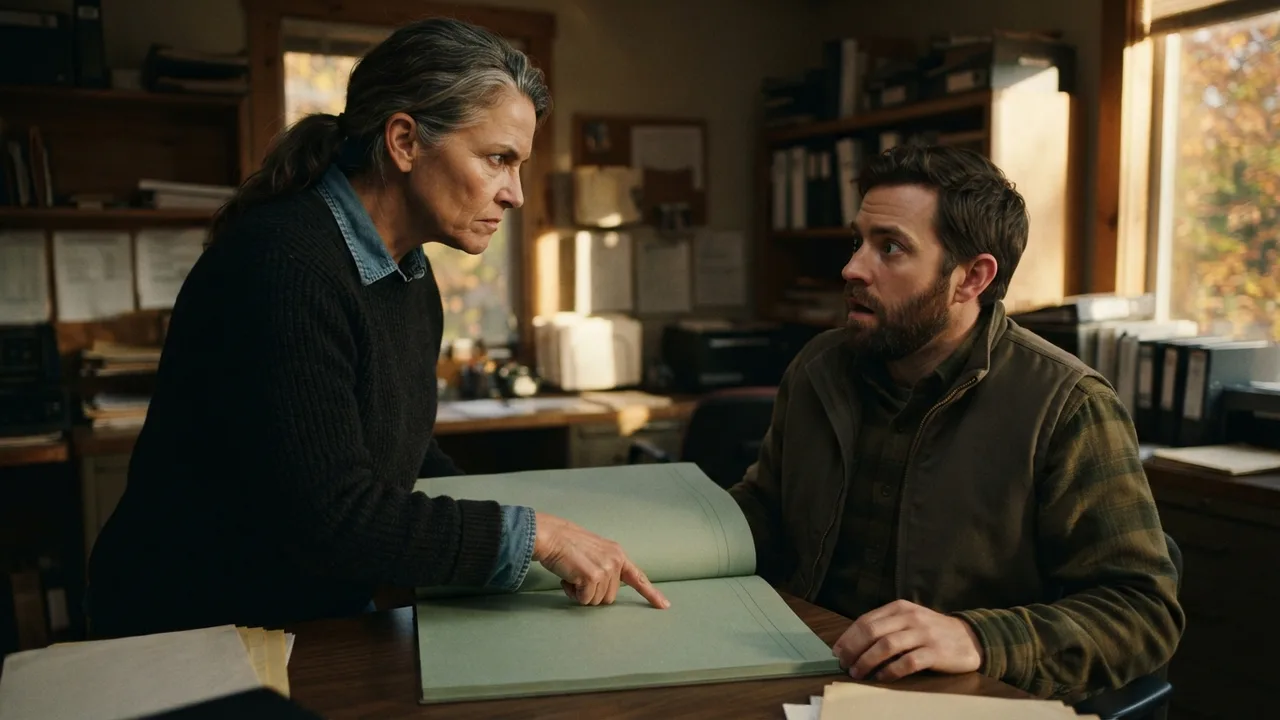
The green personnel folder. Emergency contact, filled in by hand in August, and I had typed it into the system myself. *Arthur Atherton. Father-in-law. Knoxville.*
I did not sleep. At seven the next morning I called the number printed on the foundation's letterhead from the office phone, before the buses came in. A recording told me the number was not in service. I tried again at lunch, in case I had pressed a wrong digit, and I had not.
That same morning Ruth Ann Cope came to my window. She runs a register at the Dollar General and had folded a check for forty dollars into an envelope. "I'll put off the tires another month," she said. "It's for the kids' lab."
"Thank you, Ruth Ann," I said, and wrote her name in the ledger. The pen felt heavier than it had on Monday.
I did not know yet whether I was logging a gift or a lie. But I knew I was the one holding the ledger.
Janine Delgado came in Thursday after the last bell, clipboard against her chest, her reading glasses pushed up into her hair. She is a bookkeeper for a construction outfit and organizes the PTA the same way she balances their accounts.
"Janine, have you spoken with anyone at the foundation?" I asked. I kept my eyes on the stapler I was refilling. "I need a contact name for the district file."
"Oh, Dr. Benton's handling all of that. He says they like one point of contact. Streamlines the process." She leaned on my counter. "Mildred, I cannot tell you what this means. Wanda Sutter is putting in her whole tax refund."
"Has anyone seen a letter beyond the email?"
"He showed me on his phone. It looked so official." She squeezed my arm. "You worry about everything, you know that? It's why we love you."
She left with her clipboard and her good news. I sat in the quiet office while the copier ticked as it cooled.
Nobody else in the building knew what I knew. If I was wrong, I would have insulted a man who had given our children their first real hope in years. If I was right, I would be standing in front of the whole town, telling them their hope had no address.
My husband used to say that a fact does not care who is standing near it. He has been gone ten years, and I had not needed to hear him say it as badly as I did that night.
The PTA met on the second Tuesday, in the cafeteria, under the thermometer.
The red paint stopped a hand's width below the top. Folding chairs filled before seven and parents stood along the back wall by the milk cooler. The room smelled of floor wax and the pinto beans Mr. Hobbs had left warming for the next day's lunch.
Harold Pruitt sat in the front row. He chairs the school board and sold feed for forty years before he retired, and he wore the same tan windbreaker he wears to every meeting. Two other board members sat beside him.
Dr. Benton took the microphone and thanked us for ten minutes. He said "community" eleven times. I counted, because counting is what I do with my hands folded. He said a child in this room might cure something someday because of what we built here. People wiped their eyes. Janine, in the second row, held her clipboard against her chest as if it might float away.
"Questions?" he said, and beamed. "Don't be shy."
A father asked about the 3-D printers. A teacher asked about the wiring. Dr. Benton answered each with a joke and a hand on the podium.
I stood up with the folder under my arm and walked down the center aisle. My shoes made more noise on that linoleum than I would have liked. Dr. Benton saw me coming, and his smile held.
"Mildred! Our secretary, everyone, the backbone of this school."
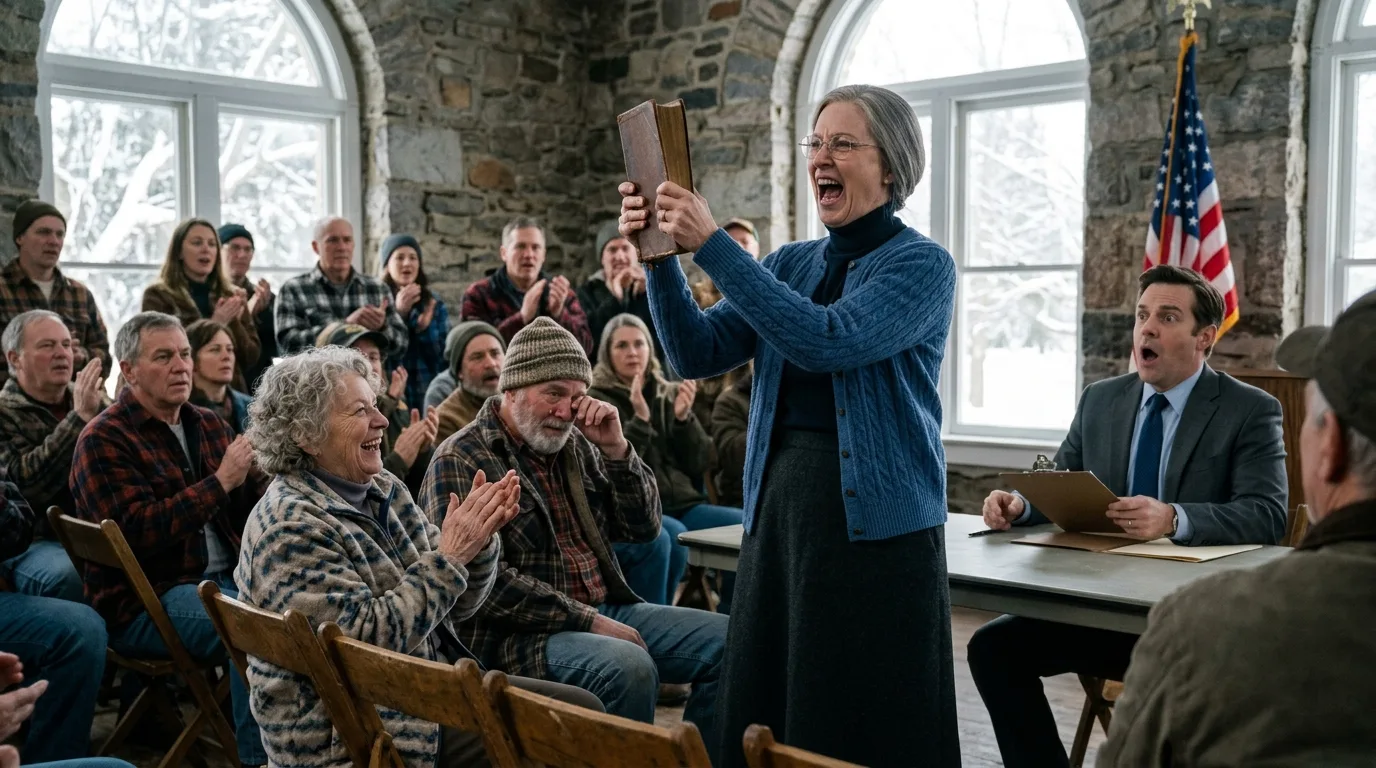
"This is wonderful news, Dr. Benton," I said into the microphone. "I'm preparing the grant acceptance forms for the district, and the auditor requires the foundation's Employer Identification Number for any matched funds. Could you provide the EIN for the Atherton Foundation so I can complete the paperwork?"
"Mildred, thank you for your diligence." He laughed, and a few people laughed with him. "But that's an administrative detail we can handle tomorrow. Tonight is for celebrating."
I did not move from the microphone. "District policy says we cannot officially log pledges against a grant until the granting body's EIN is registered with their office. It's to ensure fiscal transparency."
His voice lost its warmth. "Are you suggesting there's a problem, Mildred?"
I opened my mouth to answer him, and Janine spoke first.
She had half risen from her chair, her glasses down on her nose now. "An EIN? Of course they'd need one. I'd need one for any payer on my books." She looked at him, not at me. "Is there a delay, Dr. Benton?"
The room changed. Chairs creaked and a baby fussed somewhere near the back. Nobody laughed, and Dr. Benton's mouth worked before any words came out of it.
"These things take time. The foundation's structure is, well, it's unconventional, and—"
He stopped. He looked at the thermometer behind him as though it might finish the sentence.
Harold Pruitt rose from the front row and buttoned his windbreaker. "Dr. Benton, I believe we'll continue this in your office."
"Harold, this is a misunderstanding."
"Office," Harold said. "Mildred, bring your folder. Janine, you too."
Nobody applauded. Wanda Sutter stared at the red paint, and then at me, and then at her hands.
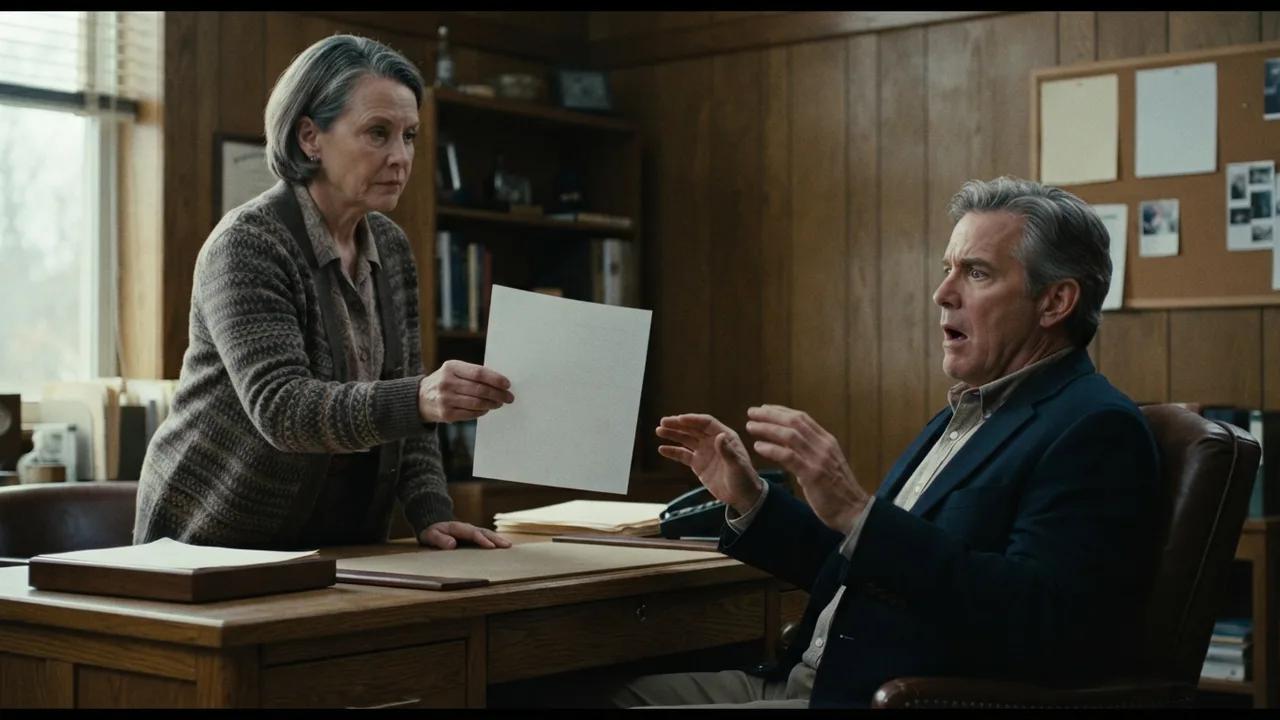
His office had the same coffee ring on the blotter. Harold shut the door and did not sit. Dr. Benton took the chair behind his desk and held himself very straight in it.
"The foundation exists," he said. "The paperwork is in process. I'd have thought the board could give me more credit than this."
"Which paperwork?" I asked.
I opened the folder and laid the pages across his blotter in a row: the IRS search, the Secretary of State search, my log of two calls to a number out of service. At the end I set down the emergency contact card in his own handwriting.
"Arthur Atherton," I read. "Father-in-law. Knoxville. He is the only Atherton I can connect to this building."
"Arthur is family. That proves nothing."
"It proves whose name is on your letterhead," Janine said. She had picked up the printed email and held it close to her glasses. "And there's no number in the footer. Mildred saw that the first day."
He turned to Harold. "Arthur told me at his dinner table that he'd cover the match. Give me until the end of the year. The check comes, and nobody has lost a dime."
"A promise at a dinner table," Harold said. "Is that what Wanda Sutter gave her refund against?"
"Then let it arrive first," I said. "Let Arthur write to the school account and let us watch it clear. Until then it is your word, and your word is on that letterhead."
The smile came back, thin. "You went through my personnel file, Mildred. I'd think about how that sounds to the district."
"I typed that card into the system myself. It has sat in my green folder since August." I squared the pages. "Nobody went through anything."
Harold lowered himself onto the arm of a chair. He could outwait anyone, and he did not look at Benton. He looked at me.
"You kept the books," he said. "What do we do?"
I had expected to be sent out of the room. I stayed where I was.
"Every envelope in my ledger goes back in full," I said. "I deposited every dollar and I know what the account holds. Dr. Benton will call each family himself, in his own voice, and say there is no foundation. I will write the checks while he talks."
"Mildred, you can't mean every—"
"The thermometer comes down before the weekend. And on the last Friday of the school year, a signed letter of resignation lies on Harold's desk. If it does not, I carry this folder to the superintendent's office. They do call me first."
Benton stared at the card. Nobody spoke until Harold stood and buttoned his windbreaker.
"That's the board's decision, then," he said. "It's Mildred's."
On Thursday after the last bell, Dr. Benton sat in the plastic chair beside my counter with a legal pad and the donor list. I wrote the checks in blue ink and tore each along its perforation. He dialed with a thumb that shook.
Ruth Ann Cope came in before he reached her name, still in her Dollar General vest, car keys in her fist.
"Everybody at the register knew by lunch," she said.
"Ruth Ann, I'm sorry," he said.
"Save it for the tire man." She took the check from my hand, read the amount, and folded it into her vest pocket. "I already told my husband the tires could wait. Now I have to tell him why."
"I know," I said.
"You could've waited till the match came. Some of us would've liked that." She left without looking back, and her keys rang against the door.
On Saturday I stood in the cereal aisle at Food City with a box of Raisin Bran, $4.29, and Wanda Sutter turned her cart into the end of the aisle and saw me. Her tax refund had been in one of those envelopes, and her check had been in her hand since morning.
"Hope you're proud," she said. "Whole thing scuttled over a technicality."
"The technicality was that the money did not exist, Wanda."
"It could have." She pushed her cart on. "It could have, and now it won't."
I put the cereal in my basket and finished my shopping. Janine had not stopped at my window since Thursday, and she used to stop every day.
Monday morning I let myself in before the custodian arrived and before the buses turned onto Ridge Road. The cafeteria lights were off. The butcher-paper thermometer had been rolled up behind the door with a rubber band around it, the red end showing.
At the front desk I opened my email. The folder called Evidence was where I had left it, with one message inside. The fuzzy logo looked no better than it had on the first Monday.
I moved the email from the Atherton Foundation out of the folder and into the trash, then clicked Empty Trash.
The file was gone.

Comments