
The first lie they told about me was that I couldn't tell the difference between cobalt blue and ultramarine anymore. Heather Cassian told it to Principal Covington, and Dale repeated it to me across his desk, gently, as if I were a patient. Twenty-eight years of teaching art at North Haven Elementary, and a woman who had lived in Port Clyde for two years wanted my eyes tested.
"I hear your concerns," I said, which was his line, and he winced.
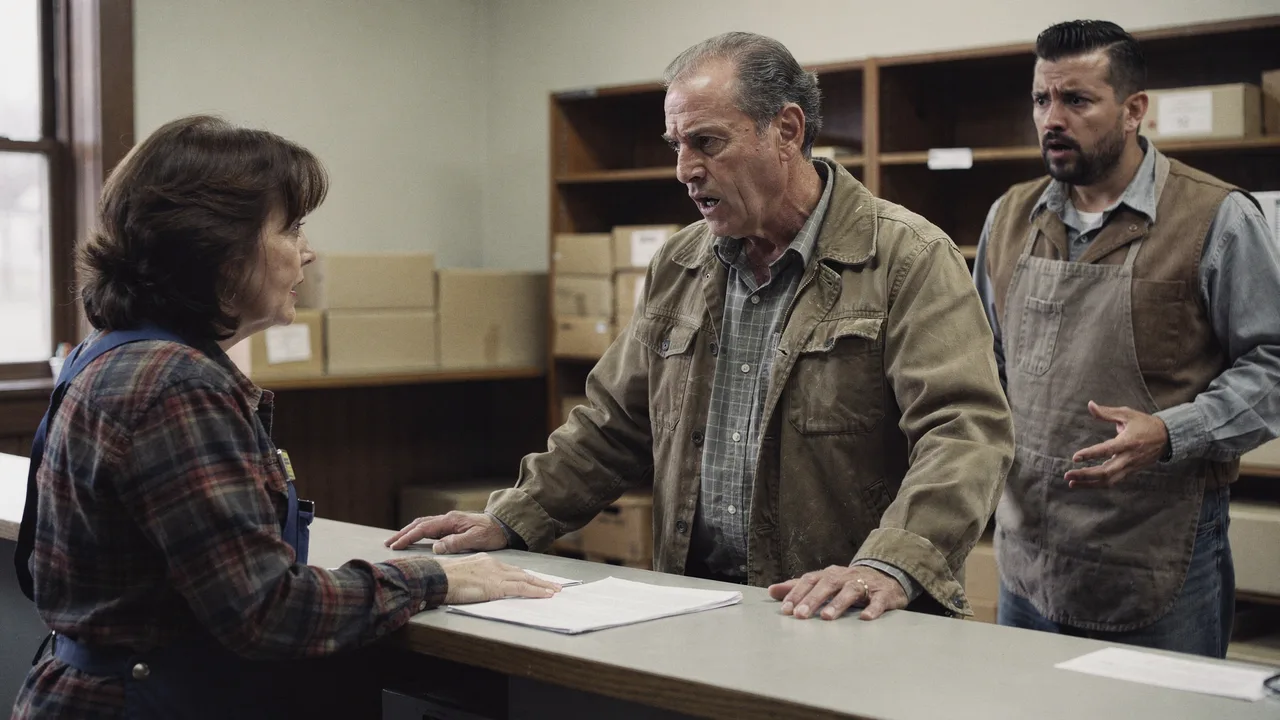
"She says parents are worried about the budget," Dale said. "The word she used was *junk*."
"Egg cartons. Buttons. Driftwood from the shore at Marshall Point." I counted them off on my fingers.
"I know what it is, Winifred."
"Which parents?"
"She didn't give names." He turned his pen end over end. "I'd like you to write up a supply list. Something structured. Something I can hand her."
Advertisements
"A child builds a lighthouse out of an oatmeal canister and learns more about weight and balance than from any worksheet I could order."
"I'm not asking you to change what you teach. Only how it looks on paper." He rubbed the cuff of his sweater, the gray of a gull's wing, worn thin at the wrist. "Heather has a lot of friends."
On his wall hung a paper-plate fish a kindergartner had made in my room, back when Dale still had dark hair. He had stood behind my methods for twenty years. Now I sat in a plastic chair explaining them to him like a student with a late assignment, and I felt my face go hot to the ears.
I wrote the list that night. It was tidy and it was humiliating.
---
The email came on a Tuesday, to the whole PTA list, from an address made of random letters and numbers. *Concerns About Art Program Spending.* It said supplies were reportedly going missing. It said parents deserved to know where the money went. It asked everyone to optimize outcomes and signed off, *Team, let's hold each other accountable.*
It didn't name me. It didn't have to.
The next PTA meeting was held in the cafeteria, among folding chairs and the hum of the milk cooler. Heather stood in a cream blazer the shade of unbleached muslin, her manicure flawless around the stem of a pen.
Advertisements
"Team, I'm not pointing fingers," she said, smiling at the room. "I'm asking us to optimize outcomes. Greater transparency and accountability. That's all."
Bonnie Pelkey, who had once cried over her son's lopsided clay turtle in my room, studied her program as if it were in another language. Item four on mine repeated the email's subject line word for word, and in the footer, in the small gray type the template stamps on every draft, was the day it had been written: the Monday before the email came. I noticed it the way I notice a pencil line under paint, and I folded the sheet into my bag.
Nobody looked at me. I held a Dunkin' cup that had gone cold an hour earlier and let the silence settle on my shoulders like wet wool.
I didn't sleep that night. I lay in my cottage listening to the harbor slap at the pilings and pictured a formal inquiry, a stranger from the district office in my closet, counting glue bottles.
On Saturday I carried every ledger and receipt to the kitchen table and audited myself. Pencils, tempera, butcher paper, the clay order, the glue. Page after page matched to the penny. By Sunday afternoon the mud-season rain had turned the yard to cocoa, and I had proved what I already knew, that I was careful to the point of dullness. It brought me no comfort. A clean ledger cannot answer a rumor.
---
On Monday I knew before I turned the key.
My supply closet is organized the way a painter organizes a palette, warm to cool, left to right. The ochre and sienna construction paper sat on the shelf among the blues. The felt scraps had been shifted off their bin. Somebody had looked at everything and tried to put it back by memory.
"Liam," I said, when he came by with the mop bucket. "Has anyone been in here after hours?"
He pushed his headphones down around his neck. He is a man of few words, and he spent a few of them slowly.
"Mrs. Cassian came out of your closet on Thursday," he said.
"Did she say why?"
"Said she was dropping something off."
I looked at the felt bin, sitting crooked on its shelf.
"Was she carrying anything?"
"No, ma'am. Empty hands." He frowned at the mop handle. "Didn't think much of it. Then I did."
"Thank you, Liam."
"Is it bad?"
"It's useful," I said.
It gave me an idea, and I disliked myself a little for having it. Heather wanted something to hold up before the whole town, and she was willing to go through my closet to find it. So I would give her something worth reaching for.
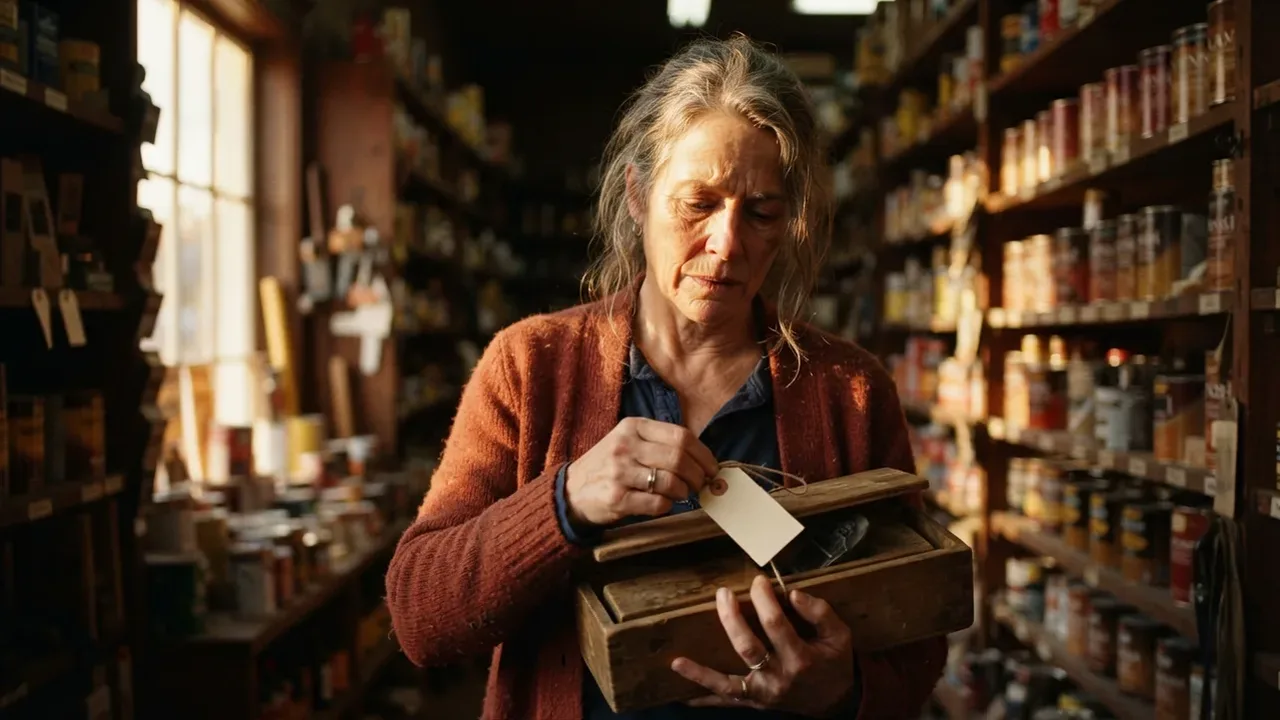
On Saturday I drove to Rockland, to a shop called Seaglass Antiques that smelled of cedar and lamp oil. Ingrid, the owner, had a crate of old glass fishing buoys under the counter, each the size of a grapefruit, in green and amber and one deep, clear cobalt that held the window light like a drop of the sea at its farthest edge.
"They're not cheap," Ingrid said. "People hang them in nets."
"I'd like the whole box. I'll need a receipt."
"Everybody wants a receipt for glass," she said, and rang it up. One hundred fifty dollars, put on my card, which is more than I spend on myself in a month of Hannaford runs. I folded the slip into my wallet.
I put the box in the closet at eye level with the lid open, labeled nothing, and told nobody. Then I told the third graders we'd build a community sculpture for the art fair, a driftwood lighthouse wired with glass, and the children wired like little engineers.
On Thursday Liam stopped me in the hall. "She was back," he said. "Same bag. Stayed longer."
That afternoon Dale caught me at the copier. "Heather asked if she could say a few words after my speech at the fair," he said. "A small announcement. I couldn't think how to say no."
"No," I agreed. "I don't suppose you could."
I kept the receipt in my shirt pocket, buttoned, from then on. In my tote bag, wrapped in a dish towel, I kept the cobalt buoy. Beside it, folded small, I kept a printout of the email and the program from the PTA meeting.
---
The art fair filled the gymnasium with noise: sneakers squeaking on the varnished floor, a kindergartner wailing happily, trifold boards bristling with watercolor sunsets and potato-print lobsters. The smell of coffee and whoopie pies drifted from the folding tables. The third-grade lighthouse stood at the center under the basketball hoop, tall as a man, its driftwood ribs hung with glass, amber and sea green catching the lights.
Dale stepped up to the microphone in his best blue sweater.
"Every child in this room made something no one else could have made," he said. "And I want to thank Winifred O'Malley, who for twenty-eight years has put a brush in their hands and trusted them with it."
There was warm clapping. I stood by the sculpture and did not look at Heather. I could feel her, though, the way you feel a window open somewhere in a cold house.
She took the microphone from Dale with a brightness that filled the whole gym.
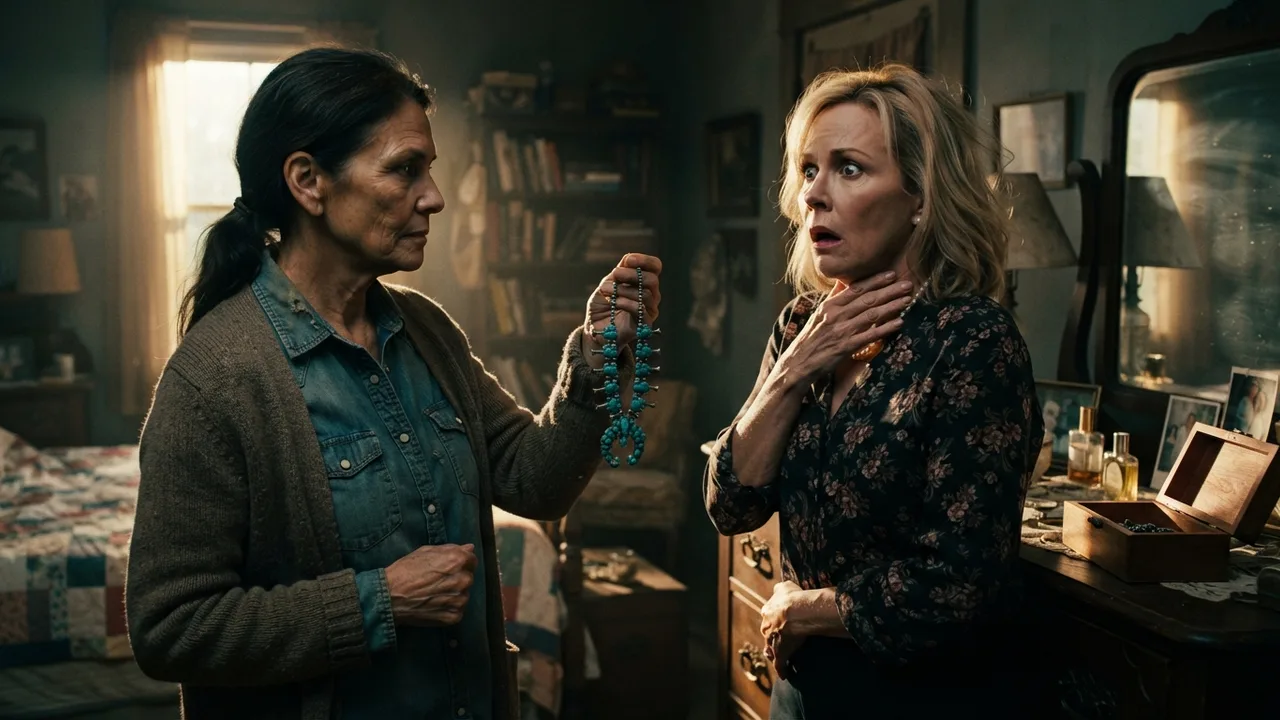
"Thank you, Dale. I have a small announcement." She turned toward the lighthouse. "I'm the anonymous donor of those lovely vintage glass buoys. The school's budget is so strained, and I wanted to help. Art matters, team. It really does."
The applause was louder than it had been for Dale. Bonnie Pelkey put a hand to her chest. Somebody whistled.
I walked forward. My clogs sounded very loud on the varnish, and the clapping thinned out as I went. At the sculpture I lifted the dish towel from my tote and held up a single cobalt buoy, identical to the ones above us, and the light went through it and laid a blue stain on my wrist.
"I'm so glad you admire them, Heather," I said. "I bought them myself last Saturday, in Rockland."
I unbuttoned my pocket and took out the slip.
"Seaglass Antiques. One hundred fifty dollars. Assorted antique glass buoys." I held it where the people at the front could read it. "It's dated. It's on my card."
For one moment Heather's face went tight as a drum skin. Then it smoothed over, and she laughed, a bright and practiced sound.
"Oh my goodness, wires crossed! I donate to so many things, it's hard to keep track." She waved a hand at the room. "Winifred, there's no need to bring receipts into it. We're all on the same team here."
A few parents smiled uncertainly. It would have been easy to smile back. I had spent my whole life being the one who smiled back.
"It wasn't a mistake, Heather." I took the folded printout from my tote and opened it. "Nobody donated these. I bought them, and I put them in my supply closet with the lid open and told no one. Not Dale. Not a single parent."
"The children have handled that glass all week," she said. "Anyone could have seen it."
"Not from behind a shut door. Liam?"
He stood against the far wall beside his mop bucket, and every head in the gym turned to him.
"Twice, ma'am," he said. "She came out of your closet. Bag on her arm the second time."
"The custodian," Heather said, and let the word hang. "A man who answers to the school, repeating whatever he's been told in a hallway."
"Nobody told me nothing, ma'am," Liam said, to the floor. "I just mop."
I held the email up where the light caught it. "*Optimize outcomes. Team, let's hold each other accountable.* You said those words from the front of the cafeteria, Heather, and they came to my inbox from a stranger the week before."
"Everybody says team. Everybody says accountable." Her laugh came out thin. "Half this gym learned it at the same webinar."
"Then I'll ask about something that isn't a webinar."
I took the folded program from the tote and smoothed it against the lighthouse's driftwood frame.
"Item four. The email's subject line, word for word, on your agenda, on your cream paper." I turned it so the front rows could see the bottom edge. "Your template stamps the date a draft was written. It says Monday. The email that supposedly raised the concern didn't arrive until Tuesday."
Heather's eyes went to the page and stayed on it a moment too long.
"I draft ahead," she said. "That's what a president does. I anticipate concerns."
"By a day, in a stranger's exact words?"
"Parents write to me privately. They asked me to keep their confidence."
"Then name one." I turned to the third row. "Bonnie. Did you write to Heather about the art room?"
Bonnie's hand had come down from her chest. She shook her head slowly, once, and kept her eyes on the floor.
Heather looked along the faces: the father by the whoopie pies, two mothers from the bake table, a boy tugging his mother's coat. I watched her do her sums. Her chin came up, and her voice dropped to something low and hard that the microphone, still in her fist, carried anyway.
"Fine. It was me. Somebody in this town had to ask where the money goes, and everyone else was too polite."
"Nothing went anywhere," I said. "Every dollar was in a ledger on my kitchen table. You could have asked me, and I would have put the books in your hands."
"You made me stand here and look like a fool."
"You were standing here before I came."
Nobody moved. The milk cooler in the next room hummed through the wall.
"My office," Dale said, in a thin voice. "Please. Both of you."
"Yes," I said. "And I'll be doing the talking, Dale."
---
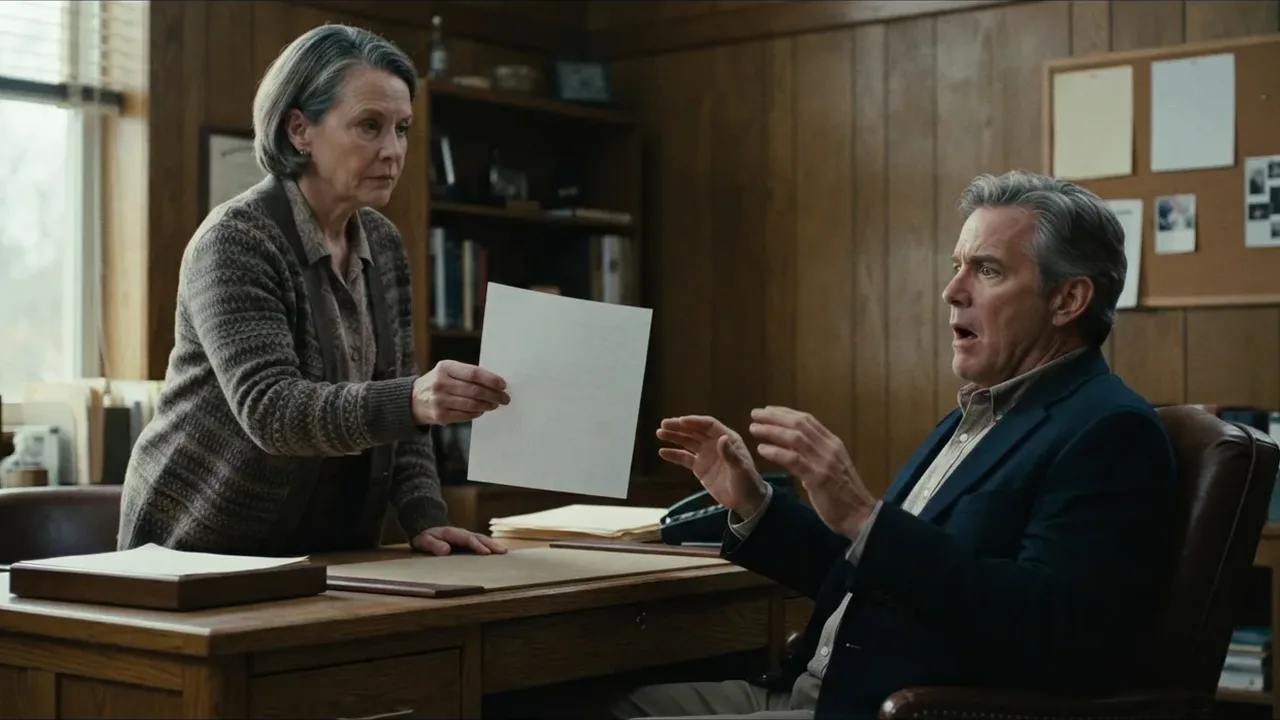
His office held the same plastic chairs and the same paper-plate fish. Heather stood by the filing cabinet with her arms folded, her blazer still perfect and her face not. Dale sat behind his desk and said nothing, and I understood that this time he was waiting for me.
"This is a witch hunt over a box of knickknacks," Heather said.
"It's a hundred and fifty dollars of glass you called yours." I stayed on my feet. "That comes first. Write me a check."
"I'll make a donation to the art fund for the same amount. It reads better."
"It isn't the same. The charge is on my card."
"You're being petty, Winifred."
"I'm being exact."
She dug a checkbook out of her purse, monogrammed in gold, and wrote hard enough to dent the desk beneath it. She tore it along the perforation and held it out at arm's length, as if the paper were hot. I folded it into the pocket where the receipt had been and buttoned the flap.
"Next, the PTA," I said. "Every office you hold. You'll write it out on Dale's pad and sign it tonight."
Heather looked at Dale. Dale looked at the fish.
"Dale?" she said.
"She's the one you took it from," he said quietly.
She wrote it standing, bent over the desk, the pen scratching. I read it over when she finished.
"You left off the date," I said, and she added it.
"Last, the email." I set the printout beside her resignation. "You'll write to the parent list, from your own address. You'll say you sent the one about the art program, that nothing was missing, and that you went through my closet. Your name at the bottom, not letters and numbers."
"That finishes me in this town."
"You wrote it, Heather. I'm only asking you to sign it."
"I'll say there may have been a misunderstanding."
"No. You'll say it was yours."
She took out her phone. Her thumbs were slow on the glass, and I stood close enough to see them shake. I found no pleasure in it, which surprised me.
"Take out 'misunderstanding,'" I said. "Say what you did."
She deleted it. She typed *my claim was false* and stopped, and I waited until she went on. When she pressed send, Dale's phone buzzed on the blotter, and a moment later mine buzzed in my tote.
Heather picked up her purse. She looked at the buoy in my hands, then at my face, and I waited for an apology that was never going to come.
"Team," she said, in a voice nothing like her public one, and walked out.
The door closed on its slow hinge.
"I should have done that in March," Dale said.
"Yes."
"I'm sorry, Winifred."
"I know you are. The list I wrote you is in your top drawer."
He found it under a stack of attendance forms, and for a moment he held the page, my neat columns of pencils and paste. Then he carried it to the shredder under the window and fed it in. The machine ground through it slowly.
"I teach what I teach," I said.
"You do," said Dale, and I believed that he was sorry, and it was not the same as having it not happen.
---
In the gym the crowd had thinned. Parents were collecting coats and children, and conversation stopped when I passed. Bonnie Pelkey caught my sleeve near the coat rack.
"Did it have to be tonight?" she said. "With the kids watching?"
"She did it with them watching."
"I know. I know she did." Bonnie let go of my sleeve and smoothed it, absently, as though I were one of her own. "It's just that it was such a nice night."
It had been. I helped Liam fold chairs until the floor was bare. Heather's husband had left a tray of untouched lemon bars by the door, and Liam looked at them, and then at me, and put them in the trash.
---
On Monday morning I came in early. The art room was empty and the heating pipes were still knocking awake. I put my tote on the desk and unwrapped the dish towel, and the sun came across the sink and the drying racks and found the glass in my hand.
I had spent twenty-eight years in this room trusting every door in the building. This morning I had checked the lock on the closet twice before I touched the knob, and I knew I would check it tomorrow.
I held the buoy up to the window and turned it over. Ultramarine leans toward violet, always, a little warm at the edge. This was cobalt, clear and cool and steady all the way through, a blue nobody could mistake.
Comments