My son slid a printout of my bank statement across the dinner table. "See, Mom? This is how it starts," he said, and I had to pretend I didn't recognize the name of his own LLC.
He had marked one line in yellow highlighter: four hundred and fifty dollars, gone out of my account on the last Tuesday of the month. The other lines were left alone.
Across from him, Hugh set down his water glass without a sound. My sister-in-law Sylvia, at the end of the table, looked from the paper to me and back again.
I had known that name for three nights. I had not slept well in any of them.
---
It began with the phone calls. For weeks Mark had been ringing me from Phoenix, sometimes twice a day, and every call began the same way.
Advertisements
"Mom, I need you to hear me out. I'm not trying to be the bad guy."
"I know you're not, honey."
"A man who shows up eight months after Dad dies, who's friendly, who's patient, who doesn't ask for anything at first? That's the playbook. I've read about it. They build trust, they find the leak, then they pull."
"Hugh makes furniture, Mark. He builds a dining table for two years and charges the customer for the lumber."
"Do me one favor. Look at your accounts. If I'm wrong, I'll apologize to him myself."
I said I would. I said it mostly to end the call, and partly because I wanted to watch Mark eat those words. I had avoided my own bank records since the week we buried David, because David had managed our money for thirty years and I had managed the casseroles.
So I invited Mark to dinner for the following Sunday, and I invited Sylvia to keep the peace. I told Hugh he did not have to come, and he said, "I'd like to, if you'll have me." He asked it like a question, the way he asked most things.
That night I carried my laptop to the kitchen table. David's password was written on a yellow sticky note in his small square handwriting, stuck inside the desk drawer where he kept the stamps.
---
It took me a week of evenings to learn how to read the statements.
Advertisements
I did not know what a "pending" charge was. I did not know that I could download a month as a spreadsheet and sort it. I learned by clicking, and each click took me backward through the years, and then backward through the worst of them.
There was the funeral home. There was the florist on Highway 179. There was a Safeway receipt for the paper plates and the ham, and a pharmacy charge from the last week at the hospital in Flagstaff that I had forgotten I ever paid.
I sat at the table with a cup of decaf going cold and cried over a pharmacy charge.
Hugh called on the fourth night. "Would you like company?"
"No," I said. "I need to do this alone, Hugh. I'm sorry."
"Don't be. I'll leave my porch light on." That was all he said, and I felt ashamed anyway, as if I were going through his pockets instead of mine.
On the sixth night I found the pattern.
It was a transfer of that same sum to something called APEX DIGITAL VENTURES, dated on a Tuesday at month's end. I scrolled up and it was there again. I scrolled up again and it was there again.
My hands went cold. Mark had said look for a pattern, and here it was in plain black type, month after month, and for a long time I could not make myself look at the dates.
I did not sleep that night. I lay in the bed David and I had bought at the furniture outlet in Cottonwood and went through everything Hugh had ever done. He had fixed my sticking pantry door and refused to be paid in anything but lunch. When I once tried to give him cash for a cutting board he had made me, he slid the bills back into my coat pocket while I was looking for my keys.
I thought of a man who asked small, polite questions. I thought of how easily a person like me could be fooled, and how much I wanted to be.
By morning I had decided I was a fool.
---
I put the company's name into the search bar at six, before the coffee finished.
The first result was a page from the Arizona Corporation Commission. Apex Digital Ventures, LLC, a limited liability company, registered in Phoenix. I clicked through to the filing, thinking I would see Hugh's name, or a stranger's, or a post office box in Nevada.
The registered agent was Mark Collier. The address was a house on a cul-de-sac in north Phoenix where I had mailed his birthday cards, where I had sat on a gray sectional and admired his new espresso machine.
I read it once, slowly. Then I did what I had been taught as a girl and checked the date of formation against the dates in my own account.
The first transfer went out the month after David's funeral. I had not met Hugh for months after that. I had not even been to the Sedona farmers' market, where I would later stand in line behind him for tamales.
I remembered the phone call. Mark had been so excited. He had told me he had signed a lease on a bigger office and needed a deposit, only temporarily, and I had said, "Of course, honey, whatever you need." I had thought he meant a hug and a pep talk.
Somewhere in my kitchen the refrigerator clicked on. I sat with my son's name on a government page and felt the floor of my life tilt.
Then I closed the laptop and looked up the price of a rotisserie chicken at Costco, because I could not think of anything else to do with my hands.
That afternoon I called Sylvia in Cottonwood.
"Come Sunday, and come hungry," I said. "Please don't ask me why."
"I don't like that voice, Vivian."
"I know. I'll tell you Sunday."
"Is it Hugh?"
"No," I said. "It isn't Hugh."
There was a silence, and I could hear her setting down whatever she was holding. "Then I'll bring the pie."
---
I made green chile chicken enchiladas on Sunday, David's mother's recipe, and tossed a bag of salad greens from Bashas' into the big wooden bowl. The red rocks outside the kitchen window had gone the color of rust in the late sun, and the wind kept pushing the wind chime against the porch post.
Mark arrived first, in a pressed shirt and his good watch. He kissed my cheek and looked past me at the hall, checking, I think, to see who else had come.
Hugh came with a loaf of sourdough and the same flannel he wore everywhere. Sylvia came with her pie and her sensible shoes and sat where she could see all of us.
Mark did not wait for the salad. He reached into his jacket, brought out the folded printout and slid it across the table to me, and I did my best to look surprised.
"See, Mom? This is how it starts." He tapped the yellow line. "A few hundred a month. Small enough you don't notice. That's the whole trick."
Hugh said nothing. He kept his eyes on his plate, and a muscle tightened in his jaw.
I looked at the paper. Then I looked at my son.
"You told me to look for a pattern," I said. "I found one. The same sum, every month, on that last Tuesday."
"Exactly. That's what I'm—"
"The transfers didn't start when I met Hugh. They started the month after your father died."
The triumph in his face slipped, like a picture on a nail that has started to give.
"Apex Digital Ventures," I said. "I looked it up. The registered agent is Mark Collier, at your house in Phoenix."
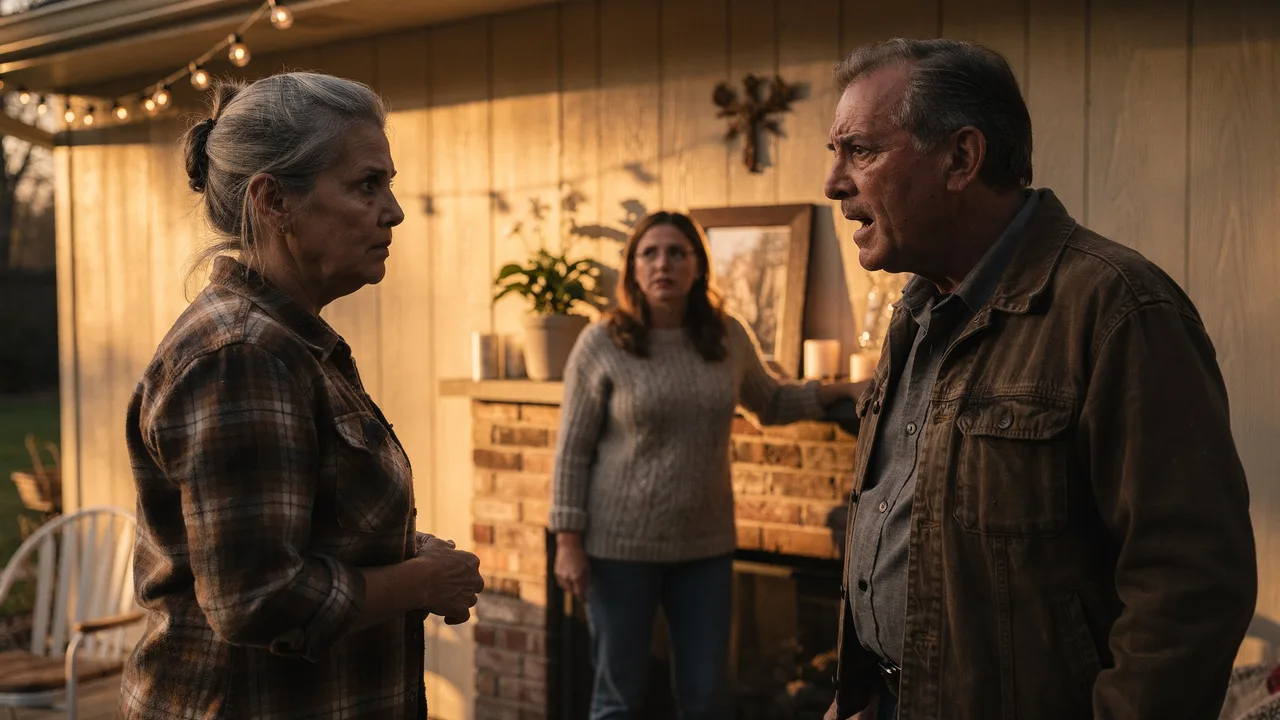
Mark laughed, loud enough to bounce off the cabinets. "Anybody can put my name on a form. He's framing me, Mom. That's what these guys do." He jabbed a finger across the table at Hugh.
"Mark," Sylvia said. "Sit down."
I had not noticed he was standing.
"The dates match your calls," I said. "The week you told me about the new office, the deposit. You said it was only for a little while."
"Fine." His hands opened, and his voice dropped into something reasonable. "Yes. It was a loan. Family to family. Dad would have handed it over in a heartbeat, and you said whatever I needed."
"I did say that."
"So nobody stole anything, and you're humiliating me in front of Aunt Sylvia over money I was going to pay back."
"Then you'd have a paper that says so." Sylvia folded her hands. "Do you?"
He did not. He looked at the highlighted sheet in front of me, the one he had marked himself, and I watched him work out that he had carried the evidence into my house in his own jacket pocket.
"A month ago you couldn't find the bank's website," he said to me. "Somebody's been coaching you."
"Hugh offered to sit with me, and I told him no. I did it alone, at that table, and it took me a week." I made myself keep looking at him. "I borrowed against this house, Mark. For the property tax and the electric and the roof man. What left on those Tuesdays was what I was living on."
Sylvia drew a short breath. Nobody else made a sound.
Mark's chair scraped back so hard it rocked on its legs. He took his keys off the counter. The front door shut behind him without a slam, which was somehow worse.
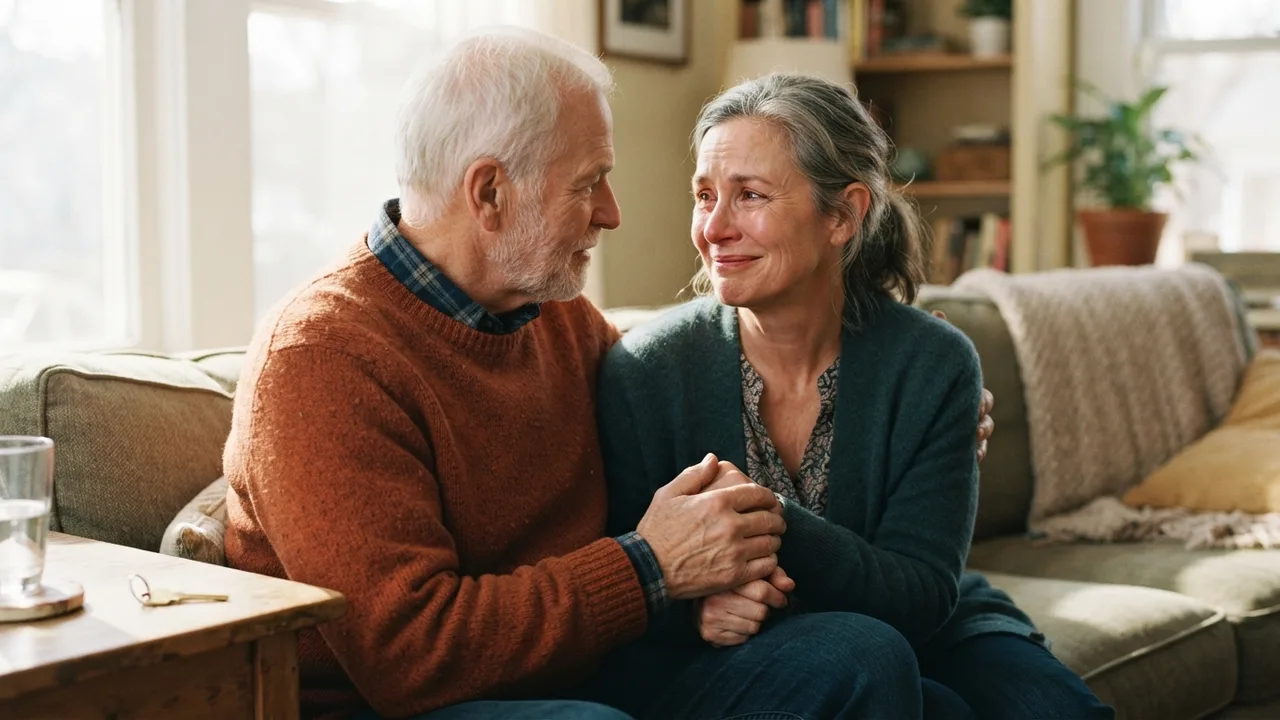
Under the table, Hugh's hand found mine. It was warm and rough, and he held on without a word.
"Eat something, Vivian," Sylvia said at last. "You've gone gray."
---
Mark came back on Thursday.
His car sat at the curb a good while before the door opened. He knocked, which he had not done since he was a teenager, and he sat down at the table where I had spent my week of nights. He had left off the watch.
"I've got a plan," he said. "I can pay it back in installments. I put it in a spreadsheet, I can show you—"
"I'm selling the house," I said. "When the loan is paid off, you'll get your share of what's left."
"You'd sell Dad's house."
"You already sold it, honey. I'm only signing the paper." I waited until he looked up. "And you will apologize to Hugh. Not a text, not a letter. Saturday, at his workshop, and I'll be standing there."
"Mom, that's humiliating."
"It was humiliating to be told he was a thief at my own table. That's the only other part of the deal."
He pushed the chair in and stood with a hand on the back of it, like a boy waiting to be excused. "Saturday," he said.
I signed the listing agreement Friday at a realtor's office on Highway 179. She slid a tissue box across the desk before I needed it, and by Saturday morning her sign was up in my yard.
---
Mark followed my car out to Hugh's and parked behind me. He slowed at the sign on my lawn on the way out. I saw his brake lights come on.
The workshop sits behind Hugh's house, low and stucco, with a roll-up door he leaves open on mild days. Inside it smelled of sawdust and lemon oil. Hugh stood at the long bench with a plane in his hand, working a board along the grain.
He set the plane down when he saw us. He wiped his hands on a rag and did not say a word.
I took a place by the pegboard of chisels. Mark stood in the doorway with his hands in his pockets, then took them out.
"Hugh." His voice cracked on the name and he started over. "I told my mother you were working her. I put that paper on her table and said it was you. It was me. I've been taking her money since the month Dad died."
Hugh folded the rag in half. "Go on."
"I figured if there was a villain in the room nobody would ask where it went." Mark swallowed. "I thought you'd be easy to blame. You're new, and you're quiet. I'm sorry. I don't have anything to say that makes it better."
"No," Hugh said. "You don't."
Mark nodded. A muscle worked in his jaw, the same one I had seen in Hugh at the table, and I looked at the floor.
"I'm not the one you owe most," Hugh said, not unkindly. "Your mother's the one standing there."
"I know." Mark turned to me. "Mom, I'm sorry."
I had rehearsed answers for three nights, and every one of them left me. "I heard you," I said. "Call me when you get home."
"Coffee's on, if you want it," Hugh said.
"I've got the drive back on the 17." Mark glanced at the bench, the plane, the shavings curled on the concrete. "Thank you for letting me say it."
He walked out to his car. He did not look at the sign on my lawn again, because we had left it behind us. I stood in the doorway until the sound of his engine had thinned out down the road.
Hugh's hand settled on my shoulder, and I let myself lean on it for a moment.
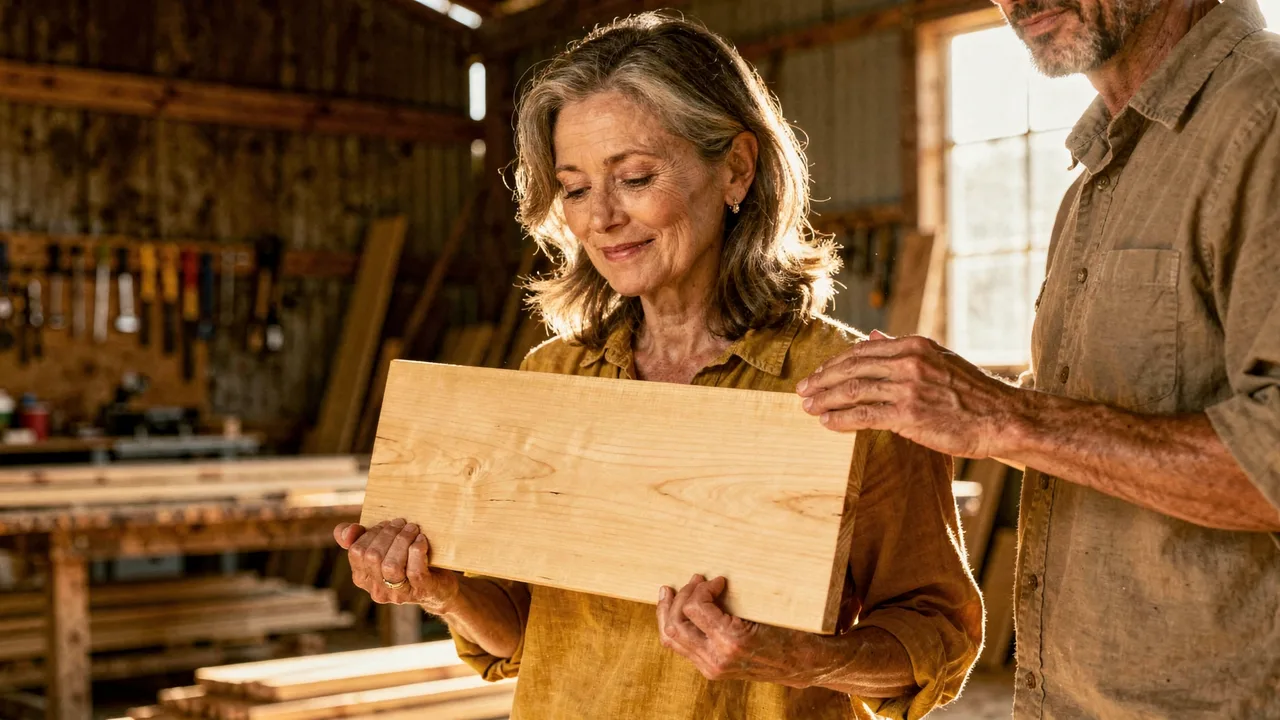
Then he went under the bench and brought out a board of maple no longer than my forearm. He did not tell me it would work out. He did not say a word about the house, or the loan, or my son's empty chair. He put the board in my hands.
I ran my palm along the face of it. He had sanded it until nothing could catch, no lifted grain, only a clean pale surface that held the light from the open door.
"What's it going to be?" I asked.
"That's up to you," Hugh said. "I thought you might want something to start with."
*This is how it starts*, Mark had said, with a yellow highlighter in his hand and my money in his pocket. I stood in the sawdust with the cool maple under my fingers and let the words mean something else.
I closed my hand around the smooth wood and held on.
Comments