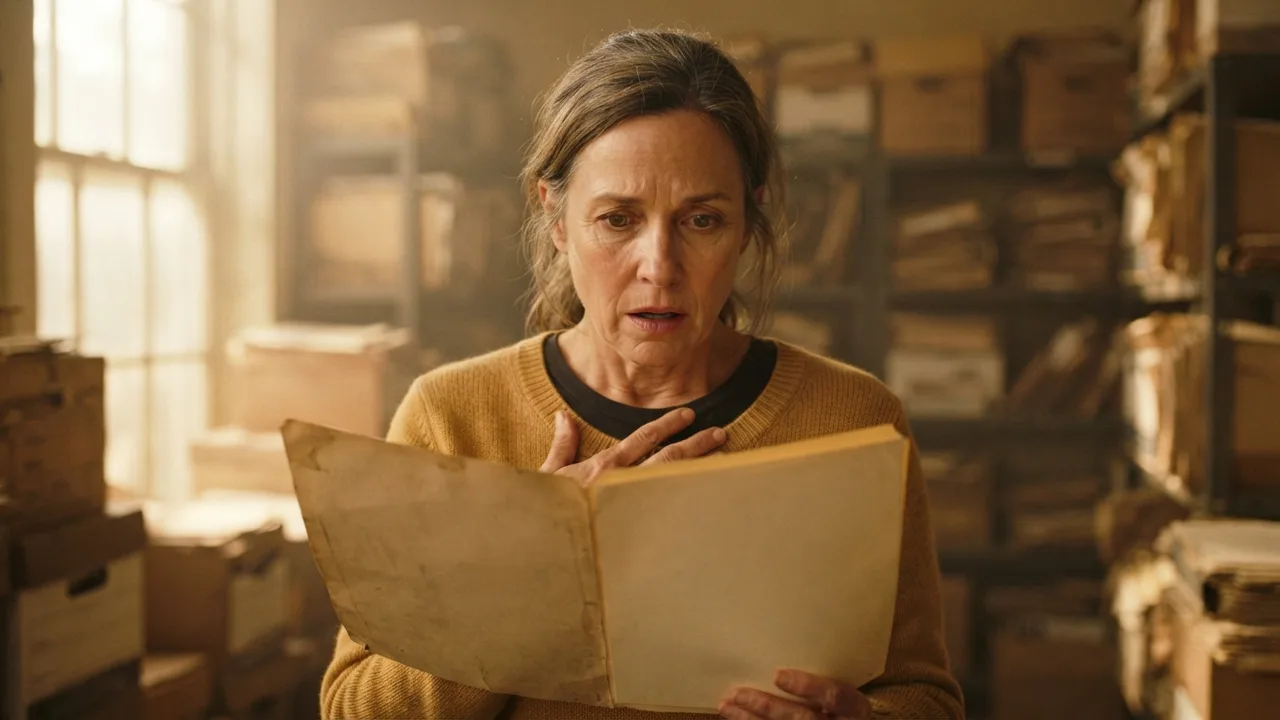
The demolition permit was dated May 10, 1996, and it was for the Hawthorn House, the very landmark Gordon Corwin was famous for having saved. It sat in a boundary folder in the town hall archives, a yellowed carbon copy with his name typed on the applicant line. I had four months of Gordon's company behind me and a client waiting on a clean title search, and I understood that I could not keep both.
"Find what you need, Philippa?" asked Dolores at the counter.
"Most of it." I slid the folder closed over my thumb. "Do you copy by the page or by the folder?"
"Twenty-five cents a page. Same as always."
I paid for one page and carried it out in my briefcase, between a title commitment and a roll of mints. A sawmill invoice was clipped behind the permit, and I left it where it lay, since I had no reason yet to want it.
Advertisements
I should explain why I was there. Bertram Lindqvist wanted to buy the gray-shingled cape next door to the Hawthorn House, and Bertram was the sort of client who called twice before breakfast. He wanted every easement, every setback, and every scrap of paper that touched the lot line. The Hawthorn parcel ran along his back boundary, so I had pulled its file as well.
Old town records are messy, and I know it better than most. Permits get filed under the wrong street and applications get withdrawn without a note. A permit is a request, and a request is not a deed done. I told myself that on the library steps and again in my car.
Then I called Gordon.
"Saturday's off," I said. "Bertram wants the whole file by Monday, and I'm only half through it."
"Camden can wait," he said. I could hear a plane running in his shop, and then I couldn't. "I'd gotten us a table at the place with the lobster rolls. The one you liked."
"I know. I'm sorry."
"Don't be. You work too hard, that's all." He said it kindly. But the quiet after it had a shape, and I sat holding the phone and felt that I had told him a smaller truth than the one in my briefcase.
Advertisements
I spent Saturday at my kitchen table with the permit propped against the sugar bowl. I read it the way I read every document, top to bottom, then bottom to top. The ink had gone brown. The fee was stamped paid, and the inspector's initials were in the corner, but the line for the date of completion had been left empty.
It meant nothing and it meant everything. Gordon's restoration was in the brochures and on the plaque at the visitor center. It had been in the *Courier* every Fourth of July since before I moved back to town. He had saved it. That was the story.
On Monday morning I drove to his workshop with two coffees from Dunkin' and the page folded in my blazer pocket. He was at the bench, running a plane along a length of oak. Curls of pale wood lay around his boots. He looked up and his whole face changed, the way it had for four months now, and I nearly turned around.
"You brought me coffee," he said.
"I brought you a question." I set the cup down on a clean corner. "Professional curiosity. Bertram's lot backs onto the Hawthorn House, and I found a demolition permit in the file. Nineteen ninety-six. Your name's on it."
He kept his eyes on the oak. "Oh, that."
"Yes. That."
"It was procedural." He brushed shavings off the bench with the side of his hand. "The town required one before any major work on a condemned structure. We took it out to cover ourselves, in case the framing was worse than we thought. We never used it."
"The completion line is blank."
"Because we never used it." He turned and smiled at me, and it was a gentle smile, which made it harder. "Philippa, honey. That's thirty years of paper. Dig around in it and all you get is dust in your eyes. Let it be."
His hands were scarred across the knuckles and steady as a level.
"I don't let paper be," I said. "It's the whole job."
"Course it is." He picked up the coffee. "Humor me this once."
That got no answer from me, and he took it for a yes. I drove back to my office on Water Street with a bad taste behind my teeth. A man who had nothing to hide would have laughed and pulled the old job file off a shelf. Gordon had asked me to stop asking, and in all my years of selling houses, nobody had ever asked me that who wasn't standing on a cracked foundation.
Harlan Strickland had been the town building inspector until his knees gave out. He was eighty if he was a day and kept tomatoes along his porch rail in Styrofoam coolers. I found him there Wednesday evening, snapping the tops off a bowl of green beans.
"Philippa Marsh," he said. "You selling or buying?"
"Neither." I stopped at the bottom step. "I wanted to ask about the Hawthorn House. Back in 1996."
His hands stopped. He looked past me at the street, where somebody's sprinkler ticked across a lawn.
"What about it?"
"There's a demolition permit for it in the town file. I'd like to know whether anything was ever done under it."
"Sit down, Philippa." I sat on the glider. He took his time. "That house was a ruin. Rot in the sills, the roof half in the cellar. Condemned, and the state was ready to take it off the town's hands. We'd have lost the one building that put Port Blossom in the guidebooks."
"And Gordon?" I kept my briefcase on my knees.
"Gordon was a local boy with a wife in and out of Maine Med and a shop one bad winter from the auction block." He shook his head slowly. "The selectmen wanted that house saved. Everybody was flexible, you understand me. Nobody looked too hard. Nobody wanted to."
"Flexible how?"
"I'm not accusing a soul." He picked up a green bean and snapped it. "I'm saying a town can want a thing so badly it stops asking what it's getting. You be careful where you take that, hear? People in this town love that man."
I thanked him and drove home with the windows down. The air smelled of cut grass and the harbor. I knew what I had, and it was not a scandal. It was a favor, thirty years old, that a whole town had agreed to keep.
By Friday, Dolores had stopped chatting at the archives counter, though she copied the sawmill invoice for me without a word. By the following Monday, a woman I had sold a house to crossed Main Street to avoid me. Harlan had told no one, I was sure. But a woman who asks about a hero draws notice in a town this size, and I could feel it settling on my shoulders like fog.
The Historical Society met in the community room at the library on the last Thursday of September. Someone had set out folding chairs in rows, a coffee urn, and a sheet cake from Hannaford with LIFETIME ACHIEVEMENT IN PRESERVATION piped across it in blue. About thirty people had come. Maxine Doyle, the president, stood at a lectern with a walnut box in her hands.
I sat in the front row with my briefcase on my knees. The permit was inside it, and I had put it there that morning without deciding why.
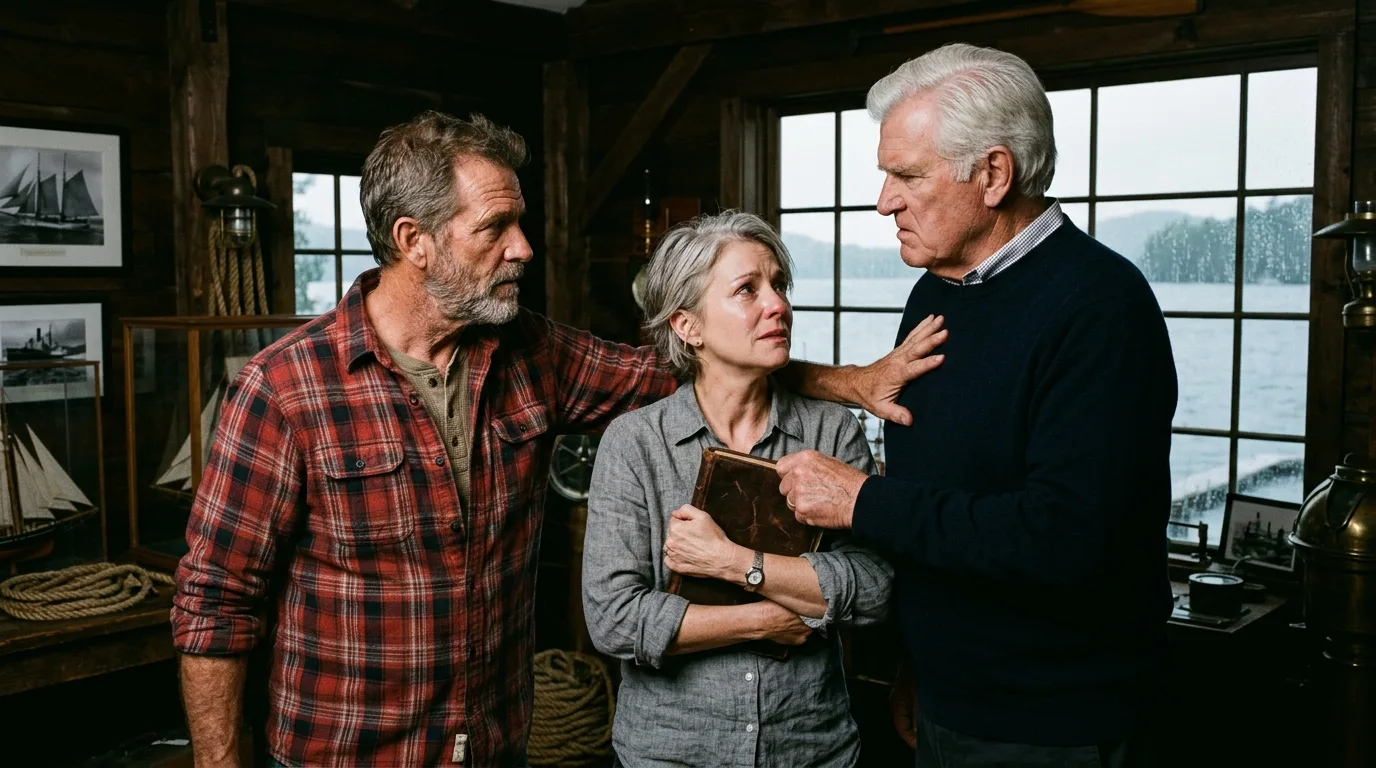
Gordon sat two chairs down in his good corduroy jacket, with Evan beside him. Evan had his father's shoulders and his father's way of looking at a room, but worry had drawn his face tight. He had not looked at me once since I sat down.
"Gordon has given this town its heart back," Maxine said. "Many of you drove past the Hawthorn House as children and thought it would be gone before you grew up. It stands because of him."
Gordon took the box. He said a few words about Ellen, and about the town that had carried him through the worst years of his life. His voice caught on her name. I believed every word of that part, and it was the worst moment of the evening for me.
"Questions?" Maxine said, smiling around the room. "Gordon's agreed to take a few."
For a long moment nobody lifted a hand. The coffee urn ticked. I stood with the briefcase against my hip.
"Maxine, I have one, if Gordon will allow a realtor's question."
"Philippa, of course." She looked pleased. She did not yet know.
Gordon's smile stayed a beat too long. "Ask away."
"When you restored the Hawthorn House, how much of the original frame did you keep?"
"All that could be kept." He said it to the room, warmly. "Philippa's been through the town files for a client, folks. She's caught the history bug."
"In those files sat a demolition permit," I said. "Dated May 10, 1996, with your name on the applicant line. The completion line is blank. I asked you about it in your shop, and you called it procedural."
A murmur went along the rows. A folding chair creaked.
"It was procedural," Gordon said. "Nothing ever came of it."
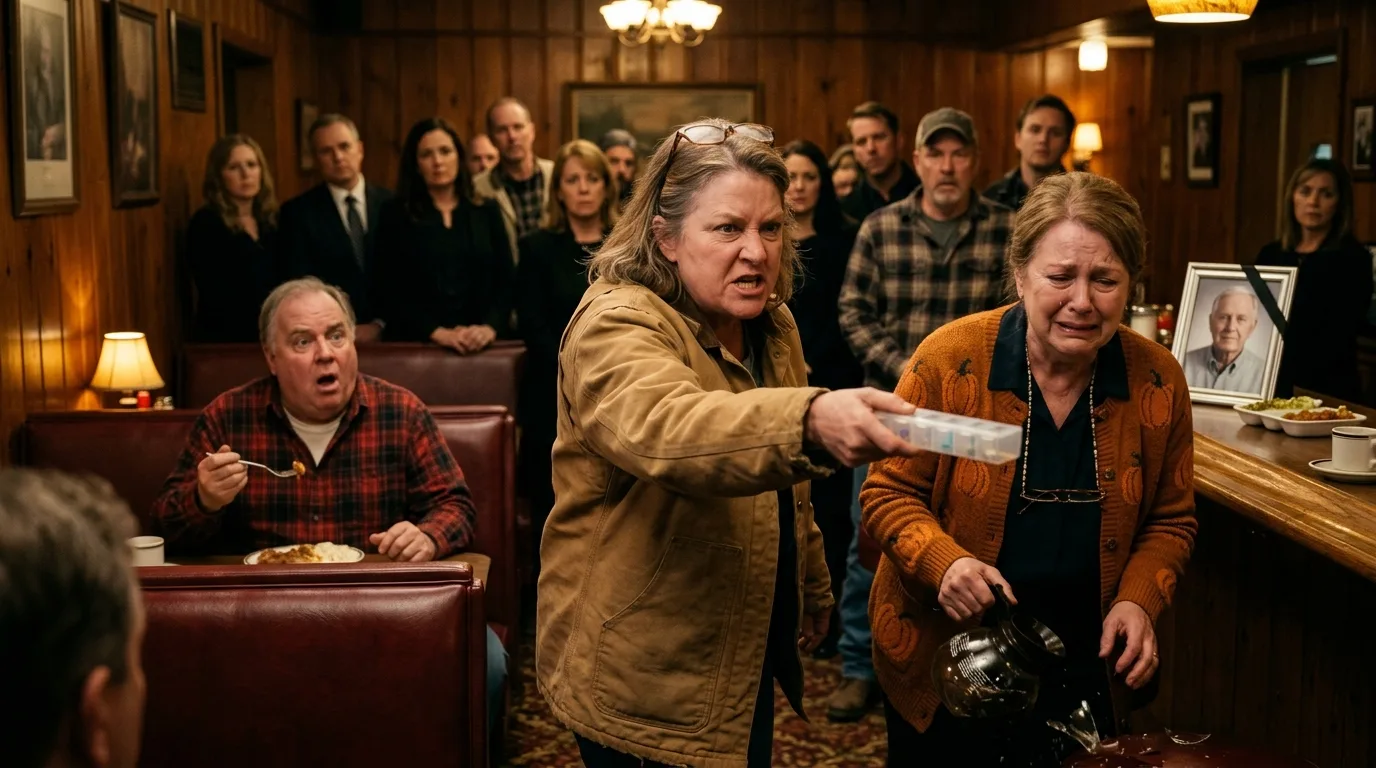
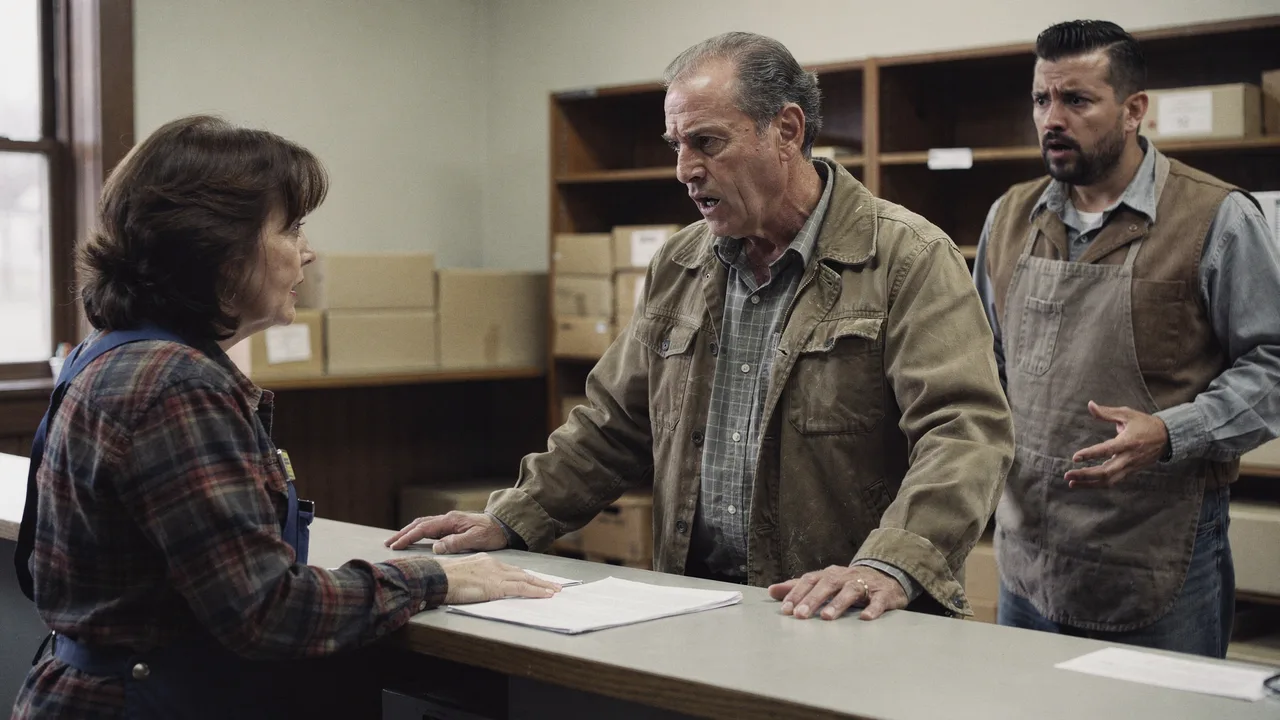
Evan was on his feet. "That's enough. My father is holding an award, and you're digging through thirty-year-old paper like he owes you something. Whatever this is, it isn't about a permit."
Part of the room agreed with him. I heard it in the shifting of shoes. Part of what he said was fair, too, and it landed.
"It's about a permit, Evan," I said. "I wish it were about anything else."
I opened the briefcase and took out the second page, the one Dolores had copied.
"This was clipped behind the permit. It's an invoice from a sawmill, that same June, billed to Corwin Millwork and delivered to the Hawthorn lot. Rafter stock, wall studs, king post timbers. All new-cut, all paid in full." I held it out and Maxine took it. "A frame you're repairing doesn't need new king posts. A frame you're building does."
"Every restoration buys lumber," Gordon said. His voice had thinned. "Philippa, come by the shop tomorrow. We'll go through it together, quiet, the two of us."
"We could have done that the first time, in your shop." I kept my eyes on him. "You told me in July that you can't fake the grain of heart pine. Then tell them what grain is up in that attic."
Nobody coughed. Maxine lowered the invoice to the lectern and looked at him over her glasses.
Gordon set the walnut box on the chair beside him with great care, as if it might break.
"There isn't any," he said.
"Dad," Evan said.
"Sit down, son. You hauled the old boards out with me, and she's right." Evan sat. His face had emptied.
"The house was past saving," Gordon said to the room. "The state had the date set. So I built it new, board by board, and aged the lumber in my shop, and when you all called it saving, I let you. Ellen's bills were stacking up. Nobody here asked me to lie. I just never said no."
"The Society paid your shop the restoration fee out of the preservation fund," Maxine said. "People gave to that fund at the Fourth of July picnic."
"I know where it came from."
"Then what are you going to do about it?"
He looked at his hands a while. "Pay it back. Every dollar the shop took, a little each month till it's square. And I'll write the *Courier* myself, so it comes from me and not from a file."
"Write it now," Maxine said. She took a legal pad from under the lectern and held out a pen.
He wrote standing at the lectern, slowly, and the only sounds in the room were the pen and somebody's cough, finally. He signed. Maxine read it through, signed beneath his name as witness, and tore the page off the pad.
"The brochures get reprinted," she said.
Gordon picked the walnut box off the chair and put it in her hands. "It isn't mine."
Thirty people filed out in twos and threes, and not one stopped at my row. Nobody cut the cake. Evan paused beside me with his jacket over his arm.
"I hope the paper was worth it," he said.
I had no answer, and he did not wait for one.
Gordon came last, cap in his hands. The folding chairs were still in their rows, and the blue letters on the cake had begun to sweat.
"Is there any way forward for us, Philippa?"
"No." It came out gently, which was the only mercy I had. "I'd stand in your shop and look at every joint and wonder."
"I understand." He turned the cap over once. "I think I knew it the Monday you brought me a question with the coffee."
He put the cap on and went out the side door. I stacked chairs against the wall until the room was bare.
A week later I was walking Bertram Lindqvist through the gray-shingled cape again. He rapped on the kitchen cabinets and asked about the furnace. I answered every question exactly. Nobody in the street had waved at me that week, and the Hannaford checkout girl had rung up my groceries without a word.
In the backyard, while Bertram paced off the lot line, I turned and looked over the fence.
The Hawthorn House stood in the afternoon light, its trusses hidden under a roof that had never weathered. The clapboards were cut true and the porch posts were turned fine. I had loved that house since I was a girl, and I stood there and saw it plainly for the first time. It was beautiful, and it was perfect, and it was a copy of something that was gone forever.
Comments