Clint Brody told me he was filling in the headgate ditch on Monday, and there wasn't a thing I could do about it.
He said it over the fence with his Bluetooth blinking blue in his ear, already half turned toward his truck. That ditch carried the only water my hay meadow ever got. It fed the clover my bees lived on and kept my small herd in grass, and without it the ranch George and I built over forty-five years would be dust by August.
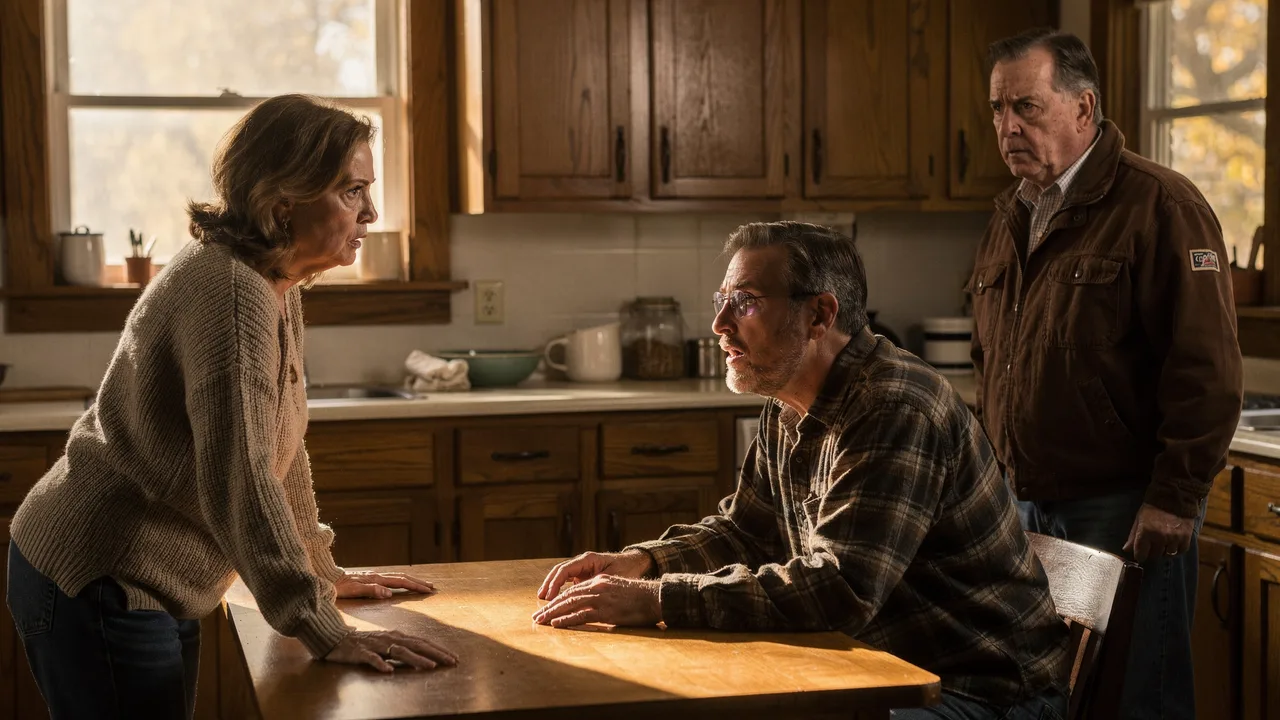
"It's just a ditch, Martha," he said. "Walt's old arrangement was never in writing. I'm sorry. Business is business."
I stood there with the gate chain in my hand until his dust settled on the road. Then I went and checked the hives. The bees were working the dandelions along the ditch bank, loud and busy, and not one of them knew.
Advertisements
I am sixty-six. George had been gone a year that spring. He was the one people knew, the one who talked at the feed store and shook hands at the sale barn. I kept the books, the bees, and the house, and I had been content to be the quiet half. Now there was nobody to talk for me.
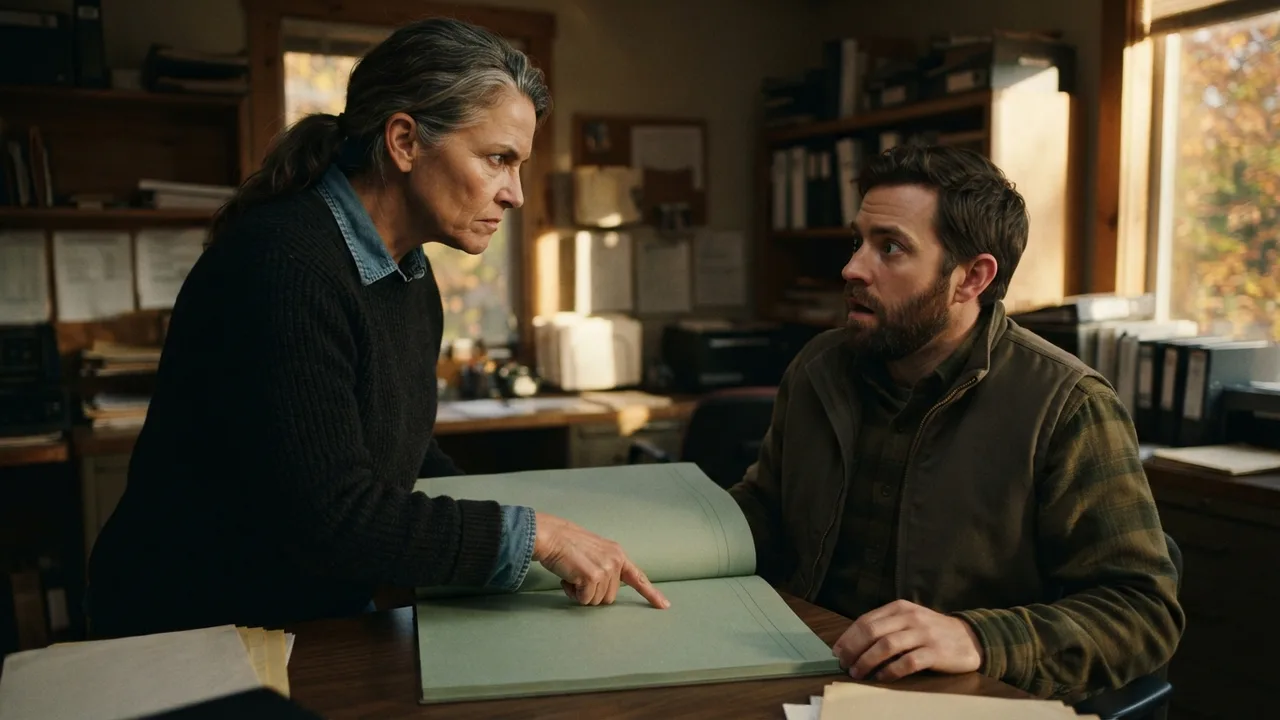
Saturday morning I drove the mile down the road to the Brody Cattle Co. office. I wore my good jeans and carried the only paper I had, a half page in George's handwriting that said the Tillmans could draw water from the headgate ditch "as agreed." It was signed by Walt Brody and George, and it was not notarized.
Clint's office had a glass wall and a wall of charts. He motioned me to a leather chair and kept his earpiece in.
"Let me show you something," he said, and turned a monitor toward me. Blue bars, green bars, a red one that climbed. "That's my flow, and that's yours. See how yours drops off? You're taking water for sixty-some head and a meadow nobody's cut properly since George passed. I'm leveraging my assets here. I need those assets optimized."
"My meadow's been cut every year," I said.
"Not at the yield it should be." He smiled, and it was a kind smile, which made it worse. "Martha, handshake deals don't hold up anymore. You know that."
Advertisements
I put George's half page on his desk. He looked at it the way you look at a bill you didn't order.
"I'll tell you what," he said. "I'll make you an offer for the place. Ninety thousand, cash, and you walk away with no more worries. That's generous, considering."
"It's worth more than that."
"With no water, it's worth a good deal less." He said it gently, and I understood he meant it as a courtesy.
I drove home with my hands tight on the wheel and sat in the yard until the porch light came on by itself. I didn't sleep. I lay there listening to the house tick and feeling like a foolish old woman who had walked into a man's office with a scrap of paper and her hat in her hand.
Monday was two days off. On Sunday I called a lawyer in Cheyenne whose name I got from the county extension office. His name was Pruitt, and he did not waste a word.
"Unrecorded easement," he said. "Verbal origin, one page of notes. Ma'am, I'll be honest with you. That's a weak case."
"My husband used that water for forty years."
"Use helps. It doesn't settle it. Mr. Brody holds the deed and the senior right. It'd be your word against his paper."
"What would it cost to try?"
"Fifteen thousand to start. A retainer, and I couldn't promise you anything for it."
I looked out the kitchen window at the feed money, the property tax, and everything else that fifteen thousand dollars stood for. I said I'd think about it, and we both knew what that meant.
When I hung up the kitchen was very quiet. That was the morning I quit hoping the law would do it for me.
Clint did not fill the ditch on Monday after all. His men were still fencing up on the north pasture, and he told me through the earpiece that it would be "end of the week, weather permitting." It was a stay, not a mercy. I used it.
George's office was at the back of the house, and I had not opened the door since the funeral. His coat still hung on the hook. The room held the cold, closed smell of a place where nobody breathes.
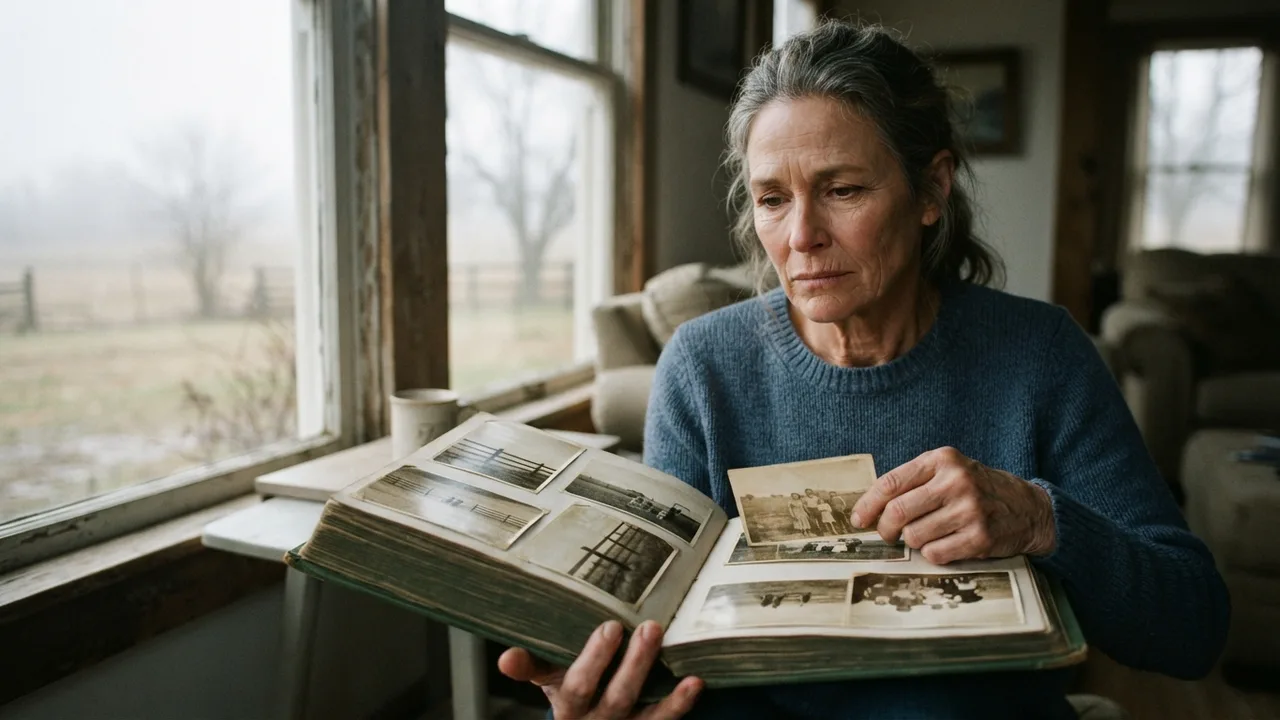
I wasn't looking for a will or a deed. I was looking for the man himself, because George wrote down everything. Along one wall sat a row of green ledger journals, one for every year, and below them were the photograph albums and the carousels of slides. He shot slides to the end. He never trusted the other kind.
I sat down on his swivel chair and pulled the first journal off the shelf.
For three days and nights I hardly left that room. I ate saltines standing up. I wrapped myself in his Pendleton and read about every fence post he mended and every storm that took the power. I read about every calf pulled in the dark and the first frost, which always came earlier than the almanac promised. I turned page after page of us. There was the day he came in laughing with a swarm of bees in a cardboard box and the year I cut my own hay while he was laid up with his back. There were so many of those ordinary days that I had to stop and put my face in the crook of my arm.
It hurt more than the funeral had. The funeral was one day, and this was every day he ever lived, laid out in blue ink. But somewhere in the second night the hurt went cold and hard and useful. I started setting aside what I needed.
On the third night, near two in the morning, I found 1986.
A photograph first, a slide held to the lamp. George, young and thin, leaned on a shovel, and beside him stood Walt Brody in a feed-store cap. Behind them ran a raw trench in raw dirt, with the date stamped on the cardboard frame. Then I opened that year's journal to August fourth, and I read the entry once, one word at a time, with my glasses on.
*Co-signed the note for Brody at First National today. Hard times for them. This water is the repayment.*
I turned off the lamp. I sat in the dark with the book on my knees and I was not sad anymore.
The Sage Creek Stock Growers Association met the next Thursday in the VFW hall, as it did every year. It was the one night every rancher in the valley sat in a single room. There were folding chairs, a coffee urn, and Dot Hanley's rhubarb pie going for two dollars a slice.
I had never once spoken at that meeting. George spoke, and I brought a dish.
I carried in the slide carousel in a Murdoch's shopping bag and set it on the end of the last row. The hall's old projector sat under its cover in the corner, the one they hauled out for the Memorial Day program. Frank Yoder ran the meeting from the front, seventy years old, leather-faced, with a gavel he rarely used.
We got through the minutes and the treasurer's report. We got through the brand inspector's complaint about the county road. Then Frank said, "New business," and Clint stood up.
He had a laptop and a clicker. He put a chart on the screen.
"Folks, I want to talk about water optimization," he said. "Dry year coming. I've reviewed the whole system, and the most inefficient piece is the old Tillman ditch off my headgate. Low volume, low return. I plan to decommission it and put that flow where it earns."
A murmur went around the room. Someone's chair scraped. Dot Hanley looked at me, and then away, which was worse.
I stood up. My knees cracked in the quiet.
"Frank," I said. "May I have the projector?"
Frank looked at me for a long moment. Then he nodded to the boy who ran the lights, and the room went dim.
The first slide dropped into the light, a little crooked, and I straightened it.
"Nineteen eighty-six," I said. "That's George. That's Walt Brody. They're digging the ditch."
Nobody said anything. I clicked forward.
"Nineteen ninety-five. That's the cottonwood at the headgate. George planted it from a cutting. It's up to his knee here."
Click.
"Twenty fifteen." The tree filled the screen, huge and shaggy, its roots gripping the ditch bank. "The ditch ran every season in between. George wrote down the day it opened and the day it shut, every year. I have all of it."
I took the journal out of my coat pocket and held it to the light of the projector.
"August fourth, 1986. 'Co-signed the note for Brody at First National today. Hard times for them. This water is the repayment.'"
The fan on the projector hummed. Someone's coffee cup clicked in its saucer.
Clint's laugh came out loud, and it cracked a little at the edge. "That's a scrapbook, Martha. It isn't a legal filing."
"It's a record," I said.
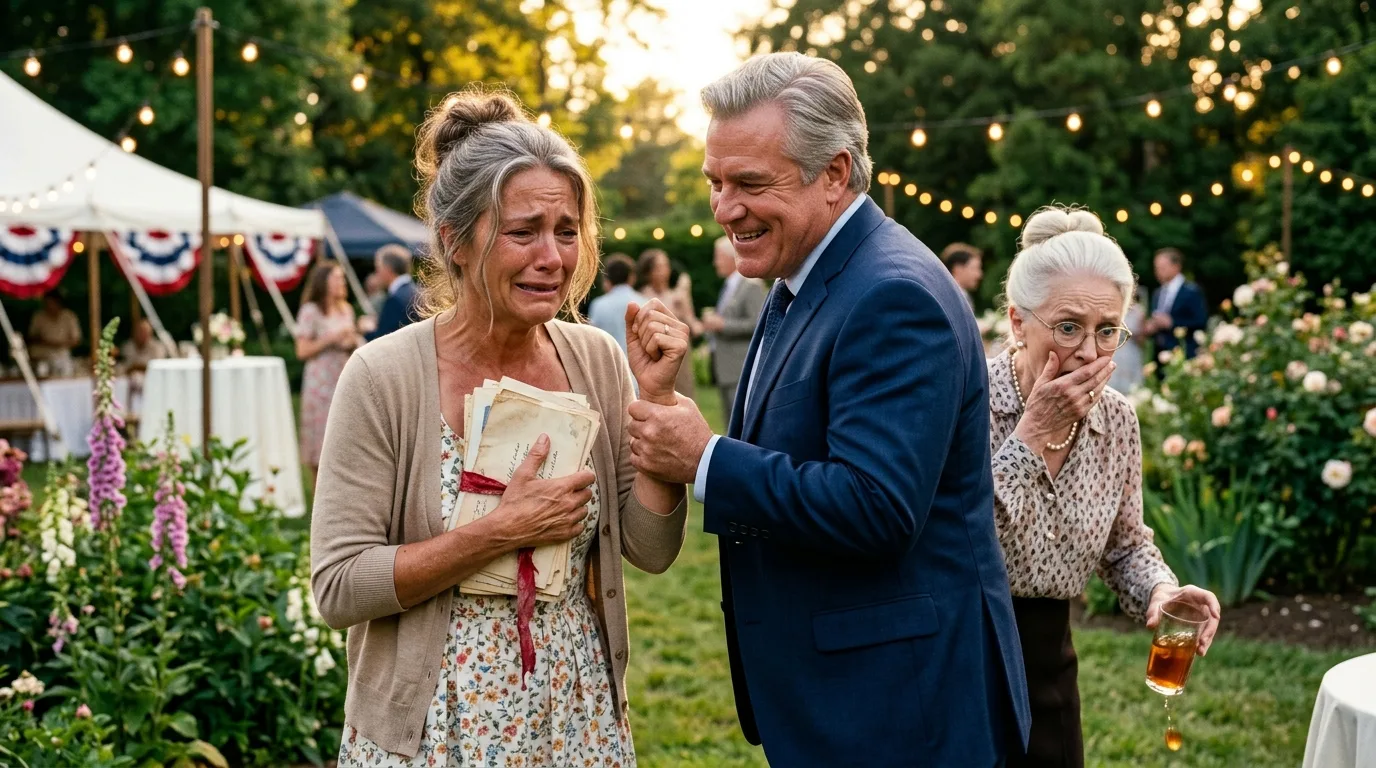
"My father never mentioned a loan." He turned to the room with his hands open. "Folks, come on. She's grieving. I understand that, I do. But you can't run a business on sentiment, and you can't run a valley on one woman's old photographs."
A few people shifted. I saw it begin to take, as a thing will when a confident man says it. Dot's husband studied his boots. Clint had made me small again, and for a moment I felt myself going back into the chair.
I didn't argue with him. I had learned in that office that arguing was how he won.
I reached into the Murdoch's bag and took out an envelope gone soft at the folds. I had found it inside the 1991 journal, the night I started setting aside what I needed.
"This is from First National," I said. "The release on Walt's note. It's addressed to George, because George's name was the one holding it."
I carried it down the aisle and put it in Clint's hand. He read it standing, and the whole room watched him read.
"So George signed," he said. "Neighbors sign for neighbors. That's a favor, Martha, not a water right."
"Then tell me why your father gave away water."
"I never said he did."
"The ditch ran off your headgate every season, Clint, even the dry years. Walt Brody counted every dollar he ever held. He wouldn't hand a neighbor one drop for nothing."
Somebody in the back turned a laugh into a cough. Walt's thrift was famous in that valley.
Clint's jaw worked. "All right. Suppose I grant it. You keep the ditch through this season, and we sit down in the fall and talk terms."
"No."
"That's more than I owe you."
"It's less than your father agreed to."
He pitched his voice for the back rows. "Then what is it you want? You turned down ninety thousand dollars, and now you stand up and shame a man in front of his neighbors over a dead man's diary."
My knees wanted the chair. I stayed on them.
"I'm not shaming you," I said. "I'm reading you your father's bargain. George signed the note, and George dug that ditch with the shovel you saw on the screen. Walt gave the water. The bank has the file. Call them Monday and ask what's in it."
Then I turned to the front. "Frank, I'm asking the association to put the Tillman ditch on the water list the way it has always run. I'm asking nothing of Clint that Walt didn't give."
Frank looked at me, then at the gavel he rarely used. "Chair hears a motion."
"So moved," Dot's husband said to his boots. Then he lifted his head and said it again. "So moved."
"Second," called a voice from the back.
The ayes came ragged and low, not a cheer in them. Clint did not vote. He stood with the clicker hanging from his hand and the blue bars glowing on the laptop, the red one still climbing. After a while he sat down.
I put the slides back in the carousel one at a time. My hands shook, and I let them.
I had read George's private words aloud to a hall full of neighbors and held up our whole life on a screen. In the parking lot Dot Hanley asked me, kindly, whether George had really planted that tree himself. I stood there answering questions about the best years of my marriage until the last truck pulled out.
Two days later a truck came up my drive, and I knew the engine before I saw it.
Clint climbed down and shut the door without a sound. He held his hat by the brim and stopped at the foot of my porch steps, looking at the boards.
"I called the bank," he said. "Then I called my mother. She remembered the note. Dad never told me, and I never asked why a man would give away water in a dry country."
He took the soft envelope from his shirt pocket and held it out. I took it.
"My lawyer's drafting a deeded easement, filed with the county. I'll cover the fees. And I'll send my crew Monday to clear the ditch."
"I appreciate the paper," I said. "Thank you, but I'll clear my own ditch."
He nodded as if he'd expected that. He put his hat on and went back to the truck, and I stood on the porch until his dust thinned out over the sage.
It was won, and it was not private anymore. I went in and put my hand on the green cover of 1986. The grief was still mine, but I would have to share it now.
A week later I walked up to the headgate in the early light, with the easement folded in my coat pocket. The county clerk's stamp was on it, bright and dry. The cottonwood stood over the bank, and its leaves were just starting to show silver.
The wheel was rusted and stiff, and I put my back into it. It gave on the third try with a groan I knew by heart.
The water came slowly, then all at once. It slid over the gravel and ran down the channel toward my meadow, glinting where the sun hit it. A few bees were already working the bank. It sounded the way it always had, low and steady, like someone in the next room talking to himself.
I watched it for a long time. Nobody else was there.
Then I went to the shed for my shovel. The water kept running down the ditch behind me, clear over the stones, and the paper in my pocket said it could.
Comments