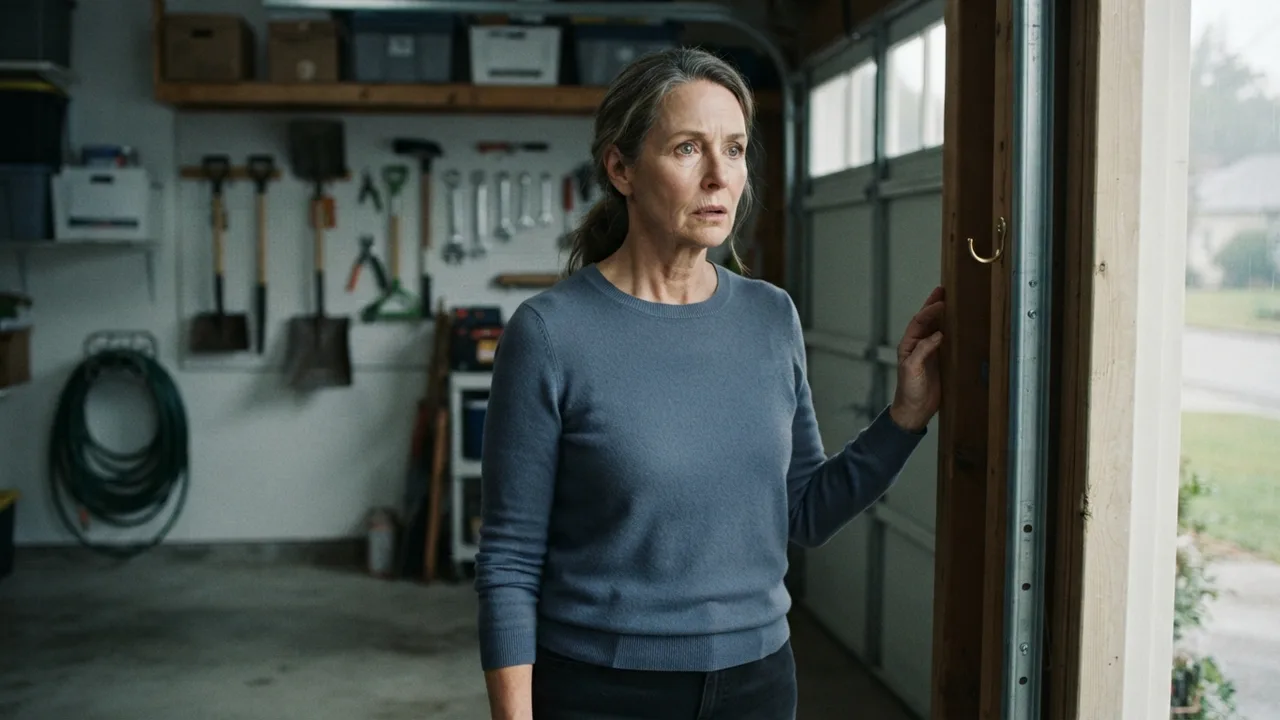
The first lie my husband told me about his stolen motorcycle was that he'd locked the garage that night. The second was about the keys. By the time the $15,000 claim landed on my desk, I was filing his stories as facts, because thirty years of marriage had trained me to.
It started on a Monday, in the kitchen, with the coffee still dripping.
"It's gone," Clifford said. He stood in the doorway in his work boots, holding his phone out from his body. "The side door was open and the Harley's gone."
"Did you lock it last night?"
"Of course I locked it."
I set down my mug. Clifford wiped that bike's chain every Sunday afternoon and kept a chamois in a bread bag so it wouldn't pick up grit. The same man had left the back door unlocked twice that month and his nail gun on a job site in Kearney. He remembered what he loved and lost track of the rest.
Advertisements
"Who found it?"
"Corey. He came by at daybreak to borrow the ladder and saw the door hanging open. He knocked on the bedroom window."
"I didn't hear him."
"You sleep like a log, Gwen."
I did. I drove to the office with the heater blasting and wind pushing the bare cottonwoods along Main Street. Sabrina was already at her desk, blazer on, a Casey's cup at her elbow.
"Clifford's bike was stolen," I told her. "I want to handle the claim myself."
She looked at me over her glasses. "It's your husband's claim, so we do it by the book."
"That's why I want it."
"Then we do it by the book twice," Sabrina said.
I opened the file, typed the date, and felt a small snag, the kind I get when a number on a form doesn't match the number in my head. I told myself it was nerves. That night I lay awake listening to the furnace kick on and off, picturing the side door of our garage and trying to remember whether I had ever once seen him turn that deadbolt.
I hadn't.
---
The carrier sent an adjuster named Dwight Fenner, a soft-spoken man with a clipboard and a windbreaker from a seed company. He set up in our conference room on Thursday morning. Clifford sat across from him with his hands folded on the table, and Corey sat beside his father because the form listed him as the witness who found the open door.
Advertisements
I sat at the end, as the agent of record, and kept my pen capped.
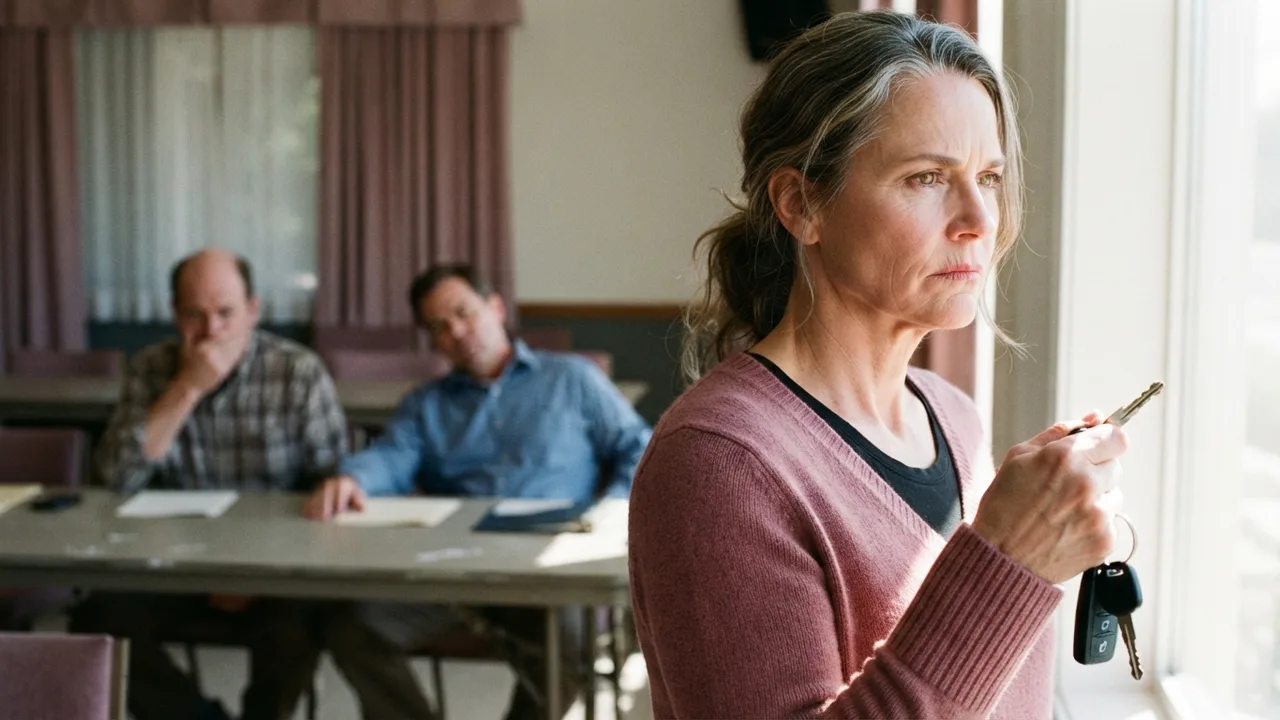
"Mr. Astor," Dwight said, "let's talk keys. How many sets exist for this bike?"
"Two. I carry one. The spare hung on a hook in the garage."
"On a hook in the garage," Dwight repeated, writing.
"Right by the door. Whoever took the bike probably grabbed them off the wall on the way out."
Corey nodded along a little too fast. He was looking at the table. He had been looking at the table since he sat down.
I knew where the spare set lived. It lived in the drawer of Clifford's nightstand, on a ring with a plastic fob from the Harley dealer in Grand Island, under his reading glasses. I had moved that ring to dust more times than I could count.
I said nothing. Dwight asked about the saddlebags, and Clifford said both were on the bike, tooled leather, initials on the flap. Dwight wrote it down. I watched the pen move.
That night I waited until Clifford was in the shower. I opened his nightstand drawer and looked at the reading glasses, a church bulletin, a pair of cuff links from a wedding. The ring with the fob was not there.
When he came out, towel around his neck, I was sitting on the bed with the drawer open on my lap.
"Where are the spare keys, Cliff?"
"I told that man. The garage."
"They've been in this drawer since the week after you bought the bike."
His face went red from the collar up. "So now you're auditing me in my own bedroom?"
"I asked where the keys are."
"You asked like you've already made up your mind." He pulled the drawer out of my hands and shoved it back into its slot. "Thirty years, and you can't take my word on a stolen motorcycle? Go ahead. Write it up. Put it in your file."
"That's not what I—"
"Take it up with the thief, Gwen."
He slept in the den. I lay in the bed we had bought at the Furniture Row in Omaha and discovered that my pride hurt in a specific place, just under the ribs, and that being right did nothing for it.
---
On Saturday I carried a pot roast across town in a Pyrex dish wrapped in a dish towel. Corey lived over the hardware store on Elm, in two rooms with a window that rattled when the grain trucks went by. I told myself I was bringing dinner because he ate cereal for supper.
He opened the door in a Huskers sweatshirt, hair flat on one side, and took the dish from me with both hands.
"You didn't have to do this."
"I wanted to. Put it in the fridge so it doesn't go to waste."
He went into the kitchen. The bedroom door stood open, and his closet stood open beyond it, the way a closet does when the man owning it has stopped caring what's inside.
On the shelf above the hangers, between a duffel bag and a stack of folded jeans, sat a saddlebag.
I knew it from across the room. I had paid a leather shop in North Platte to tool it, a sunflower on the flap and *C.A.* stamped under the buckle, and I had wrapped the pair in brown paper and tied them with kitchen twine on our anniversary. Clifford had cried a little. He'd said nobody had ever made him anything.
I crossed the room and picked it up. The leather had been oiled recently. When I lifted it, the cologne on it rose up, the sharp cedar Corey had worn since high school.
"Mom."
He stood in the bedroom doorway with a dish towel in his hands. He wasn't looking at me. He was looking at a spot on the carpet about a foot to the left of my shoes.
"I borrowed it," he said. "Dad let me borrow it, for, uh, for a camping trip."
"When was the camping trip?"
"Before. A while ago." He smiled, the charming one. "You want some water? I've got Hy-Vee brand sparkling, the lime kind."
"No, thank you."
I put the bag back exactly where I'd found it, with the strap tucked under as it had been. In the car I sat in the parking lot with both hands on the wheel and watched a grain truck rattle past the hardware store. Then I said out loud, to nobody, "Both bags were on the bike."
That was what the sworn statement said. Clifford had given it under oath, in my office, with my notary stamp on the bottom.
I had spent two weeks excusing things. I couldn't think of one left to excuse.
---
At home, Clifford was out at a job site. I went to the hall closet and opened the gray fire box where we kept the birth certificates, the deed and the titles. I paged through the folder. The truck title was there. The trailer title was there.
The Harley's was gone.
A thief doesn't break into a house to take a title out of a fire box. Whoever had that bike now had the paper that let him own it, signed over by somebody with a right to sign.
I sat on the closet floor among the winter coats and did the arithmetic of what I knew. Missing keys. A missing title. A saddlebag in a closet that smelled like my son. A husband who got loud the moment I asked a plain question.
On Sunday afternoon Corey was at the Legion hall watching the Huskers, which I knew because he texted me a photo of a plate of nachos. I let myself into his apartment with the key I'd held since the winter he locked himself out. I had never used it.
I took the saddlebag. I did not take the pot roast Pyrex, because I couldn't stand to look at it.
It spent the week in the bottom drawer of the file cabinet in my office, under the claim folders. All week I processed the file as if I didn't know. I ordered the check. I filled out a savings withdrawal slip at the credit union on Wednesday and put it in my blazer pocket, and I told Sabrina only that the settlement meeting should be Friday and that Corey should be there.
"You all right?" she asked Thursday, watching me square a stack of forms that were already square.
"Ask me Friday."
"I will."
---
Friday morning, the conference room smelled of Sabrina's burnt-hazelnut coffee. The check sat in the middle of the table in its window envelope, made out to Clifford Astor for $15,000. Beside it lay the attestation form, with the line at the bottom for his signature under penalty of perjury.
Clifford had put on his good flannel. Corey sat to his right in a pressed shirt, jiggling one knee under the table.
Sabrina slid the pen across to Clifford. "Whenever you're ready, Cliff. It's a formality at this point."
He picked it up. I stood.
Nobody looked at me until I bent, lifted the saddlebag out of the canvas tote at my feet, and set it in the center of the table, on top of the check. It made a soft, heavy sound against the wood.
Nobody spoke. Out on Main Street a pickup went by with its radio on, and I could hear the bass go past and fade.
Corey's knee stopped. Clifford's hand stayed where it was, the pen an inch above the page.
"Item four on your sworn statement," I said. "A pair of custom leather saddlebags, tooled, initials on the flap, both mounted on the motorcycle at the time of theft. You said it to Mr. Fenner. You said it to me."
Sabrina looked at the bag, then at me. She didn't say anything. I loved her for it.
Clifford recovered first. He always did. He cleared his throat and sat back.
"Where'd you get that?"
"You know where."
Clifford's chair scraped the floor as he shifted his weight, and the pen never left his fingers.
"Gwen, those things are all over the internet. You can order a set with any initials you like. That's a replica."
"It's the one my leather man in North Platte made. His stitch mark is under the buckle." I turned the flap over. "Right there."
"Maybe the thieves dropped it," Corey said. His voice came out high. "Like, they got spooked, and it fell off, and somebody found it and, and I picked it up, I was going to tell you—"
"Corey, hush." Clifford was looking at me now, and his voice had dropped into the low, hard place it goes before he shouts. "I'm going to ask you one time. What do you think you're doing? You pull a stunt like this in front of your own partner? You want to humiliate me in front of a woman I've known since she opened this office? For no reason?"
"I have a reason."
The bag sat between us on top of the check, one buckle catching the light from the fluorescent tube overhead.
"You've got a leather bag and a feeling."
I kept my voice low. It was the voice I use on the phone with people who have just lost a house to a fire.
"The form says you're signing under penalty of perjury, Clifford. Before you do, just tell me: when Corey sold the bike, did he at least get a decent price for it?"
The pen touched the paper and stopped.
I watched it land on him. His shoulders came down an inch at a time, the way a tarp comes down off a stack of lumber when someone cuts a rope. He put the pen on the table very gently and moved it away from himself with one finger.
Corey said, "Dad," and nothing else.
"Fourteen thousand, six hundred, give or take what the dealer in Grand Island paid," Clifford said, to the table. "He wasn't going to get anything like what it was worth. They knew he was in a hurry."
"What was the hurry?"
He looked at his son, and his son looked at the wall.
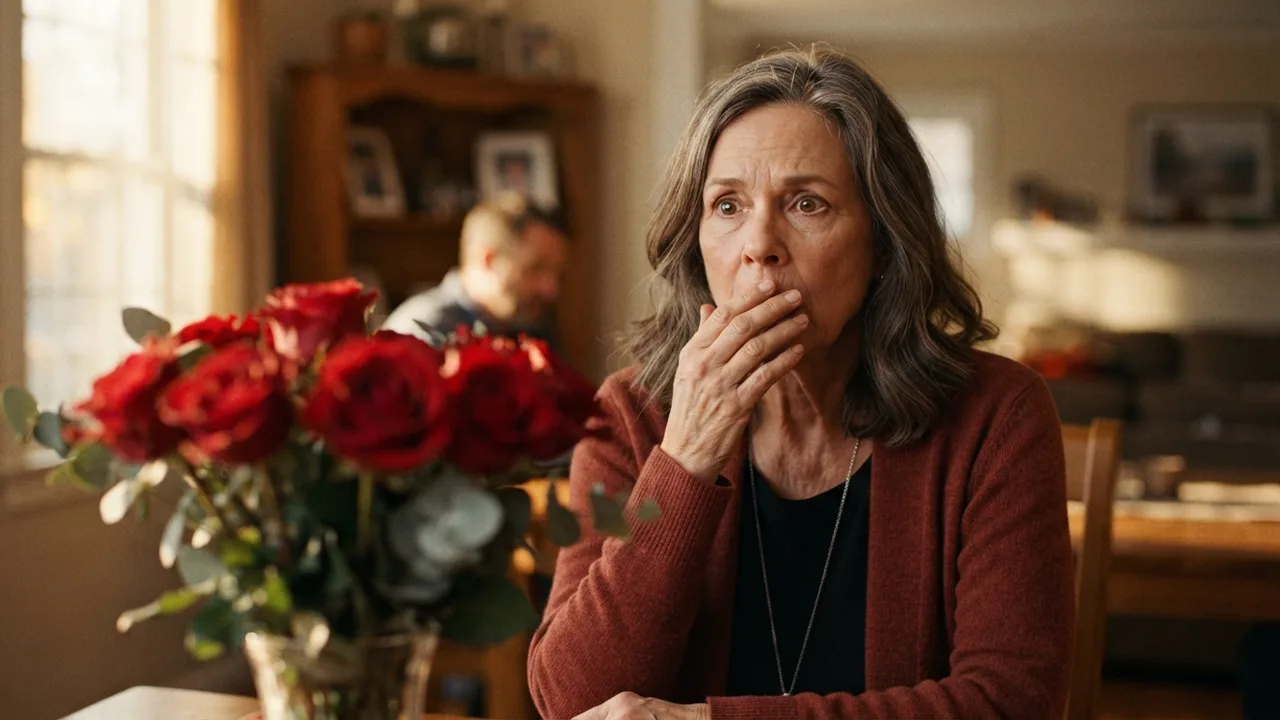
"Corey owes some people," Clifford said. "It started with the sports apps on his phone and went on to those riverboats over in Iowa. A man in Omaha has been calling the house phone for a month. I thought if I could put the money back before you went looking, you'd never have to know."
"You thought I wouldn't see it."
"I thought it would be the last time."
"Is it the first?"
He didn't answer, which was an answer. Sabrina turned her chair a few degrees toward the window and became very interested in the street.
"Mom, I'm sorry, I swear to God, I'm—"
"Not now, Corey."
I picked the check up out of its envelope. It was good paper, heavy, from a carrier I had sold policies for since before Corey could drive. I tore it in half along the fold and then in half again, and laid the four pieces on the table beside the saddlebag.
Then I took the withdrawal slip from my pocket, unfolded it, and set it down in front of Clifford. It was filled out in my handwriting for the same figure as the check. The line at the bottom was blank.
"We'll cover this from our savings," I said. "We pay what Corey owes, and we pay it this week. You sign that and I go to the credit union at lunch."
He stared at the slip. "Gwen, that's the money for the—"
"I know what it's for."
He signed. His hand shook a little on the *A*.
I turned to my son. He had both elbows on the table and the heels of his hands pressed against his eyes.
"Corey. Look at me."
He did, finally. His eyes were red and he looked about nine years old.
"You'll pay back every cent. Out of your wages, a set amount, every Friday, to your father and me. And you start Gamblers Anonymous on Tuesday. There's a meeting in the fellowship hall at St. Mark's in Kearney. I'll drive you the first time."
"Mom, I can handle it myself."
"You've handled it. That's how we got here."
He nodded. It was a small nod, the kind that means a boy hasn't got the strength for an argument, and I didn't mistake it for more than that.
Sabrina stood and gathered the four pieces of check into her palm. "I'll mark the claim withdrawn," she said, crisp as ever, but her voice cracked slightly on the last word. "And I'll call Dwight myself this afternoon. The carrier needs to hear it from us, not from a records search."
"Thank you."
"Gwen." She waited until I looked at her. "Go home. I've got the phones."
Clifford had risen too. He stood with his hands open at his sides, the work-worn hands I'd held through a funeral and two hospital waiting rooms.
"Gwen, can we talk about—"
"Not here."
I picked up the saddlebag and carried it out to the car myself.
---
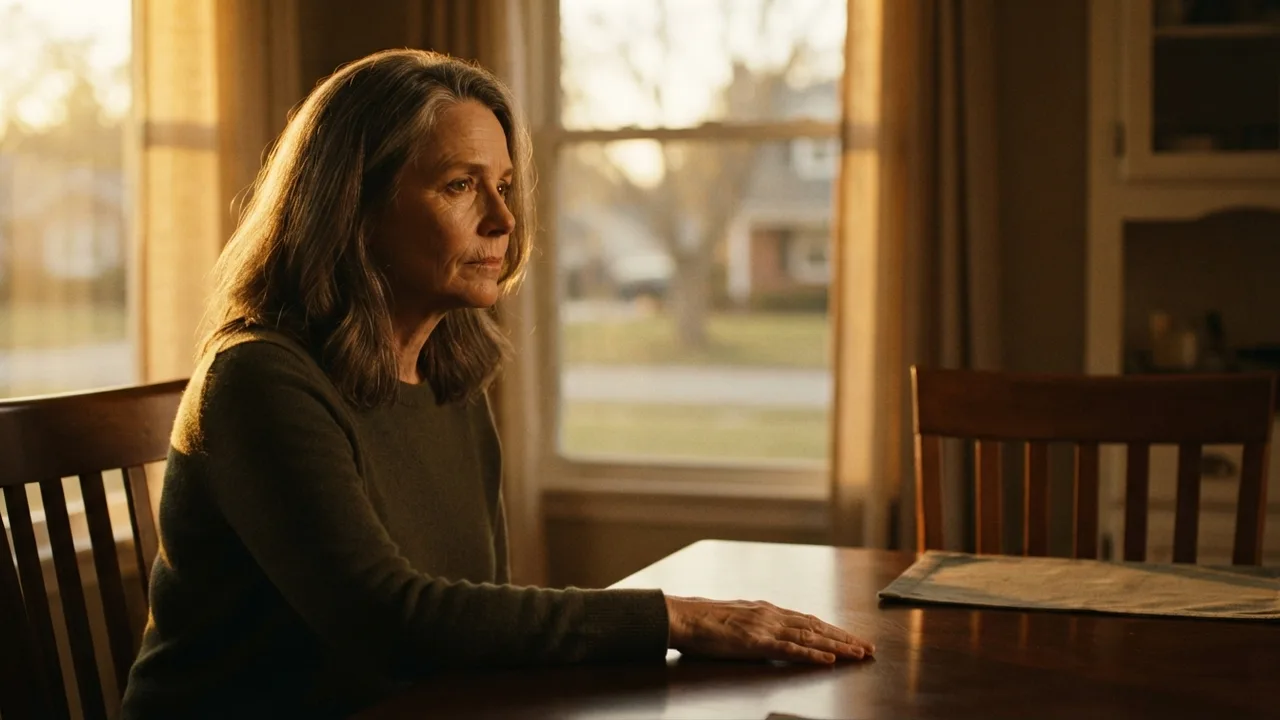
That night the house was silent. Clifford had taken a pillow and a blanket to the den again. Corey had gone to his apartment with a promise to be at St. Mark's by seven on Tuesday, and I had not told him I loved him, and he had not asked me to.
I stood at the kitchen sink for a long time, rinsing a clean cup. Then I opened the door to the garage and pulled the cord on the bare bulb.
The space where the Harley had stood was a rectangle of paler concrete with a dark stain at one end, where the oil pan used to sit. His tools hung on the pegboard in their painted outlines, every wrench in its place. He had always been proud of that.
I set the saddlebag on the workbench. It looked smaller there.
By the door, at eye level, a brass cup hook stuck out of the stud, with a strip of masking tape beneath it in Clifford's block capitals: SPARE. He had screwed it in years ago, when the bike was new, and hung the second key on it for a week before he decided he liked it better in his nightstand. I'd forgotten it was there. He had not.
I didn't know what Monday would look like. I didn't know if the man asleep in the den was someone I could eat breakfast across from, or if the boy in the apartment above the hardware store would call on Tuesday or let it ring. I knew the claim was withdrawn, the savings were spoken for, and the foundation I'd stood on for thirty years had a crack in it that no adjuster could price.
The wind picked up outside and rattled the overhead door in its track. I stood on the cold concrete in my stocking feet and looked at the empty hook on the garage wall.
Comments