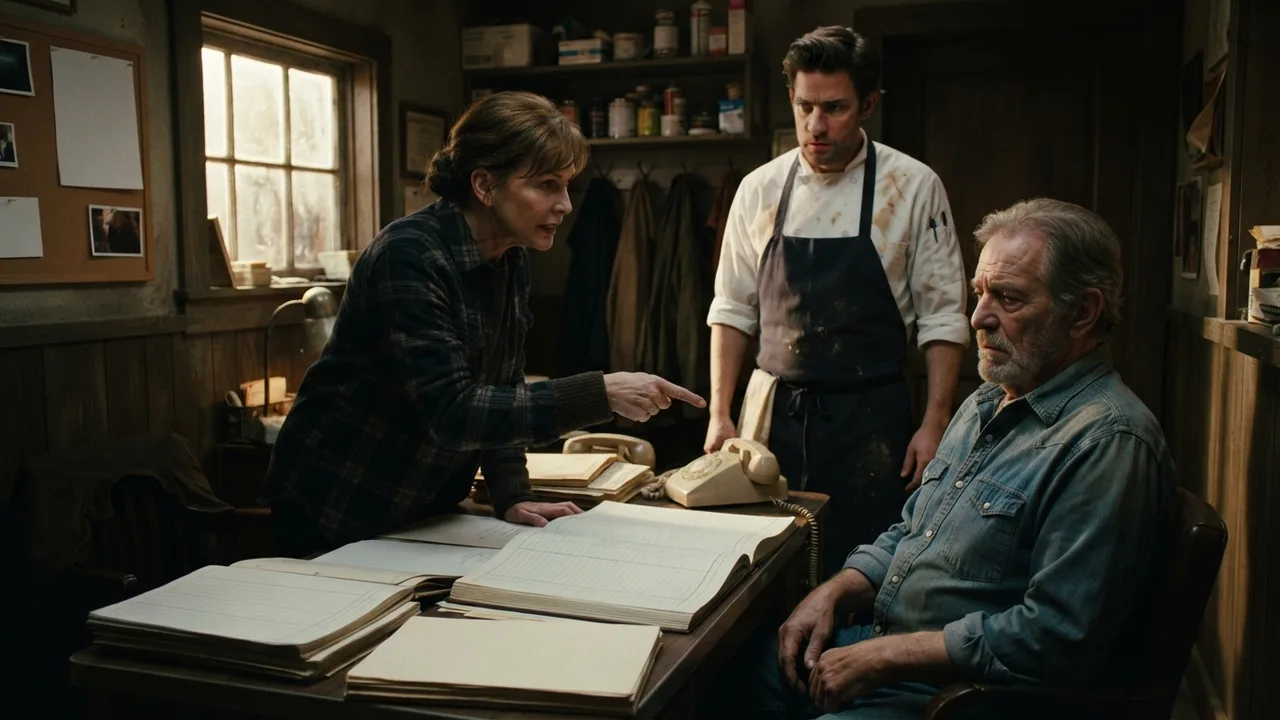
My husband of thirty years handed me the new weekly payroll file, and for the first time, it was password-protected.
Payroll was due by noon. Every cook and server at The Afton Cut was counting on a deposit I had never once sent late.
"What's the password, Greg?"
Advertisements
"I've got it from here, Al." He pulled the laptop back against his chest.
"I own half of this restaurant."
"And I'm asking you to let me handle one thing. Our insurance guy says fewer people should see the employee data." He smiled, and the smile stayed on his mouth and went no higher.
I stood in the doorway of the back office with my reading glasses swinging on their chain. For thirty years I had kept the books for The Afton Cut from the corner of that desk, and later from my own home office. Greg couldn't have told you what a payroll liability account was.
"The deposit has to be submitted by noon," I said.
"Then I'll submit it."
"You don't know how."
"Then go home and wait for my call." He turned the laptop to the wall, which he had never done in three decades.
Out front, Nathan was breaking down the lunch line in his chef's whites, a stack of sheet trays on his hip. He looked from his father to me and said nothing. A twenty-eight-year-old sous-chef learns early when to keep his head down.
Advertisements
I drove the five minutes home with the heater roaring against the first hard frost. The corn stubble along Route 34 lay white and bristling. I parked in the drive and went straight to the office off the kitchen, where the plaque on the door said Afton Accounting.
I didn't wait for a call.
Years ago I had built the restaurant's shared network myself, and I had given myself administrator rights over every folder on it. I had never used them against Greg. I had used them when he deleted a tax folder by accident and when a cook's phone picked up a virus.
I typed my credentials. The payroll folder opened.
I felt the cost of that before I read a line. I had been a woman who trusted her husband, and now I was a woman who had gone around him. There was no pretending I'd stumbled onto anything.
The file was the same as always, with one new row. *V. Ingram. Consultant. $1,500 weekly.*
I had never approved a consultant. There was no engagement letter in my files and no line for a consultant in the budget we had agreed on in January.
I ran payroll for the real staff first, because they had rent due. The deposit went through at ten minutes to noon. Then I opened a browser and typed the name.
Victoria Ingram, Hospitality Consultant, Des Moines. Her photograph showed a woman in a sharp charcoal suit with her phone in her hand even for the portrait. Her website promised "transitions for legacy restaurants."
*Transitions.*
I printed her page and the payroll row and put them side by side on my desk. Then I sat there while the afternoon went gray in the window.
My thoughts went where any wife's would. Greg's late nights. The Wednesday supply runs he took alone. The new phone he kept face down on the counter. I thought of the woman in the suit, and I ran the numbers on a marriage the way I'd run them on a restaurant. The figures did not look good.
I stayed up until the furnace clicked off. Greg came home after midnight, and I closed the folder before his headlights crossed the window. I lay beside him and listened to him not sleeping.
Sunday dinner was at our house, as it had been every week since Nathan moved out. I made pot roast and mashed potatoes. Nathan brought a bag of Casey's cinnamon rolls, which he thought was a joke about my baking.
Greg waited until the plates were half cleared.
"I have news," he said, and he put his fork down square beside his plate. "I've accepted an offer on the restaurant."
Nathan stopped chewing.
"An offer from whom?" I asked.
"A holding company. Victoria Ingram found them. She's been consulting for us on the transition."
*Us.* He had said it as though I had signed the engagement letter.
"What's the price?" I said.
He named a figure. It was less than the building alone would bring at auction. I did the arithmetic in my head and then, because my hands wanted something to do, I folded my napkin in half and then in half again.
"Greg, that's a fire-sale number."
"It's a clean number. Cash, quick close, and we walk away."
"Dad." Nathan's voice cracked on the word. "I thought... you said I'd take over the kitchen. Eventually the whole thing."
Greg rubbed his forehead. "Nate, you're a great cook. You're not ready to run a business."
"I've run the line for six years."
"The line isn't the business."
Nathan gripped the back of his chair until the wood creaked.
"Nathan has been learning the business since he could carry a milk crate," I said. "He could take over the books with me beside him. We could structure a buyout over time, and you'd still retire."
"Stay out of it, Alice."
"I own half."
"You own half of a paper." He stood so fast his chair scraped the linoleum. "You think I want to do this? I'm tired. I am fifty-four and I'm tired, and you're going to stand there with your ledger and tell me I can't rest?"
"I'm telling you it's a sale at a loss to someone I've never met."
"Mom." Nathan pushed back from the table. "He said he's tired. Why can't you let him be?"
I looked at my son, and his steady eyes were my own, aimed at me with something close to reproach.
"I'm not the one rushing, Nathan."
"You always have to see the numbers." He took his jacket from the hook. "Maybe some things aren't a spreadsheet."
The screen door slapped behind him. Greg stared at the cinnamon rolls as if they might offer a position. Then he went to the garage and stayed there.
I had lost my son's good opinion over a pot roast. Worse, I had learned that Greg would rather lose a fight than answer one question. A man who only wanted retirement would have shown me the offer.
That night I went into the home office and pulled two years of the restaurant's accounts, every sales report and every supplier invoice. I worked until the window turned blue.
The cash liquor sales were impossible. The Afton Cut had always been a steakhouse that sold beer and a few bourbons to farmers and the Rotary lunch. Yet the register showed cash receipts at the bar that would have required the whole county to drink standing up every Friday.
The bottle purchases didn't match. We were selling more liquor on paper than we had ever bought.
The food side ran the other direction. Beef orders had fallen, and so had produce. Yet our reported steak sales had climbed. Somebody was claiming we sold ribeyes at forty-two dollars each that had never come off a truck.
And the payroll held names I did not know. Their hours were never on the kitchen schedule, and nobody had ever clocked in under them. Money went in through the front of the books, got washed through the payroll, and came out somewhere else.
I wrote it all in a legal pad in my small, square hand, column by column, until the page looked like what it was.
*The figures were incongruous.* That was the bookkeeper's phrase. Underneath it I wrote a different sentence, and I tore the page out and put it in my pocket.
Greg was in the kitchen when I came out, standing at the coffee maker with his back to me. He had lost weight. I noticed the belt notched in a place I'd never seen.
"Greg, I need to ask you about the liquor receipts."
"Not now."
He ran water into the carafe and kept his eyes on the spout. I shifted the legal pad to my other hand.
"The cash sales are three times what the bar could pour. I checked against the bottle orders."
He turned. "You checked."
"It's my job. It's been my job."
"It was your job." His eyes went to the legal pad in my hand. "You've been in the payroll folder."
"I'm an administrator on that network. I've been one since I built it."
"Unbelievable." He laughed, a short, dry sound. "You find a woman's name on a payroll sheet, and suddenly the whole restaurant is a crime scene."
"I didn't say anything about her."
The coffee maker gurgled and spat behind him. He didn't turn to it.
"You didn't have to. You've been looking at me like I'm a stranger since Friday." He pointed with the mug. "This is jealousy, Alice. You're dressing it up in a ledger so it looks respectable."
"Then explain the beef."
"I'm not explaining the beef to my wife at six in the morning."
Steam rose between us from the carafe neither of us had touched.
"Greg, I think somebody is washing money through our register."
His face did something I had never seen in thirty years. It went blank and then white, and his hand tightened on the mug until the knuckles shone.
"You're trying to ruin me," he said, so quietly I leaned in to hear it. "That's what this is. You want to wreck the sale because you can't stand that I'm leaving something behind you didn't build."
"I built it too."
"The closing is in two weeks. The farewell dinner for the staff is Saturday. You'll be there, you'll smile, and you'll sign what the lawyer sends." He set the mug down and walked out. Through the window I watched him sit in his truck in the driveway for a long time without starting it.
I did not cry. I did what I knew how to do. I made a copy of every report, labeled the folder *A. Patchett — personal*, and carried it to the safe deposit box at the Farmers Savings Bank before the lunch crowd.
I had stopped asking whether my husband had made a mistake. I was asking what had hold of him.
The farewell dinner was Saturday. Greg had closed the restaurant to the public and pushed the tables into one long line under the pressed-tin ceiling. Candles stood in the old Mason jars. The cooks, the servers, Dot behind the bar, and the dishwashers in clean shirts filled the chairs with their families.
Victoria Ingram sat at Greg's right hand in a charcoal suit, scrolling her phone. Nathan sat at the far end, in his whites, not looking at me.
Greg stood and tapped a fork against his glass. He was good at this. For a minute I watched the man I had married, who could make a room of farmers feel like guests at his own table.
"Thirty years ago, Alice and I opened this place with a loan, a used walk-in cooler, and a menu printed at the Kinko's in Creston," he said. "You people have been the heart of it. It's time for me to hang up the apron. So please raise a glass with me. To new beginnings."
Glasses lifted. Somebody's baby cooed.
I stood.
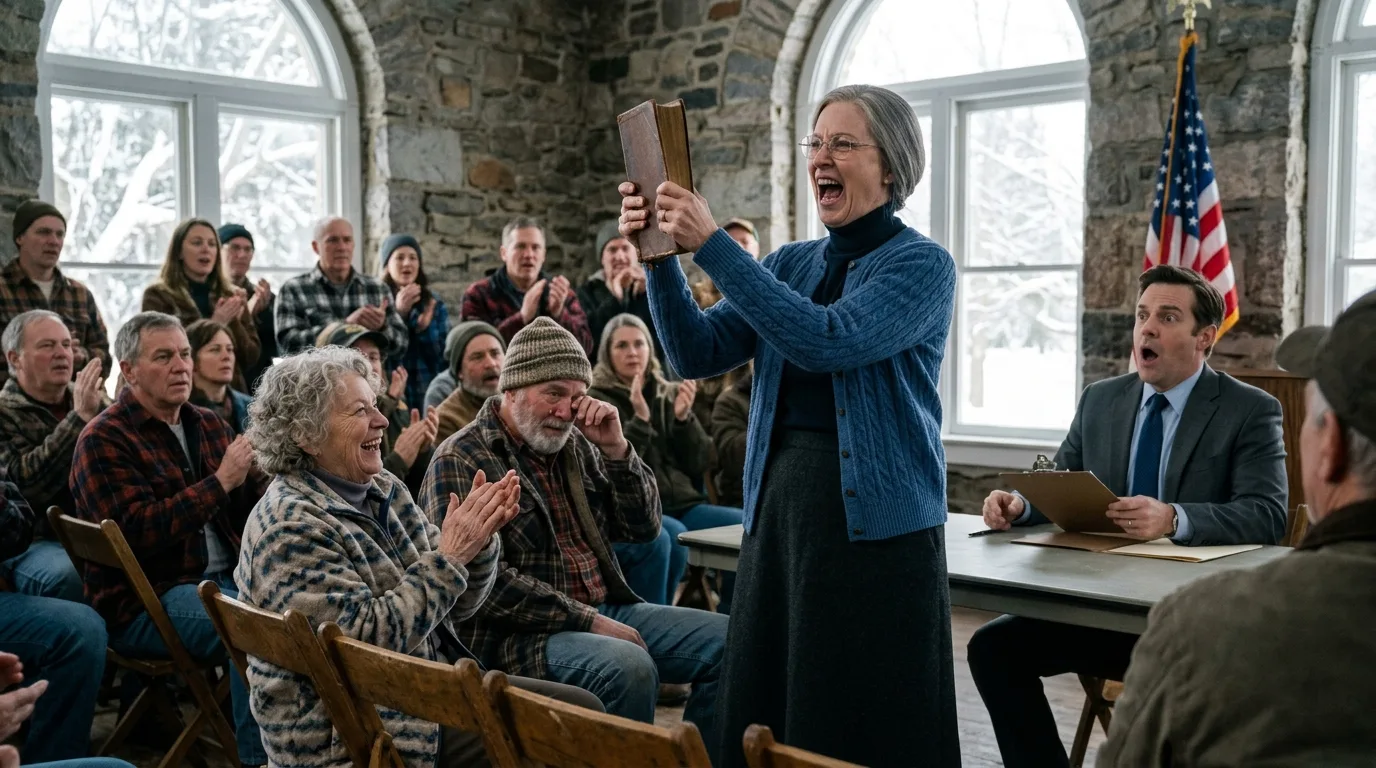
"Before we drink," I said, "I want to thank everyone for being so patient. I've just finished the final severance checks for each of you. They're in the envelopes by your plates."
Murmurs went down the table. Dot touched her envelope as if it might be warm.
"I'm so glad we could afford them," I said. "Though I had to draw from our personal savings. The restaurant's cash reserves were almost entirely paid out to our consultant this year."
Nobody moved. Greg's glass hung in the air at the height of his chin.
I looked down the table at my son. His fork had stopped.
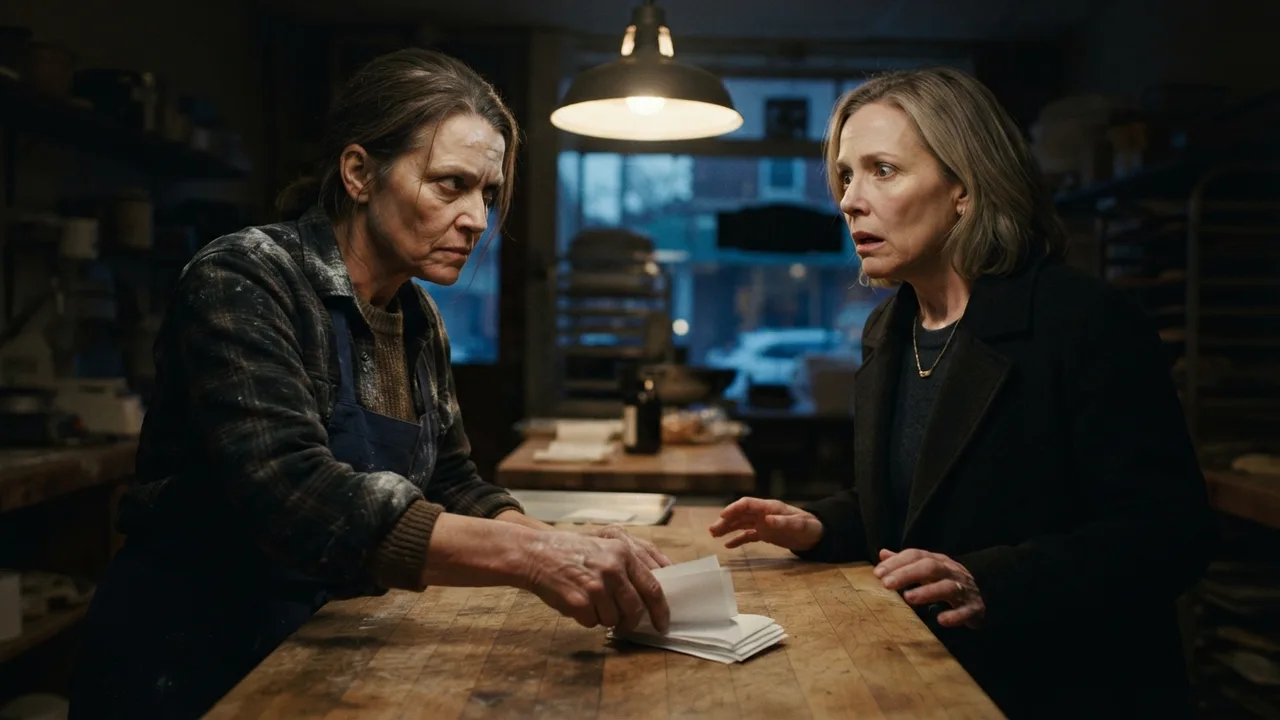
"Ms. Ingram," I said, and I turned to her. "Your invoices came to $78,000. They must have been very detailed. Maybe you could tell the staff what improvements you made."
Silence landed on the room like a dropped tray. A server's chair creaked. In the kitchen, a pilot light ticked.
Victoria lowered her phone. "Those are confidential engagement terms," she said. "This isn't the appropriate forum."
"It's the restaurant's money," I said. "The staff are the restaurant."
"Greg." She didn't look at me. "Handle this."
Greg opened his mouth and closed it. His color was gone. The man who had charmed the Rotary Club for thirty years looked at the tablecloth as if an answer might be printed there.
"Dad?" Nathan stood. "What did she improve?"
"Nate, it's complicated. It's—"
"Did you hire her or didn't you?"
Greg said nothing.
Victoria's phone buzzed in her hand, and for the first time I saw her flinch. Her sleek composure came apart at the corners. She picked up her bag and her coat, and her heels cracked across the hardwood hard enough to be heard in the kitchen.
The front door shut behind her. Nobody clapped. Nobody spoke.
Nathan looked at me, and it was a different look than at Sunday dinner. It was the look he'd had as a boy when he first understood that his mother had been right about the stove.
"Everybody eat," he said, in his steady voice. "Dinner's on the pass. Please eat."
They ate, mostly in silence, and the checks went into pockets one by one.
Four days later, a business lawyer named Frank Holloway sat at our kitchen table with a legal pad and a cup of Folgers. Frank had drawn up the original LLC papers. Greg sat across from him with his hands under the table. Nathan stood by the refrigerator because he couldn't sit.
I had laid out the folder in front of me. It held every page I had copied.
"Mrs. Patchett has documentation," Frank said. "Cash receipts that don't tie to inventory. Payroll lines for people who never worked a shift."
"I know what it says," Greg said.
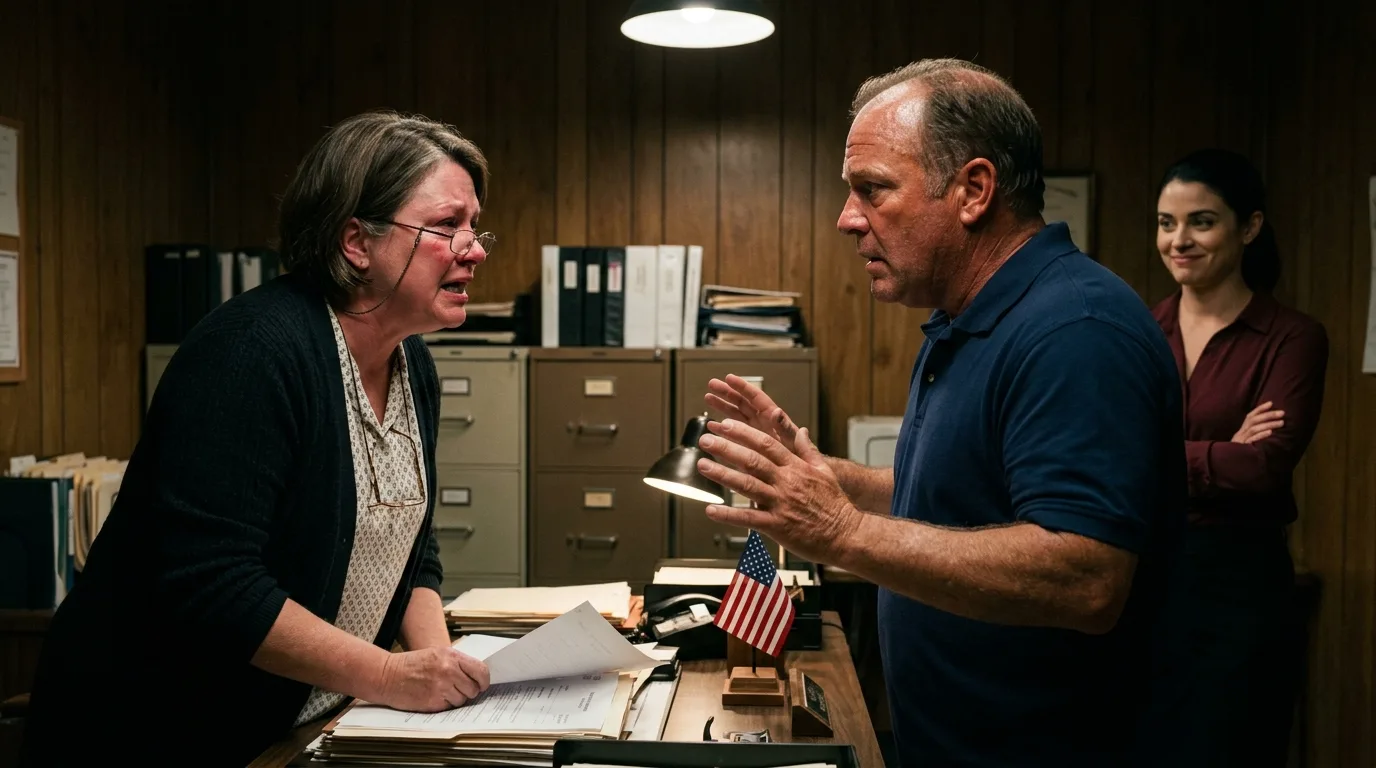
"Then you know what an audit does with it," I said. "Your name is on the filings, Greg. As owner and manager. Mine is on the preparer line, and I'll file amended returns tomorrow and tell the state and the IRS exactly what I found, unless you sign."
"Alice." He looked up, and he was fifty-four going on seventy. "You don't know what you're asking."
"Then tell me."
"I can't."
The refrigerator hummed. Nathan's boots shifted on the linoleum.
"All right." I slid the first document across. "Transfer your fifty percent of Patchett & Son LLC to Nathan. One dollar. Frank has the paper."
Greg stared at it. He didn't argue. That told me more than a week of fighting would have.
"And then?" he said.
"And then you leave Afton. You cut contact. The sale is canceled and Ms. Ingram's holding company gets a polite note from Frank. We don't see them. We don't see you."
Greg's hand shook as he picked up the pen. Nathan took a crumpled dollar from his wallet and smoothed it on the table.
"I'm sorry," Greg said, to no one in particular. He signed in three places.
"Close the blinds on your way out," I said. "Please."
He drew the blinds himself, one by one, before he lifted his suitcase. The truck started on the second try.
The sale was canceled by Friday. Victoria Ingram's website went dark, and her number rang to a recording that said it was no longer in service. Neither she nor the holding company was ever heard from again.
A week after the signing, Nathan and I sat in the back office of The Afton Cut with every ledger on the desk. A pot of Casey's coffee sat cooling by the register tape. The window faced the town square, where somebody had already hung the first strand of Christmas lights over the bank.
Line by line, honest ones only, the two of us had been rebuilding the books from the bank statements forward.
Nathan turned a pen over in his fingers. "I still don't get it, Mom. If he wanted out, why not just have an affair? People do. I'd have been angry. I'd have understood it."
On the screen sat the clean spreadsheet, the true numbers in their columns. I thought of the Wednesday runs with no receipts, the casino stub in a coat pocket I'd found last spring, the phone face down on the counter. The blank white face when I said the word *washed*.
"Honey, he wasn't running toward her," I said. "He was running from something else. He was more afraid of what he owed them than he was of losing us."
Nathan didn't answer. He set the pen down and pulled his chair closer.
I saved the new payroll file under a fresh name. A box opened on the screen, asking for a password, and I had known for days what I would put in it.
I typed: NATHANS-CUT.

Comments