
"We have to sell the house," my husband Leonard said, and the sixty-thousand dollars he'd claimed we lost in the market suddenly felt like the smallest lie he'd ever told me.
He said it over the Sunday dishes, a towel on his shoulder and his sales smile in place. I set down the pan I was drying. We had made the last payment on this brick two-story in Plano three years ago, and I still touched the doorframe when I came in from the garage.
"Why?" I asked.
"Projected downturns, Nay. Everything's going to soften. We need to recapitalize our portfolio before it does."
"We have a portfolio?"
"We had one." He folded the towel into a square. "Let's not get into the weeds tonight."
Advertisements
I write grant proposals for a living. I know what a needs statement looks like, and I know what it looks like when somebody has left one out.
A few months before, Leonard had sat me down at this same kitchen table and told me a tech stock had gone bad and taken our entire emergency fund with it. I had been heartbroken, and then I had been resolute. We would rebuild. We were a team.
Nobody had mentioned a team selling the roof over its head.
That night I waited until he was snoring, then took my laptop to the kitchen and pulled up our bank statements. I went back month by month with my reading glasses on their chain and a legal pad beside me.
A stock loss leaves a trail. There is a brokerage, a trade confirmation, a settlement. I found none of that. I found one outgoing wire transfer on a Thursday afternoon, the full amount, sent to an account at a bank I had never banked with.
The memo line was empty.
It was not a market loss. Somebody had been handed that money.
I sat there until the window over the sink turned gray and the sprinklers came on next door. I had not slept, and I had stopped believing the story I had been telling my friends for months.
---
The joint Visa was next. I told myself I was looking for strain, a second loan or a cash advance, anything that fit a man in trouble.
Advertisements
What I found was a charge for $149.99 on the same date every month, from a company called StageBuild Pro. It ran back past the wire and showed no sign of stopping.
I carried the printout to the garage, where Leonard was loading his golf clubs into the trunk.
"What is StageBuild Pro?"
He didn't turn around. "Where'd you get that?"
"Our credit card statement. One hundred forty-nine dollars and ninety-nine cents, every month."
"It's for a consulting gig I'm exploring." He shut the trunk harder than he needed to. "I was going to tell you when it firmed up."
"What kind of consulting?"
"Naomi." He faced me then, and his smile was gone. "Are you checking up on me?"
"I'm reading a statement with both our names on it."
"That's micromanaging. Twenty-eight years, and you've never once gone through my things." He pointed the car keys at me. "I've never lied to you, and I don't appreciate being treated like I have."
The word hung in the garage between us. I should have held my ground. Instead I heard myself say, "I'm sorry, I'm under strain too," and I watched his shoulders drop as if I had passed a test he'd set.
He drove off to the golf course. I stood on the concrete with the printout and the taste of that apology in my mouth.
In twenty-eight years he had never accused me of distrust. He had never needed to.
---
Research is the one thing I do better than almost anyone. By ten o'clock that morning I had a StageBuild Pro tab open in my home office.
It was not consulting software. It was project-management software for staging concerts and festivals. It had crew schedules, load-in timelines, stage plots and a vendor payment tracker.
I thought of Justin, my stepson, who lived in Austin and called himself a freelance event producer. He called me "Naomi" in the tone of a man reading it off a name tag, and I had always suspected his income was whatever his father sent.
His Instagram was easy to find. Two posts showed a festival poster with the words *ATX Indie Fest: SOLD OUT*, and below them, in the comments, a different story. *Where's my refund?* *Never got paid, bro.* *Stage guys left Saturday.*
The festival's Facebook page had stopped posting on a Friday. Its last entry thanked "everyone who believed."
The poster named the venue, a place called Bluff Creek Event Grounds. I found its management company, Pruitt Property Services, and its number on a Sunday-school-bright website with a photo of a barn.
I put on the voice I use with program officers, courteous and slightly bored, and dialed.
"Pruitt Property, this is Dale."
"Mr. Pruitt, I'm calling from a rental company about an outstanding account. Justin Kemp?"
He laughed, and there was nothing friendly in it. "You and every other outfit in Travis County. Ma'am, that boy signed a contract for the whole property. He tore up the north field, left the main gate hanging off its hinge, and the damage bill is thousands. Nothing he wrote us ever cleared."
"Has he made any payment arrangement?"
"His daddy's the only thing that ever came up in conversation." He stopped. "No, strike that. You find him, you tell him Dale Pruitt wants his money."
I thanked him and hung up. My hand was steady enough to write the name *Pruitt* on the legal pad.
Then I looked at the whole page, the wire, the subscription, the festival. My marriage was a document I had been co-writing for twenty-eight years, and somebody else had been editing it in the margins.
Leonard's fifty-fifth birthday was Saturday. He wanted a dinner at home, with Sheila and Justin. He wanted brisket, and he wanted me to make the creamed corn.
I said yes. I also began to build a spreadsheet.
---
By Saturday evening the brisket had rested under foil and the house smelled of rosemary and cedar smoke. Pollen dusted the windshield of Justin's leased SUV in the driveway, though the thunderstorms the weatherman promised for later had not arrived.
I had run an HDMI cable from the sideboard through the archway to the big television in the living room. From the head of the dining table the screen was plainly visible to everyone.
Sheila came first, in her teacher's cardigan, carrying a pecan pie from Kroger and a card she'd signed in green ink. She looked at the cable and then at me.
"Redecorating?" she asked.
"Presenting," I said. She raised an eyebrow and said nothing.
Justin arrived late in a jacket that cost more than my first car. He kissed his father's cheek, nodded at me, and took the chair with the best view of the television.
We ate. Leonard told his story about the lumber yard in Garland. Sheila asked Justin about work, and he said he was "in a pivot." I passed the creamed corn and watched my husband refill his tea glass three times.
After the cake, Justin stood and tapped his glass with a fork.
"I want to say something about my dad," he said. "He's the most generous dad in the world. When nobody believed in me, he did. To Leonard Kemp."
Sheila raised her glass slowly. Leonard's eyes were wet and pleased.
I stayed seated.
"I have a gift, too," I said.
Leonard laughed, uncertain. "Naomi, the pie was plenty."
I opened the laptop and pressed one key. The television woke behind him, and the title filled the screen in the same typeface I use for state arts council proposals.
*The Justin Kemp Entrepreneurial Fund: A Report to the Primary Investor.*
Nobody spoke. Justin's hand was still holding his glass in the air.
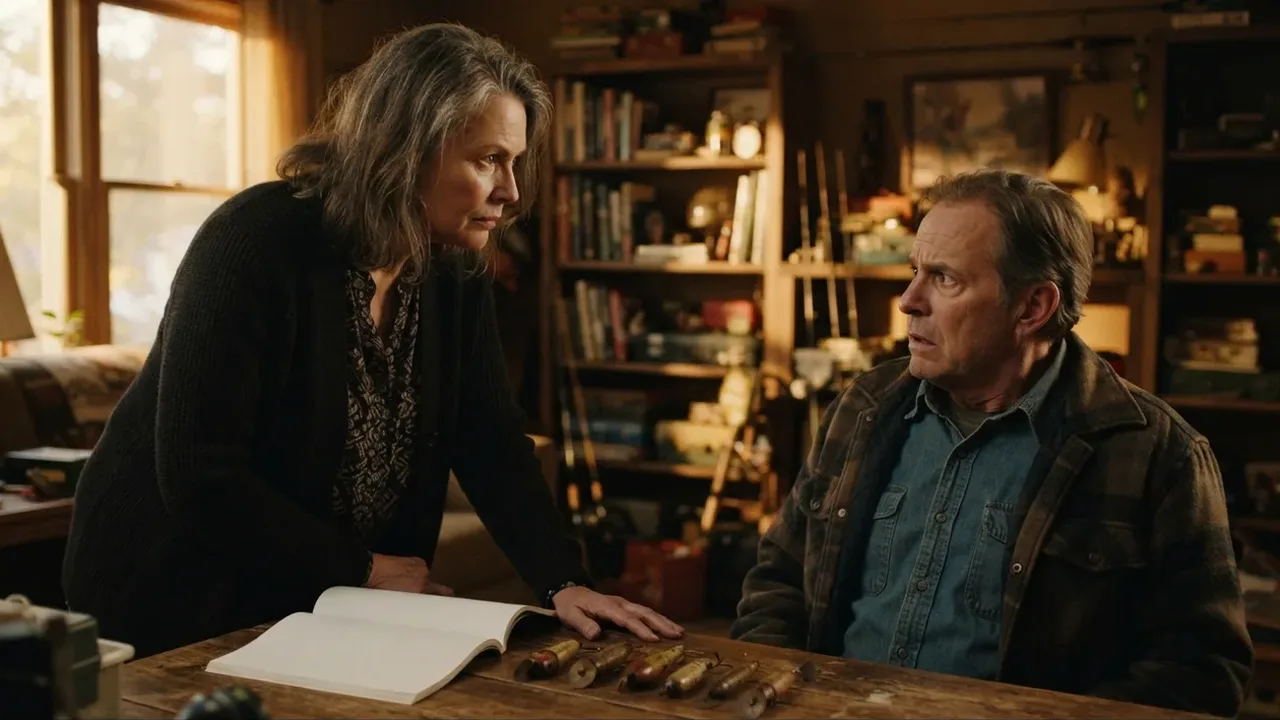
"Section One is the wire transfer," I said. "Sixty thousand dollars, out of our joint savings, on a Thursday afternoon. Section Two is the monthly charge for StageBuild Pro, one hundred forty-nine dollars and ninety-nine cents, which runs to this day. Section Three is a set of screenshots from vendors who say they were never paid for the ATX Indie Fest."
I clicked. The comments scrolled up the screen, one after another, in white type on black.
"I have one question for our fund manager." I looked straight at my husband. "What's the return on our investment?"
---
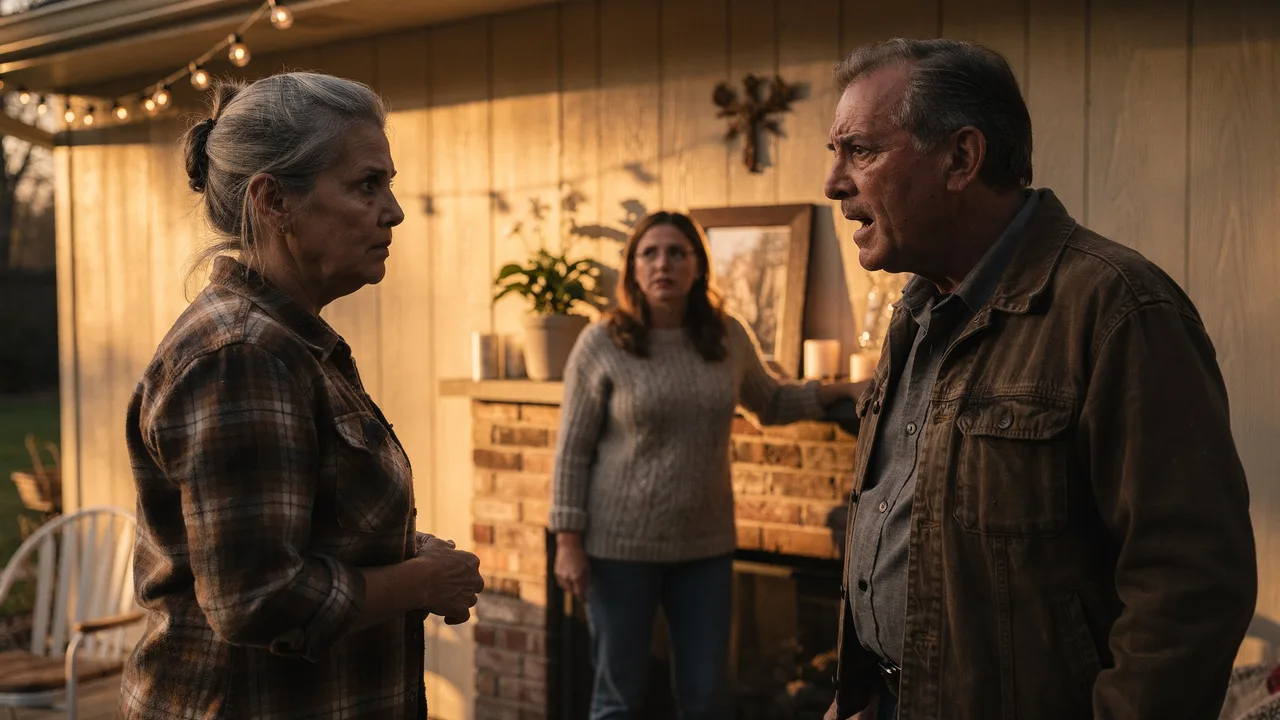
Leonard's face went dark red from the collar up. He stood so fast his chair scraped the hardwood.
"Shut it off."
"It's a report, Leonard. It has a footnote for each figure."
"It's my birthday. This is a family celebration, and you've turned it into a, a hearing." He pointed at the television. "Shut it off, Naomi."
"The wire went out of our account. I didn't put it on that screen. I only read it."
Justin was on his feet before I finished.
"Wow. Wow, okay." He threw his napkin on the table. "This is what you do? You wait until my dad's got a plate of cake in front of him?"
"Justin," Leonard said, without conviction.
"No, Dad, she wants the room to hear it. She's bitter. She's been jealous of me since I was seven." He swung toward me. "You never supported one thing I tried. You've been waiting for me to fail so you could stand there with your little glasses and your charts."
"I made the charts after you failed," I said. "The wire is on the first page. Which line do you dispute?"
"It was a loan."
"Is there a note?" I asked. "A repayment date?"
He opened his mouth and found nothing in it.
"We'll talk about this tomorrow," Leonard said, quieter, his hands lifted like a man calming a customer. "Let's not do this in front of Sheila. Tomorrow we can all sit down and work out a plan."
"There was a plan when you told me it was a stock," I said. "I'd like to hear the new one tonight."
Sheila had not moved. She sat with her fork still on her plate, studying the screen the way she studied a primary source, reading the vendor names one by one.
Then she turned her chair, not toward her brother, but toward her nephew.
"Forget the invoices, Justin," she said, her voice quiet and firm. "Did you ever pay the lighting crew? Because Angie from my book club says her son worked sixty hours for you and never saw a check."
The room held its breath.
"That's, that's a misunderstanding," Justin said. "The money was tied up in the—"
"Sixty hours," Sheila said. "He's in college, Justin. He bought his textbooks with that job in mind."
Justin's face came apart a piece at a time. His chin went first, then his mouth, then the color. He looked like the toddler in the one framed photo in the hall, the one from before I knew any of them.
Leonard did not say a word. He sat back down, slowly, and stared at the tablecloth where the candle wax had dripped.
---
Sheila drove Justin back to Richardson, where he would sleep on her sofa. She didn't speak to him in the driveway, and he didn't speak to anyone. At the door she put one hand on my arm and left it there a moment.
"I'm sorry it was your house he did it in," she said.
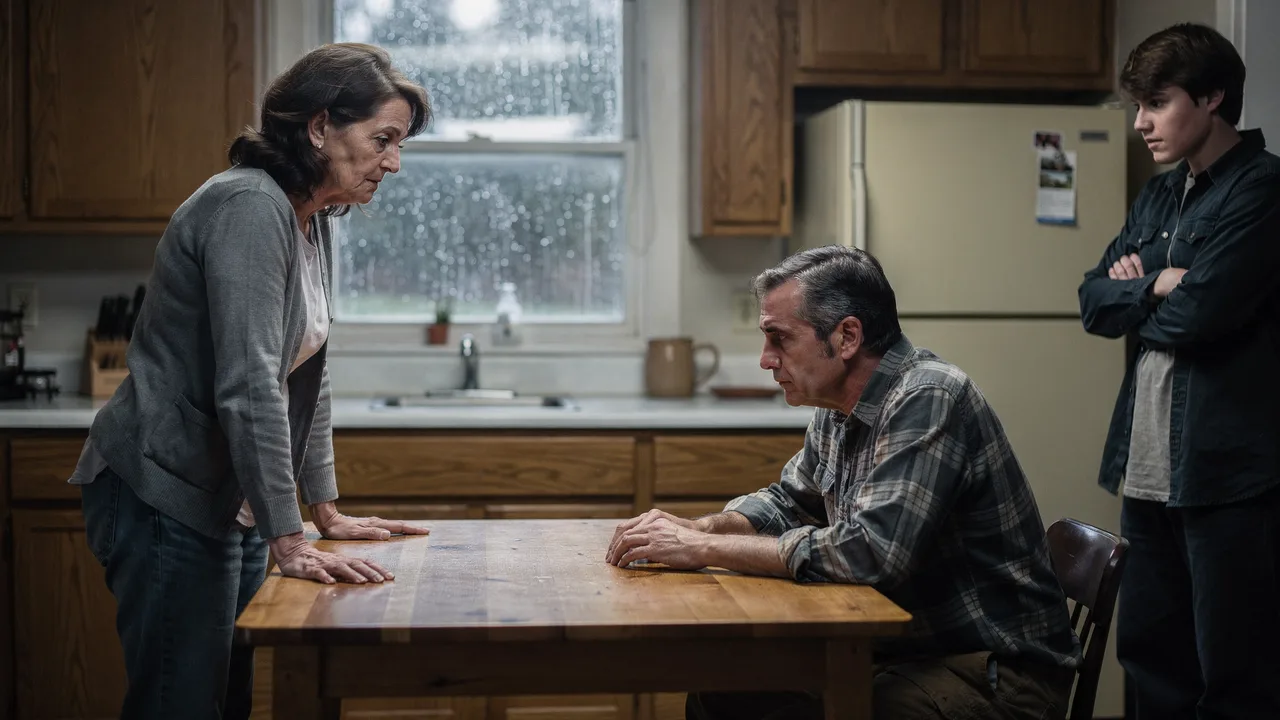
I washed nothing. I turned off the television and sat back down at the table, and Leonard sat across from me with the cold brisket between us.
"I'll tell you all of it," he said.
"All right."
He told it to the candle stubs. Justin had called him at work one afternoon, crying, the festival under water and a vendor threatening to sue. Leonard had meant to cover a few weeks. Then the number grew, and he moved the money in one afternoon, and by the time it was gone he couldn't find a way to say it.
"I kept thinking he'd pay me back by summer," he said. "I kept thinking I could fix it before you ever opened the statements. And then you were so good about it, Nay. You were so brave about the market, and I couldn't stand to take that back."
"And the house?"
"I thought if I sold it I could put the money back and you'd never have to know." He wiped his face with the heel of his hand. "I know how that sounds."
"Yes."
I let the silence stand. It was not a kind silence. I had learned from a hundred program officers that the person who speaks first loses the room.
"We are not selling my house to pay for your lies," I said.
He nodded.
"You will take a loan against your 401(k). The full sixty thousand goes back into our joint savings, in one deposit, with the statement printed for me. You'll pay the penalties and the taxes, and you'll be behind on your own retirement by at least five years."
"I know."
"You'll work longer. That's the cost, and it's yours."
"Okay." His voice cracked on it. "Okay, Naomi."
"From now on, every account has both our logins. You'll forward me every statement, and I'll see every card. If either of us spends more than a few hundred dollars, we say it out loud before it happens." I took off my glasses and let them hang. "Complete transparency, Leonard, for as long as we're married."
"Forever," he said.
"That's the term."
He reached across the table. I let him take my hand, and I held it exactly as long as it took to be fair. Then I got up and put the brisket in the refrigerator.
I had won. The house was mine, and the money would come home. But I stood with the refrigerator door open and understood what the victory cost. I would never again read a statement without wondering what wasn't on it.
---
The next morning I was at my desk in the home office by seven, with a proposal for a women's shelter in Garland open on my screen. They needed a roof repair, a van and a part-time counselor. I was building the budget narrative line by line.
Every figure had a source. The rent matched the lease, the van matched the dealer quote, and the counselor's salary matched the county scale. I checked each total against its parts, and each one held.
Leonard came in around eight. He didn't knock. He set a mug of coffee on the corner of the desk, beside my keyboard, and I saw it was the blue one with the chip, the one he knew I liked.
He stood in the doorway.
My phone sat face down next to the mug. Justin had left a voicemail at midnight that I had not played, and a text from Sheila said only, *Call me when you're ready.* I did not touch either one.
I felt my husband waiting for me to turn around. I knew the question he was holding, and I knew what it would cost to answer it.
I kept my eyes on the screen, where the numbers added up and every line told the truth.
Behind me the floorboard creaked once, and then the hallway was empty.
The coffee mug sat untouched on my desk, in the house I had refused to sell.

Comments