
The first time Sandra Choi told me her mother's heart pills didn't seem right, I told her she was probably just imagining it. I said it in my own kitchen, two months after I'd signed Port Blossom Pharmacy over to Jordan Maxwell, and I said it with complete confidence. Forty years of my name over that door, and I was wrong.
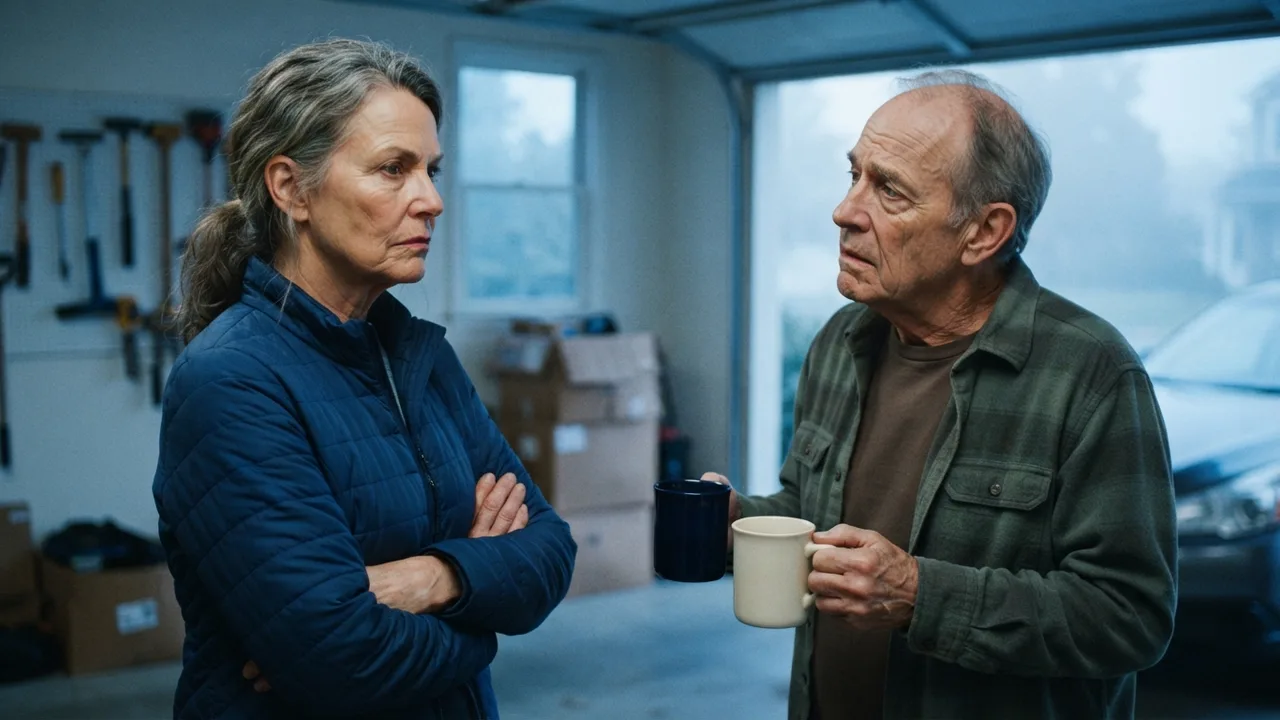
Sandra had brought wild rice soup in a margarine tub, the way she'd brought something every Tuesday since I retired. She set it on the counter and didn't take off her fleece vest.
"Mom looked at me Sunday like I was a stranger," she said. "She's dizzy half the day. The aides say it's just her age."
"Eleanor's pills haven't changed," I said. "Same prescriber, same strength. Jordan fills them exactly the way I did."
Advertisements
"Then why does she keep saying they taste like chalk?"
"Because she's tired of swallowing them, Sandra. Anyone would be."
She nodded slowly and picked at the zipper of her vest. I watched her decide not to argue, and I felt pleased with myself, which I remember well now.
I had my days arranged by then. Coffee, the crossword, a walk to the end of Lakeview Drive where the water had gone the gray of a dishpan. Nobody called to ask whether the insurance had cleared, and I was proud of that silence. It meant I had built something that ran without me.
Jordan had said so himself the afternoon we signed. He'd been in my back room since he was a pharmacy intern, and he shook my hand with both of his.
"You've earned your rest, Miriam," he'd said. "Go enjoy it. I've got this."
I believed him. I'd taught him to count by fives on the tray and to read a label before he read a prescription. I'd lent him money for his first condo deposit and never mentioned it again.
Sandra caught me at the Meijer in Petoskey the next Saturday, between the cereal and the canned soup. She was holding a rotisserie chicken and didn't seem to know it.
"It's the second time I'm telling you," she said. "Since the changeover she's foggy. Not a little. She asked me yesterday whether Harold was coming, and Harold's been gone since before you and I met."
Advertisements
"Did you tell the nursing staff?"
"They wrote it on her chart." Her chin shook. "Miriam, I'm not a nervous woman. I taught second grade for thirty years. I know when something's off in a child, and I know it in my mother."
I took the chicken from her, because it was sweating through the bag, and set it in her cart.
"I'm sorry I brushed you off," I said. "Let me look into it."
"Look into what?"
"I don't know yet."
That was true, and it made my stomach feel like a drawer pulled out too far. Sandra thanked me and I let her. I'd just agreed to doubt a young man whose wedding I'd attended, and I did it over a rotisserie chicken.
At home I kept busy for a day and a half. Then, Sunday evening, I sat at my kitchen table with my laptop and the old wholesaler portal open in front of me.
I didn't expect it to work. Jordan had told me he'd moved everything to a new account, and I'd never closed mine, because closing it meant making a phone call and I'd been busy being retired.
My password went through on the first try.
The screen filled with order history, and I went through it with the same habit I'd used on every monthly reconciliation for forty years. I started at the top of the nursing home's list and read down.
The numbers were wrong. For the heart and blood pressure drugs the home took by the hundreds every month, Jordan had ordered a single case where I'd have ordered ten. Some months he'd ordered nothing at all.
"No," I said, to the empty room.
Either he was dispensing from the shelf stock, which couldn't last a week, or he was buying somewhere else. A pharmacy that size doesn't make up that difference with goodwill. I checked the invoices going back to the day he took the keys, and the pattern held without a single break.
I made a pot of decaf and didn't drink it. I printed the order pages on the old inkjet and spread them on the table, and I lined up the months with a ruler as if the lines might move.
I thought about calling him. I thought about driving to Main Street and asking him over the counter, and I knew exactly how that would sound, an old woman with a printout. He'd smile, tell me about efficiencies, and everyone would be gentle with me.
Around the time the furnace kicked on, I understood I had not slept and wasn't going to. By then I'd stopped being the woman who retired. I was a pharmacist again, and my mentee was the subject.
Thursday, Sandra came to the house with a sandwich bag in her coat pocket. She placed it on the table the way you'd set down a dead bird.
"Eleanor's aide dropped it on the carpet," she said. "I told her I'd throw it away. Miriam, I lied to a nice girl in scrubs over a pill."
"You did right."
"Then why do I feel like a thief?"
"Because you're honest," I said. "Sit down. Have some coffee."
Inside the bag was a corner of foil torn from a blister card and one small white tablet. I took the jeweler's loupe from the junk drawer, the one I'd used for years on counterfeit scares, and held the foil under the lamp.
The lot number was printed in gray ink along the edge. Beside it, in smaller type, ran a line I had never once seen on anything in my store: *Redistributed by Med-Source Solutions.*
I read the lot number aloud, slowly, and Sandra wrote it on the back of an envelope. Then I opened the manufacturer's lookup page on my laptop and typed it in.
It took no time at all. The page came back with the product, the strength I knew by heart, and a date.
*Expired August 15.*
Sandra read it upside down, because that's how she'd read children's papers for thirty years.
"That's good, right?" she said. "It's saying the pills are fine?"
"It's saying the lot expired in August," I said. "It's almost the end of October."
She put her hand over her mouth. The coffee in her cup trembled in rings.
"Eleanor takes one of these every morning," she said.
"I know."
"I have to tell Colleen. I have to tell somebody."
"We will," I said. "But if you walk into Colleen's building with a pill in a bag, Jordan has the weekend to clean his shelves and call you confused. I need a room where he can't."
I had one in mind. I'd been dreading it for a week.
The Port Blossom Business Association held its annual dinner in the community hall, as it had every fall for as long as I'd been a member. Tickets were forty dollars for lake whitefish, wild rice pilaf and a slab of cherry pie from the Lutheran ladies. About fifty of us sat at folding tables under the basketball hoop.
I wore my navy cardigan with the good brooch. I sat three tables from the stage, with Sandra beside me, her napkin in a wad in her lap.
Colleen Brandt, the director of the Senior Care Center, was at the front table next to Mayor Pruitt. She'd come in a blazer the color of oatmeal, and she laughed too easily at things the mayor said.
Jordan took the stage at the end of dinner, in a fitted shirt the blue of a swimming pool. The Association handed him a framed certificate, and the room clapped, and I clapped too, once, with my hands low.
"I owe this town everything," he said into the microphone. "And I owe Miriam Hostetler, who built something worth inheriting."
"Questions for our new leader?" the mayor said, chuckling. "Don't be shy."
I stood up. My chair scraped, and the sound carried.
"Jordan. Could you tell us about your new supplier? A redistributor called Med-Source Solutions?"
His smile held a second too long. "A sourcing partner that keeps costs down for this community." He came down the two steps and patted my arm. "Miriam, I know it's all different now. But we're much more efficient."
Somebody at the back laughed, then others, warm and kind, the way you laugh at a grandmother who has asked what an email is. I waited until it ran out by itself.
"Colleen," I said. "Then perhaps you can explain why Eleanor Choi is being given heart medication from a lot the manufacturer says expired on August 15th."
I held up my phone, the lot number across the top and the date beneath. The people nearest me leaned in to read it, and the ones behind them leaned after. The hush came from the front of the room backward.
"A clerical error on a website," Jordan said. "Expiry dates get extended all the time."
"Not on that product."
"Where did you even get that number?"
"From a pill an aide dropped on a carpet at the center. Sandra Choi picked it up."
He found the angle quickly. "So you took medication out of a licensed facility," he said, louder. "That's tampering, Miriam, retired or not."
"One pill, and I'll answer for it to anyone in this room. Eleanor's name is on the chart, Jordan, and yours is on the label."
Colleen stood very slowly, one hand on the table as if the floor were moving. "Every delivery log and every invoice on my desk Monday."
"Colleen, we have a contract—"
"Monday."
Jordan stood in the middle of the floor with his certificate under his arm, and no one went near him. Sandra cried into her napkin, and I put my arm around her and found I couldn't feel my fingers.
Wednesday, Colleen came to my house first and sat at the kitchen table with her coat on and a folder in front of her. Jordan came ten minutes later and stood in the doorway until I told him to sit.
I put out three cups. It was the only thing I had left to give them.
"I haven't ended the contract," Colleen said. "I want to hear him explain it where Miriam can hear."
"It was one bad shipment," Jordan said. "The distributor swore the dates were extended. I'd have caught it."
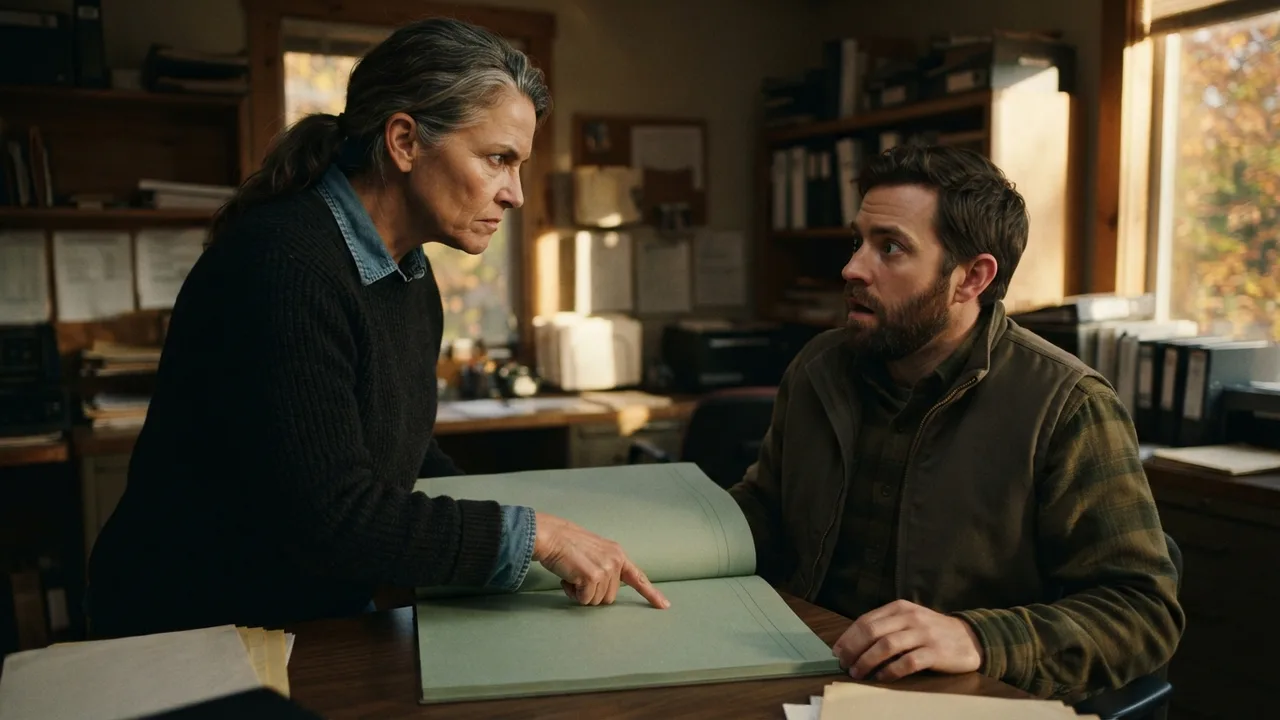
I laid the printouts down and set the ruler across them. "One case where I'd have ordered ten. Every month since you took the keys. The shelves can't make up that difference."
"You sold me a store that was sliding, Miriam. I cut costs where anyone would."
"My books were in the black every year, and you read them before you signed. You didn't cut costs. You bought cheaper pills and kept the margin."
He turned to Colleen. "You never asked what I paid."
"No," she said. "I never did. I told families it was age. I'll carry that."
Jordan's hands were on the table, and for the first time I saw them shake. He had traded the sharp shirt for a gray sweatshirt with a hole at the cuff.
"The restaurant in Traverse City," he said, to the cup in front of him. "With my brother-in-law. I signed for everything. I had a number in my head, and I was going to switch suppliers once I reached it."
"Did the number have Eleanor Choi's name on it?" I said.
He had no answer. Colleen took two papers from her folder, signed the first, and slid it across to him. It ended the contract.
"The second goes to the state Board of Pharmacy," she said. "I'm signing it in front of you so you can't say I did it behind your back."
"Please," Jordan said. "My wife doesn't know. Don't give it to the Gazette."
Outside, the wind off the lake worked at the gutter. I took a long time with my coffee.
"I won't call the paper," I said. "You'll write every family a letter in your own hand and say what you did. You'll leave Port Blossom. And there's a fund, which starts with the monthly payment you still owe me on the store."
His head came up. "That's yours."
"It was," I said. "Every payment that's left goes to the fund, along with whatever the pharmacy sells for."
"Miriam," Colleen said quietly. "That's what you live on."
"I know what it is."
Saturday, I met Jordan at the pharmacy. Half the shelves were bare, and the chain's offer for the prescription files lay on the counter under the stapler, the liquidator's list stapled behind it.
"Fixtures go last," Jordan said, not looking up. "The scale's on page two."
My husband's brass scale sat in the window where he'd set it the year we opened. I laid my hand on its cool pan.
"Put it on the list."
"Walt bought that for you."
"Walt would say sell it. Forty years of that scale and nobody ever weighed anything on it but the mail."
Colleen came in with a stack of envelopes and the family names in her handwriting. Jordan signed each letter at my counter, with my pen. At the first one, Choi, his hand stopped.
"Read it out," I said. "To me."
"I gave your mother medicine I knew was past its date," he read. His voice cracked on *knew*. "I'm sorry."
"Sign it."
He signed. He did not look at me, and I did not look at the empty rectangle on the wall where the sign had hung.
Sandra took her mother's care to a different pharmacy, and a few weeks later Eleanor called her by name again. Sandra told me over the phone and then she cried, and I stood in my kitchen with the cord wrapped around my wrist.
The first week of December, I drove to the Meijer in Petoskey, the nearest pharmacy now, and filled my own prescription. A young pharmacist I didn't know slid it across the counter and wished me a nice day, and I said the same to her.
At home I stood by the sink, where the afternoon light came flat and gray through the window over the dish rack. I took the bottle out of the bag and turned it in my hand.
Then I tilted it to the light and read the lot number off the bottom, all the way to the last digit.

Comments