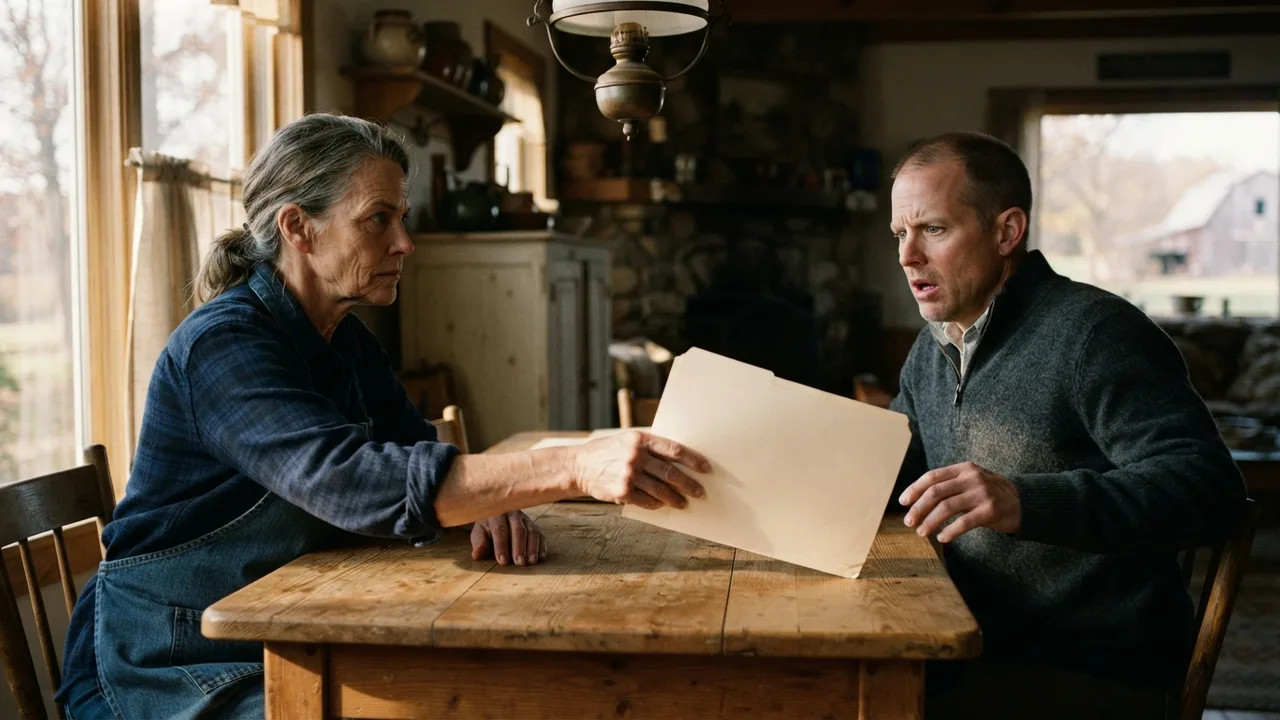
My brother Will told me he had a cash offer of four hundred thousand dollars for the forty acres along Stanton Creek, and I had until the end of the month to sign.
He said it over the phone while I stood in the barn aisle with a bucket of mineral in one hand. A heifer was bawling in the back pen, and I let her.
"Cash, Diane," he said. "No financing contingency. The buyer's a guy who wants a place on the water."
Advertisements
"That's our water."
"It's an asset. Let's keep the emotion out of it."
Our father had been in the ground six months. I was fifty-two and had run Stanton Creek Ranch for thirty years, longer than Will had gone without calling it "the property." He was fifty, a regional sales director with a software company in Denver, and he looked at a thousand acres of Montana the way he looked at a quarterly report.
"Dad left it to both of us," I said. "Not to a stranger from out of state."
"Dad left it to both of us," Will said, "which means I get a vote. Check your email."
The email came that evening. It held a purchase agreement for the forty acres, eleven pages with the buyer's name on the first and a signature line for me on the last. Under it Will had typed three sentences.
*I've retained counsel in Bozeman. If you won't sign, I'll file for partition and let a judge force the sale of that parcel. Let's not go there.*
Advertisements
I didn't sleep. I sat at the kitchen table until the stove clock and the coyotes had both quit saying anything useful, and then I went out and checked the water gap on the north fence, because it was something I could fix.
The next morning I called Marcy Dolan in Livingston and paid her five hundred dollars to tell me what I already feared.
"A court can order a parcel sold when co-owners can't agree," she said, turning pages. "Fighting it costs real money, and you're the one with the cattle payroll and the operating loan. I'd say your odds are poor and your bill would be large."
"So I sign."
"I didn't say that. I said it's difficult." She looked at me over her glasses. "Is there anything on that land I should know about? A lease, an old agreement, anything recorded?"
"Not that I know of."
I drove home past the Town Pump with my jaw tight. Then, on the gravel stretch before our gate, I remembered the last fall my father sat at our kitchen table, his hands shaking around a coffee mug.
*I've seen to the creek corridor, Dee. Talked to the folks at the land trust. It's handled.*
I had patted his arm and told him to rest. I'd thought it was the sickness talking.
The Gallatin Valley Land Trust answered on the first try. The woman who took my call was polite and shut tight as a gate chain.
"We can't discuss landowner agreements with anyone who isn't a party to them," she said.
"My father was Frank Stanton. He passed in December. I'm his daughter and co-heir."
"I'm sorry for your loss, Ms. Stanton. I truly am." A keyboard clicked once and stopped. "If you're an heir, anything recorded would be in the public record. The county clerk in Bozeman could help you."
"Could you tell me if there's anything to find?"
"I can tell you the clerk's office is open on weekdays."
I lost a whole day to it. I turned the cows and calves onto the upper bench alone, left a fence stretch half-stapled, and drove the 90 minutes to Bozeman with the grass along the interstate going from the tan of last year to the green of new wheat. The Gallatin County Clerk and Recorder's office had a number-taking machine and a sign about cash and checks.
The clerk was a young man named Dale. He took my seventy-five dollars for the records search, tapped at his screen, and turned it toward me.
"I've got a notice here. Notice of intent to record a conservation easement, filed this winter, grantor Frank Stanton."
"Where's the easement itself?"
"The final instrument should have a recording number, but it hasn't been scanned into the system. I can see the notice, not the document."
"Then who can?"
"Request a certified copy from the vault. By mail that's weeks." He shrugged. "Sorry. It's what we have."
I drove home with a printed notice and no proof. I fed after dark, and the heifer in the back pen had calved without me, which told me the day's price in a way no receipt did.
Will called on Wednesday, and the first thing out of his mouth was a sigh.
"Diane. It's been days. You're dragging your feet."
"I'm running a ranch, Will. I have a few things to do besides read your paperwork."
"Here's the bottom line. I'm flying in Saturday for a final discussion. I'm bringing Grant, the buyer, and I've asked Cousin Ruth to come. She's family. She'll help you see reason."
My face went hot, the way it did when I was nine and he'd told on me. "I don't need a chaperone in my own house."
"You've made one necessary. Saturday, two o'clock."
He hung up. I stood in the yard with the phone in my fist and felt like the difficult child he was describing.
Then I called the clerk's office back. A woman there said a rush courier could bring a certified copy from the vault to my door by Friday, and the fee was a hundred and fifty dollars.
"Do it," I said.
The courier came Friday afternoon in a dusty Subaru, a girl with a clipboard and a sunburned nose. I signed for the envelope on the porch and opened it right there.
It was seven pages, stamped with the county seal, with a recording number in the corner. My father's signature was on the last page, with the notary's stamp beside it and a date three months before he died. The land trust held the easement. It was perpetual, and it covered eight hundred of our thousand acres, the whole creek corridor and the forty acres Will had priced.
*No subdivision, no structures other than those for agriculture.* I read that line standing up until my knees told me to sit.
He had known Will would try this. Frank Stanton, sick and thin, had gone to Bozeman and shut the gate on his own son, and he had told only me, in a sentence I'd brushed off.
I put the envelope in my father's old Bible-black briefcase and set it in the dining room, and I baked nothing, because I wasn't going to feed them.
Ruth arrived first on Saturday, in her cardigan and her sensible shoes, carrying a rhubarb crisp under foil. She kissed my cheek.
"Oh, honey, you look worn through. Now let's all take a breath today."
"I'm breathing, Ruth."
Will pulled in at ten past two in a rented SUV, white and clean from the Bozeman airport lot. The man who got out of the passenger side wore a quarter-zip vest and boots that had never met a corral. Grant Hollis, late forties, firm hand, a smile with a lot of teeth in it.
We sat at my mother's oak table. I gave them coffee in the good cups, because I was raised to.
Grant didn't wait for the cream.
"I'll tell you what I see, Diane. A house on that rise above the creek. Glass on three sides, a deck cantilevered right out over the water. You'd wake up and the whole valley would be in the bedroom with you." He spread his hands. "I'd keep the cottonwoods. I'm not a barbarian."
"Where would the road run?" I asked.
"Along your existing two-track, widened. Minor."
Will leaned in. "Let me frame this. Four hundred thousand, cash, closing on my timeline. You pay down your operating note, you fix whatever needs fixing, and I get my share without dismantling anything. That's financial security for both of us. Everybody wins."
"Everybody," I said.
"You keep the rest of the ranch," Ruth said gently, and put her hand over mine. "That's the part I keep coming back to, dear. It's a lot of land for one woman to look after. Your father would want you comfortable, and he'd want Will taken care of too. Why not sign and have it done?"
I looked at her hand, soft and spotted, the hand that had graded my seventh-grade essays. I took mine out from under it.
"Thank you, Ruth. Let me show you what Dad wanted."
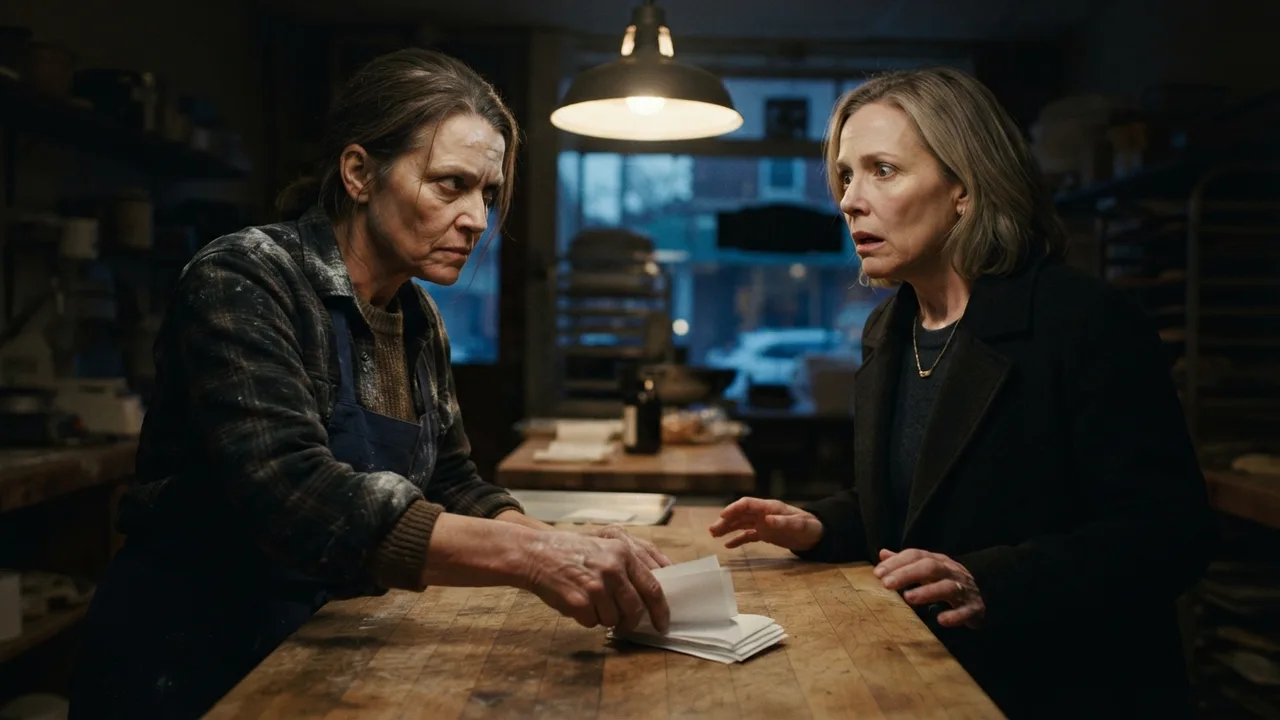
I opened the briefcase and laid the envelope in the middle of the table, between the crisp and the creamer. Nobody reached for it.
"This is a certified copy of a conservation easement," I said. "Dad recorded it with the land trust three months before he died. It's perpetual. It covers eight hundred acres, including the forty along the creek. No houses, no subdivisions, nothing but ranch buildings and cattle. Not for you, Mr. Hollis, and not for anyone who owns this land after Will and me."
Grant's smile stayed where it was while the rest of his face moved away from it.
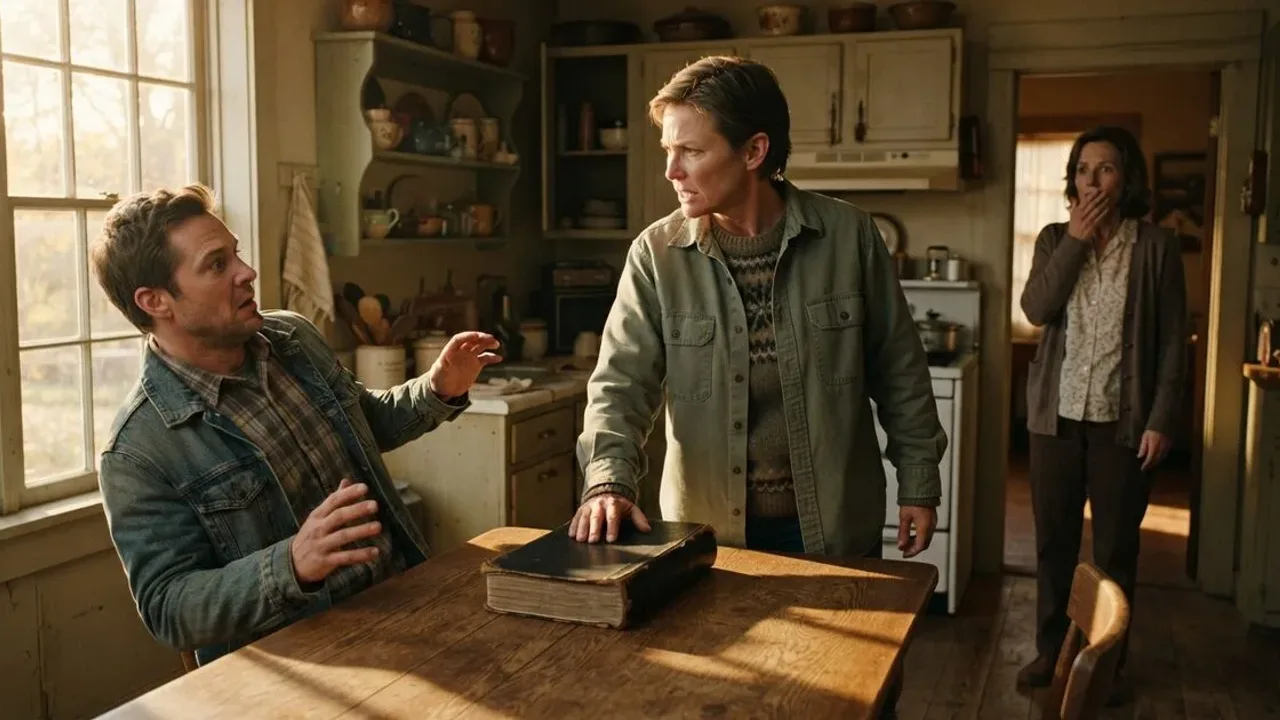
Will snatched the envelope. He ripped it open and turned pages, and the color climbed from his collar to his hairline.
"This is insane," he said. "You manipulated him."
"Will."
"You sat by his bed for months and talked a dying man into signing this behind my back."
"I found out about it this week," I said. "A woman at the land trust wouldn't even tell me it existed. I drove to Bozeman and paid seventy-five dollars to learn there was a notice, and a hundred and fifty more to get that."
"Then you're lying, or he was confused. A court will see it. These things can be broken."
"Maybe. You'll need a lawyer and a reason better than cash, and the land trust will be across the table from you, not me. There's a notary stamp on the last page, Will, and Dad's handwriting was better than yours."
Grant had stopped drinking his coffee. He took the pages gently out of my brother's grip, found the corner with the county seal and the recording number, and studied it for what felt a long time. Then he laid it down square to the edge of the table and stood.
"Will, my offer was always contingent on a clear title and building rights," he said. "I'm afraid this removes both. Ms. Stanton, Mrs. Mercer, thank you for the coffee."
"Grant, hold on, we can restructure—"
"No, I don't believe we can."
He walked out through the kitchen. The screen door clapped shut behind him, and a minute later I heard gravel under tires, his and then no one's.
Four hundred thousand dollars had been sitting in that room like a fourth guest, and it had just got up and gone.
Will stood with his hands open at his sides. For once he wasn't looking at his phone.
Ruth hadn't moved. She was looking at my father's signature, her lips working.
"Frank knew," she said quietly. "He knew exactly what he was doing."
"Ruth, don't," Will said.
"He did this to keep the ranch from you, Will. Not from me, not from Diane." She put the cardigan sleeve to her eye. "Oh, honey. And I came out here to tell your sister to sign."
"It's all right," I said.
It wasn't, but I said it. Will took the rental keys off the table without a word, and the screen door clapped a second time.
He came back a week later, on a Saturday morning, while I was changing the pump on the stock tank. He didn't come to the barn. He waited in the kitchen with a folder, standing, in a clean shirt and a tight face.
"Sit down, Will."
"I'll stand." He opened the folder on the counter. "I had the ranch appraised. With the easement on it, it's agricultural value only. Roughly five hundred thousand dollars."
"That sounds about right."
"Then you know my number. Half is two hundred fifty thousand. I want it in cash, and I want it immediately."
I wiped grease off my hands onto a dish towel and took my time.
"I don't have two hundred fifty thousand dollars."
"You'll borrow it. The land is collateral, and you're the one who wanted it." He closed the folder. "You wanted the land, Diane. Now you can pay for it."
"Dad would have hated this."
"Dad isn't here. He made sure of that, in a way." His voice cracked and he coughed over it. "He picked you. He's been picking you since I was twelve."
"He didn't pick anyone, Will. He picked a creek."
He wouldn't look at me. He looked at the coffeepot, still warm, and didn't pour any.
"I'll call Farm Credit on Monday," I said.
"Good."
At the door he stopped with his hand on the frame. I waited for *Dee*, the name he'd used when we were kids and I'd drive the tractor and he'd ride the fender. He said, "My attorney will send the paperwork," and the screen door took him out.
The Farm Credit Bureau loan officer in Livingston was a decent woman with a plant on her desk and a stack of forms. She slid them across, and I signed where she put little yellow arrows. My hand was steady on every line, though I couldn't draw a full breath until we got to the last one.
The money moved from her bank to Will's account without my seeing it. Ruth called once, her voice small, and offered to bring a casserole. I told her yes, and she did, and neither of us mentioned the table.
The first payment coupon came in the mail the week we cut first hay.
I carried it out to the front porch with my coffee, still in my boots. The sun was on the meadow below the house, the grass along the creek a deep wet green, and runoff from the high snow was running fast and loud and clear over the stones. A heifer lifted her head at the water gap, then went back to drinking.
I looked at the coupon. The number in the box at the bottom would be due every month for the rest of my working life.
Down the slope the creek kept running, and it didn't care what I owed on it.
Comments