My brother Laurence told me we had to sell our father's house to pay a blackmailer, and for a week, I almost believed him.
He wanted a hundred and fifty thousand dollars before the end of the month. The only place that kind of money lived was inside the walls of the house where I was born.
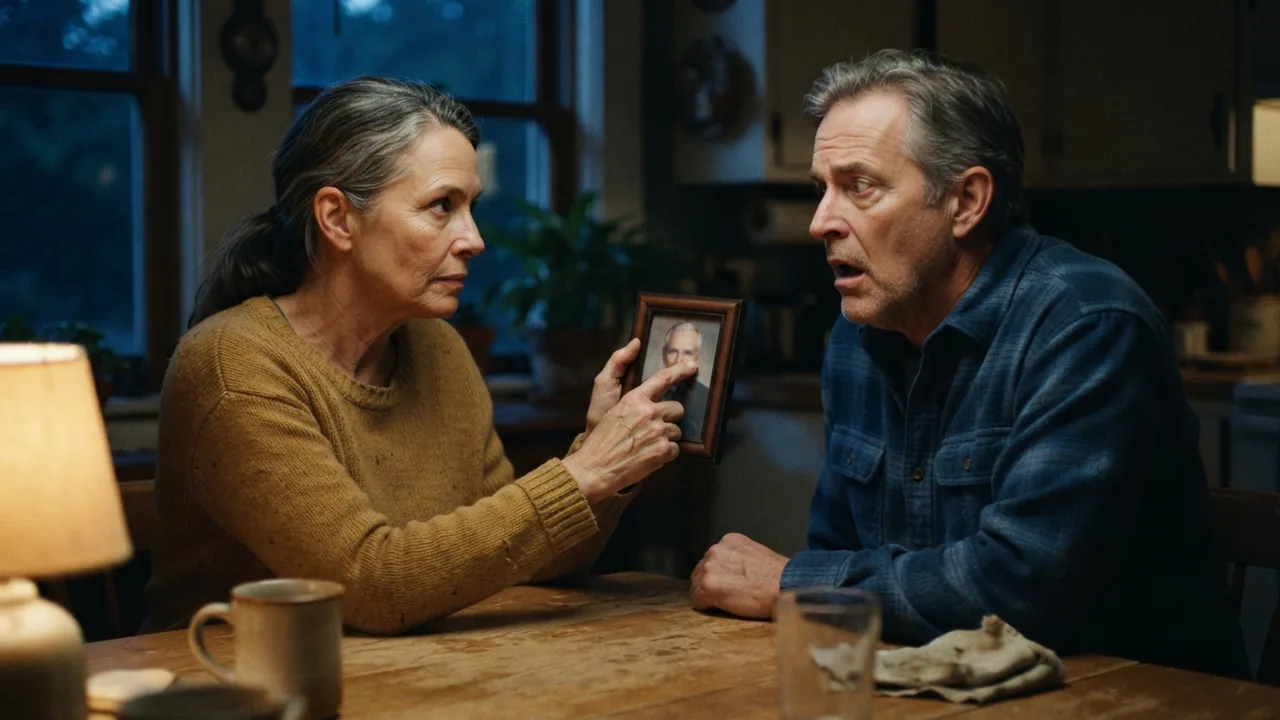
He told me on a Tuesday, at my kitchen table in Port Blossom, in a linen jacket a man half his age might have worn. He held the coffee cup by its rim and did not drink from it.
"Somebody has proof, Rosie," he said. "Proof of a mistake Dad made."
"What kind of mistake?"
"I can't say it out loud in this kitchen. Not in Dad's kitchen."
Advertisements
"Who is the somebody?"
"A man who knows how to find people like us. He'll go to the paper, the church, everybody. Dad's name, Rosie. Everything he was."
I wrote none of it down while he was there. Forty years in the Town Clerk's office taught me to wait until the visitor leaves before I write, so he does not see what I thought worth keeping.
After he left, I wrote *no name, no mistake, no date* on the back of a Hannaford receipt and set it under the sugar bowl.
The calls started the next morning. They came before breakfast, at suppertime, and once on a Saturday while I was kneeling in the garden with the black flies at my neck.
"The buyer's agent says the market won't hold, Rosie. It's May. People want to buy in May."
"Laurence, I have not agreed to a buyer's agent."
"I've talked to one. Just to know our options. Harbor Light Realty. A nice woman."
"You went to a realtor about my house."
"Our house. Dad left it to both of us. Half of it is mine, and half of it is going to be a headline."
I said I would think about it. I thought about it in the way I thought about every request that arrived without a document attached.
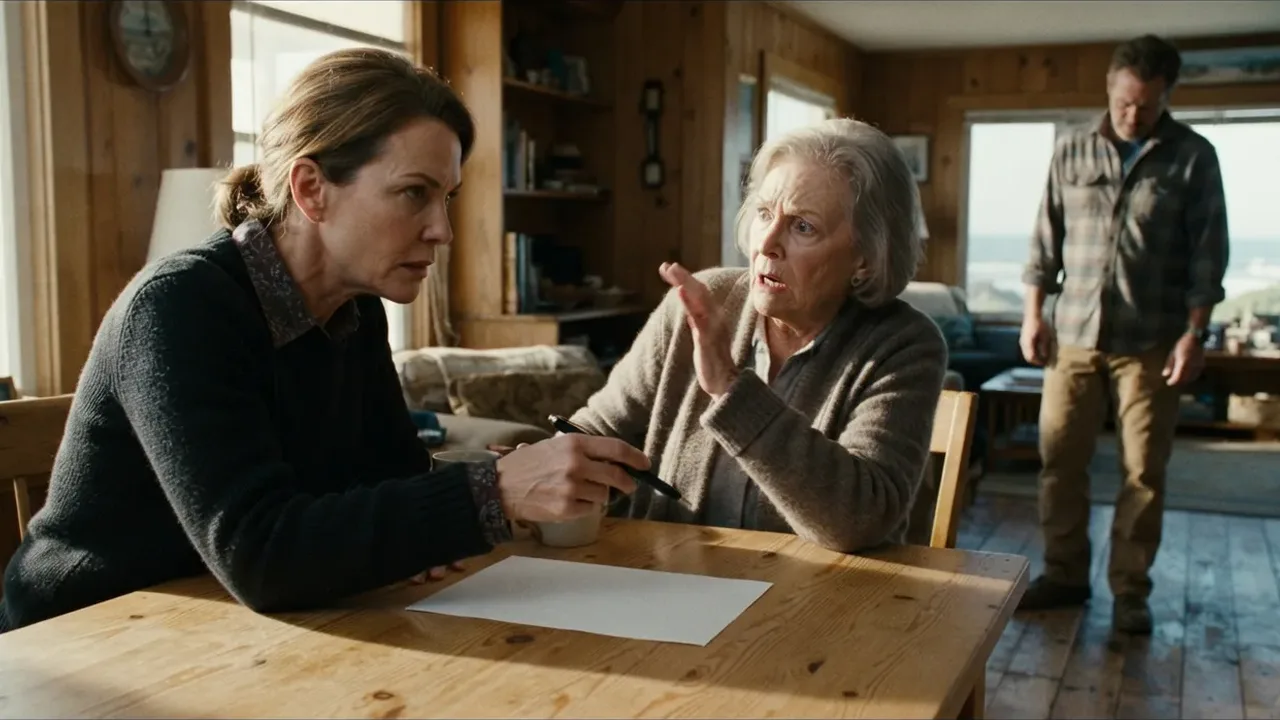
Nina came on Sunday with a lemon loaf from the Hannaford bakery, still in its plastic clamshell, and the look of a girl bringing home a failed test.
She sat where Laurence had sat. She had her grandfather's way of squaring her shoulders before she said something hard.
Advertisements
"Uncle Larry told me, Mom."
"I wondered whether he would."
"He's terrified. He cried on the phone." She pulled the clamshell open and then did nothing with it. "It's bricks and mortar. Grandpa wouldn't have wanted you holding a house over his reputation."
"Did your uncle tell you what the mistake was?"
"He said it wasn't his to tell."
"Then you've been asked to weigh something you haven't been shown."
Her eyes filled, which was how she had lost every argument since kindergarten, and how she won this one. "I'm not trying to take your home. I'm trying to keep you from being stubborn about it."
Stubborn. I cut the lemon loaf into even slices, because my hands needed a job, and I did not trust my face with a reply.
She left before dark. I stood on the porch while her taillights went down Harbor Road, and I understood that I was the one being handled in my own house, by my brother and now by my own child.
On Monday I walked to the town hall, a ten-minute walk from my porch, and signed the visitors' log like anybody else. Priscilla, the young woman who had taken over my desk, brought me the key to the records room without a word.
I spent the day in there. I went through the deed books and the harbormaster's logs, the old selectmen's minutes, the lien indexes and the incident reports the town published.
I looked under Atherton, under Walter, under every year Laurence had been old enough to make trouble and our father had been old enough to cover for him. I found a dog license and a zoning variance for the porch. I found nothing else.
Forty years had taught me that real trouble leaves paper, even when the paper is only a line in somebody's margin. A scandal with no paper behind it had not been buried. Somebody had made it up.
That night I lay awake and heard the house tick as it cooled. The sum Laurence had named came back to me. A hundred and fifty thousand was exactly half of what the house was worth.
A blackmailer picks a number to fit what the victim can pay. This one had picked a number that fit what my brother needed.
I did not want to think it. I thought it anyway, at three in the morning, with my reading glasses still on their chain around my neck.
Walter Atherton kept his papers in better order than most men keep their word. Everything he had ever signed or paid or been billed for sat in the attic in gray file boxes, labeled in his square capitals by year, and I had not opened one since the funeral.
On Wednesday I carried them down the pull-down stairs one at a time. The attic smelled of cedar and dust, and the afternoon went to heat under the roof.
It took hours. Tax returns, oil bills, a receipt for the pew cushions at First Congregational. My father, in his own handwriting, telling me nothing wrong.
Near the bottom of the box for the year 1996, there was a manila folder with a label I did not recognize: *L.A. LOAN – S.P. MATTER.*
Inside was a promissory note, one page, typed and dated. *I, Laurence Walter Atherton, promise to pay my father, Walter Atherton, the sum of $100,000.* The signature was my brother's, with the looping L and the flat tail I knew from every birthday card he had ever sent.
Under the note lay a ledger, ruled by hand. Column after column of payments went to one name, *Silas Pembroke*, each marked *marine property damages*.
The payments ran monthly, and then they thinned to yearly. The last entry was over a decade old. Beside it my father had written two words and underlined them: *Paid. Closed.*
I sat on the attic floor with the ledger in my lap. Below me the house was quiet, and my father's capitals marched down the page like a man who had never once been late.
I knew Silas Pembroke. Everybody in Port Blossom knew the Pembroke boat, and everybody knew the autumn that Laurence turned thirty-two, when a boat went down in the mooring field and my father stood up in the Grange hall and said he had been at the wheel.
I had been there. I had been proud of him for saying it.
The ugly truth did not need a second page. My father had not made a mistake. My brother had made one, and my father had taken it onto himself and then paid for it, a little at a time, for most of my adult life.
I put the folder in my bag. I wanted to be angry at Laurence, and what I felt was grief for a man who had been dead a long time, and for the way I had remembered him.
Thursday morning I looked up the Pembroke wharf in the town directory, the kind of book I used to keep on my desk. The man who answered was Calvin, Silas's son. His voice had the gravel of a man who started work before the sun.
"Silas passed some years back," he said. "I run the boat now. Atherton, you said? Walter's girl?"
"Yes. I'm calling about the money my father paid your father."
"That was settled before I took over. Walter stood up in the Grange and told everybody it was him, you know. Dad never forgot it. Never said a word against him."
"Has anyone from my family contacted you recently? Anyone asking for money, or threatening to say something about the accident?"
"Ma'am, we haven't heard a word from your family in ten years. Not since your dad's last check, with a note thanking Dad. Why? Is somebody saying different?"
"Somebody is," I said. "Thank you, Mr. Pembroke. You've been more help than you know."
I hung up and stood in the hall with my hand on the banister until my knees agreed to go on holding me.
Laurence called that afternoon. His voice had the brightness of a man who believes he has won.
"The agent has the listing paperwork ready. Cowan's office, Friday at ten. He's keeping the file for the estate, so it's the cleanest place to sign."
"Cowan has our file?"
"Dad's lawyer, Rosie. Who else would we trust?"
"Who else," I said. "I'll be there."
Friday was cool and gray, the fog sitting on the harbor like a lid. Mr. Cowan's office is on Main Street above the hardware store, and his conference room has a long oak table he polishes himself.
Laurence arrived first and shook Mr. Cowan's hand with both of his. Nina arrived next with her coat still buttoned.
A folder with the Harbor Light logo lay at the head of the table with a pen on top of it. Mr. Cowan pushed it toward my place and sat back with his glasses on his forehead.
Laurence stood. He had always been better on his feet than I had.
"I want to say something before anyone signs. I know how hard this is for you, Rosie. It's hard for me. We grew up in that house. Dad taught us to tie bowlines on that porch rail."
Nina was nodding. Her eyes went to me and stayed there, pleading.
"But Dad wouldn't want us clinging to wood and shingles," Laurence went on, "when his good name is what's at stake. Sometimes loving a family means letting go of a thing. I'm asking you to let go of this one, because I can't carry it alone."
He sat down and rubbed his eyes. It was a very good performance, and I had seen him give most of the others.
Mr. Cowan slid the listing agreement another inch toward me. I did not touch it.
"You're right, Larry," I said. "Protecting Dad's legacy is the most important thing."
He let out a breath. Nina's shoulders came down.
I reached into my bag and took out the manila folder and set it on the polished oak between us.
"That's why I think we should start with his records."
Laurence's smile stayed on his face and the color left it. I opened the folder and turned the promissory note around so everyone at the table could read it.
"This is dated in 1996. It's a loan from our father to you, Laurence, for a hundred thousand dollars. That's your signature."
He took a moment. When he spoke, he had found his bluster.
"That's a family loan, Rosie. It has nothing to do with the blackmail."
"Then you won't mind explaining it."
"There's nothing to explain! It's ancient history. The threat is real and it's happening now, and you're pulling out some old IOU to change the subject." He stood up and the chair scraped behind him. "Are you really going to let Dad's name be ruined over this? I can't believe you, Rosie, bringing up ancient history when we're under attack!"
I did not answer him. I turned to Nina.
"The S.P. on this folder stands for Silas Pembroke," I said. "His lobster boat was destroyed in 1996. Your grandfather paid for it, a little at a time, and told the whole town it was his own fault."
Nina's mouth opened. She looked at the ledger and then at her uncle.
I looked at Laurence. "I spoke with Silas's son yesterday. His family hasn't heard a word from ours in ten years. No one has called them or threatened them or asked them for anything."
"He could be lying," Laurence said.
"He could. But you've never named your blackmailer, and you've never named the mistake." I put one finger on the note. "There is no blackmail, Laurence. There is only this. The debt to Dad's estate is the only thing on this table that's real."
Nobody said anything. The fog pressed against the window, and the radiator ticked under it.
Mr. Cowan cleared his throat. He lowered his glasses, picked up the note, and held it to the light.
"This is a legally binding document," he said, looking at Laurence over the rims. "It's an asset of the estate. Before any proceeds from a sale could be divided, this debt, a hundred thousand dollars with thirty years of interest, would be settled out of your share."
"Out of my share," Laurence said.
"Out of your half of the house, yes. I would expect it to consume it."
Laurence sat down slowly, one hand finding the table's edge before his chair found him. He said nothing at all, which I had not seen in sixty-two years.
I looked at the listing agreement and left it where it lay.
"I won't be signing this," I said. "I'm not selling my home."
Beside me, Nina's face had gone the color of paper. She did not speak, and she did not look at her uncle again. She picked up her chair by its arms and set it down closer to mine, until her sleeve touched my sleeve.
Mr. Cowan folded his hands. "I'll prepare a statement of the debt and send a copy to each of you."
Laurence followed me into the hall. He had his keys out and could not seem to find the right one.
"Rosie, I'm three months behind on the apartment. I need a bridge, just until—"
"No."
"You'd see your brother on the street?"
"You have a daughter and a son you don't speak to, and a good many friends who've lent you money. Ask one of them." I buttoned my coat. "Dad covered for you once. He paid for it every month for years. I'm not going to be the second time."
"He wouldn't have wanted this."
"He wrote *Paid. Closed.* and underlined it, Laurence. I think he wanted it to be over."
He went down the stairs by himself. I listened until the street door closed.
Nina drove behind me to the house and came in without the lemon loaf. She stood in the front hall with her hands in her coat pockets.
"Mom, I'm so sorry. I told you to give up your home."
"You believed someone who cried on the phone. I believed him for a week."
"You didn't. You went and looked."
"That's the only thing I know how to do," I said. "I'm glad you came with me this morning."
She hugged me, hard, and I held on until she let go. She said she would call me tonight, and tomorrow, and I told her that would suit me fine.
After she left I stayed in the living room as the light went from gray to pewter. The house made its usual sounds, the refrigerator and the clock on the mantel, and the pipes in the wall where the porch rail meets the window.
On the bookshelf stood the photograph I had dusted every Saturday for as long as I could remember. Laurence and I were children on the town pier, squinting, and between us our father stood with a hand on each of our shoulders and the harbor shining behind him.
I took the dust cloth from the drawer and wiped the frame, the glass, the corner where the wood had begun to lift. Then I ran my thumb across my father's face.
He had told one lie in his life, and he had paid for it every month until it was true. The house was mine, and so was the memory, and the memory was a harder one than the one I had started the week with.
I set the picture back where it stood, and turned on the porch light.


Comments