
The scoreboard showed a twenty-point victory, but the expression on Caitlin Clark’s face suggested Indiana had discovered something far more valuable than another win.
For the opening twenty minutes, the New York Liberty looked capable of turning the evening into the kind of difficult test Indiana had experienced many times before.
New York carried a four-point advantage into halftime, and the Fever still had to prove they could remain patient against a talented opponent that understood how quickly momentum could change.
Then Indiana returned from the locker room and produced one of its most complete quarters of the season.
The Fever outscored New York 30–12 in the third period, transforming a competitive contest into a commanding 108–88 victory at Gainbridge Fieldhouse. Indiana improved to 16–10, while the Liberty fell to 13–12.
It was not merely the final margin that made the performance significant.
Indiana forced mistakes, moved the basketball with purpose and received important contributions from nearly every part of the rotation. New York committed 17 turnovers, and the Fever converted those errors into 30 points—a devastating difference in a game that had been close at halftime.
For a team frequently discussed through the lens of one famous player, this victory offered a much broader story.
Indiana Did Not Wait for One Player to Rescue the Night
Caitlin Clark remained central to Indiana’s offense, even while operating under a minutes restriction.
She finished with 17 points and seven assists in 26 minutes, repeatedly stretching New York’s defense and creating opportunities before the Liberty could settle into comfortable positions.
Yet Clark was not required to carry the entire scoring burden.
Kelsey Mitchell delivered the defining offensive performance, scoring a season-high 33 points and recording the 15th 30-point game of her career. She scored 14 points during Indiana’s decisive third-quarter surge, punishing New York whenever the defense shifted too much attention elsewhere.
Aliyah Boston added 15 points and seven rebounds, giving Indiana a dependable interior presence while the guards attacked from the perimeter.
The Fever bench also outscored New York’s reserves 31–14, another indication that Indiana’s success did not depend on one extraordinary individual performance.
That balance may have been the most encouraging development of the evening.

During the first stages of Clark’s professional career, nearly every Indiana game seemed to become a referendum on her shooting, passing or decision-making. When she played brilliantly, the Fever were treated as dangerous; when she struggled, the entire team was often described as incomplete.
Against New York, Indiana looked like something more mature.
Clark influenced the game without dominating every possession. Mitchell recognized the openings created by that attention, Boston remained productive inside, and the supporting cast supplied the effort necessary to turn a narrow halftime deficit into a comfortable victory.
The Third Quarter Changed the Entire Mood
Basketball games often turn on adjustments that are difficult to recognize while they are happening.
A defender begins closing out half a step faster. A passing lane that appeared open during the first half suddenly disappears. A team that had been reacting starts dictating where every possession will go.
Indiana’s third quarter carried that feeling.
The Fever increased the pressure, attacked New York’s uncertainty and refused to allow the Liberty enough time to regain their rhythm. Each turnover produced another opportunity to run, and each successful transition possession brought the home crowd deeper into the contest.
New York entered the game with additional rest, yet Indiana looked like the fresher and more connected team after halftime.
The Liberty’s four-point advantage disappeared quickly. By the time the third quarter ended, Indiana had established control, and the building no longer felt tense.
It felt expectant.
The Fever bench responded to defensive stops with the same enthusiasm normally reserved for three-pointers. Teammates communicated, celebrated and appeared fully invested in possessions that would never appear in individual highlight packages.
That is usually where meaningful improvement begins.
It is easy to celebrate the player who makes a difficult shot. It is harder to build a team that takes equal pride in forcing a rushed pass, protecting the paint or making the extra rotation that prevents an open look.
Indiana displayed those habits against one of the league’s most recognizable opponents.
Why This Victory Carried More Weight
The Liberty entered the season with championship expectations and a roster filled with accomplished players.
That reputation made Indiana’s twenty-point victory feel larger than an ordinary result in July, even though New York had been struggling and had lost eight of its previous ten games after the defeat.
A dominant win does not guarantee postseason success.
It does, however, provide evidence that a team’s best version is becoming more attainable.
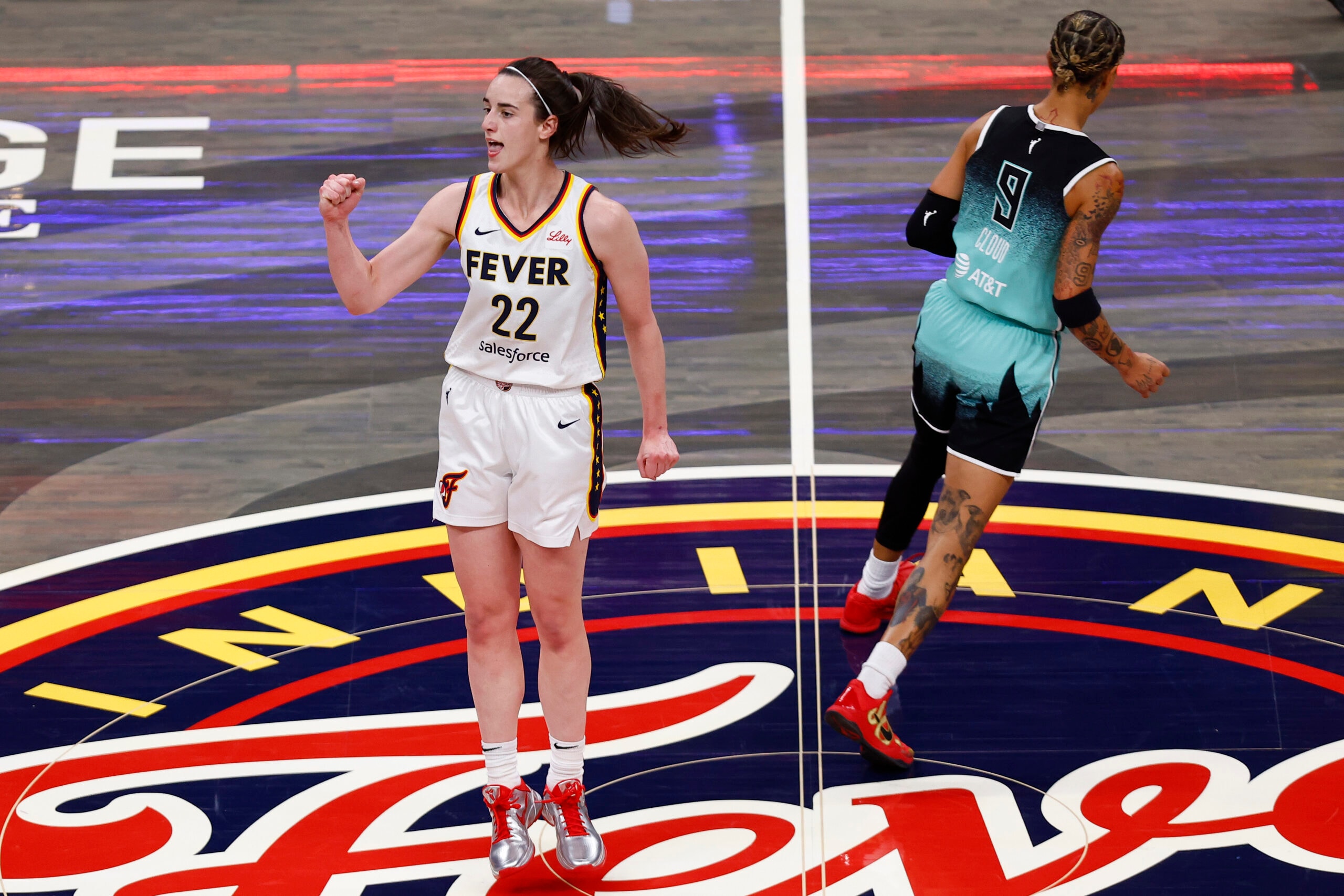
Indiana has spent much of Clark’s tenure learning how to handle the extraordinary attention surrounding her. Every lineup decision becomes a debate, every physical play generates discussion, and every defeat invites exaggerated conclusions about the team’s direction.
The players cannot control all of that noise.
They can control whether the basketball becomes more organized, whether the defensive effort remains consistent and whether each player understands her responsibilities when pressure increases.
Against New York, Indiana answered those questions convincingly.
The Fever did not panic after trailing at halftime. They did not abandon their offense or wait for Clark to manufacture a miracle from well beyond the three-point line.
They trusted the structure of the team.
Sophie Cunningham’s Influence Was Larger Than the Box Score
Sophie Cunningham has built her reputation through intensity, physical effort and an obvious willingness to confront uncomfortable moments.
Her contributions do not always produce the largest statistical totals, but they can influence the emotional direction of a game. A contested loose ball, an aggressive defensive possession or a timely reaction from the bench can change the energy surrounding a team.
That role matters for Indiana.
Clark naturally attracts enormous attention, Mitchell provides elite scoring, and Boston gives the Fever strength around the basket. Cunningham offers a different quality: visible edge.
She celebrates teammates without hesitation and plays with the kind of urgency that can spread through an arena.
However, some accounts of the Liberty victory have described Cunningham and Clark delivering a specific emotional joint message immediately afterward.
The available official material does not confirm that scene.
Indiana’s official postgame listings identify other participants for the media session following the New York game, while the Fever’s verified recap confirms the result and player statistics.
That distinction is important because the genuine story does not need an invented speech.
The performance itself already communicated Indiana’s message.
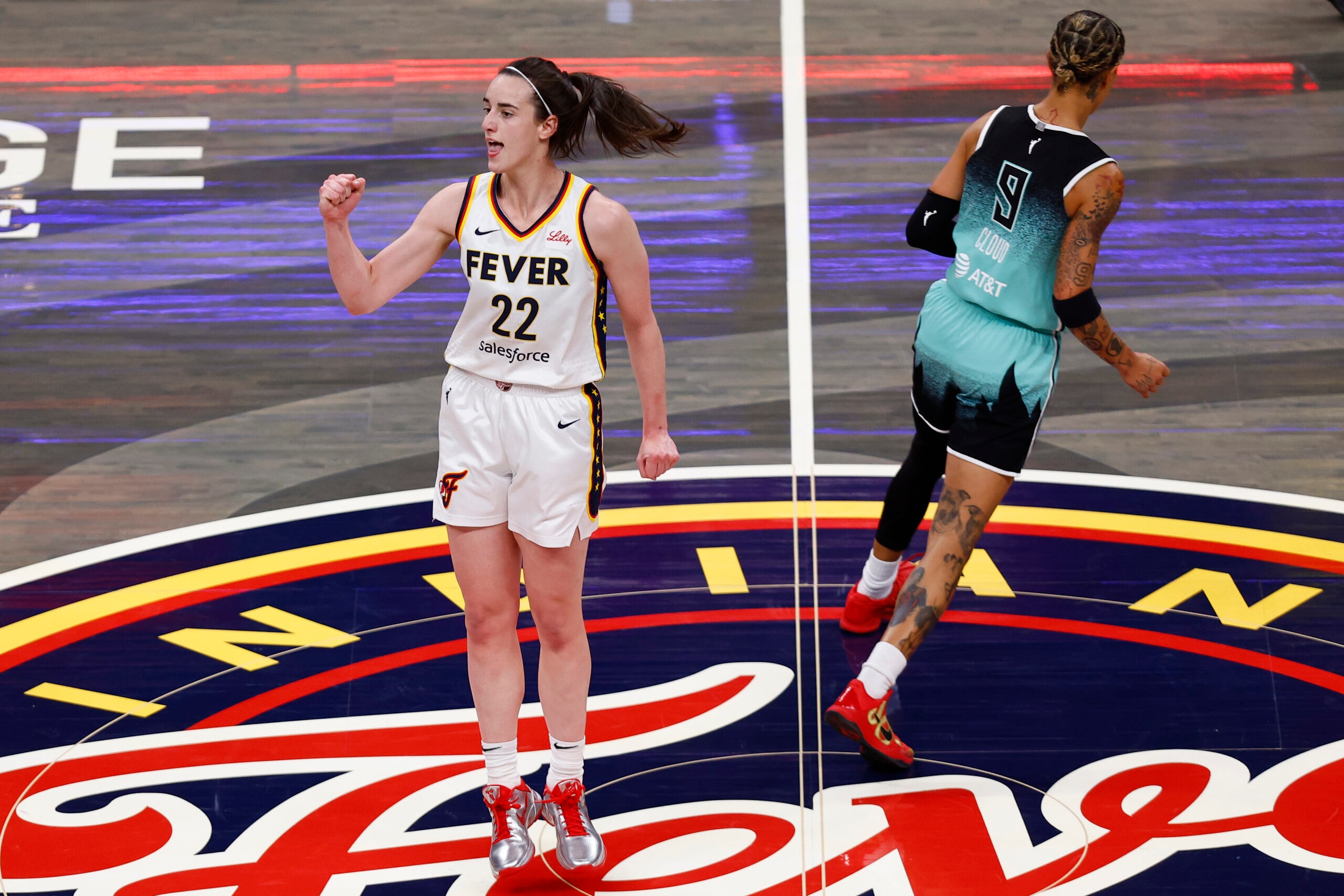
The Real Meaning Emerged Near the End
What made this victory memorable was not a dramatic sentence spoken beside the court.
It was the way Indiana responded when the game demanded discipline.
The Fever trailed at halftime, faced a respected opponent and could easily have allowed the evening to become another exhausting contest decided in the final possessions.
Instead, they produced a 30–12 third quarter.
Mitchell delivered 33 points. Boston contributed inside. Clark added 17 points and seven assists without needing to control every moment, and the Fever’s depth overwhelmed New York’s bench.
That is the detail that changes how Indiana should be viewed.
Clark’s brilliance remains essential, but the Fever are becoming most dangerous when her presence strengthens everyone around her rather than reducing the offense to a one-player performance.
A championship-level team cannot depend on one person to rescue every difficult evening.
It needs multiple scorers, dependable defense, useful depth and players willing to value the possession more than personal recognition.
For one convincing night against New York, Indiana displayed all of those qualities.
The final score was 108–88, but the greater statement was quieter.
The Fever no longer looked like a promising team waiting for its future to arrive.
They looked like a connected team beginning to understand exactly how good it can become.