
How to Organize a Small Kitchen With Limited Cabinet Space
A small kitchen can feel crowded even when you do not own many dishes or cooking tools. Limited cabinets, cluttered countertops, and hard-to-reach shelves can make everyday cooking more frustrating than it needs to be.
The good news is that you do not always need a larger kitchen or expensive storage products. A few thoughtful changes can help you use your existing space more efficiently and make frequently used items easier to reach.
Here is how to organize a small kitchen with limited cabinet space while keeping it practical for everyday life.
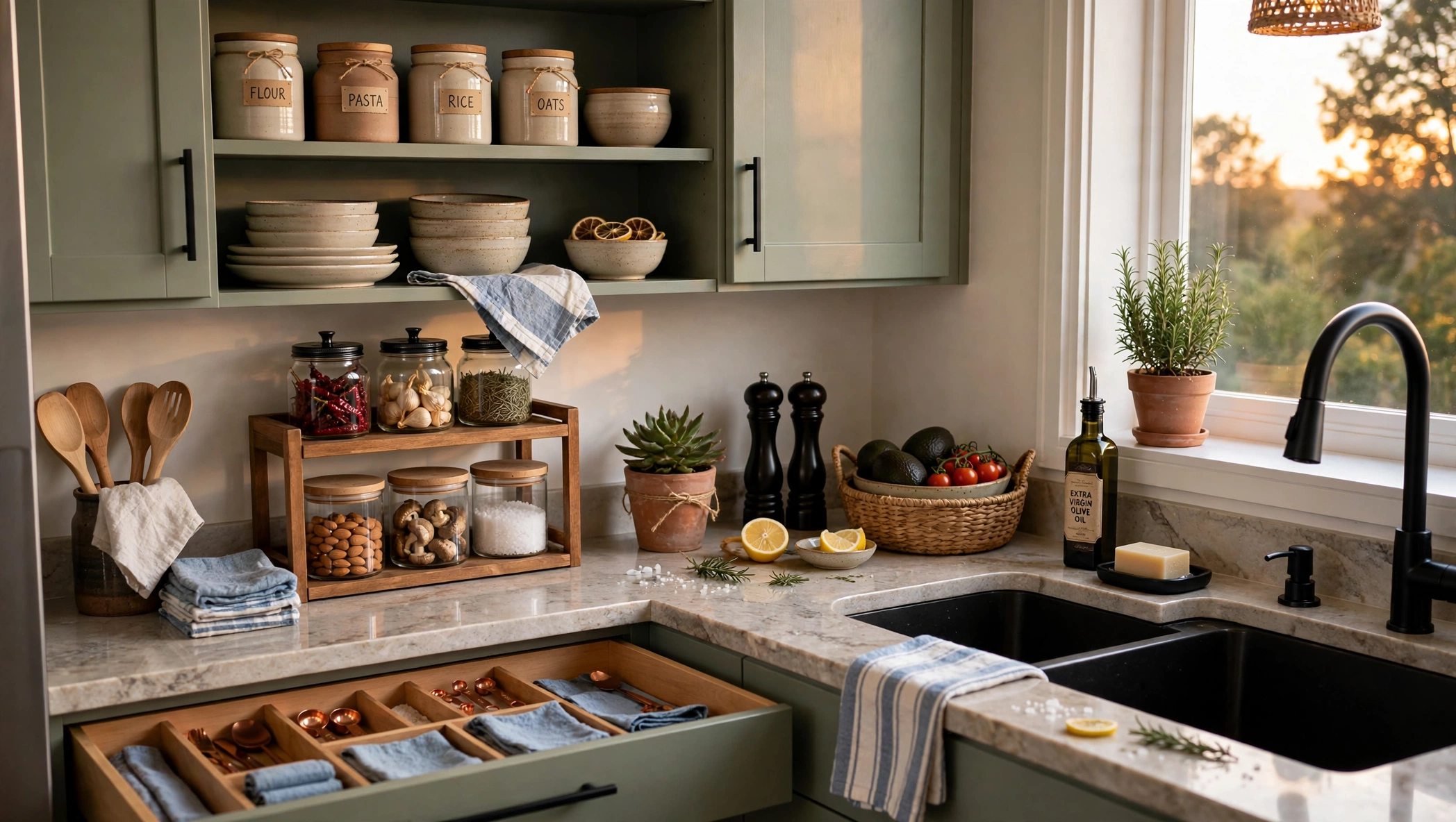
1. Declutter Before Rearranging Your Kitchen
Before buying organizers or moving everything around, take a few minutes to identify what you actually use.
Remove items from one cabinet or drawer at a time. This makes the process easier to manage and helps you see how much space is available.
Sort items into three groups:
- Keep: Items you use regularly or genuinely need.
- Relocate: Items that belong elsewhere in the home.
- Donate or discard: Usable items you no longer need, or damaged items that cannot be repaired safely.
Pay particular attention to duplicate utensils, rarely used gadgets, mismatched containers, and cups that take up valuable shelf space.
Avoid emptying every cabinet at once. Working in small sections makes it easier to finish the task without turning your kitchen into a larger mess.
2. Organize Cabinets Around Your Daily Routine
Store items near the places where you use them.
Keep plates, bowls, and glasses close to the dishwasher or drying area. Place cooking utensils near the stove, and keep frequently used ingredients near your main food preparation surface.
Create simple kitchen zones:
- Cooking zone: Pots, pans, cooking utensils, and frequently used spices.
- Food preparation zone: Cutting boards, mixing bowls, and measuring tools.
- Dishwashing zone: Dish soap, drying supplies, and everyday dishes.
- Food storage zone: Food containers, wraps, and suitable pantry items.
This arrangement reduces unnecessary movement and makes it easier for everyone in the household to return items to the right place.
3. Make Better Use of Vertical Space
When cabinets are short or shelves are crowded, vertical space can make a noticeable difference.
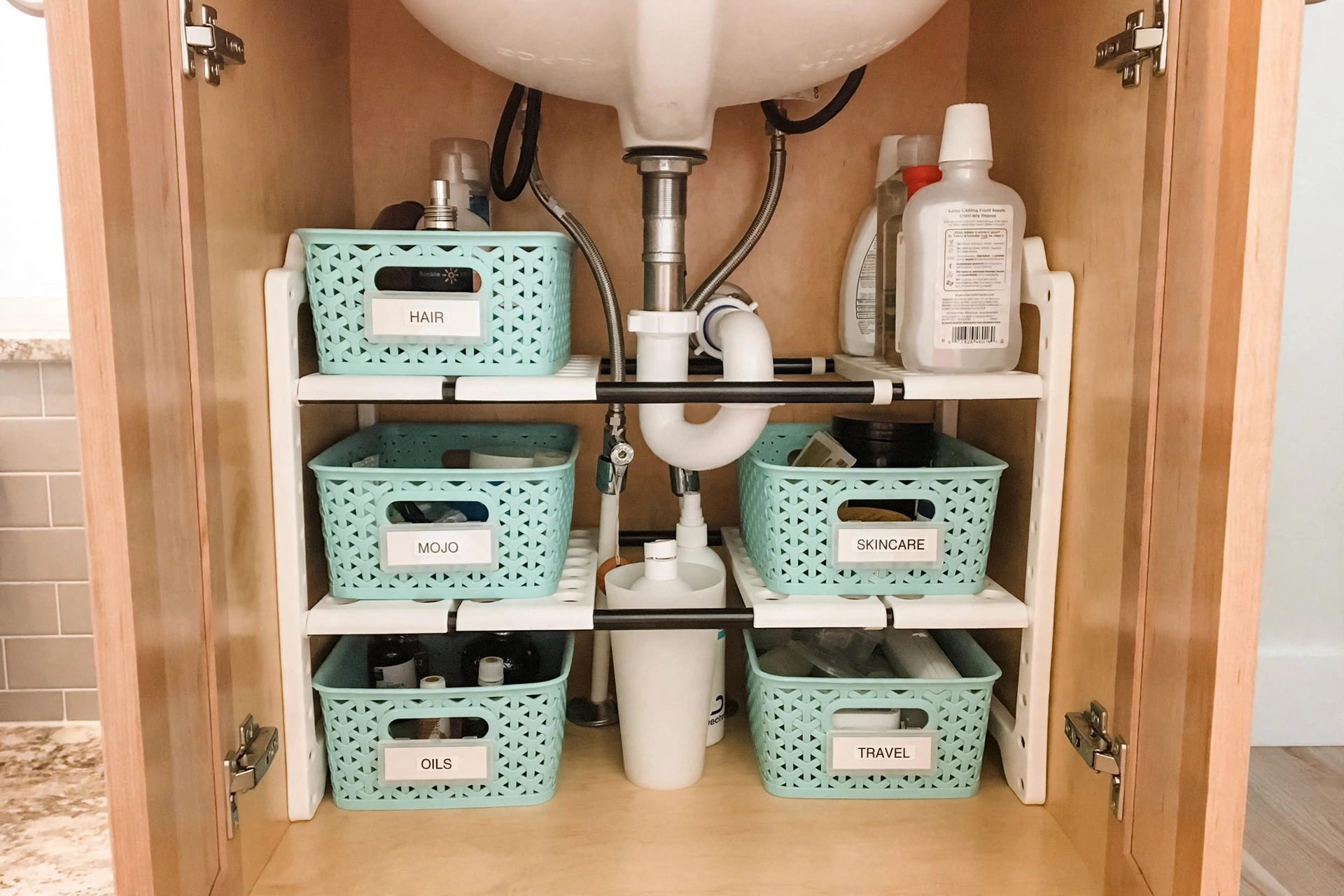
Consider adding shelf risers to create another level for lightweight dishes or mugs. Under-shelf baskets may provide additional room for napkins, wraps, or other suitable items.
For cabinet doors, use organizers designed for the specific door and cabinet construction. Check the weight limits and make sure hinges can handle the additional load.
Do not stack heavy cookware too high or place items where they could fall when a cabinet opens.
4. Choose Storage Containers Carefully
Food containers can become difficult to manage when lids and bases are mixed together.
Keep matching sets together and store lids vertically in a divider when possible. Choose containers that nest inside one another to reduce wasted space.
Before buying a new set, measure your available shelves and drawers. A container that looks compact in a store may not fit well in your cabinet.
For pantry ingredients, clear, properly sealed containers can make it easier to see what you have. Label containers when their contents are not immediately recognizable, and follow appropriate food storage instructions.
5. Keep Countertops Clear Without Hiding Everything
Countertops are valuable working surfaces, especially in a small kitchen.
Keep only the appliances and supplies you use frequently within easy reach. Store occasional-use appliances elsewhere if you have a suitable location.
A small tray can group everyday items such as cooking oil and salt, preventing them from spreading across the counter. However, keep the area around the stove clear and follow appliance manufacturers’ clearance requirements.
Avoid storing items beside heat sources or where they could interfere with food preparation.
6. Organize Drawers and Narrow Spaces
Kitchen drawers often become cluttered because different items are mixed together.
Use adjustable dividers to separate utensils, measuring spoons, and small tools. Group similar items so you can find what you need without moving everything around.
For narrow gaps, consider a slim rolling cart only if there is enough clearance to move it safely. It should not obstruct walkways, doors, or access to appliances.
Use organizers that fit your existing dimensions rather than trying to force too many products into a small area.
7. Move Occasional-Use Items Elsewhere
Not every kitchen item needs to stay in the kitchen.
Seasonal serving dishes, special-occasion cookware, and appliances used only occasionally may fit better in a suitable nearby storage area.
Keep frequently used items in the most accessible locations. Store heavier objects at a comfortable height, and avoid placing anything where reaching it requires climbing on unstable furniture.
If you have limited storage throughout the home, start by keeping fewer duplicate items rather than moving clutter from one room to another.
8. Create a Simple Maintenance Routine
An organized kitchen is easier to maintain when every item has a clear place.
Try these small habits:
- Return cooking tools to their designated locations after use.
- Wipe countertops after food preparation.
- Check food supplies before shopping.
- Put clean dishes away instead of leaving them on the counter.
- Spend five minutes resetting the kitchen at the end of the day.
The goal is not to keep the kitchen perfect at all times. It is to make it easy to restore order without needing another major reorganization.
Common Kitchen Organization Mistakes to Avoid
Buying organizers before measuring: Products that do not fit can create more clutter.
Keeping too many rarely used items: Valuable cabinet space should serve your daily needs first.
Ignoring accessibility: Frequently used items should not require awkward reaching or unsafe stacking.
Overfilling shelves: Leave enough room to remove dishes and containers comfortably.
Creating complicated systems: Simple storage arrangements are usually easier for the whole household to maintain.
Frequently Asked Questions
How do you organize a small kitchen with very little storage?
Start by removing items you no longer use. Then group belongings by activity, use vertical cabinet space where safe, and store occasional-use items elsewhere when practical.
What should go in the most accessible kitchen cabinets?
Keep everyday plates, glasses, cooking tools, and commonly used ingredients in convenient locations. Place heavy items where you can lift them comfortably.
Are kitchen organizers worth buying?
They can be helpful when they solve a specific problem. Measure your cabinets first and choose products that improve access rather than simply adding more containers.
How can I keep a small kitchen organized?
Give each item a designated place, return items after use, and schedule a brief daily reset. Reassess your storage when clutter begins to return.
Final Thoughts
A small kitchen can work well when storage reflects your actual routine. Declutter first, organize cabinets by activity, make safe use of vertical space, and keep frequently used items accessible.
Start with one cabinet or drawer rather than trying to reorganize everything in a day. Small improvements can make cooking, cleaning, and everyday kitchen tasks easier.
Related reading: See our guide to decluttering your home room by room for a practical approach to organizing the rest of your living space.

2 thoughts on “How to Organize a Small Kitchen With Limited Cabinet Space”