FIGHTER JET REBELLION: Canada Dumps F-35, Embraces Swedish Gripen in $19B Sovereignty Gamble
OTTAWA & WASHINGTON – In a stunning break from decades of defense alignment with the United States, Canada has formally abandoned its planned procurement of the F-35 fighter jet, opting instead for Sweden’s Gripen system in a move that has sent shockwaves through the Pentagon, NATO allies, and the global aerospace industry.
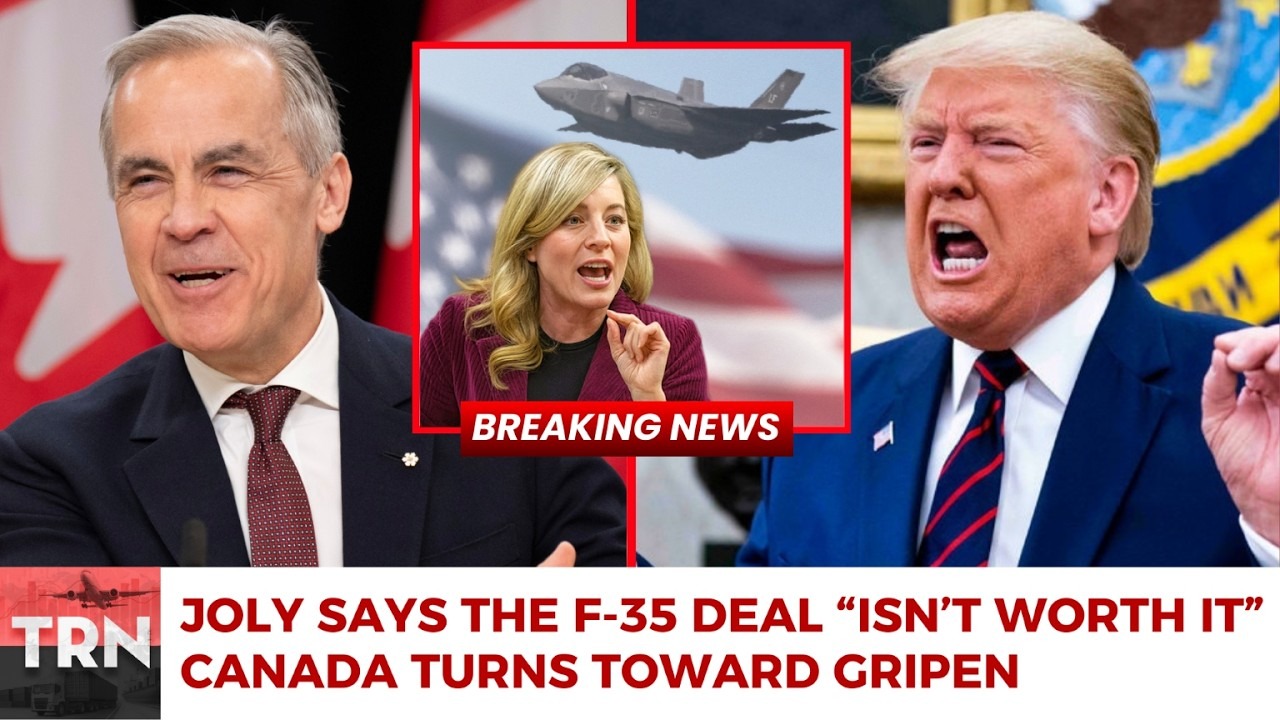
Foreign Affairs Minister Mélanie Joly confirmed the decision in a terse statement that left little room for negotiation or regret. “The F-35 is a remarkable aircraft,” Joly said. “But it is not the right aircraft for Canada’s sovereignty, Canada’s economy, or Canada’s future. We have made a different choice.”
That choice is the Saab Gripen, and the implications extend far beyond which plane patrols Canadian skies.
The Breaking Point
The F-35 program has long been a source of friction between Ottawa and Washington. Originally pitched as the ultimate expression of allied interoperability, the Joint Strike Fighter evolved into something else entirely for Canadian officials: a black box of restricted technology access, escalating costs that ballooned from $65 million per aircraft to over $200 million, and operational control that remained firmly in American hands.
“The final straw was when we realized we wouldn’t truly own the planes we were buying,” explained a senior Department of National Defence official who requested anonymity. “The F-35 requires American approval for software updates, American oversight for maintenance, and American permission for combat deployment. That’s not sovereignty. That’s subordination.”
Canadian pilots training on F-35s in recent years reported frustration with restricted access to the aircraft’s systems, unable to perform even basic maintenance without U.S. approval. For a country that prides itself on Arctic sovereignty and independent defense decision-making, the arrangement became increasingly untenable.
The Gripen Alternative
Enter Sweden’s Saab, which had been quietly cultivating Canadian interest for years. Unlike the F-35’s “take it or leave it” model, the Gripen offer represented something fundamentally different: a genuine industrial partnership rather than a simple procurement.
The Swedish proposal includes full local assembly at a new facility in Quebec, technology transfer that would give Canada independent modification capabilities, and participation in future Gripen upgrades and exports. Most crucially, Canada would own its aircraft outright—no black boxes, no remote kill switches, no Pentagon approval required for deployment.

“This isn’t just buying planes,” said aerospace analyst Richard Aboulafia. “It’s buying back Canada’s aerospace industry. The F-35 deal would have sent Canadian tax dollars to the U.S. and left Canadian workers with nothing. The Gripen deal builds planes in Canada, creates Canadian jobs, and gives Canada control over its own defense.”
The Jobs Math
The numbers tell a compelling political story. Saab projects the Gripen program would create approximately 12,000 direct and indirect Canadian jobs over its lifetime, spanning manufacturing, engineering, supply chains, and maintenance. Quebec’s aerospace sector, centered in Montreal, would receive the largest boost, but supply chain benefits would spread across the country.
By contrast, the F-35 offered approximately 200 Canadian supplier jobs—mostly minor components with no technology transfer or strategic value. For every dollar spent on the F-35, roughly 90 cents flowed directly to the United States. For every dollar spent on the Gripen, Saab promises that 70 cents would stay in Canada through local content requirements and industrial participation.
“Avionics manufacturers in Ontario, composite specialists in Quebec, maintenance crews in Alberta—this is nation-building disguised as defense procurement,” said industry consultant Maryscott Greenwood. “Joly just announced the largest industrial policy initiative in a generation, and she did it by talking about fighter jets.”
Washington’s Shock
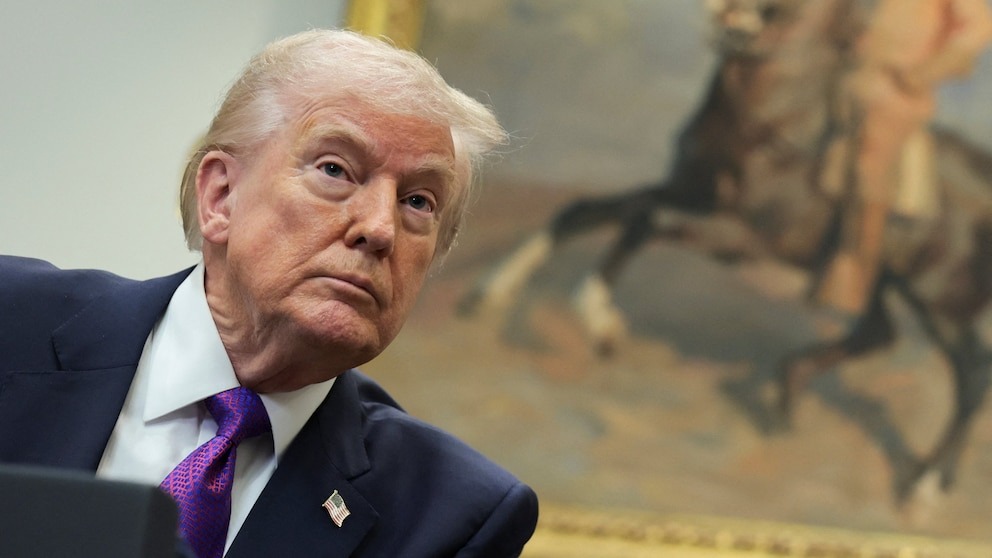
The reaction from Washington has oscillated between disbelief and fury. Pentagon officials learned of the decision through media reports, a diplomatic snub that underscores the deteriorated state of U.S.-Canada relations. President Trump, already embattled on multiple trade fronts with Canada, erupted at the news during a closed briefing.
“Canada is supposed to be our ally,” Trump reportedly fumed. “They’re buying Russian jets? No, Swedish jets? It’s all the same. They’re turning their back on us.”
In fact, the Gripen is NATO-compatible and uses many American components, preserving interoperability. But the distinction matters little to an administration that views any Canadian move away from U.S. dominance as betrayal.
Lockheed Martin, manufacturer of the F-35, issued a carefully worded statement expressing “disappointment” while noting that “the F-35 remains the most advanced fighter in the world and we are proud of the 200 Canadian companies that continue to support the program.” The subtext was unmistakable: 200 jobs versus 12,000.
The Strategic Calculus
Defense analysts see method in Ottawa’s apparent madness. The F-35’s much-touted stealth capabilities matter less for Canada than for frontline combat nations. Canada’s primary defense mission is sovereignty protection—patrolling the Arctic, intercepting Russian bombers, responding to civilian emergencies. The Gripen excels at these missions while costing roughly half as much to operate.
“The F-35 is a sports car,” said retired Royal Canadian Air Force Colonel Paul Ormsby. “The Gripen is a pickup truck. For driving to the grocery store in winter, which would you rather have? Canada needs a pickup truck. Sweden understood that. America didn’t.”
The Arctic dimension proves particularly significant. Gripen operations from remote northern strips, cold-weather performance, and simpler maintenance requirements make it better suited for Canada’s vast northern territories than the technologically delicate F-35.
European Alignment
The Gripen decision aligns Canada with a broader trend of European defense autonomy. Sweden, which maintains armed neutrality while cooperating closely with NATO, offers a model that increasingly appeals to middle powers seeking to balance alliance commitments with independent decision-making.
Prime Minister Mark Carney, attending a NATO summit next week, will now arrive with a dramatically different posture. Rather than a supplicant seeking American approval, Canada presents itself as a confident partner with options. European allies, long frustrated with U.S. dominance of alliance procurement, have quietly applauded the Canadian move.
The Political Fallout
Domestically, the decision has redrawn political lines. The Bloc Québécois, whose support the minority Liberal government requires, has enthusiastically endorsed the Gripen choice, noting Quebec’s central role in the industrial benefits. Conservative opposition, traditionally favoring U.S. alliances, finds itself torn between supporting the military and opposing anything the Liberals do.
The 12,000 jobs figure has proven politically potent, particularly in Quebec where the next election may be decided. Conservative leader Pierre Poilievre, campaigning hard in the province, now faces uncomfortable questions about why he would send those jobs to the United States instead.

What Comes Next
Contract negotiations with Saab will proceed rapidly, with a final agreement expected within eighteen months and first aircraft deliveries by 2030. The transition period means Canada’s aging CF-18 fleet must continue flying longer than planned, but defence officials express confidence in extending the current fleet’s service life.
Meanwhile, the F-35’s Canadian defeat sends shockwaves through other procurement battles. South Korea, Finland, and other middle powers watching Canada’s calculation may reconsider their own F-35 commitments. Lockheed Martin faces uncomfortable questions about its inflexible business model.
“This is the moment the F-35 program started dying,” Aboulafia predicted. “If Canada can walk away, anyone can. The emperor has no clothes, and Sweden just sold Canada a wardrobe.”
For Canada, the decision represents more than an aircraft purchase. It signals a fundamental recalibration of how the nation views security, sovereignty, and partnership. The era of assuming American leadership serves Canadian interests is over. In its place rises a colder, more calculating north—one that builds its own planes, guards its own skies, and answers to no one.