For decades, Canada’s fighter jet decision seemed predetermined.
But one unexpected warning—and Ottawa’s willingness to reconsider—has triggered a debate that could ripple across NATO for years.
Trump’s Gripen Warning Sparks a Strategic Shockwave Across NATO
For generations, Canada’s air power strategy appeared locked into place. Geography, alliance obligations, and the deep integration of North American defense under NORAD made one assumption almost universal: Canada’s future fighter aircraft would remain tied to the United States.
That assumption shaped decades of procurement planning.
It also meant that alternatives—no matter how capable—rarely received serious attention. Among them was Sweden’s Saab JAS 39 Gripen, a fighter jet often described as efficient, flexible, and technologically sophisticated but operating outside the powerful gravitational pull of the American defense ecosystem.
For years, the Gripen existed on the margins of Canada’s debate.
Now it sits at the center of it.
The shift began as Canada’s strategic environment changed dramatically. The Arctic—once viewed as a distant buffer zone—has rapidly become a region of renewed geopolitical competition.

Russian long-range bomber patrols have increased near northern approaches. New polar shipping routes are opening as ice recedes. And strategic interest in the region from global powers, including China, has intensified.
Suddenly, Canada’s fighter jet requirements looked very different.
Aircraft operating in the Arctic must handle extreme weather, long distances, and limited infrastructure. They must launch quickly from remote bases and remain operational even when supply chains are disrupted or communications networks degrade.
In this context, Canada’s defense planners began examining not only aircraft performance but operational resilience.
The F-35 Lightning II, built by Lockheed Martin, remains one of the most advanced fighter jets ever created. Its stealth capabilities, sensor fusion, and integrated data-sharing networks represent the cutting edge of modern air combat.
But those strengths exist within a tightly interconnected ecosystem.
Software updates, mission data, logistics systems, and maintenance pipelines operate through a centralized network largely managed by the United States. That structure ensures seamless cooperation among allied air forces—but it also creates a form of strategic dependence.
For decades, most allies accepted that trade-off without hesitation.
Then Canada started asking new questions.
Could an aircraft designed for operational independence offer advantages in the Arctic? Could Canada maintain stronger national control over mission software, upgrades, and maintenance while still cooperating fully with NATO partners?
Those questions brought the Gripen back into focus.

Unlike many modern fighters, the Gripen was designed with the assumption that its country might have to fight under conditions of isolation. Swedish defense doctrine emphasized dispersed operations, rapid turnaround times, and the ability to operate from improvised runways or remote locations.
Ground crews could refuel and rearm the aircraft quickly with minimal equipment, allowing air forces to keep jets operational even when traditional bases were compromised.
In Arctic conditions, such flexibility carries obvious appeal.

At the same time, the Gripen’s lower operating costs could allow more flight hours, higher pilot proficiency, and greater long-term readiness.
But as Canada’s evaluation gained momentum, signals from Washington grew stronger.
American officials began emphasizing the importance of maintaining alignment within the alliance’s defense architecture. The F-35 program, after all, has become the cornerstone of Western air power modernization.
Dozens of allied nations are adopting the aircraft as part of a shared ecosystem designed to maximize interoperability and technological superiority.
Choosing a different platform, some warned, could complicate integration with that system.
Reports circulated that political figures in Washington—including voices associated with former President Donald Trump—expressed concern about Canada potentially stepping outside that framework.
The message was subtle but unmistakable: defense platforms are more than military equipment—they are instruments of strategic alignment.
Yet Canada’s leadership insisted that exploring alternatives did not mean abandoning the alliance.
Instead, the debate centered on finding the right balance between integration and sovereignty.
The Gripen’s architecture allows operators to retain control over mission data and software modifications, providing flexibility that some policymakers believe could prove valuable in an uncertain geopolitical future.
That possibility is what truly unsettled defense planners.
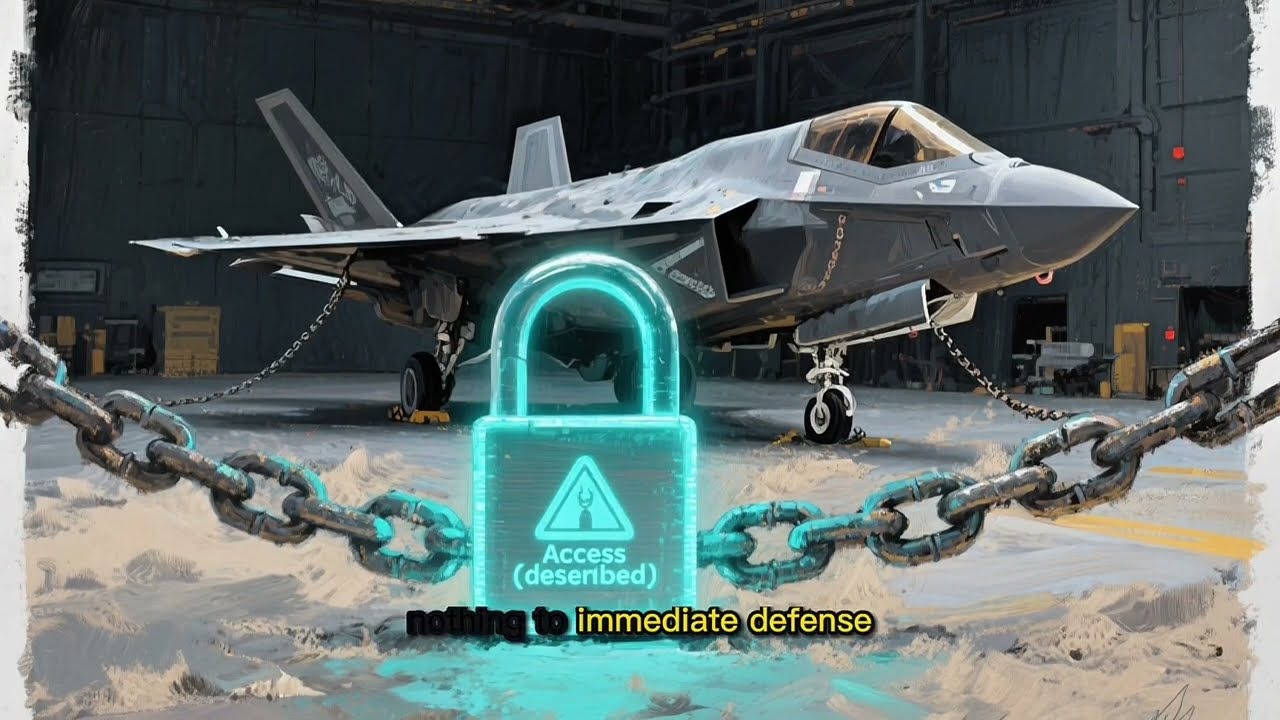
If Canada—one of America’s closest military partners—demonstrates that it can maintain strong alliance ties while operating outside the F-35 ecosystem, other countries may begin to reconsider their own procurement choices.
Such a shift would not dismantle NATO’s defense structure.
But it could alter the balance between centralized integration and national autonomy that has defined Western air power for decades.
In the end, Canada’s decision is about more than a fighter jet.
It is about how modern alliances evolve in a world where countries increasingly want both cooperation and control.
And once the assumption that there is only one acceptable choice has been challenged, the strategic conversation cannot easily return to where it began.