WINNIPEG — Late last night, what looked like a routine announcement in the Manitoba capital quietly turned into something far bigger than anyone expected. Behind closed doors, officials and industry leaders unveiled plans for a massive new manufacturing project that insiders say could reshape Canada’s industrial future — and potentially alter the balance of production across North America.
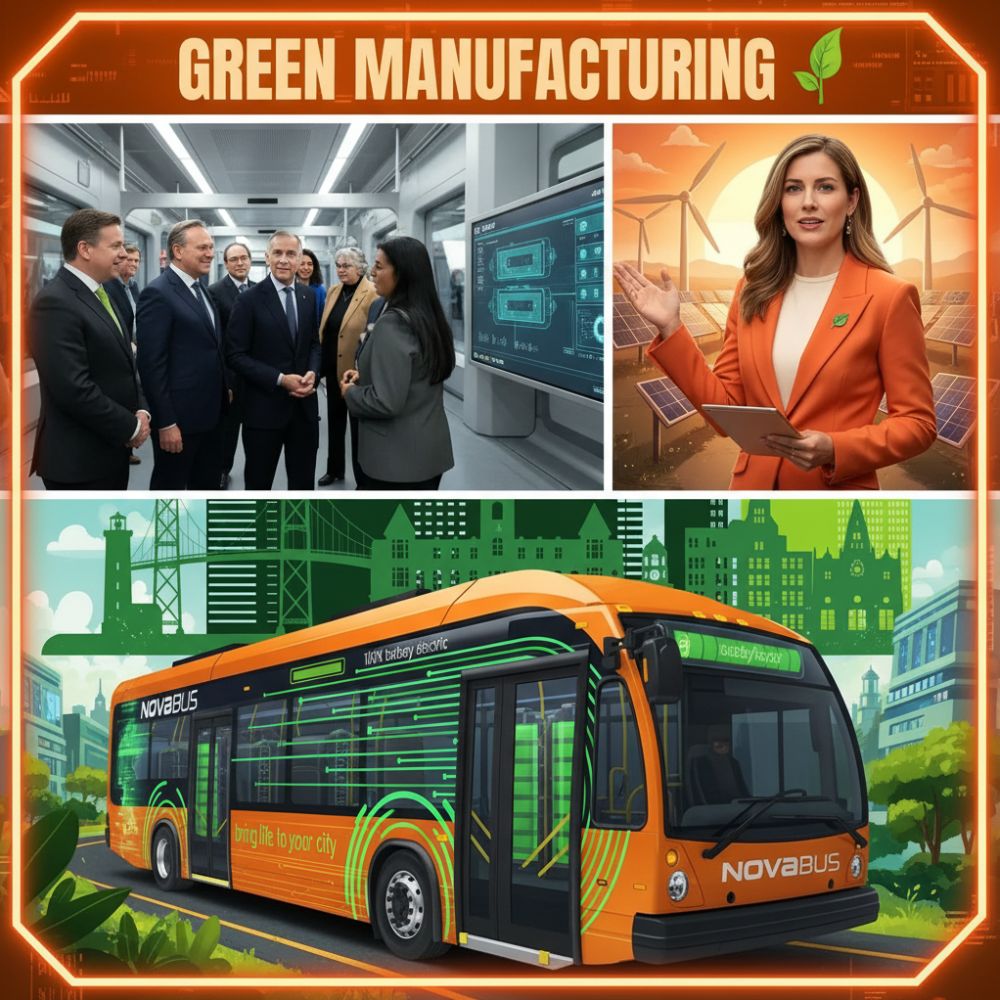
The centerpiece is a next-generation bus manufacturing facility designed to operate at a scale rarely seen in the region. But according to sources close to the briefing, the factory itself is only part of the story.
“This is not about buses,” said one senior industry executive who attended the closed-door session. “This is about rebuilding a supply chain from the ground up.”
The project, which remains officially unnamed, is expected to generate thousands of high-skill industrial jobs while pulling component manufacturing — from electric drivetrains to advanced composite materials — back toward Canadian production.
For years, analysts have debated whether “Made in Canada” could ever regain the industrial momentum it lost to Mexico, China, and the American South. Yet insiders say the plan unveiled in Winnipeg may represent a turning point.
It is a calculated attempt to rebuild domestic manufacturing capacity at a moment when global trade tensions are already forcing companies to rethink where they build and source their products.
“The pandemic exposed the fragility of just-in-time supply chains,” said Laura Dawson, a trade expert and former president of the Canada Institute. “Tariffs and geopolitical risks have accelerated the search for alternatives. Winnipeg is betting it can be that alternative.”
The facility, expected to break ground within 18 months, would produce zero-emission buses for Canadian transit agencies and potentially for export to the United States. But its true significance lies in what surrounds it.
According to briefing documents reviewed by the Times, the project includes provisions for on-site battery assembly, a dedicated research-and-development lab, and direct rail links to major North American markets.
Economic strategists are already calling it one of the most ambitious industrial plays Canada has attempted in decades. Some believe it could strengthen regional supply networks and reduce dependence on foreign production — particularly from China, which dominates the electric bus market.
Others warn the ripple effects could extend far beyond transportation. The facility could influence trade negotiations, investment flows, and the competitive dynamics of North American manufacturing at a moment when the United States-Mexico-Canada Agreement is due for review.

“This is Ottawa sending a message,” said Fen Hampson, a fellow at the Centre for International Governance Innovation. “Canada can be a manufacturing hub, not just a resource supplier.”
But the most intriguing details are the ones still largely hidden from public view. What special incentives and supply-chain agreements made the project possible? Why did Winnipeg suddenly become the focal point for such a major industrial push?
Sources point to a combination of factors: affordable land, hydroelectric power, a skilled workforce, and aggressive provincial tax credits. But they also hint at federal involvement beyond standard infrastructure programs.
“There are layers to this that haven’t been disclosed yet,” said one provincial official who spoke on condition of anonymity. “This is part of a longer game.”
The long-term strategy Ottawa is quietly building around this facility, sources say, involves linking bus manufacturing to critical minerals processing, battery production, and defense procurement — creating an integrated industrial corridor from the Prairies to the Great Lakes.
“You don’t build a factory like this in isolation,” the industry executive added. “You build it as an anchor. And anchors attract ships.”
Not everyone is convinced. Skeptics note that Canada has announced ambitious manufacturing projects before, only to see them stall due to cost overruns, political shifts, or competition from larger American subsidy programs like the Inflation Reduction Act.
“Winnipeg is not Detroit,” said one U.S.-based auto analyst. “And Canada is not going to out-subsidize the United States. But if they play this smart — focusing on niches where they have natural advantages — they could carve out something real.”
For now, the project remains in its early stages. Environmental assessments, community consultations, and final investment decisions lie ahead. But the fact that the announcement happened at all, insiders say, is a signal.
“For decades, we’ve watched manufacturing leave,” said a longtime Winnipeg economic development officer. “Last night, for the first time in a long time, we watched something arrive.”
Whether the Winnipeg gambit succeeds or fails, it has already accomplished one thing: it has forced North America to look north — and wonder what comes next.