
As Lindsay Clancy prepares her latest effort to prevent a retrial for the January 2023 killings of her three children, legal experts say the challenge is likely to turn on how far judges can go in scrutinizing what happens during jury deliberations.
Clancy’s defense lawyer, Kevin Reddington, confirmed last week that he intends to file a motion to dismiss her case, arguing that Judge William F. Sullivan declared a mistrial when there was no need to do so and, as a result, Clancy can’t be tried a second time.
His comments came after multiple jurors who served on her case came forward to report that a lone holdout refused to acquit her, despite acknowledging having reasonable doubt about whether prosecutors proved their case.
“Do I think it has a shot? I definitely think it has a shot,” said Christopher Dearborn, a law professor at Suffolk University in Boston. “There’s some real merit to it on a fundamental fairness basis.”
At the same time, Dearborn said the defense will likely have a hard time showing Sullivan erred by failing to interject in the jury’s deliberations.
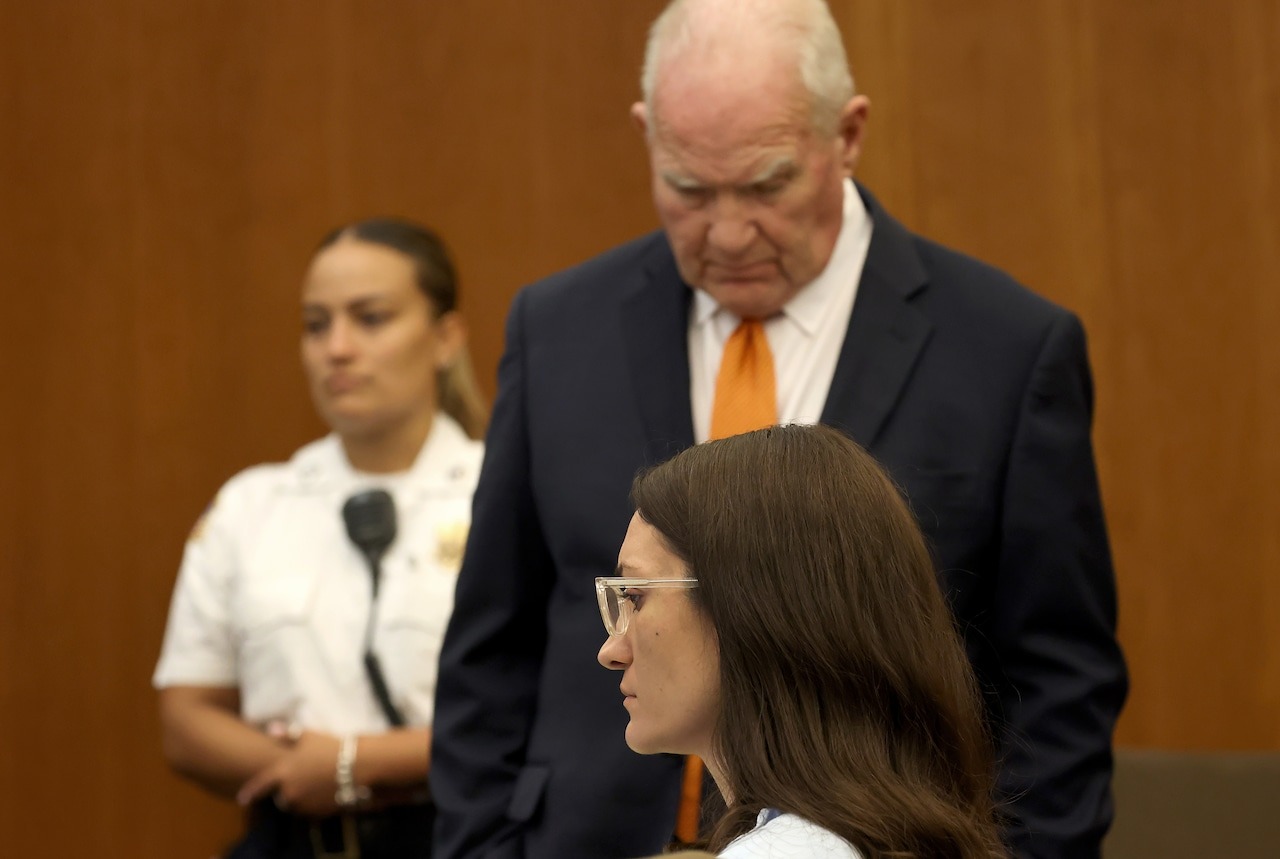
“The SJC frowns upon intervening in the deliberative process of jurors and frowns upon trial court judges doing the same thing,” Dearborn said. “To have done further inquiry would have been really close to that line.”
Sullivan clearly weighed the potential peril of intruding into jury deliberations before deciding not to question the holdout juror in more detail. Judges must take the “utmost caution” to “avoid invading the province of the jury,” he said in court, quoting case law.
“Jury deliberations are sacrosanct,” said Jack Lu, a retired Superior Court judge. “Shall we routinely second-guess juries, both those that reach a verdict and those that do not? No, we should not.”
Doing so would “undermine the crucial role of the jury in the legal system,” he said.
Part of the problem for Clancy’s defense is the ambiguity of the notes jurors sent to Sullivan before the mistrial was declared.
The second of two notes sent to the judge on Sept. 3 — the day before Sullivan declared a mistrial — said the holdout made statements “acknowledging doubt but refuses to apply it to the verdict.” As Sullivan noted, the instructions given to jurors before deliberations tell them prosecutors must prove their case beyond a reasonable doubt, not all doubt.
Reasonable doubt is “so subjective as to be a dangerous basis for intruding on jury deliberations,” Lu said.
For Clancy’s defense, the missing word could prove impossible to overcome.
“There is this ambiguity and (uncertainty) around the phrases of doubt and reasonable doubt,” said Jolie Zangari, a law professor at Touro University in New York City. “For the judge to intrude on that based on what he determined to be insufficient evidence of misconduct, I do think could lead to a slippery slope.”
Still, Reddington is not on entirely unfamiliar legal ground.
Massachusetts has seen cases where judges barred a retrial under double jeopardy after a mistrial was declared. But those cases have little similarity to the situation Clancy now finds herself in.
“In light of precedent, it appears to be a long shot,” Zangari said of Reddington’s motion, though she noted, “there are occurrences in the history of criminal law when a ruling is issued for the first time.”
For Clancy’s defense, the challenge seems to be bridging the gap between what the law permits and what appears to be the right thing to do.
“It feels so tragically unfair that 11 people wanted to acquit (and) there was one holdout who, it sounds like, was on the fence about being a holdout,” Dearborn said. “But our jury system, as it exists right now, is very clear. It’s got to be unanimous.”