It began with a document.
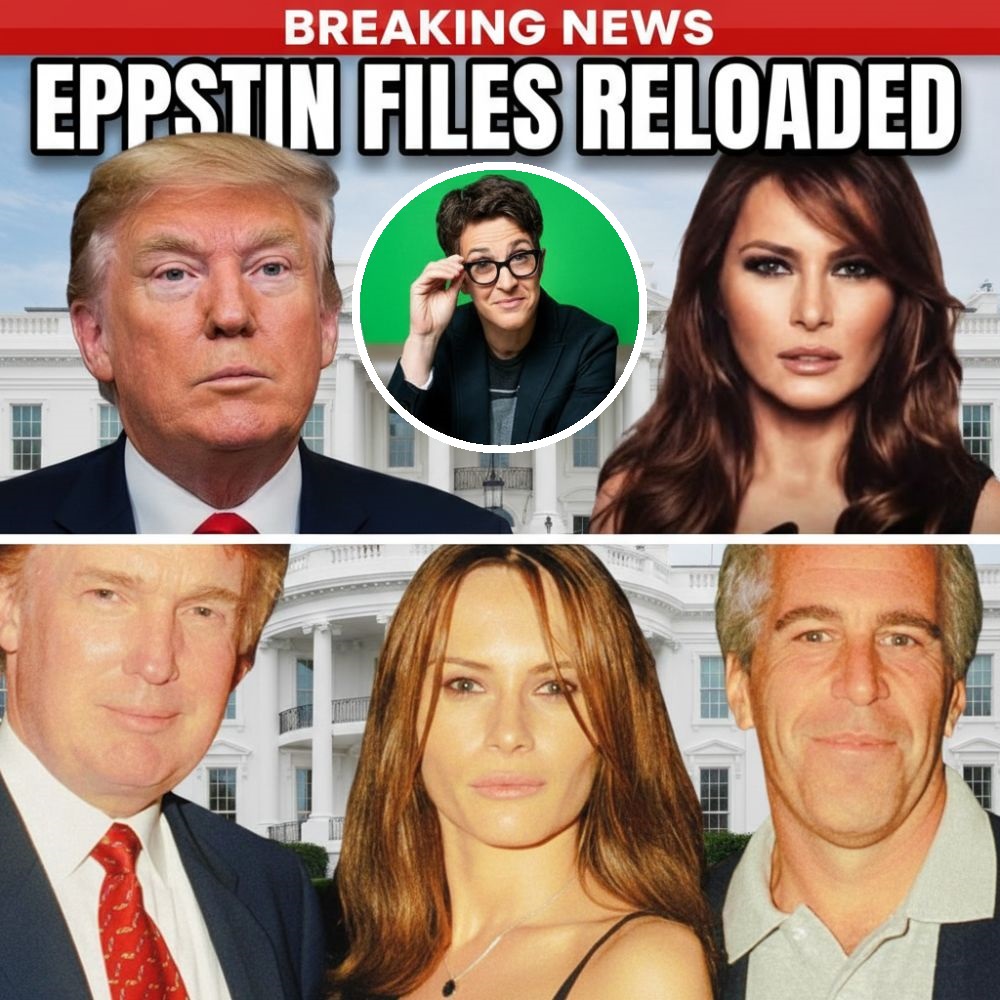
Not a speech. Not a press conference. Not even a public statement.
Just a document—quietly released, buried within a larger batch of files that, at first glance, appeared routine. But within hours, that document would ignite one of the most intense media firestorms in recent memory, pulling one of the most private figures in modern political life into an unexpected and unrelenting spotlight.
At the center of it all: Melania Trump.
The Release That Sparked a Storm
The files, attributed to the Federal Bureau of Investigation, were part of a broader disclosure tied to ongoing archival processes. According to officials, the release followed established procedures designed to increase transparency around historical materials.
But transparency, in this case, came with consequences.
Within the dense pages of the release, observers identified references that—while not immediately clear in meaning—were enough to trigger widespread speculation. Names, timestamps, fragments of correspondence—each piece became a puzzle that analysts and commentators rushed to assemble.
And as those fragments circulated, one name began to dominate the conversation.
A Figure Pulled Into the Spotlight
Melania Trump has long maintained a unique position in public life.
As a former First Lady, she occupied one of the most visible roles in the world. Yet she often approached that role with a level of distance and restraint that set her apart from many of her predecessors.
She spoke selectively.
Appeared strategically.
And rarely engaged in the kind of rapid-response media cycles that define modern political communication.
That approach made the sudden surge of attention all the more striking.
“She’s not someone who invites this level of scrutiny,” one media analyst noted. “So when it happens, it becomes a major story.”
The Interpretation Battle
Almost immediately, two competing narratives began to take shape.
On one side were voices urging caution—emphasizing that raw documents, especially those released without full context, can easily be misunderstood.
“These are fragments,” one legal expert explained. “Without context, without verification, without a complete picture, drawing conclusions is extremely risky.”
On the other side were commentators who argued that even fragments can raise important questions—particularly when they involve high-profile figures and complex historical records.
“The existence of a reference can be enough to spark inquiry,” another analyst said. “And inquiry, in itself, can drive a story.”
Between those two perspectives lay a rapidly expanding field of speculation.
The Role of Digital Amplification
If this story had unfolded a decade earlier, it might have developed more slowly.
But in today’s digital environment, speed is everything.
Within minutes of the first interpretations appearing online, the story spread across platforms. Screenshots of document excerpts circulated widely. Threads analyzing individual lines gained traction. Influencers and commentators added their voices, each bringing a different angle to the narrative.
The result was a kind of informational whirlwind—one in which clarity became increasingly difficult to maintain.
“Once something like this takes off online, it’s almost impossible to contain,” one digital media strategist observed. “It evolves in real time, and not always in predictable ways.”
Inside the Documents
What exactly did the documents contain?
That question proved harder to answer than many expected.

The references themselves were often brief, sometimes ambiguous, and frequently embedded within broader sections that required careful interpretation. Some appeared to relate to communications. Others to timelines. Still others seemed to be administrative in nature.
But taken together, they created an impression—an impression that became the foundation for much of the public discussion.
Legal analysts were quick to point out that impressions are not conclusions.
“Documents can suggest connections without confirming them,” one former investigator explained. “And distinguishing between those two things is critical.”
Silence from Key Figures
As the story intensified, attention turned to whether Melania Trump—or those close to her—would respond.
Hours passed.
Then more.
No immediate statement emerged.
That silence, as is often the case in high-profile situations, became part of the narrative.
Some interpreted it as a strategic decision—an effort to avoid amplifying speculation.
Others saw it as an indication that the situation was still being assessed behind closed doors.
In either case, the absence of a response did little to slow the momentum of the story.
A Broader Conversation Emerges
Beyond the immediate headlines, the situation began to spark a wider conversation about the nature of document releases, public interpretation, and the responsibilities of media and audiences alike.
How should raw information be handled?
What constitutes responsible analysis?
And where is the line between inquiry and assumption?
“These are questions that go far beyond any single case,” one academic specializing in media studies noted. “They speak to how we process information in an age of constant exposure.”
The Pressure of Public Attention
For individuals caught in the center of such storms, the pressure can be immense.
Every development is tracked.
Every silence noted.
Every fragment examined.
And in many cases, the narrative evolves faster than any response can keep up with.
For Melania Trump, whose public persona has long been defined by control and selectivity, the current moment represents a rare departure—one in which the narrative is being shaped externally, in real time, by forces largely beyond any single individual’s control.
What Comes Next
As the initial surge of coverage begins to settle, attention turns to the next phase.
Will additional context emerge?
Will experts provide deeper analysis of the documents?
Will there be official clarifications that reshape the narrative?
Or will the story gradually fade, replaced by the next wave of headlines?
For now, the answers remain uncertain.
A Story Still Unfolding
What is clear, however, is that the release of these documents has triggered a moment—one defined by intensity, ambiguity, and the rapid interplay between information and interpretation.
It is a reminder that in today’s media environment, even the smallest fragment of information can expand into a national conversation.
And once that conversation begins, it takes on a life of its own.
The Final Word—for Now
As analysts continue to review the materials and the public continues to react, one thing remains certain:
This story is not finished.
Because in the intersection of documents, perception, and public attention, the narrative is always evolving.
And for now, all eyes remain fixed on what comes next.