The Promise and the Paper Trail: Ted Lieu Exposes Gap Between Bondi’s Vows and Epstein File Handling
In the rarefied air of a congressional hearing room, where words are measured and promises are etched into the permanent record, a moment of striking dissonance unfolded today. Representative Ted Lieu (D-CA) meticulously juxtaposed a crystal-clear commitment made by Attorney General Pam Bondi with the opaque reality of what followed, turning a procedural oversight hearing into a referendum on institutional transparency.
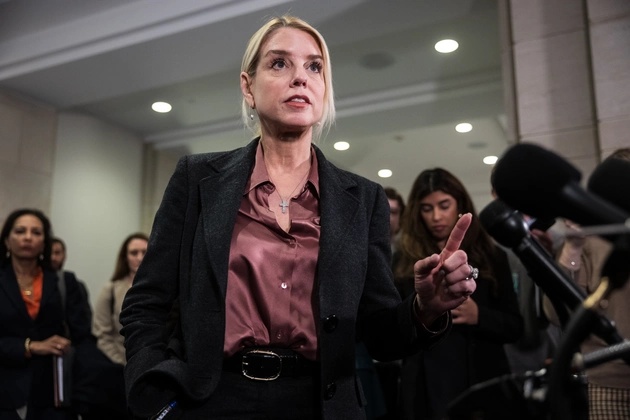
The target of Lieu’s scrutiny was the handling of the Jeffrey Epstein files—the trove of documents, flight logs, and witness statements related to the disgraced financier’s network of sex trafficking. At the center of the confrontation was a piece of video footage, played for the room, capturing Bondi during her own confirmation hearing months earlier.
In the clip, Bondi’s assurance was unambiguous. Facing questions about the Department of Justice’s handling of the Epstein case, she pledged full transparency. “The public deserves to see the full scope of the materials,” she stated in the footage. “Congress will have access. The process will be open.”
At the time, the statement was received as a standard, if welcome, alignment with oversight norms—a procedural guarantee that the department would operate with its proverbial doors open. But as Lieu pointed out, the distance between a confirmation promise and administrative reality can sometimes span a chasm.
“Madam Attorney General, I want to be clear that I am not questioning your intent in this moment,” Lieu said, his voice measured but pointed. “I am questioning what happened after the cameras turned off.”
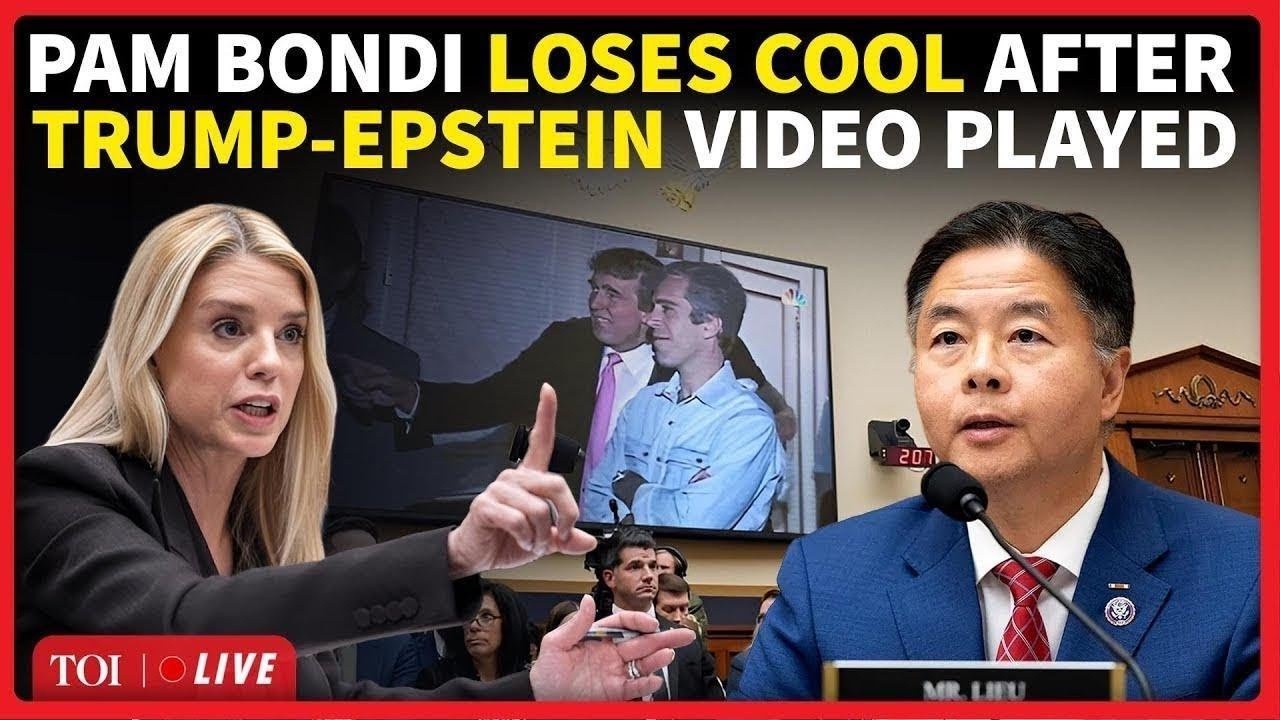
Holding up a binder filled with documented evidence, Lieu laid out a timeline of actions that painted a starkly different picture. According to records cited during the hearing, the months following Bondi’s confirmation saw a quiet but decisive shift in the Epstein file protocol.
First, key documents related to Epstein’s associates and flight manifests were reclassified, moving them from publicly accessible archives to highly restricted internal files. Second, a wave of Freedom of Information Act (FOIA) requests, filed by watchdog groups and journalists, were met with denials or indefinite delays, citing vague “ongoing sensitivity” concerns. Third, portions of transcripts related to closed-door depositions were reportedly modified or redacted before their limited release. Finally, despite the public attention, no new investigative tracks were formally initiated based on the existing evidence.
The contrast was jarring. On one screen, the committee saw Bondi the nominee, promising sunlight. On the other, they saw Bondi the Attorney General, presiding over what critics describe as a managed retreat into shadow.

“I am holding here a promise,” Lieu continued, gesturing to the frozen image of Bondi on the screen. “And I am holding here a paper trail of reclassification, denial, and delay. This is not a question of politics. This is a question of consistency. When you say one thing to get the job, and the opposite happens once you have it, that is not a procedural footnote. That is a problem.”
Bondi, appearing before the committee, defended the department’s actions, arguing that the handling of the Epstein files was dictated by legal necessities, privacy concerns for victims, and ongoing investigative leads that required confidentiality. She maintained that the commitment to transparency remained, but that it had to be balanced against the integrity of potential prosecutions.
“The department has a duty to protect the victims and to ensure that any active lines of inquiry are not compromised by premature disclosure,” Bondi responded. “The promise of transparency does not mean the abandonment of due process.”
Yet, for Lieu and other members of the committee, the explanation did not reconcile with the timeline. If there were active investigations, they pressed, why had no new charges been announced? If victims’ privacy was the concern, why were redactions not applied more narrowly, rather than wholesale reclassification?
In Washington’s layered system of legal process and political signaling, such discrepancies rarely resolve themselves quietly. By placing the promise and the paper trail side by side, Lieu reframed what might have remained a bureaucratic footnote into a lingering question: Was the Epstein files’ handling a matter of necessary legal caution, or a quiet retreat from a public vow?
The answer, whatever it may be, now hangs over the Department of Justice well beyond the hearing room, ensuring that the gap between what was said and what was done will not be easily forgotten.