The Steel Silk Road: Canada’s Strategic Railway Expansion Rewires North American Trade
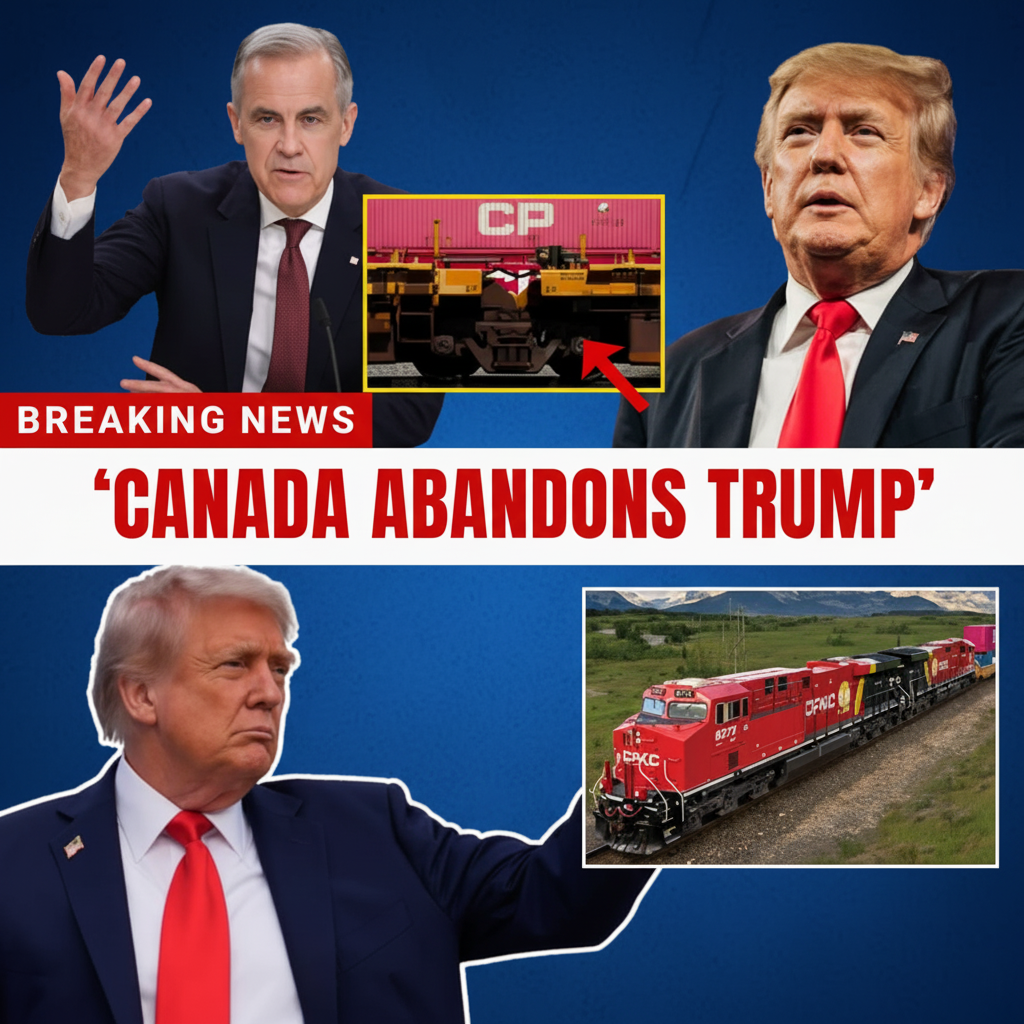
For decades, North American trade flows adhered to a predictable pattern: global shipments predominantly arrived at major U.S. ports before making their way inland to Canadian consumers. This long-standing geographical reality, however, was dramatically altered with a recent, understated announcement from the Canadian government.
Canada Unveils $350 Million Railway Project, Bypassing U.S. Ports
In a development that has surprised many in Washington and reverberated through the logistics sector, Canada has launched a substantial $350 million railway expansion initiative. This project is specifically designed to enable Canadian exports to reach Atlantic and Pacific tidewater directly, circumventing reliance on U.S. port infrastructure entirely.
What initially appeared as routine infrastructure upkeep has emerged as a significant geopolitical and economic maneuver. The “Northern Corridor Expansion,” a collaborative effort between Canadian National Railway (CN) and the Port of Halifax, involves transforming two existing rail lines into high-capacity freight corridors. These upgrades establish crucial direct links between Canada’s agricultural heartland, including Alberta’s resource regions and Saskatchewan’s grain fields, and deep-water ports in Nova Scotia and British Columbia, capable of accommodating the largest container vessels.
A Strategic Shift in Continental Logistics
Industry experts are quick to highlight the profound implications. Linda Fiorelli, a trade logistics specialist at the Cato Institute, noted, “Washington blinked, and Ottawa built a detour. For years, Canadian shippers have faced challenges from congestion at U.S. ports and the potential for border disruptions. This $350 million investment acts as a safeguard against such uncertainties. It marks a direct challenge to American port dominance.”
The timing of this project is particularly impactful. Funded through a combination of federal and private capital, the initiative was intentionally kept low-profile. While U.S. trade representatives were engaged in other commercial discussions, Canada was strategically developing infrastructure to enhance its trade autonomy.
Exploiting Vulnerabilities and Creating New Pathways
Dubbed a “gambit” in financial circles, this project leverages critical vulnerabilities in the U.S. economy, particularly persistent port congestion. U.S. West Coast ports have contended with operational challenges for years, while East Coast facilities face ongoing needs for deeper dredging to accommodate modern mega-ships. In contrast, Halifax boasts a naturally deep harbor and now possesses the rail capacity to transport significantly more containers daily to major hubs like Toronto, Montreal, and, notably, Chicago via Canadian routes.
Fiorelli further explained, “The intriguing aspect is that this benefits more than just Canada. An Asian-made shipment destined for the U.S. Midwest can now dock in Halifax, travel by Canadian train, cross the border, and arrive in Ohio. This bypasses U.S. ports entirely, meaning the U.S. foregoes associated port fees, longshoremen’s wages, and trucking jobs.”
Early Success and Political Reactions
Initial data confirms the effectiveness of this strategy. The Port of Halifax reported an impressive 15 percent increase in container volume last month, with a significant portion redirected from traditional U.S. entry points. Shipping giant Maersk has responded by announcing a new direct weekly service from Shanghai to Halifax, specifically attributing the decision to the enhanced rail capacity.
Politically, the move has generated considerable discussion. While specific officials might express displeasure, the project operates entirely within Canadian territory and adheres to all existing trade agreements, limiting avenues for legal challenge. For Canadian leadership, this project represents a tangible achievement, aligning with stated goals of diversifying trade relationships and reducing reliance on a single partner. Prime Minister Mark Carney emphasized at the project’s launch, “We are building the infrastructure of the 21st century. We will not be reliant on the goodwill of any one partner to get our goods to the world.”
A Shifting Economic Landscape
Economists caution that even minor reroutings of freight can have substantial financial ripple effects. Projections suggest that if just 10 percent of U.S.-bound Asian cargo shifts to the Halifax route, it could result in over $500 million in annual revenue losses for key U.S. ports. The “Steel Silk Road” is now operational, marking a historic shift in North American trade dynamics, with the economic center of gravity steadily moving northward.