The clash began, as many modern political skirmishes do, with a post.
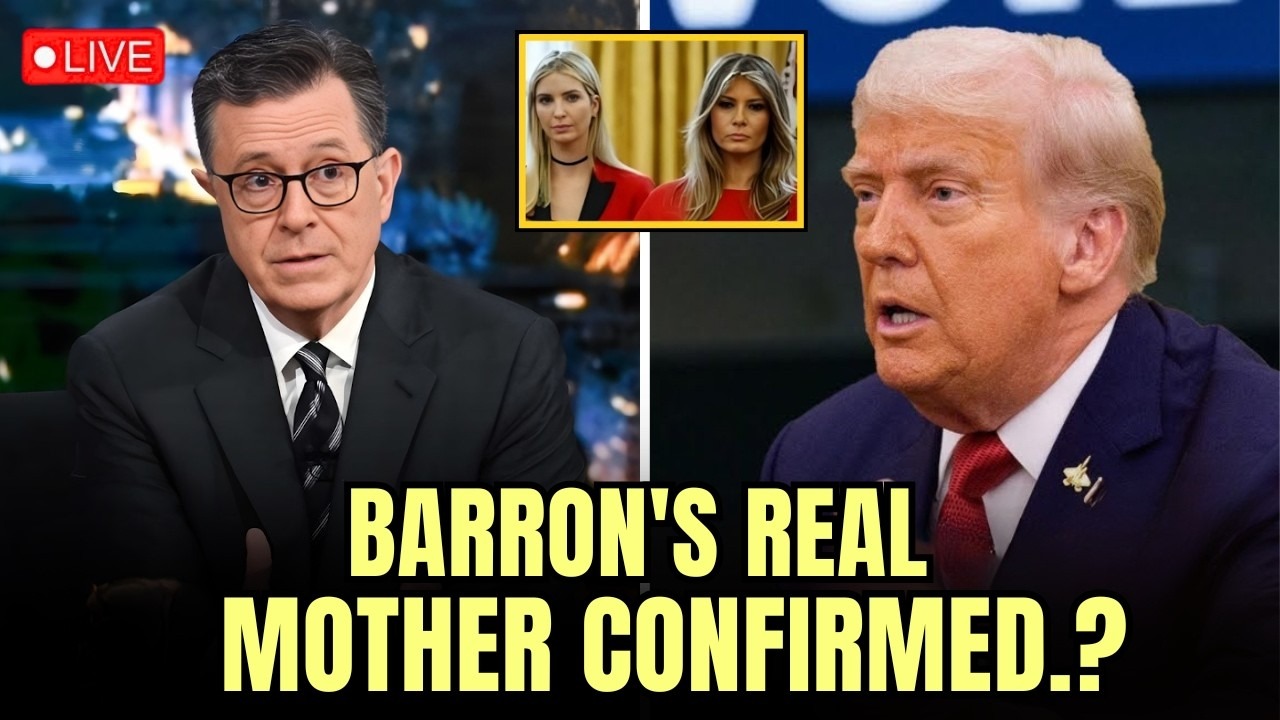
In a late-night message on social media, former President Donald Trump derided the television host Stephen Colbert as “low-rated” and “irrelevant,” reviving a familiar line of attack he has deployed against critics in media and entertainment. The timing was not incidental. Mr. Colbert had devoted several recent monologues to Mr. Trump’s legal troubles, including court rulings related to a gag order that restricted the former president’s public comments about witnesses and jurors.
What followed on “The Late Show,” broadcast from the Ed Sullivan Theater in Manhattan, offered a revealing snapshot of how late-night comedy and presidential politics have become entwined in an era of constant digital amplification.
Mr. Trump’s criticism fit a pattern. For years, he has sought to frame detractors not as ideological opponents but as personally deficient — losers, lightweights, puppets. The strategy, honed on the campaign trail and in office, aims to shift attention from substance to spectacle, turning disagreement into a test of dominance.
Mr. Colbert, whose program has frequently ranked among the most-watched in its time slot, responded not with reciprocal insult but with a question.
Holding up an index card during his monologue, he addressed Mr. Trump directly. “What specifically was false?” he asked, referring to the former president’s complaint about the show’s coverage. The line, delivered calmly, landed as both punchline and challenge.
The studio audience laughed at first, then grew attentive. The question was disarmingly simple. It also underscored a dynamic that has defined much of the Trump era: attacks often framed in sweeping terms, without direct engagement with particular facts.
Rather than enumerate grievances, Mr. Colbert displayed a montage of Mr. Trump’s own public statements — remarks delivered at rallies, interviews and press conferences over several years. The clips juxtaposed shifting positions on the same topics, allowing the contradictions to accumulate without extensive commentary.
The technique was familiar to viewers of late-night satire, but the framing felt more prosecutorial than comedic. Mr. Colbert did not dwell on caricature or impersonation. Instead, he highlighted dates and verbatim quotations, letting the archival record serve as rebuttal.
“A stable genius,” Mr. Colbert quipped at one point, borrowing Mr. Trump’s self-description from a 2018 tweet, “should be able to stand on one sentence without changing it halfway through.” The line drew sustained applause.
The exchange illustrates how entertainment platforms have become arenas for political accountability — or, at least, for political argument. While journalists adhere to formal standards of balance and sourcing, comedians operate with greater latitude. They can distill complex legal and policy disputes into digestible narratives, often with sharper edges.
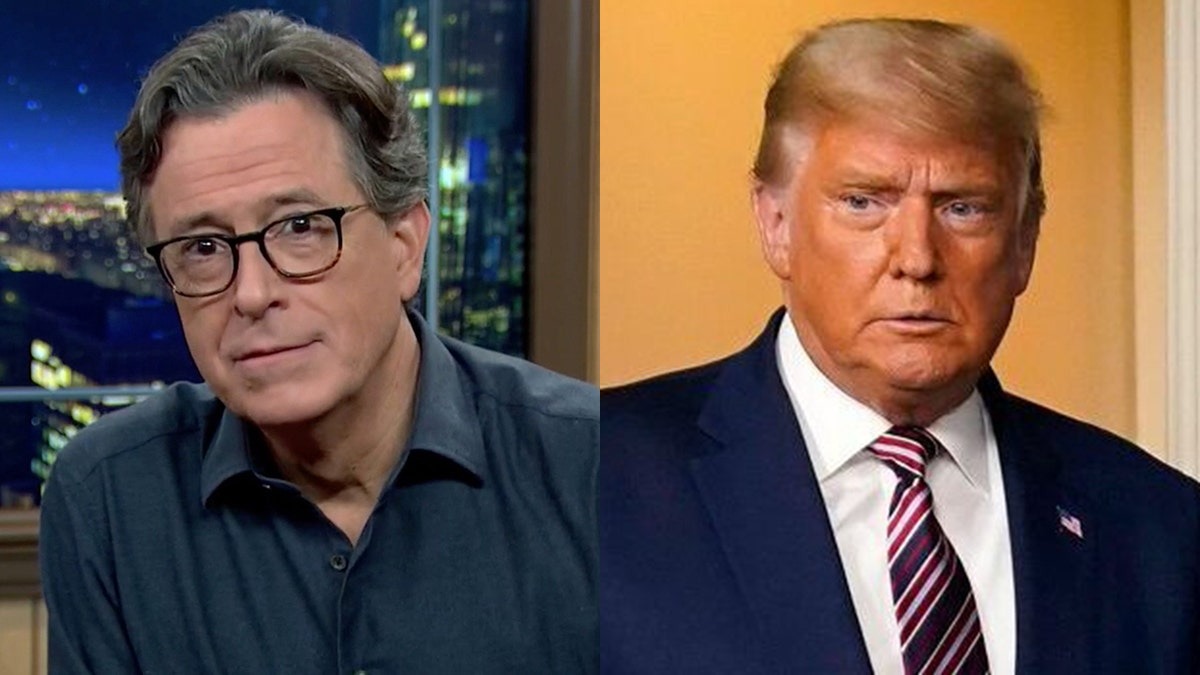
Media scholars note that this approach can both clarify and polarize. “Late-night hosts are performing a kind of editorial function,” said one professor of media studies. “They’re not neutral arbiters, but they are responding to perceived inconsistencies and inviting viewers to evaluate them.”
Mr. Trump’s allies have long argued that such segments amount to partisan advocacy disguised as humor. They contend that selective editing and tonal framing can create impressions that do not fully capture context. Supporters amplified the former president’s critique online, echoing his suggestion that the program’s ratings and relevance are in decline.
Yet audience metrics tell a more complicated story. “The Late Show” continues to draw millions of viewers across broadcast and digital platforms, and clips of Mr. Colbert’s monologues frequently circulate widely on social media. In the fragmented media landscape of 2026, influence is measured not only by overnight ratings but also by online reach.
One striking moment in the broadcast came when Mr. Colbert simulated a phone call from Mr. Trump, a familiar late-night device. Rather than interrupt the mock rant, he allowed it to run its course before repeating his central question: Which part was false?
The repetition functioned as a rhetorical hinge. Mr. Colbert’s argument was not that Mr. Trump lacks confidence or popularity, but that popularity is not a substitute for precision. “If your best argument is ‘I’m popular,’” he said, “you’re not debating — you’re campaigning.”
The audience reaction — laughter followed by applause — reflected more than amusement. It suggested a shared recognition of the broader stakes: the tension between performance and verification in contemporary politics.
Mr. Trump has often thrived in environments where attention is currency and confrontation is content. By turning the focus to timestamps and transcripts, Mr. Colbert attempted to shift the terrain from personality to record. Whether that shift resonates beyond the studio is another question.
For decades, late-night hosts have sparred with presidents and candidates, from playful jabs to pointed critiques. What distinguishes the current moment is the speed with which such exchanges reverberate across platforms, hardening partisan lines while energizing supporters on both sides.
In the end, the segment did not resolve the underlying dispute. Mr. Trump did not enumerate specific inaccuracies, nor did Mr. Colbert soften his tone. But the episode offered a vivid example of how political argument now unfolds not only in courtrooms and campaign rallies, but under stage lights — where a single question, repeated steadily, can become a counterweight to a barrage of insults.