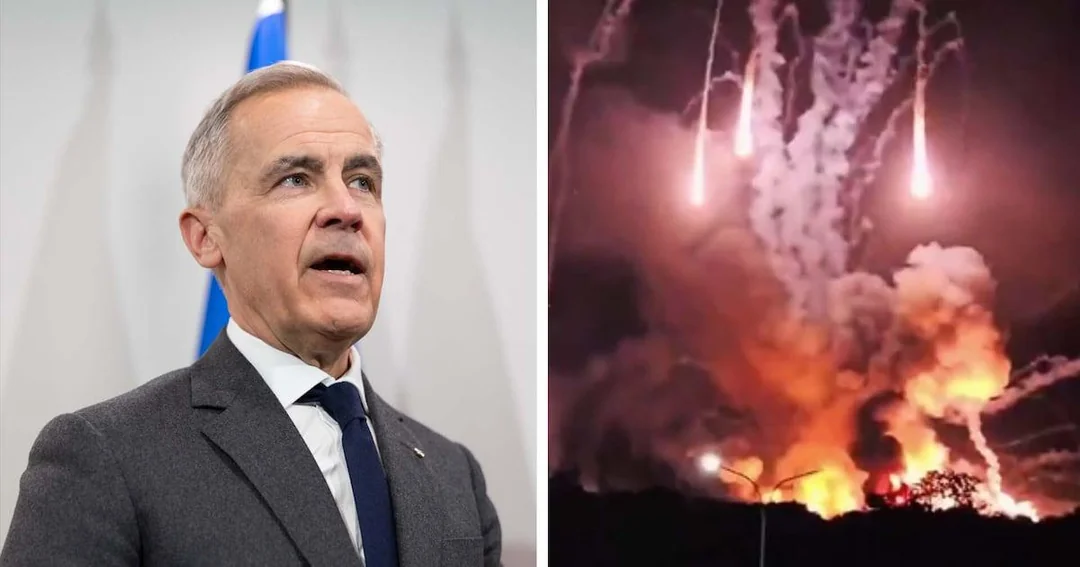
In a stunning overnight operation, the United States has executed a covert military strike deep within Caracas, successfully capturing Venezuelan President Nicolás Maduro. This unprecedented intervention has ruptured longstanding international norms, igniting urgent geopolitical tensions and prompting a cautious, defiant response from Canadian Prime Minister Mark Carney that is unsettling Washington’s expectations.
The sweeping US operation labeled “Absolute Resolve” unfolded under the cover of darkness, deploying armored vehicles and low-flying jets in the heart of Venezuela’s capital. Maduro, the nation’s embattled leader, was seized—a move that shattered assumptions about diplomatic alliances and triggered shockwaves extending far beyond Latin America’s borders.
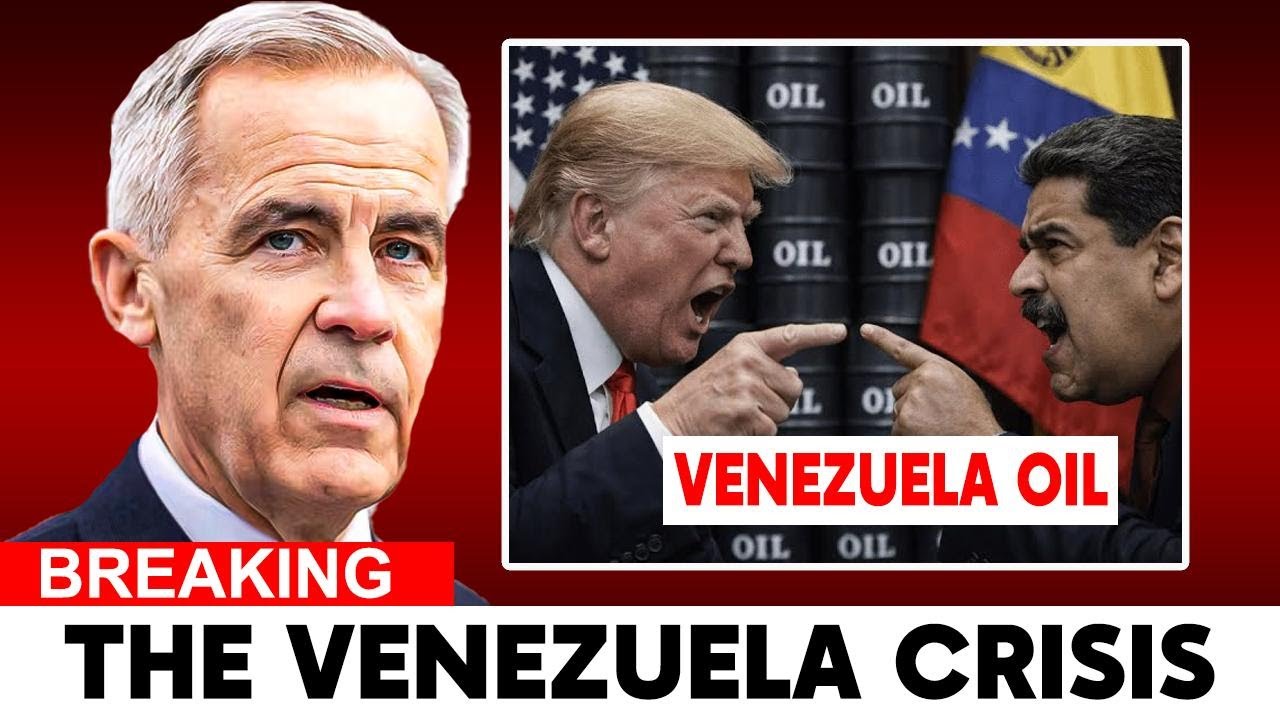
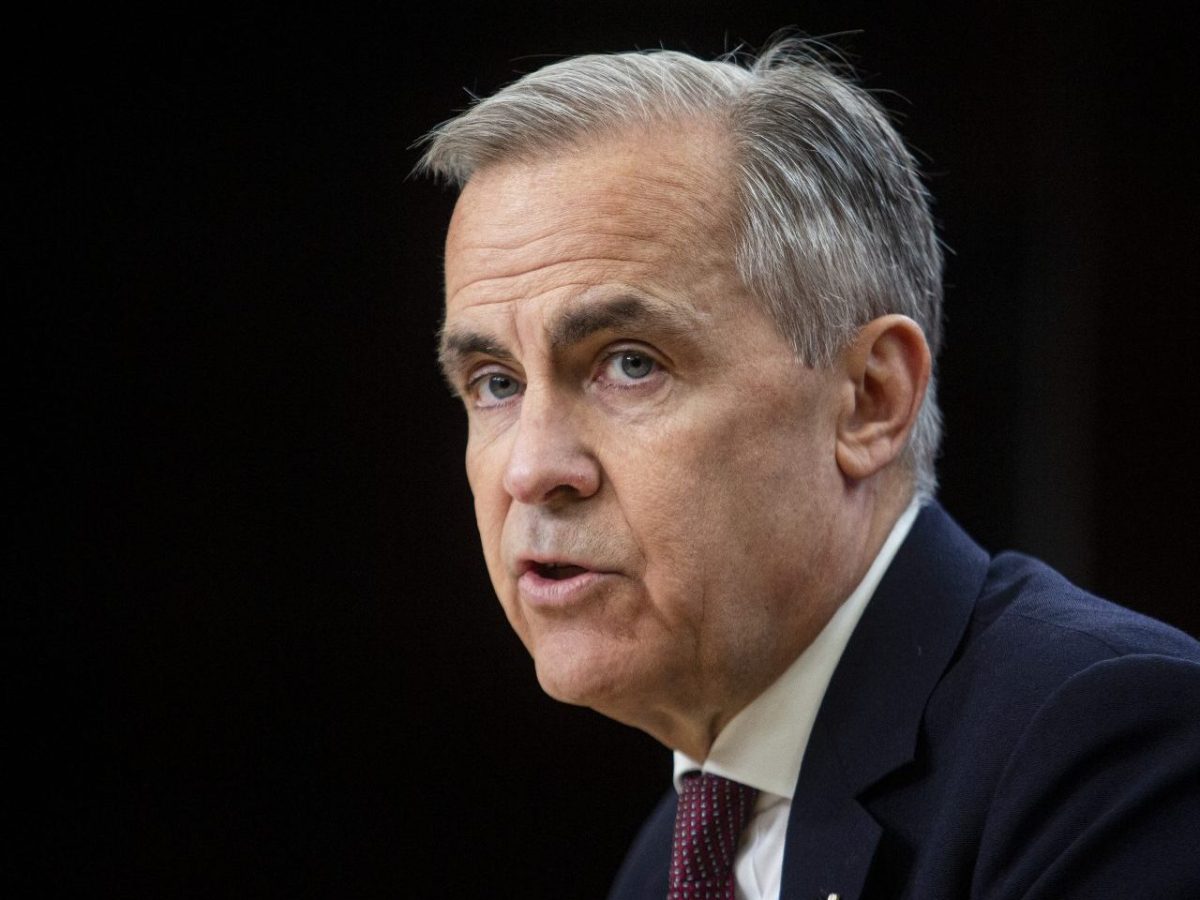
While Washington heralded the action as a decisive step toward regime change, Ottawa’s response was markedly restrained. Prime Minister Mark Carney refused to endorse the US military intervention, emphasizing Canada’s unwavering support for the Venezuelan people’s right to self-determination through peaceful, lawful means—not external force.
Carney’s statement carefully balanced condemnation of Maduro’s illegitimacy with firm opposition to unilateral military action, signaling a pivotal shift in North American diplomacy. This nuanced stance rejects the notion that Canadian alignment with the US is automatic, instead championing international law and multilateral engagement.
The divergence between Washington’s aggressive strategy and Ottawa’s principled restraint exposes fundamental clashes over power, legitimacy, and the rules governing sovereign nations. Canada’s disapproval acts as a rare rebuke of American unilateralism, highlighting concerns about sovereignty that resonate deeply across Latin America.
Historical context deepens the significance. The US-led intervention recalls the shadow of past invasions, notably 1989’s Panama incursion, stirring long-standing regional fears of external domination. Canada consciously distances itself from this approach, signaling sensitivity to these painful legacies and a commitment to diplomatic solutions.
Domestic critics in Canada reacted sharply—some applauding the US action as a triumph over socialist repression, others condemning it as illegal aggression that undermines international order. Carney’s measured position navigates between these extremes, underscoring Canada’s adherence to principles over partisan rhetoric.
Canadian Foreign Affairs Minister Anita Anand reinforced this position, demanding respect for international law from all parties, including external actors wielding military force without legal sanction. Her statement broadened the call for peace and democratic transition, rejecting any legitimacy for imposed governance.
Washington’s declarations following the operation starkly contrasted with Ottawa’s approach. President Trump’s announcement framed the US as Venezuela’s temporary governor, suggesting occupation rather than partnership. Attorney General Pam Bondi emphasized prosecuting Venezuelan leaders on US soil, signaling a zero-tolerance stance enforced by American authority.
In contrast, Canada emphasized humanitarian concerns, focusing on protecting Canadians abroad and aiding Venezuelan refugees. This stark difference in priorities reflects divergent values: Washington asserts dominance through force and control, Ottawa pursues safety and humanitarian responsibility through cooperation.
The effects on international alliances are immediate. Canada’s distancing disrupts the expected North American unity, raising urgent questions about allied cohesion in crises involving military intervention. Canada’s position may redefine its role on the global stage, asserting an independent voice grounded in multilateralism and respect for international norms.
Experts warn that Washington’s unilateral action risks undermining the global rules that maintain order between nations. Without broader international authorization, the operation threatens to set dangerous precedents, where might overtakes legality and destabilizes diplomatic frameworks critical to global peace.
For Venezuelans, the future remains uncertain. Maduro’s detention removes a contentious leader, but the path toward legitimate political transition is unclear. Regional governments watch cautiously, weighing the legality and consequences, while international organizations grapple with reconciling sovereignty and intervention.
Canada’s steadfast call for a peaceful resolution through dialogue and legal process stands in stark opposition to the disruptive and forceful US maneuver. This approach emphasizes long-term stability over immediate control, valuing trust and adherence to shared rules that govern international conduct.
The Venezuelan crisis now symbolizes a profound contest between competing visions of leadership on the world stage: raw power and unilateral action versus principled diplomacy and collective gove rnance. The outcomes of this standoff will reverberate far beyond Venezuela’s borders.
As global eyes remain fixed on Caracas, Canada’s refusal to mirror Washington’s path underscores the complexities of international alliances in moments of crisis. It illustrates how sovereign nations grapple with pressures to conform and the courage required to uphold principle under duress.
This moment marks a defining chapter in Canadian foreign policy—prioritizing consistency, legitimacy, and justice over expedience. It challenges assumptions about automatic alignment within allied coalitions and reasserts the importance of independent judgment in global affairs.
With Maduro in custody and Venezuela 𝒄𝒂𝓊𝓰𝒉𝓉 in geopolitical crossfire, the dynamics between force and restraint are more pertinent than ever. Canada’s position contributes a critical counterpoint advocating for respect, legality, and peaceful transition amidst escalating tension.
Washington’s swift military resolve collides with Ottawa’s methodical diplomacy, exposing enduring tensions between power politics and international law. The crisis serves as a test of global norms and the resilience of alliances when faced with drastic unilateral actions.
In this volatile environment, the stakes for regional stability and the integrity of global governance have never been higher. Canada’s clarion call for multilateral solutions emphasizes the urgent need to reinforce international frameworks against unchecked interventions. As this story unfolds in real time, the world watches how leadership, diplomacy, and lawful process navigate one of the most consequential interventions in recent history. The crisis in Venezuela may well redefine the boundaries of sovereignty and influence in the Western Hemisphere.
This evolving saga demands vigilant attention from governments, analysts, and citizens worldwide. The balance between respecting national sovereignty and addressing humanitarian crisis will shape the future contours of international relations for years to come. Canada’s distinctive stance illustrates a bold exercise in strategic sovereignty—refusing to capitulate to pressure while affirming commitment to democratic values and lawful process. It sets a precedent for principled engagement amid complex geopolitical upheaval.
In sum, the capture of Nicolás Maduro by US forces has catalyzed a seismic shift in diplomatic relations, exposing rifts between allies and challenging the global order. Mark Carney’s measured response reflects a deliberate choice to uphold international law over swift military expediency.
As tensions escalate and the humanitarian crisis deepens, the international community must grapple with unprecedented questions about intervention, legitimacy, and the future of democracy in Venezuela. The coming days will be critical in determining the outcome.
This historic moment emphasizes the fragile nature of alliances and the enduring importance of legal frameworks to navigate global crises. Canada’s approach offers a paradigm of leadership grounded in respect, restraint, and unwavering principle amid tumultuous change.