Elon Musk has reportedly become the first person ever to reach a net worth exceeding $700B, marking an unprecedented moment in modern financial history. The milestone places Musk in territory no individual has ever occupied before, highlighting how technology-driven wealth can scale at speeds unimaginable in previous generations.
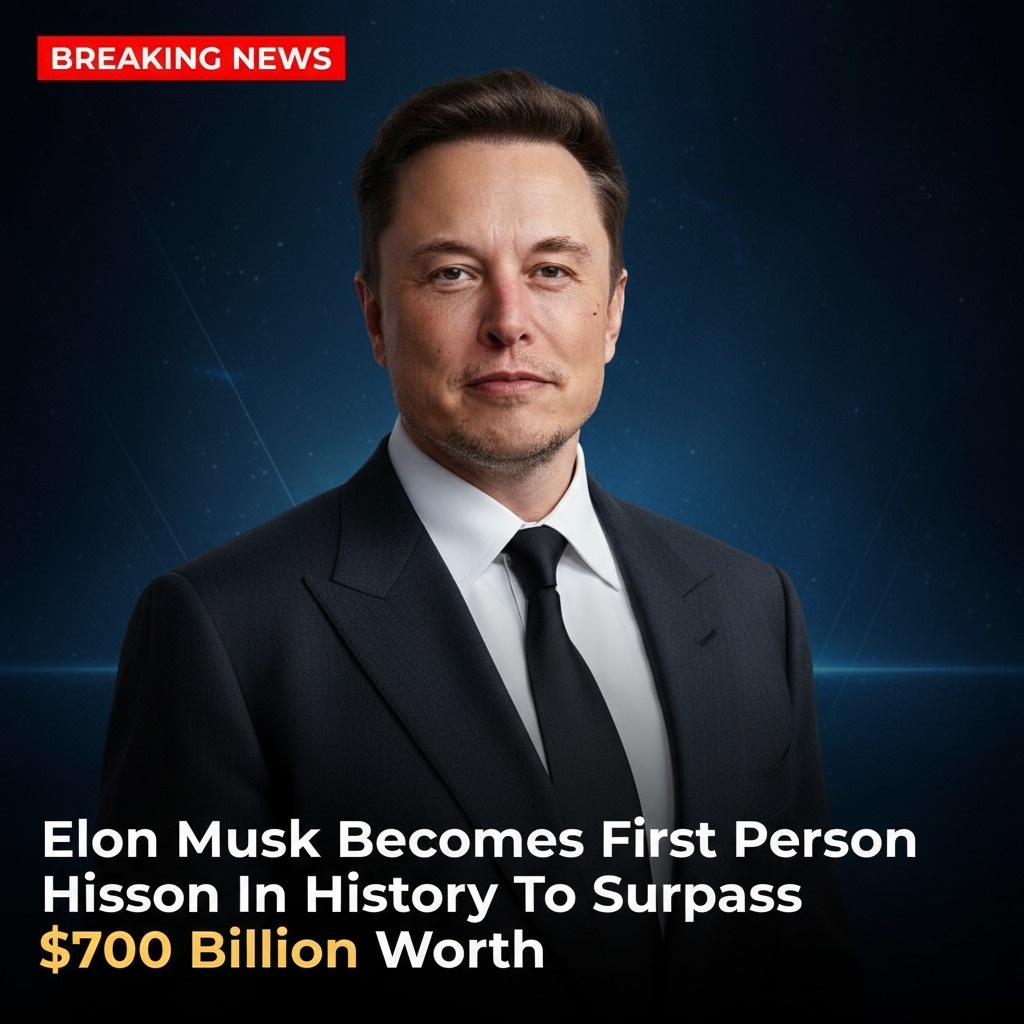
Musk’s fortune is largely tied to ownership stakes rather than cash. Major contributors include electric vehicles, space exploration, artificial intelligence, and digital platforms—industries that continue to expand globally. Unlike traditional wealth built over decades through manufacturing or finance, Musk’s rise reflects exponential valuation growth fueled by innovation, investor confidence, and long-term bets on future infrastructure.
The figure has sparked intense debate. Supporters argue it represents the rewards of extreme risk-taking, vision, and execution across multiple frontier technologies. Critics warn that such concentration of wealth raises concerns about inequality, influence, and accountability, especially when individual fortunes rival the economic output of entire nations.
What makes this moment historic is not just the number, but what it signals about the modern economy. Wealth creation is no longer linear. Ownership of platforms, data, and systems that scale globally can generate value faster than any resource-based model in history. Musk’s net worth reflects that shift more than any single business success.
Whether admired or criticized, the $700B milestone forces a reevaluation of how wealth, power, and innovation intersect. It underscores how profoundly technology has reshaped global hierarchies—and how a single individual, driven by ambition and leverage, can redefine the upper limits of what is financially possible in the 21st century.