A Flashpoint in American Politics: Speech, Fear, and the Cost of Division
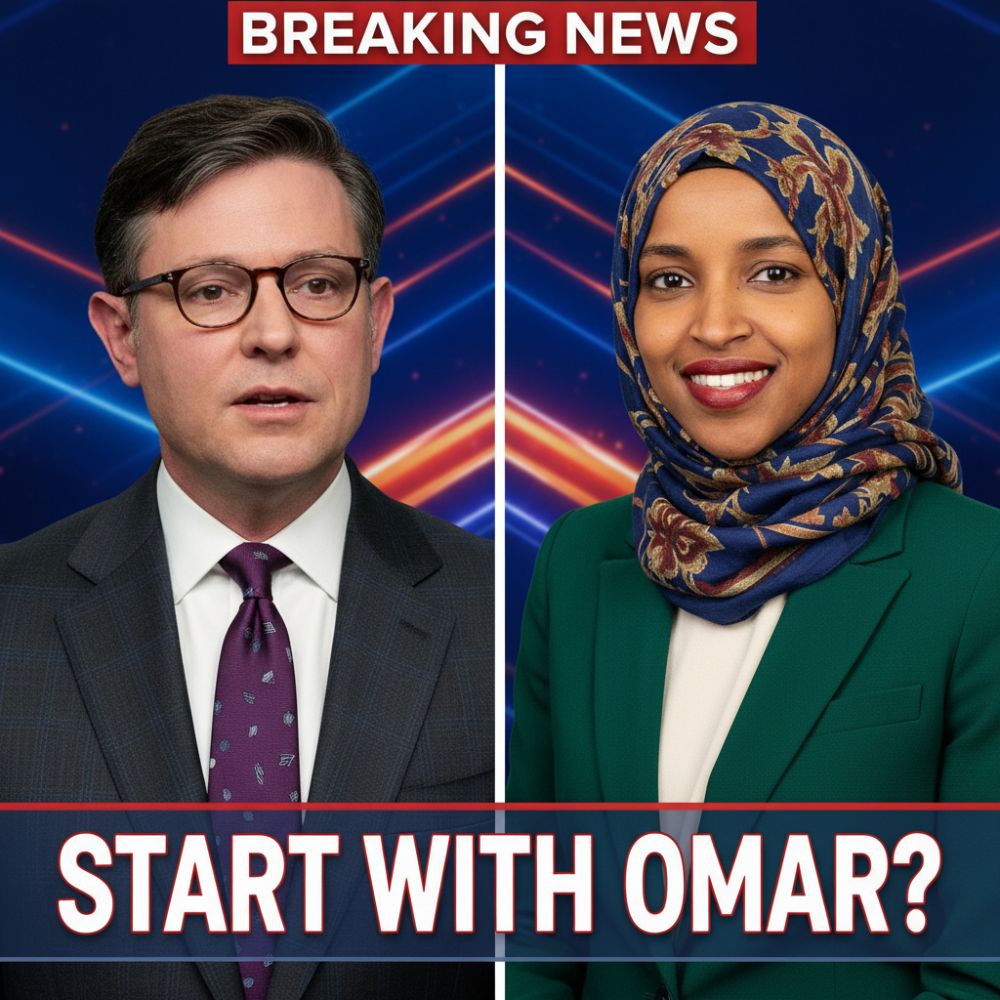
A controversial statement attributed to Mike Johnson ignited a political firestorm, forcing Americans to confront the boundaries between free speech, xenophobia, national security anxieties, and the moral responsibilities of public leaders.
The claim that the nation would be “safer” without Somali migrants instantly ricocheted across social media, provoking outrage, applause, fear, and confusion in equal measure, revealing deep fractures in contemporary political discourse.
At the center of the controversy stands Ilhan Omar, a sitting member of Congress, a refugee, and a symbol onto which competing narratives about immigration, loyalty, and identity are forcefully projected.
Supporters of the remark argue it reflects unfiltered concerns about border security, terrorism, and cultural cohesion, insisting uncomfortable conversations must happen, even when language is sharp and deeply unsettling.
Critics counter that such rhetoric dangerously conflates immigrants with criminality, fuels collective blame, and legitimizes prejudice, placing entire communities under suspicion for the actions of unrelated individuals.
The speed with which the statement trended highlights how outrage algorithms reward polarizing content, pushing extreme claims into millions of feeds, often stripped of context, nuance, or responsible framing.
For Somali American communities, the moment reopened old wounds, reviving memories of surveillance, discrimination, and the persistent burden of proving belonging in a country they already call home.
Community leaders emphasized that Somali immigrants serve as doctors, entrepreneurs, soldiers, and public servants, arguing their stories rarely go viral because dignity competes poorly with sensationalism.
Ilhan Omar’s critics see her as a lightning rod, accusing her of divisiveness, while supporters view attacks against her as racially coded efforts to silence dissenting political voices.
The controversy raises a fundamental question: when political leaders speak about safety, whose safety is prioritized, and who is quietly rendered disposable in that calculation?
Historically, American politics has repeatedly weaponized fear of the “other,” targeting Irish, Italian, Jewish, Japanese, Muslim, and Latino communities during moments of national anxiety.
Each era later looks back with discomfort, acknowledging how scapegoating promised security but delivered lasting harm, fractured trust, and eroded the nation’s moral credibility.
Defenders of the statement insist critics are overreacting, framing objections as attempts to suppress free expression rather than legitimate concerns about dehumanizing language and collective punishment.
Yet free speech does not absolve leaders from accountability, especially when words carry the power to normalize exclusion, inspire harassment, or justify discriminatory policies.
Social media intensified the clash, with hashtags weaponized by both sides, transforming a complex debate into a binary spectacle of loyalty tests and viral condemnation.
Influencers and commentators rushed to stake positions, knowing controversy drives engagement, while careful, empathetic analysis struggled to compete with outrage-fueled amplification.
The episode underscores how political messaging increasingly favors provocation over persuasion, aiming not to convince opponents but to energize bases through emotional escalation.
Policy experts note that national security is better served through targeted intelligence, community cooperation, and evidence-based strategies, rather than broad accusations against entire populations.
When migrants are framed as threats, trust erodes, making communities less likely to cooperate with authorities, paradoxically weakening the very safety such rhetoric claims to protect.
For younger audiences, especially online, the debate becomes a formative lesson about power, identity, and whether democracy can accommodate difference without descending into hostility.
Educators warn that normalization of exclusionary language reshapes civic culture, teaching future leaders that cruelty is an acceptable substitute for courage and competence.
The global audience is also watching, interpreting America’s internal battles as signals about its commitment to pluralism, human rights, and democratic resilience.
Allies express concern that such statements undermine diplomatic credibility, especially when advocating tolerance abroad while tolerating stigmatization at home.
Meanwhile, extremist groups exploit the controversy, selectively quoting politicians to legitimize their narratives, demonstrating how rhetoric can escape its original intent.
This reality places an ethical burden on leaders to consider not only what they say, but how their words travel, mutate, and are repurposed beyond their control.
The uproar invites reflection on whether political success should be measured by virality or by the capacity to reduce fear and foster shared purpose.
Citizens are left to decide what kind of discourse they will reward with attention, shares, and votes in an era where every reaction shapes the information ecosystem.
Some see the moment as a warning sign, others as overdue honesty, but few deny its power to reshape conversations about immigration and national identity.
Ultimately, the controversy is less about a single statement and more about the crossroads America faces between pluralism and polarization.
History suggests that nations grow stronger not by excluding difference, but by managing it with fairness, evidence, and empathy, even under genuine security pressures.