A Political Earthquake: When Power Turns the Spotlight Inward
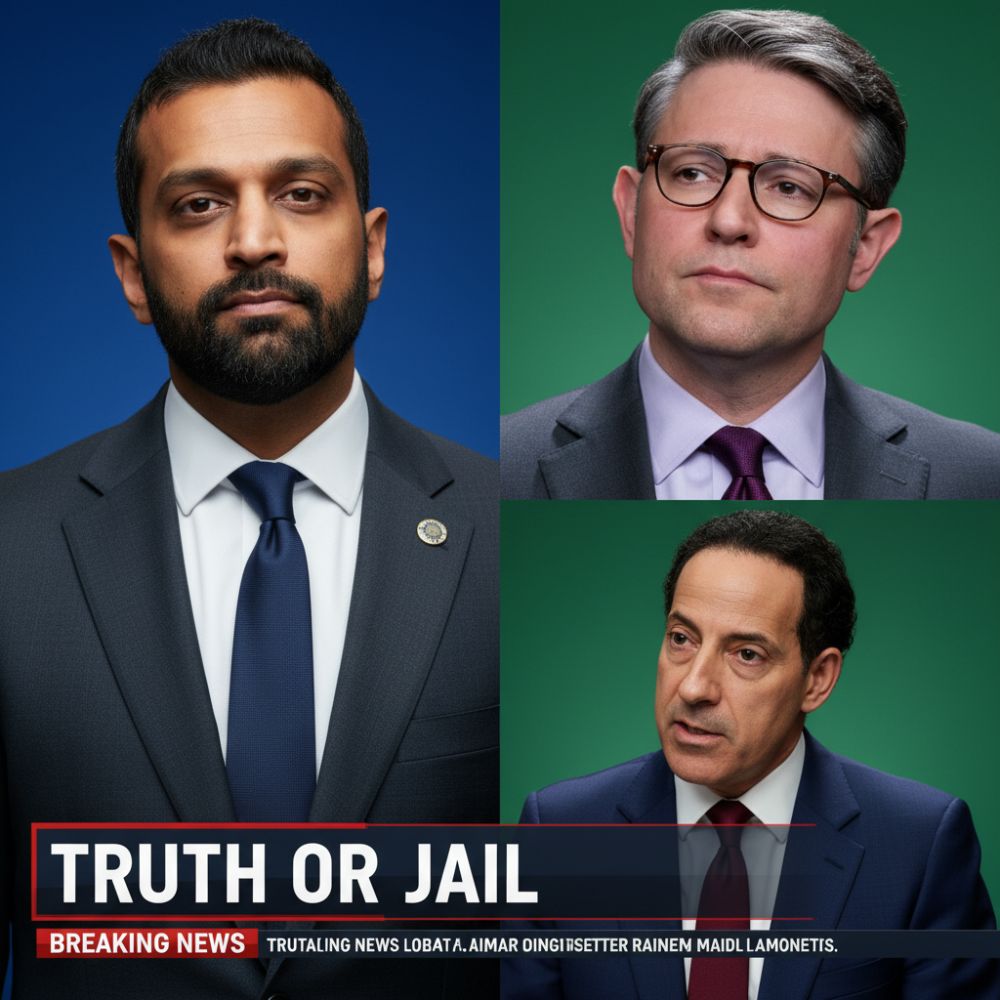
The political world is bracing for impact as Kash Patel pushes for Jamie Raskin to testify against Speaker Mike Johnson, igniting a fierce confrontation that threatens to reshape Washington’s fragile balance of power.
This demand is not merely procedural. It represents an escalation that many observers describe as unprecedented, provocative, and deliberately designed to force uncomfortable truths into the harsh glare of public scrutiny.
At its core, the controversy centers on a grand jury hearing scheduled for next week, a forum traditionally cloaked in secrecy yet increasingly weaponized within America’s hyper-polarized political climate.
Kash Patel, known for his combative style and unapologetic rhetoric, has framed the request as a matter of accountability rather than retaliation, a distinction critics immediately challenge as politically convenient.
Jamie Raskin, a seasoned lawmaker and constitutional scholar, now finds himself thrust into a narrative not of his own making, caught between institutional loyalty and the explosive demands of public transparency.
Meanwhile, Speaker Mike Johnson stands at the epicenter of the storm, facing allegations that have yet to be fully articulated but are already fueling speculation across media platforms and social networks.
Supporters of Patel argue that no official, regardless of rank or popularity, should be shielded from scrutiny when serious questions about conduct and influence arise within the highest levels of government.
Detractors counter that the move reeks of political theater, warning that grand juries risk becoming stages for partisan performance rather than instruments of justice and impartial investigation.
The timing of the request has only intensified suspicions, arriving amid a volatile election cycle where narratives can shift voter sentiment faster than facts can be verified or meaningfully debated.
Social media has amplified the controversy dramatically, transforming legal jargon into viral slogans, speculative threads, and emotionally charged debates that reward outrage over nuance and complexity.
For many Americans, this episode reinforces a growing belief that politics has entered an era where spectacle consistently overshadows substance, eroding trust in institutions once considered stabilizing forces.
Yet others view this moment as a necessary reckoning, arguing that discomfort is the price of transparency and that democracy weakens when powerful figures escape uncomfortable questioning.
Jamie Raskin’s potential testimony carries symbolic weight beyond any specific allegation, representing a collision between constitutional ideals and the brutal realities of modern partisan warfare.
Legal analysts emphasize that compelling testimony before a grand jury is not an accusation in itself, though public perception rarely distinguishes between legal process and implied guilt.
Mike Johnson’s allies insist the effort is a distraction from legislative priorities, accusing Patel of engineering chaos to undermine leadership credibility at a moment of strategic vulnerability.
Opponents of Johnson, however, see opportunity, suggestin\g that unanswered questions surrounding power dynamics deserve investigation regardless of political inconvenience or reputational risk.
This clash highlights a broader transformation in American politics, where internal party disputes increasingly spill into public legal arenas, blurring lines between governance, accountability, and revenge.
The phrase “witness against” alone has proven incendiary, triggering assumptions of betrayal, conspiracy, and hidden wrongdoing long before any sworn testimony is actually delivered.
Such language thrives online, where algorithms prioritize emotionally charged content, pushing this story into feeds of millions who may never read beyond provocative headlines.
For political strategists, the situation is a masterclass in narrative warfare, demonstrating how legal maneuvers can double as messaging tools in an attention-driven media ecosystem.
The risk, critics warn, is normalization of these tactics, where each new scandal raises the stakes and lowers the threshold for what constitutes acceptable political escalation.
Historically, grand juries were designed as safeguards against abuse of power, yet today they increasingly symbolize power struggles rather than neutral instruments of civic protection.
Public reaction remains sharply divided, with some demanding aggressive investigation and others pleading for restraint to prevent further erosion of institutional legitimacy.
Jamie Raskin has not yet publicly confirmed whether he will comply, though silence itself has become a canvas onto which supporters and critics project competing interpretations.
Every statement, pause, or procedural detail now risks being reframed as evidence of hidden motives, feeding a cycle of suspicion that thrives on uncertainty.
Kash Patel’s role continues to polarize audiences, with admirers praising his willingness to challenge elites and critics accusing him of exploiting outrage for personal and ideological gain.
Mike Johnson’s leadership faces a defining test, not only in legal terms but in how effectively he communicates credibility amid relentless scrutiny and online speculation.
This unfolding drama underscores how modern political conflicts rarely remain confined to hearing rooms, rapidly transforming into cultural flashpoints with lasting social consequences.
Whether this gambit strengthens democratic accountability or deepens partisan fractures remains uncertain, but its capacity to inflame debate is already undeniable.
As the grand jury date approaches, anticipation builds, driven less by verified facts than by the promise of confrontation, revelation, and symbolic victory.
In an age where controversy fuels clicks and engagement defines influence, this story seems almost engineered for virality, controversy, and endless online circulation.