David Letterman Just Reminded Late-Night Why He Still Matters. You could feel the shift in the room the second he started talking. During his explosive appearance on Jimmy Kimmel Live!
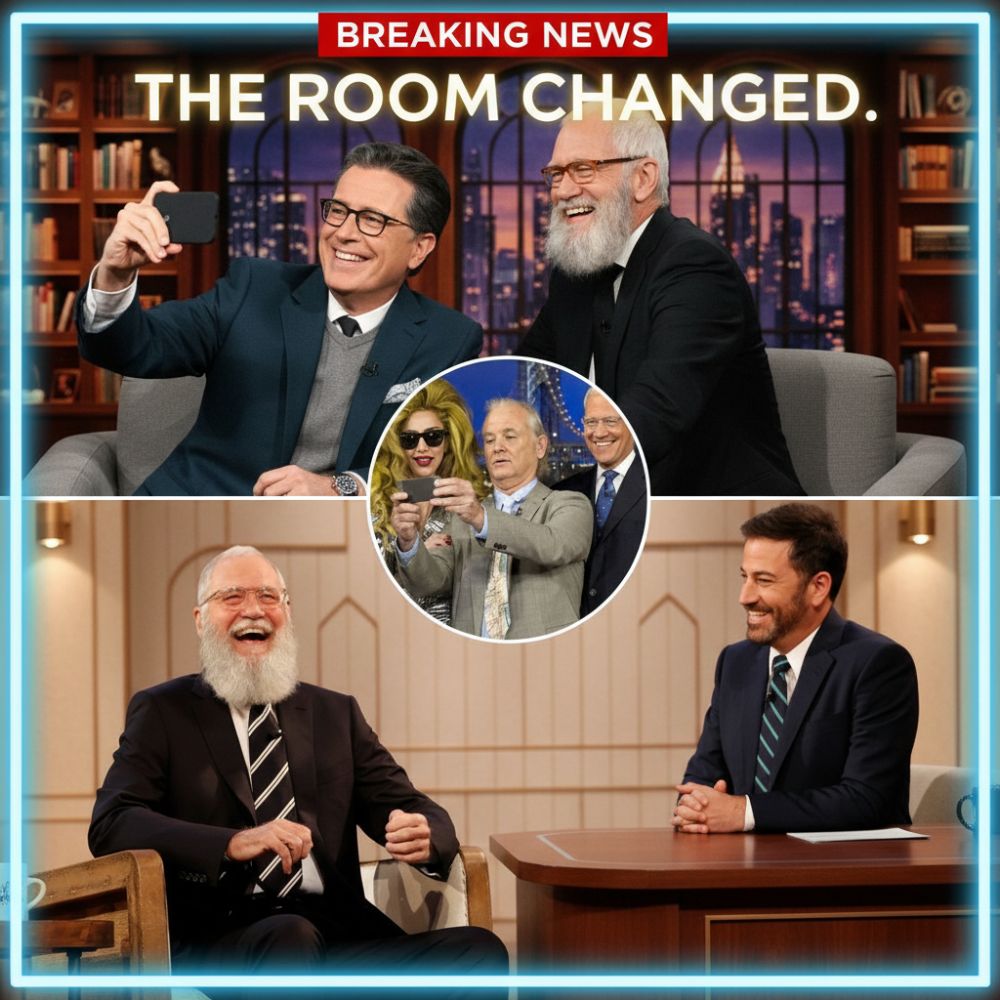
David Letterman didn’t ease into nostalgia or trade polite anecdotes. He went straight for the truth — and the audience absolutely lost it. With razor-sharp clarity, Letterman declared that any leader who behaves foolishly deserves ridicule, no caveats, no soft landings. The laughs came fast, loud, and electric — the kind that only happen when a room knows it’s witnessing something real.
This was vintage Letterman: • Fearless commentary • Surgical timing • Zero hesitation to call out nonsense But then came the twist. Letterman congratulated Jimmy Kimmel on his contract extension and admitted something fans didn’t expect: he’s relieved he’s no longer in the nightly late-night battlefield — while praising today’s hosts for “defending democracy” in a media world that feels more chaotic than ever.
And suddenly, it wasn’t just funny. It was revealing. With cancellations, suspensions, network shake-ups, and nonstop headlines rocking late-night TV, Letterman’s blunt honesty hit harder than it would have even a few years ago. It felt like a warning… and a reminder. Late-night isn’t cooling off. It’s heating up. And Letterman just threw gasoline on the fire
David Letterman Lights Up Late-Night TV With a Fiery, No-Filter Return
One appearance. One rant. And suddenly, everyone is talking about what late-night comedy is supposed to be again.
Late-night television hasn’t exactly been short on drama lately — but David Letterman just reminded everyone what real disruption looks like.
During a headline-making appearance on Jimmy Kimmel Live!, the legendary host delivered one of his sharpest, most unfiltered monologues in years — and the studio audience absolutely erupted.
This wasn’t nostalgia.
This wasn’t polite reflection.
This was Letterman, fully locked in.
“If You Act Foolish, You Get Mocked”
At the center of the moment was a blunt declaration that instantly caught fire online: leaders who behave foolishly, Letterman argued, deserve ridicule. Not hedged. Not softened. Just stated — clearly and unapologetically.
The crowd roared.
Kimmel grinned.
And social media lit up within minutes.
It felt like a throwback to an era when late-night comedy didn’t flinch — except this time, it landed in a media landscape already buzzing with tension.
The power of the moment wasn’t just what Letterman said — it was how he said it.
Fearless commentary
Razor-sharp delivery
Zero hesitation to call out nonsense
It was the Letterman audiences remembered: relaxed, confident, and entirely uninterested in playing it safe.
And coming at a time when late-night TV is facing cancellations, suspensions, shifting contracts, and nonstop controversy, his honesty hit harder than usual.
Praise for Kimmel — and Relief From the Battlefield
Letterman didn’t just stir the pot. He also took a moment to congratulate Jimmy Kimmel on his recent contract extension, praising him and other current hosts for what he described as “defending democracy” in a chaotic media environment.
At the same time, Letterman admitted something fans found surprisingly candid: he’s relieved he’s no longer in the nightly grind.
The late-night battlefield, he suggested, is more intense than ever — and the pressure on today’s hosts is enormous.
Why This Moment Hit So Hard
Letterman’s appearance landed differently because it cut through layers of media noise. There was no scripted segment, no polished talking points — just a veteran comic saying exactly what he thought, when it mattered.
Viewers didn’t just laugh.
They leaned in.
In an age where late-night TV is often accused of playing defense, Letterman went on offense — and reminded audiences why the format once felt dangerous, relevant, and essential.
Late-Night Isn’t Cooling Off — It’s Heating Up
With network shake-ups, evolving audiences, and political tension bleeding into entertainment, late-night television is anything but stable right now. Letterman’s moment didn’t calm the waters — it churned them.
And that’s precisely why it mattered.
David Letterman didn’t return to late-night to reminisce. He showed up to make a point — and in doing so, reignited a conversation about comedy, criticism, and courage on television.