In a seismic shift for Canadian energy politics, the Government of Alberta has confirmed a major new pipeline alignment with the United States, a decisive maneuver that fundamentally rewrites the nation’s energy export strategy and challenges federal authority. Premier Danielle Smith’s government is advancing a pathway to send an additional one to two million barrels of oil per day south, leveraging existing U.S. infrastructure and signaling an end to waiting for federal approvals.

The confirmation represents a strategic declaration of energy independence from Ottawa’s protracted approval culture. Alberta, home to the world’s third-largest oil reserves valued at over $9 trillion, has openly framed the U.S. as an expandable, viable export partner, moving the concept from political theory into tangible reality. This pivot south follows years of collapsed east-west pipeline projects like Energy East and Northern Gateway.
Premier Smith, while expressing optimism about a potential west-coast pipeline to Asian markets, has simultaneously driven the U.S.-focused initiative with a clear sense of urgency. She stated negotiations are progressing in “a matter of weeks,” with two teams engaged in intensive talks. This acceleration exposes a stark power shift within the federation, as Alberta chooses to monetize its resources on its own terms.
The province’s leverage stems from a compelling operational logic understood perfectly in Washington. U.S. refineries and energy systems, built for heavy crude over decades, are compatible with Alberta’s output and crave reliable, consistent supply. With American domestic production insufficient for its own demands, Alberta’s proximity and political stability make it an ideal strategic partner for enhancing U.S. energy security.
This move directly targets what Alberta calls “nine bad laws,” federal policies perceived as curbing energy sector growth. Premier Smith specifically cited the federal emissions cap, the oil tanker ban on British Columbia’s north coast, and net-zero electricity regulations as areas requiring amendment or removal to restore investor confidence and enable production growth.
The confirmation has triggered immediate and chaotic reactions across the country. Ottawa is scrambling to control the narrative, while the Government of British Columbia has forcefully reasserted its jurisdiction over coastal waters and tanker traffic. Environmental groups have escalated opposition, illustrating how Alberta’s single action has simultaneously pressured every major political fault line in Canada.
Alberta’s strategy incorporates a critical innovation designed to circumvent historic opposition: anchoring the pipeline push to Indigenous equity and ownership. Through tools like the Alberta Indigenous Opportunities Corporation, which has already underwritten $1.3 billion for major projects, the province is shifting the economic equation from protest to participation for First Nations communities.
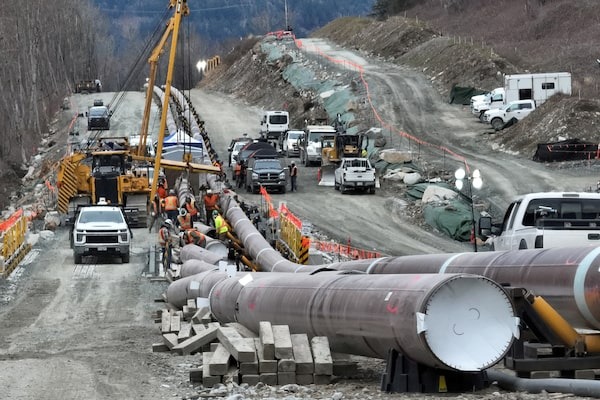
This financial and procedural groundwork has been laid quietly for months, with millions committed to route studies and technical planning. By building an investable structure, Alberta has created a project that capital can step into the moment political friction eases, demonstrating a seriousness that markets and Washington recognize instantly.
The underlying message to Ottawa is one of reclaimed agency. Federal power has long relied on controlling the timing and approvals of major resource projects. By proving it can advance energy corridors through alignment with the U.S. and Indigenous partners, Alberta has transformed federal decision-makers into observers and turned its own policy signals into measurable momentum.
Energy experts note the profound implications of this realignment. When a province already supplying 3.5 million barrels a day to the U.S. signals the capacity to push another million-plus south, it creates a competitive pressure that collapses Ottawa’s timeline for other projects, including any future west-coast export solution.

Premier Smith emphasized the immediate economic stakes, citing an estimated half-trillion dollars in capital that has fled Alberta for other jurisdictions due to policy uncertainty. She argues that changing the legal environment is the key to attracting investment back, enabling the production expansion needed to fill any new pipeline.
The confirmation also highlights a deep constitutional tension within Canada. Alberta is invoking international principles against landlocking a jurisdiction, while British Columbia asserts its coastal authority. This forces a national confrontation over who decides when one province’s resources must move through another’s backyard.
Washington’s perspective is purely pragmatic. Alberta’s offer of scale, speed, and cooperation addresses a critical supply gap. In an industry where pathways turn into steel faster than approval cultures can react, the alignment between a producing province and ready infra