A quiet, deliberate, and seismic shift in Canada’s national posture has been declared, fundamentally rewriting its strategic relationship with the United States and the world.

The moment came not in a fiery diplomatic cable or a public confrontation, but in a sober address to the nation’s armed forces. What was framed as a routine ceremony became a historic pivot. The message delivered was one of stark, uncompromising realism. Canada, the speech made clear, will never again outsource its survival, economy, or sovereignty to another nation.
This declaration traces back to a collapsed assumption: that American protection was permanent and unconditional. Years of volatile trade wars, political pressure, and rhetoric treating Canada as a possession shattered that trust. The lesson was brutal. If another nation controls your defense, it influences your economy, borders, and ultimately, your future. Canada’s response was not panic, but a methodical restructuring of national power.
The first signal was financial. Decades of chronic military underfunding, born from assumed security, ended with immediate, massive budget commitments totaling tens of billions.This funding is not for show. It rebuilds recruitment, expands training, increases pay, and restores bonuses. Credibility, not militarization, is the immediate goal.
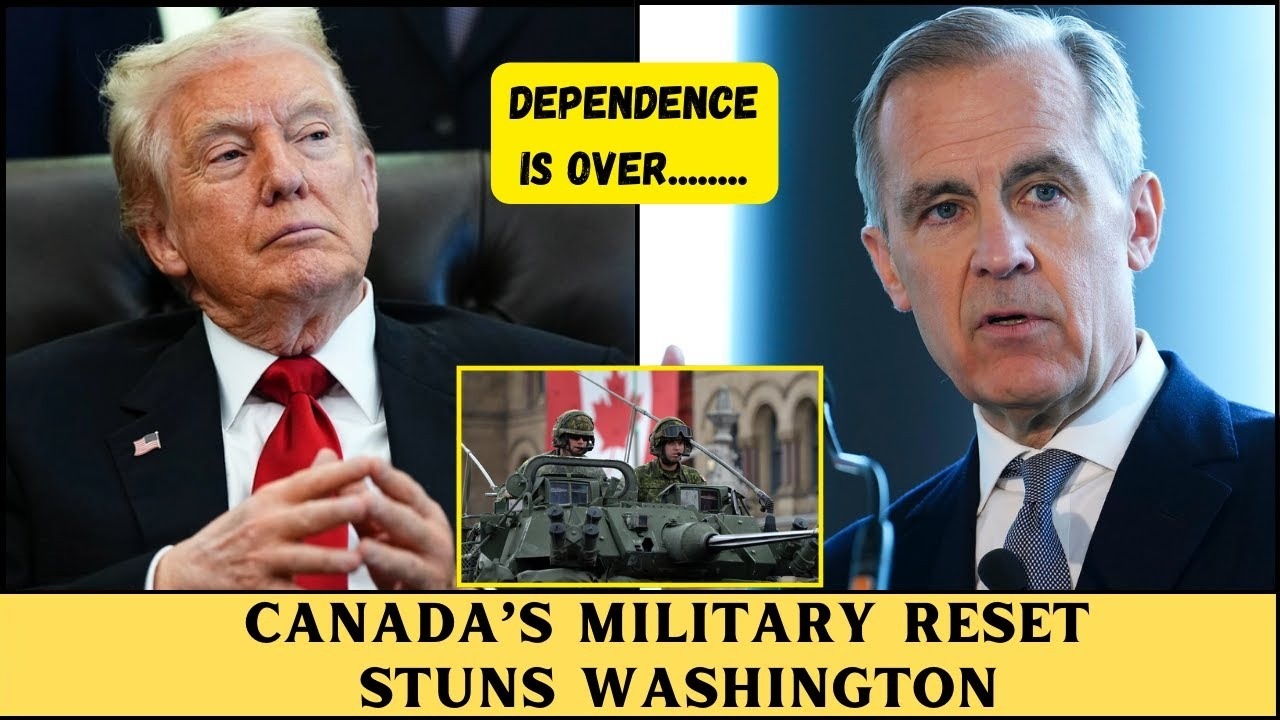
Critically, Canada committed to meeting NATO’s two percent defense spending target years ahead of schedule. The message was unambiguous: dependence is more expensive than preparation. The strategic focus turned sharply north. The Arctic, once seen as distant ice, is now central. Melting passages have turned isolation into access, drawing attention from rivals like Russia and China. Canada’s historic vulnerability there is being addressed not with words, but with persistent presence. Investments are flowing into land capabilities, naval reach, air control, and surveillance. The boldest move, however, is economic. For generations, nearly three-quarters of Canadian military procurement dollars flowed south to American defense contractors.
This created a structural weakness. As long as defense dollars flowed outward, leverage flowed with them, leaving Canada exposed to external political and trade pressure. That pipeline is being deliberately dismantled. Canadian tax dollars are now being redirected to build domestic industrial capacity in steel, aluminum, manufacturing, and technology.
Defense spending is now a tool of economic sovereignty. Building and servicing your own systems means controlling your own readiness and timelines, neutralizing external leverage. This shift is designed to be irreversible. Once domestic supply chains, workforces, and facilities are established, a return to dependence becomes politically and strategically unacceptable.
The next move asserts control of geography itself. A generational program to acquire twelve new conventional submarines represents a decades-long reset of maritime authority. These vessels are not about showing force, but ensuring certainty. They provide persistent, independent surveillance and the ability to deny access in Canadian waters without permission.
The massive, long-term contract will anchor jobs, expertise, and strategic control in Canada for half a century, insulating it from the political winds of other capitals. In the air, automatic procurement is over. While committed to some US-built fighter jets, future purchases are under review. The mere pause changes the leverage equation.
When a country is willing to slow down and evaluate instead of sign blindly, it signals profound independence. True sovereignty means controlling your own skies and seas. This comprehensive shift was not designed to shock, but it has. The world is noticing Canada preparing for permanence, not just reacting to crises.The early NATO target commitment signals allies that Canada will not be carried, and tells rivals that assumptions of weakness are dangerously outdated.
This is not a one-time budget spike. It is a multi-decade trajectory declaring Canada’s intent to be structurally prepared, not temporarily reactive.The global impact is immediate. Allies begin to treat Canada as a contributor of strength, not just goodwill. Negotiations change tone; Canada is consulted, not managed.
Potential adversaries are forced to reassess. A prepared country is harder to pressure because uncertainty disappears. Respect follows tangible capability.
This posture is not isolationism. It is entering the world with balance: partnered but not dependent, cooperative but not vulnerable. Strength, quietly built, becomes the new baseline. The shift ends a generational habit of waiting—for reassurance, for approval, for rescue. That waiting is over. Canada is announcing responsibility for its own future.
In an unpredictable world, this decision reduces tension. Prepared nations do not panic, bluff, or beg. They plan. And once planning replaces dependence, every outcome changes.
This moment crosses a line that cannot be uncrossed. Canada did not announce this with fanfare or threats. It acted. Sovereignty is now visible in contracts, infrastructure, and readiness.The nation is not turning away from the world or its closest ally. It is standing within the world, upright and capable, no longer assuming someone else will carry the weight.
That fundamental recalibration protects more than borders. It protects national identity and secures a future defined by respect instead of reliance, capability instead of hope.