The material presents a highly dramatic and emotionally charged account of a congressional hearing involving Senator John Kennedy and Congresswoman Ilhan Omar.
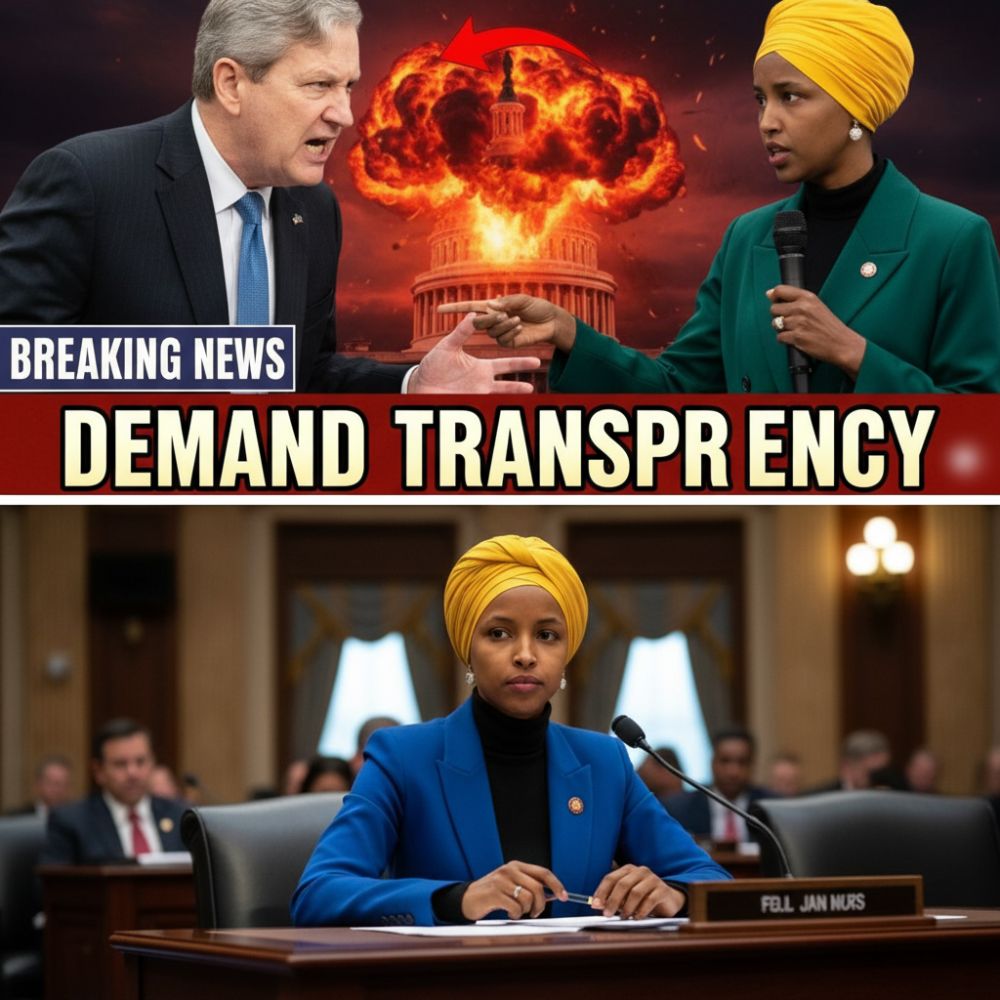
Framed as a methodical and devastating dismantling of a political figure using nothing more than a small notebook, the narrative unfolds with the pacing and structure of a courtroom drama rather than a conventional political report .
At its core, the story combines several serious allegations—financial irregularities, campaign spending concerns, personal controversies, and public statements—into a single, continuous confrontation.
Each element is presented as part of a larger pattern, with the notebook serving as a symbolic device representing evidence, order, and inevitability.
This structure is compelling because it gives the impression of a carefully constructed case reaching an unavoidable conclusion.
However, one of the most important aspects to examine is verification. Claims such as millions of dollars in campaign expenditures, dramatic increases in personal wealth, or large-scale fraud connected to a specific district are serious and would typically be supported by official records, court filings, or confirmed investigations.
While some real cases—such as fraud in federal programs—do exist, the narrative often extends these facts into broader conclusions without clearly distinguishing between documented evidence and interpretation.
The storytelling style also signals a high degree of dramatization. The hearing is described with precise cinematic detail: the timing of gestures, the reactions of the audience, the emotional testimonies, and even the symbolic tearing of notebook pages.
These elements create a vivid and engaging scene, but they also resemble scripted storytelling more than the often procedural and less theatrical nature of real congressional hearings.
Another key feature is the use of contrast. Senator Kennedy is portrayed as calm, methodical, and almost understated, while Congresswoman Omar is depicted as emotional, reactive, and ultimately silent.
This contrast reinforces the narrative’s central theme: that calm logic and “facts” triumph over emotion and deflection.
While effective as storytelling, such binary portrayals often oversimplify real interactions, which are typically more complex and less one-sided.
The material also introduces deeply sensitive topics, including references to terrorism, religion, immigration, and identity.
These are framed in a way that heightens emotional impact, particularly through personal testimonies and symbolic moments.
While these elements can be powerful, they also risk conflating separate issues—policy debates, personal conduct, and historical events—into a single narrative thread.
A particularly notable technique used throughout is accumulation. By presenting multiple allegations in rapid succession—financial, ethical, personal—the narrative creates a sense of overwhelming evidence.
This can make the overall story feel convincing, even if each individual claim requires separate verification and context.
It is a common rhetorical strategy: the volume of claims substitutes for the strength of proof.
The reaction described—silence, walkouts, immediate referrals for investigation—adds to the sense of finality. In reality, institutional processes such as ethics reviews or legal investigations are typically slower, more procedural, and less dramatic than portrayed.
Immediate, sweeping consequences rarely unfold in a single moment. It is also important to consider the broader context of political narratives in the digital age.
Content like this often blends real issues—such as transparency, accountability, and public trust—with heightened drama to maximize engagement.
The result is a story that feels both informative and conclusive, even when key details remain unverified or selectively presented.
Ultimately, the material is less a straightforward record of events and more a constructed narrative designed to persuade and evoke strong reactions.
It draws on real concerns and recognizable figures, but organizes them into a storyline with clear heroes, conflicts, and resolution.
Understanding such content requires separating its components: identifying what is documented, what is alleged, and what is dramatized.
Because while the story is undeniably compelling, the truth behind it is often more nuanced, less theatrical, and still unfolding.
In an era where information spreads rapidly and narratives form quickly, the ability to critically evaluate such stories becomes essential.
Not every powerful scene reflects a complete reality—and not every conclusion presented with confidence is fully supported by evidence.