Tomato Trade Erupts: Canada Closes Border to U.S. Imports, and Mexico Reaps a $12 Billion Windfall
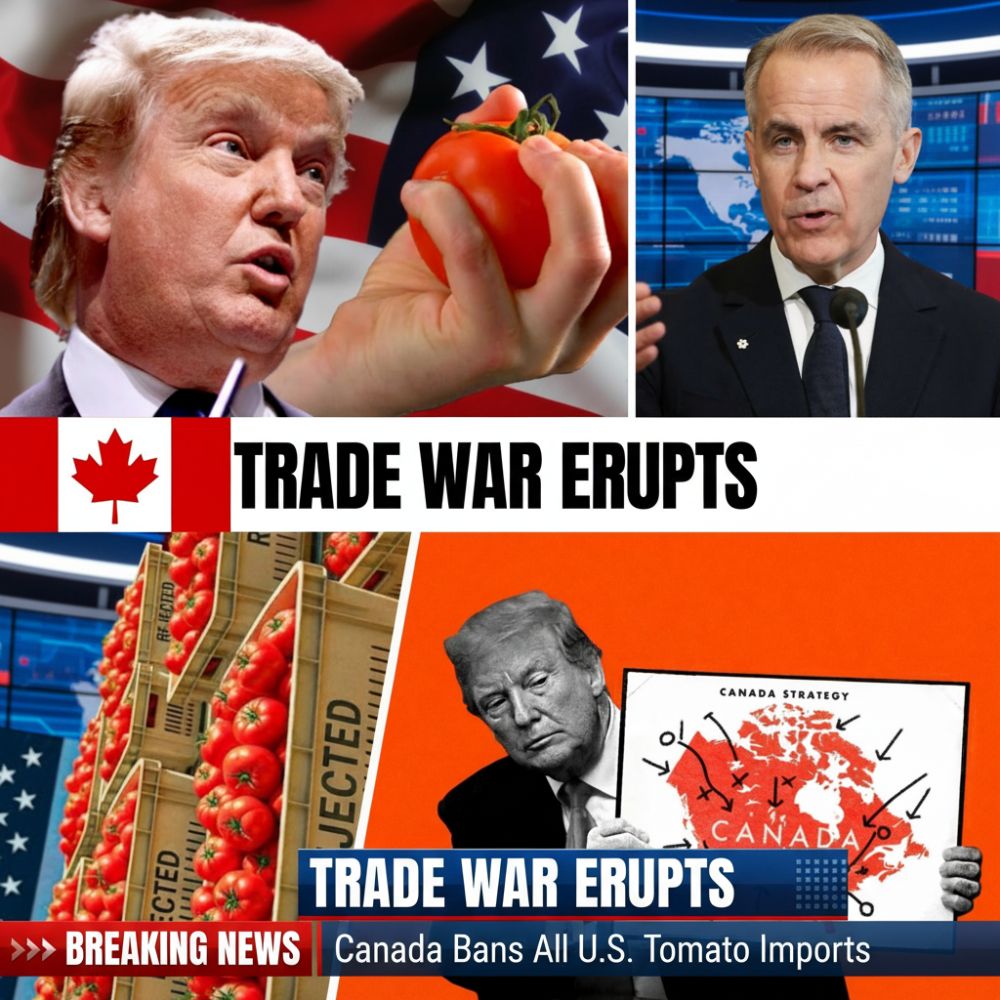
OTTAWA — In a stunning overnight escalation of North American trade tensions, Canada has effectively shut its border to all U.S. tomato imports, citing what officials described as serious and unresolved safety and quality concerns. The move has sent shockwaves through the continent’s fresh produce industry.
The decision, announced without advance notice, caught American growers completely off guard. At border crossings from British Columbia to New Brunswick, truckloads of ripe tomatoes were turned away, leaving drivers stranded and refrigeration units struggling to preserve millions of dollars’ worth of perishable cargo.
Within hours of the announcement, the price of U.S. tomatoes destined for the Canadian market collapsed. Warehouses on the American side of the border began overflowing with fruit that suddenly had nowhere to go. Growers described the scene as “an absolute implosion.”
Canada, for its part, offered little elaboration beyond a brief statement citing “recurring phytosanitary irregularities and documented safety violations” in U.S. tomato production. No specific incidents were named, and no timeline for reopening the border was provided.
The timing of the ban is anything but accidental. With the summer harvest season approaching its peak, American exporters typically ship hundreds of millions of dollars’ worth of tomatoes northward. That revenue stream has now been severed completely.
And then came the second shock. Within hours of Canada’s announcement, Mexican agricultural officials confirmed that they had signed new supply agreements worth an estimated $12 billion, effectively replacing American tomatoes on Canadian grocery shelves.
Mexico’s swift victory was no improvisation. Sources familiar with the negotiations suggest that Mexican trade officials had been quietly cultivating relationships with Canadian distributors for months, anticipating precisely such a rupture.
“The moment the border closed, Mexico was ready,” said one agricultural economist who requested anonymity to speak candidly. “Contracts were drafted. Logistics were arranged. This was not luck. This was preparation.”

For American farmers, the consequences are immediate and devastating. The U.S. tomato industry, already struggling with rising input costs and labor shortages, now faces the loss of its largest foreign market with no warning and no clear path to recovery.
“I have fields full of fruit and nowhere to send it,” one Florida grower told local media. “We will not survive this season.” His words echoed across farming communities from California to Georgia, where tomatoes represent not just a crop but a livelihood.
Industry analysts warn that the damage may be permanent. “Once supply chains are broken, they are extraordinarily difficult to rebuild,” said a trade expert at a major university. “Canadian distributors will sign long-term contracts with Mexico. By the time the border reopens — if it reopens — the American market share may be gone forever.”
The political ramifications are equally severe. The Biden administration — and by extension any future administration — now faces a crisis in key agricultural states. Calls for immediate retaliatory measures are already mounting from farm lobbies and trade associations.
Canada’s move also raises troubling questions about the future of the United States-Mexico-Canada Agreement (USMCA), the trade pact that was supposed to guarantee predictable cross-border agricultural commerce. If safety concerns can be invoked to justify a blanket ban, some legal experts argue, then the agreement’s foundation has been seriously weakened.
Mexico, meanwhile, has wasted no time celebrating. President Andrés Manuel López Obrador’s successor hailed the deal as “a historic opportunity for Mexican agriculture,” while industry representatives described the $12 billion figure as a conservative estimate of what could become an even larger partnership.
For American consumers, the immediate impact may be muted. The U.S. produces enough tomatoes for domestic demand. But prices for imported off-season fruit could rise, and more broadly, the erosion of American agricultural export power sends a troubling signal about the country’s diminishing trade leverage.
As the sun set over the border crossings where trucks remained idled in long, hopeless lines, one image captured the day’s events: American produce rotting in warehouses while Mexican shipments rolled northward under new, lucrative contracts.
Whether this trade quake represents a temporary rupture or a permanent realignment of North American agriculture remains to be seen. But for thousands of American tomato farmers, the distinction may no longer matter. The damage is already done.