WASHINGTON — In a sudden escalation of North American trade tensions, former president Donald Trump has set his sights on an unlikely but indispensable pillar of the fast-food economy: Canada’s potato supply.
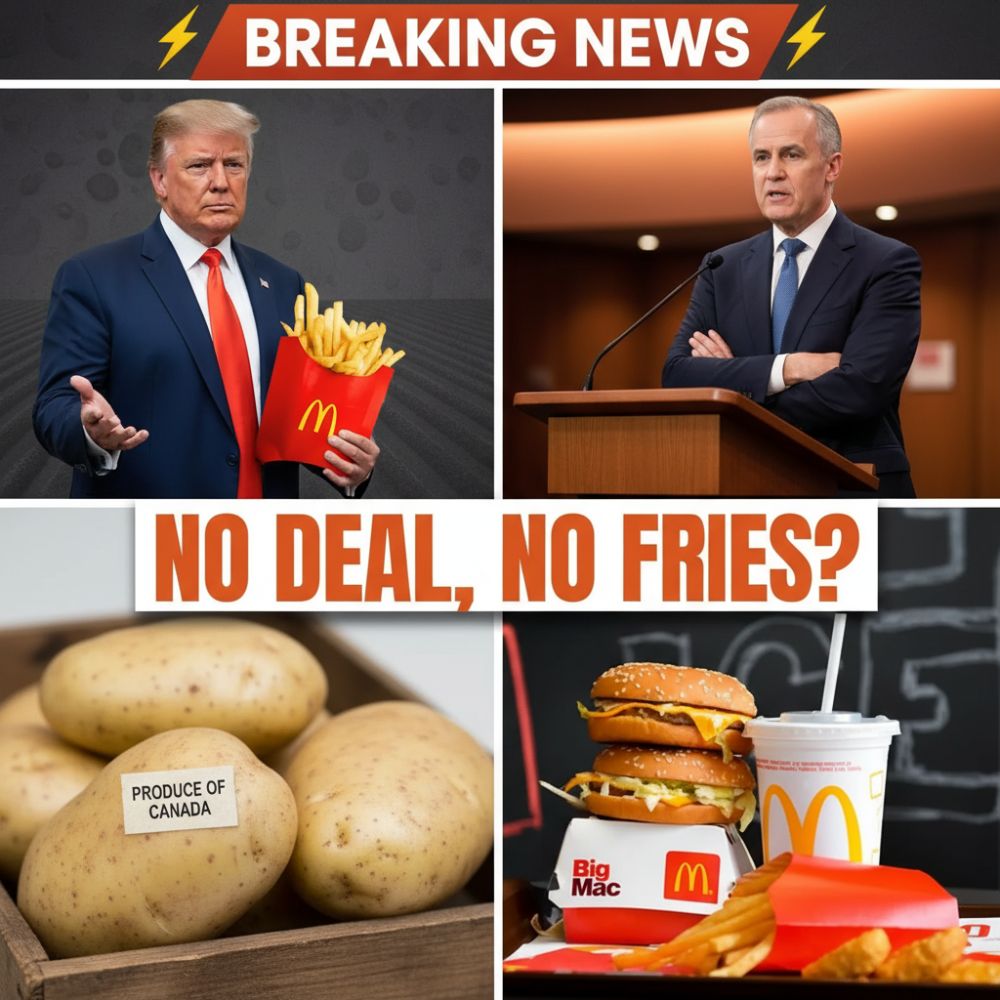
Just minutes ago, sources close to Trump’s economic advisory circle confirmed that the former president is pushing for stronger guarantees on agricultural access, specifically targeting Canadian potato exports that feed into major U.S. supply chains.
The move, described as a preemptive strike ahead of a potential second-term trade renegotiation, would demand that Canada commit to uninterrupted, quota-free shipments of processing potatoes — the backbone of America’s french fry industry.
Within minutes, officials aligned with Mark Carney, the former central banker now widely expected to play a senior economic role in Canada’s response, fired back. Ottawa would prioritize domestic stability and existing trade frameworks before making any new concessions, they said.
At issue is a complex web of cross-border supply. Every year, Canada exports nearly $1.5 billion worth of potatoes to the United States, with the majority destined for frozen fry plants in the Midwest and Pacific Northwest.
Fast-food giants like McDonald’s, Wendy’s and Restaurant Brands International rely on these steady shipments to keep their fryers running. Any disruption, analysts warn, could trigger immediate spot-market price spikes.
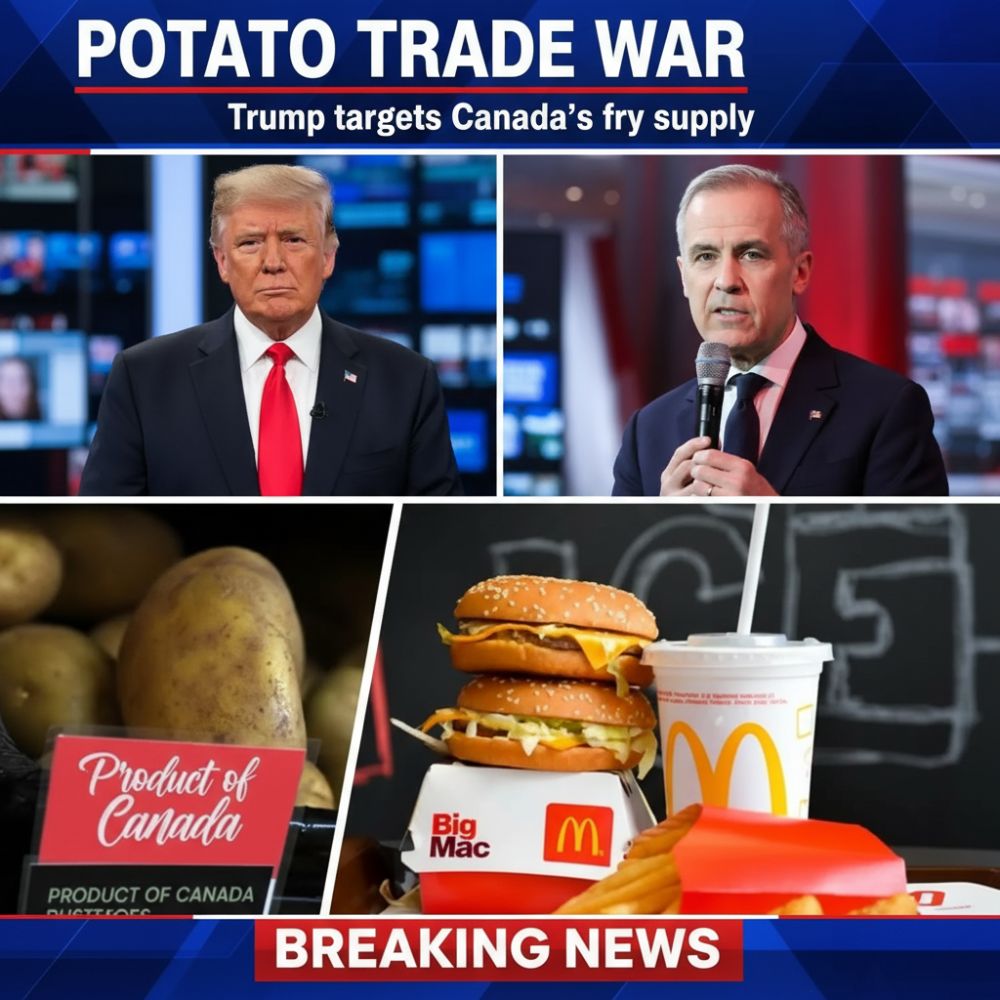
Trump’s team argues that current trade terms under the USMCA give Canada too much leeway to restrict exports during domestic shortages — a provision they call a “supply management loophole.” The former president has reportedly told allies that leveraging potato access is “a perfect pressure point” because it directly affects consumer prices and corporate bottom lines ahead of election season.
But Carney-aligned officials counter that Canada has no intention of disrupting shipments. Their concern, they say, is maintaining the right to manage domestic supply in a crisis — a principle enshrined in Canadian agricultural policy for decades. “We will not bargain away our food sovereignty for the sake of a fast-food quarterly report,” one senior Canadian trade advisor said, speaking on condition of anonymity.
Supporters of Trump’s approach call it firm negotiation. They argue that Canada has long enjoyed preferential access without sufficient guarantees against sudden export curbs, as briefly seen during a labor dispute in Prince Edward Island in 2022. Critics warn of a broader unraveling. “This is how trade wars start — not with tariffs on steel, but with potatoes,” said a former U.S. trade representative official.
Even minor export adjustments, agricultural economists note, could tighten U.S. supply within weeks. Because processing potatoes are grown under contract, surplus inventory is minimal. A 10 percent reduction in Canadian shipments could raise fry prices by as much as 15 percent — a painful prospect for both fast-food chains and consumers already battling inflation.
For now, both sides appear to be signaling resolve. Trump’s team has not ruled out filing a formal USMCA dispute claim. Ottawa has hinted at retaliatory measures on U.S. dairy and fertilizer exports. Whether this is strategic leverage or the start of another cross-border supply shock remains unclear. But one thing is certain: the french fry — that humble staple of the American meal — has just become a diplomatic weapon.