California’s economic landscape is undergoing a profound transformation, one that is unfolding gradually yet leaving lasting consequences across the state.
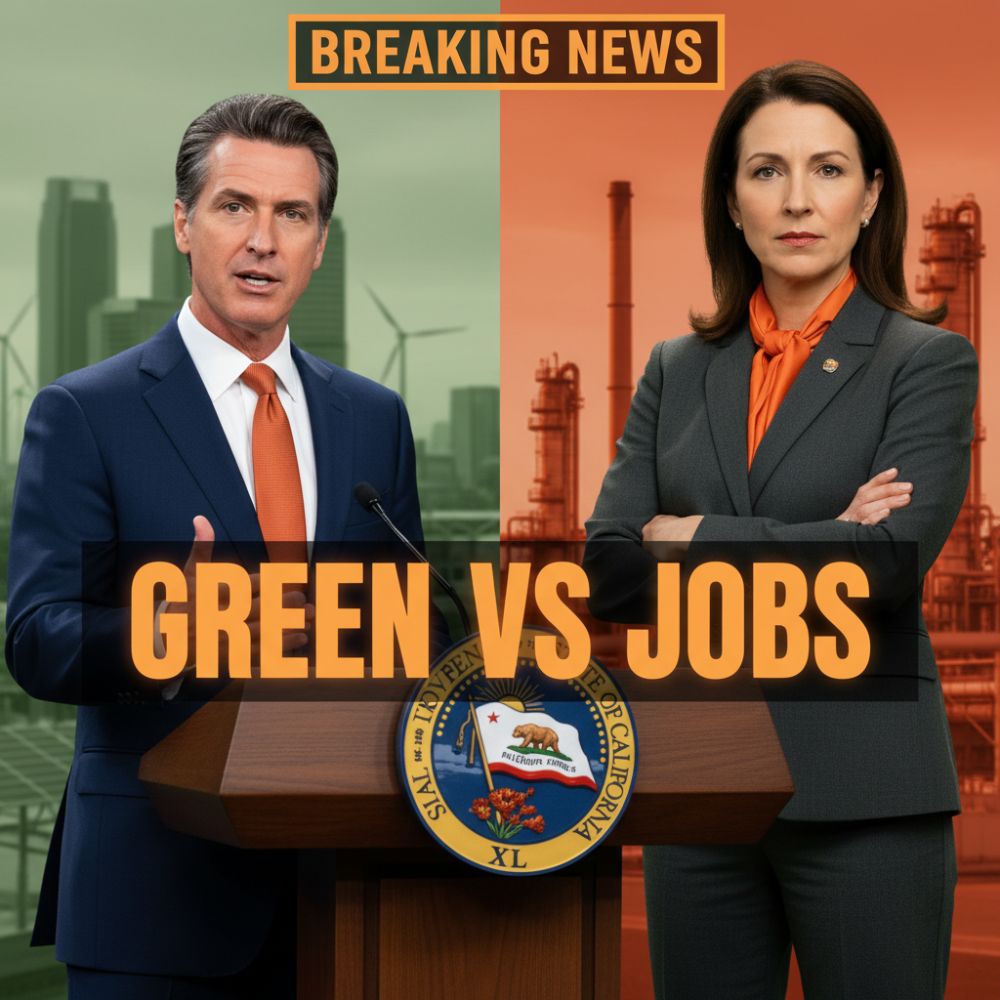
While public attention often focuses on technology hubs and environmental initiatives, a different story is emerging in the background—one centered on the decline of traditional industrial infrastructure, particularly within the energy sector.
At the center of this shift is the steady reduction of oil refineries and fuel processing facilities.
Over the past several decades, the number of such facilities in California has dropped dramatically.
What was once a robust network supporting both employment and energy production has steadily diminished, leaving behind economic gaps that are increasingly difficult to ignore.
For many workers, these facilities were more than just workplaces.
They represented stability, long-term careers, and a pathway to the middle class.
Refinery jobs often provided strong wages, benefits, and retirement plans, making them a cornerstone of economic security for thousands of families.
When these facilities close, the impact extends far beyond the individual worker, rippling through entire communities.
The closures themselves rarely happen suddenly.
Instead, they occur in stages—announced through corporate restructuring plans, efficiency measures, or long-term strategic shifts.
Each decision may appear isolated, but collectively they form a pattern of gradual withdrawal from the state.
Workers are often left with limited options: relocate, retrain, or face unemployment.
A key factor driving these decisions is cost.
Operating in California has become significantly more expensive compared to other states.
Industrial electricity rates, labor costs, regulatory compliance expenses, and taxation policies all contribute to a higher overall cost of doing business.
For energy-intensive operations like refineries, even small cost differences can have a substantial impact over time.
Electricity, in particular, plays a critical role.
Refineries require continuous, high-energy operations, running complex systems around the clock.
When energy costs rise significantly above the national average, maintaining profitability becomes increasingly challenging.
Over time, companies begin to reassess whether continuing operations in California is financially viable.
Labor costs also factor into the equation.
While higher wages can improve living standards, they also increase operational expenses for employers.
When combined with higher insurance costs and regulatory requirements, the cumulative financial burden can influence decisions about where to invest and where to scale back.
Another layer of complexity comes from California’s regulatory environment.
Permitting processes for new facilities or upgrades can take years, often involving extensive environmental reviews and legal challenges.
While these regulations aim to protect communities and ecosystems, they also create uncertainty and delay for companies attempting to expand or modernize operations.
As a result, many companies choose not to invest further in California facilities.
Instead, they direct resources to states where the regulatory process is faster and costs are lower.
Over time, aging facilities in California become less competitive, eventually leading to closure.
The consequences of these closures extend beyond employment.
Local economies that once depended on refinery activity begin to contract.
Businesses that served refinery workers—restaurants, retail stores, service providers—experience reduced demand.
Tax revenues decline, affecting public services such as schools and infrastructure.
These effects are particularly visible in regions outside California’s major metropolitan centers.
Areas like the Central Valley and parts of the Inland Empire have historically relied on industrial jobs to sustain their economies.
When those jobs disappear, there are often fewer alternative opportunities available.
At the same time, California is pursuing an ambitious transition toward cleaner energy and electrification.
Policies promoting electric vehicles, renewable energy, and reduced carbon emissions are reshaping the state’s long-term energy strategy.
While these initiatives aim to address environmental concerns, they also contribute to the changing role of traditional energy industries.
This creates a complex dynamic.
As demand for electricity increases due to electrification, the infrastructure required to meet that demand must expand accordingly.
However, the decline of existing energy production facilities raises questions about how the state will balance supply and demand during the transition period.
The challenge lies in timing and coordination.
Building new energy infrastructure takes years of planning and investment, while closures of existing facilities can happen more quickly.
If the transition is not carefully managed, gaps may emerge between energy demand and available supply.
Beyond the energy sector, similar patterns are appearing in other industries.
Companies across various sectors have relocated operations to states with lower costs and fewer regulatory hurdles.
This broader trend suggests that the issue is not limited to a single industry but reflects a wider shift in California’s economic environment.
For policymakers, the situation presents a difficult balancing act.
On one hand, there is a strong push toward environmental sustainability and modern economic development.
On the other hand, there is a need to maintain economic stability for workers and communities that depend on traditional industries.
For workers, the transition can be deeply personal.
Many have spent decades developing specialized skills that are not easily transferable to other industries.
Retraining programs exist, but they often require time, resources, and opportunities that may not be readily accessible.
Communities face similar challenges.
Economic diversification is not something that can happen overnight.
It requires investment, planning, and often a reimagining of local identity and purpose.
In the meantime, residents must navigate the immediate effects of job loss and economic uncertainty.
The broader question is how California will manage this transition in a way that minimizes disruption while achieving its long-term goals.
This involves not only policy decisions but also collaboration between government, industry, and communities.
What is clear is that the changes currently underway are significant and far-reaching.
They are reshaping the state’s economic foundation, altering the types of jobs available, and redefining how energy is produced and consumed.
As the transition continues, the experiences of affected workers and communities will play a crucial role in shaping future decisions.
Their stories highlight the human impact behind economic data and policy discussions, reminding observers that large-scale changes are ultimately felt at the individual level.
California’s path forward will likely continue to evolve, influenced by economic pressures, technological advancements, and policy priorities.
The outcome will depend on how effectively these factors are balanced—and how well the state can support those most affected by the transition.