Washington, D.C. — What began as a high-stakes televised political exchange quickly spiraled into one of the most explosive on-air confrontations in recent memory. Millions of viewers tuned in expecting a sharp but controlled debate. Instead, they witnessed a moment that has since ignited a political firestorm—one centered on Jasmine Crockett and Donald Trump.
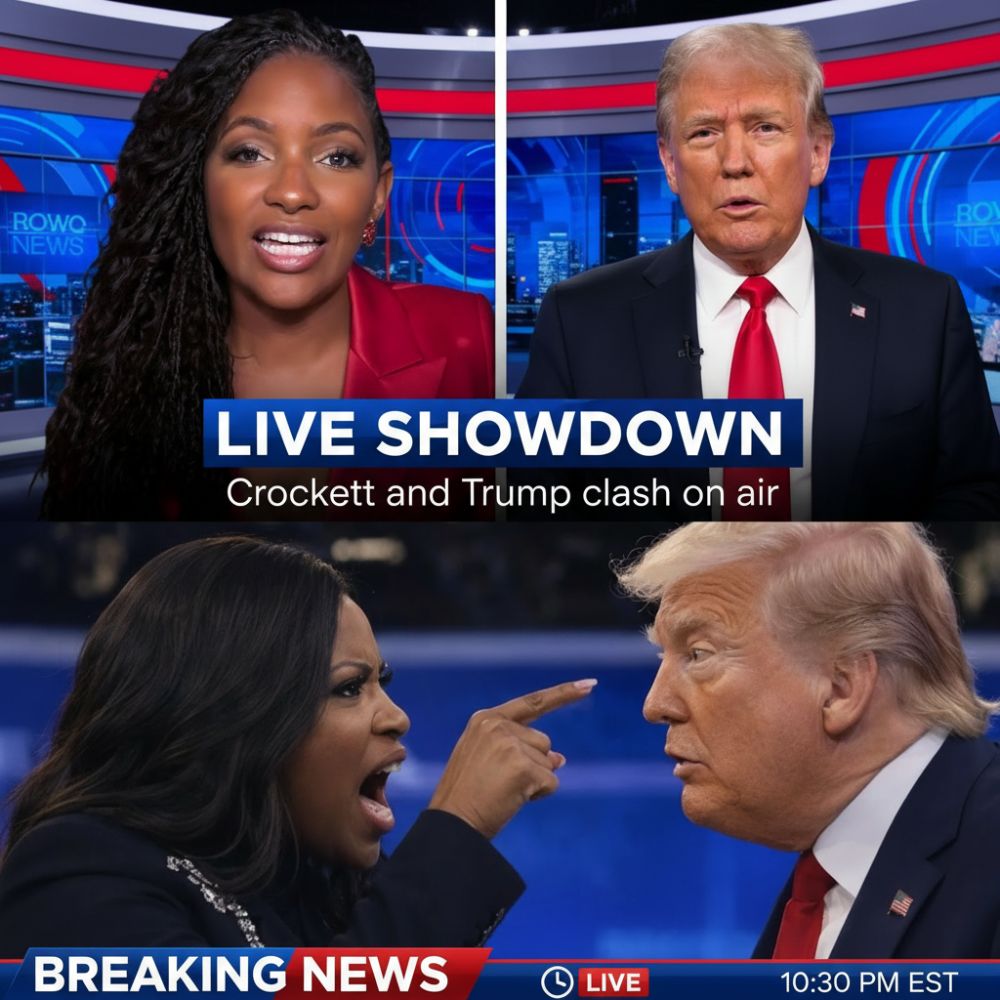
The clash, unfolding live without delay or filter, has become a defining spectacle—replayed, dissected, and debated across every major platform.
A Tense Beginning
The broadcast opened under already heightened expectations. Both Crockett and Trump are known for their commanding presence and unapologetic communication styles. Producers framed the segment as a direct exchange on pressing national issues—policy, leadership, and accountability.
From the outset, the tension was unmistakable.
Trump leaned into his familiar approach: assertive, dominant, and quick to challenge. Crockett, by contrast, maintained a composed and methodical posture, choosing her moments carefully.
Observers would later note that this contrast in styles set the stage for what was to come.
Crockett Takes Control
As the discussion progressed, Jasmine Crockett began to shift the dynamic.
Rather than matching Trump’s pace, she slowed the conversation down—focusing on specifics, citing timelines, and pressing for direct answers. Her tone remained steady, but her questions became increasingly pointed.
At one moment that would later go viral, she paused deliberately before delivering a line that cut through the noise of the exchange.
“I’m not interested in slogans,” she said. “I’m interested in answers.”
The effect was immediate.
For the first time in the segment, Trump appeared momentarily off balance.
The Turning Point
What followed marked the turning point of the entire broadcast.
Crockett introduced a series of statements that challenged Trump’s previous positions, contrasting them with documented actions and public records. The precision of her approach left little room for deflection.
Trump attempted to interrupt—once, then again—but Crockett held her ground.
The moderator, sensing the escalating tension, allowed the exchange to continue, recognizing that the moment had captured something larger than the planned format.
Viewers watched as the balance of the conversation shifted.
“This is about accountability,” Crockett stated firmly. “And accountability requires clarity.”
Trump’s Reaction Escalates
As the pressure mounted, Donald Trump responded with increasing intensity.
His tone sharpened. His gestures became more animated. He pushed back forcefully against Crockett’s framing, challenging both her interpretation and her intent.
But the more he reacted, the more the contrast became apparent.
Crockett remained composed—measured in her delivery, precise in her wording. Trump, by comparison, appeared visibly frustrated, his responses growing less structured and more reactive.
At one point, he raised his voice, speaking over both Crockett and the moderator in an attempt to regain control of the exchange.
The effort did not fully succeed.
A Moment That Went Viral
Within minutes, clips of the confrontation began spreading across social media.
The defining moment—Crockett calmly delivering a pointed critique while Trump responded with visible frustration—was replayed repeatedly, quickly becoming the focal point of public discussion.
Hashtags related to the exchange surged. Commentators from across the political spectrum weighed in. The phrase “live TV showdown” began trending within hours.
For many viewers, the moment captured a rare dynamic: a high-profile figure being challenged in real time—and struggling to reset the narrative.
Inside the Studio
Behind the scenes, the atmosphere was described as electric.
Producers scrambled to manage timing as the exchange extended beyond its original slot. Staff members monitored reactions in real time, aware that the segment had taken on a life of its own.
“It was one of those moments where you know something significant is happening,” one insider said. “You don’t interrupt it—you let it unfold.”
The decision to keep the cameras rolling proved pivotal.
Political Fallout
The aftermath has been swift and far-reaching.
Supporters of Jasmine Crockett praised her performance, highlighting her composure and command of detail. Many framed the exchange as a demonstration of effective questioning and accountability.
Critics of Trump seized on the moment, arguing that his reaction undermined his position and reinforced concerns about temperament under pressure.
On the other side, Trump’s supporters pushed back strongly, accusing Crockett of staging a confrontational ambush and defending his response as justified.
The divide, already deep, has only widened.
A Clash of Communication Styles
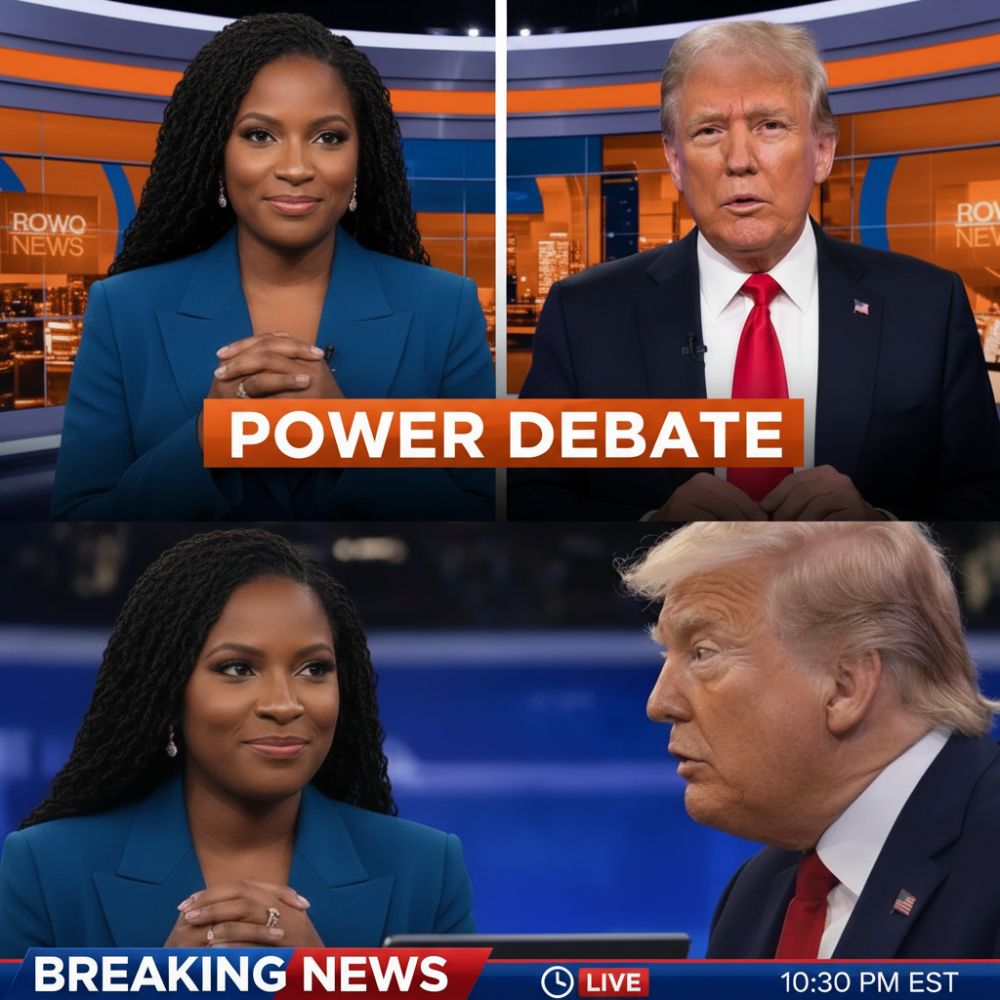
At its core, the exchange highlighted two fundamentally different approaches to communication.
Crockett’s strategy was structured, deliberate, and evidence-driven. She focused on narrowing the discussion, forcing specificity, and maintaining control through discipline.
Trump’s approach relied on dominance, speed, and counterattack—techniques that have often proven effective in broader settings.
But in this particular context, the contrast worked against him.
“When you have one person slowing things down and another trying to speed them up, it creates tension,” one analyst explained. “And that tension becomes the story.”
The Power of Live Television
Part of what made the moment so impactful was the medium itself.
Live television offers no safety net. There are no edits, no second takes, no opportunity to recalibrate before the audience sees the result.
Everything unfolds in real time.
In this case, that immediacy amplified the stakes—and the consequences.
“It’s raw,” one media expert noted. “And when something unexpected happens, it resonates in a way that scripted moments can’t.”
Trump’s Post-Show Response
Following the broadcast, Donald Trump responded quickly.
In a series of statements, he criticized the format of the exchange, the moderation, and Crockett’s line of questioning. He framed the encounter as unfair and biased, arguing that the conditions were designed to undermine him.
His tone remained combative, signaling that he had no intention of backing down from the confrontation.
At the same time, the intensity of his response ensured that the story would continue to dominate headlines.
Crockett’s Position
Jasmine Crockett, for her part, maintained a measured stance after the broadcast.
In brief remarks, she emphasized the importance of direct answers and public accountability, avoiding personal attacks while reinforcing the substance of her approach.
Observers noted that her consistency—both during and after the exchange—reinforced the impression she had created on air.
Broader Implications
Beyond the immediate drama, the confrontation raises larger questions about political communication, media dynamics, and public expectations.
What do viewers respond to in moments like this?
How do different styles perform under pressure?
And what does it mean for future public exchanges?
These questions are now part of a broader conversation that extends beyond any single broadcast.
A Defining Media Moment
Some analysts are already describing the exchange as a defining media moment—one that will be studied for its dynamics, its impact, and its timing.
It combined high stakes, contrasting personalities, and an unfiltered setting to produce a moment that feels both immediate and significant.
“These are the moments that stick,” one commentator said. “They shape perception in ways that go beyond policy or platform.”
Conclusion
The live television confrontation between Jasmine Crockett and Donald Trump has left a lasting impression.
It was intense, unscripted, and impossible to ignore.
Crockett’s measured approach and Trump’s forceful reaction created a dynamic that captured national attention—and sparked a wave of analysis that shows no sign of slowing.
In the fast-moving world of modern media, moments like this stand out.
Not because they are planned.
But because they aren’t.
And once they happen, they become part of the story—whether anyone is ready or not.